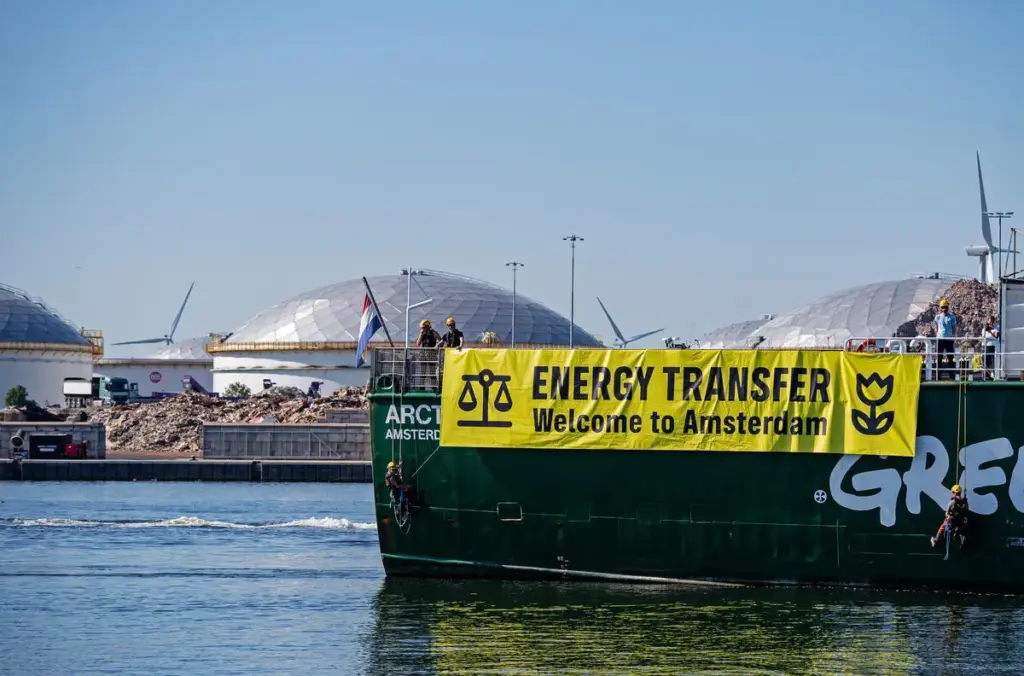
AMSTERDAM — The high-stakes legal warfare between environmental advocacy giant Greenpeace International and multinational energy infrastructure firm Energy Transfer has entered a critical new phase. Following a recent ruling by a North Dakota District Court regarding a "narrowly tailored" anti-suit injunction, Greenpeace has confirmed that its landmark anti-SLAPP (Strategic Lawsuit Against Public Participation) proceeding in the Netherlands will proceed unimpeded.
According to senior legal strategists for the environmental network, the core arguments of their Dutch litigation remain fully intact. While the North Dakota court’s directive places specific boundary lines on the international legal maneuvering, the ruling ultimately preserves Greenpeace’s fundamental path toward holding corporate plaintiffs accountable in European courts for actions that civil rights advocates argue are designed to stifle free speech and peaceful protest.
Executive Overview
The cross-border legal saga highlights an increasingly common and controversial tactic in modern corporate litigation: the use of transnational legal instruments—including U.S.-style civil racketeering claims and domestic injunctions—to suppress environmental activism that spans multiple jurisdictions.
At the heart of the dispute is an ongoing struggle over accountability stemming from years of protests against the Dakota Access Pipeline (DAPL). Energy Transfer, the Texas-based developer behind the pipeline, previously launched massive legal salvos in U.S. federal courts against Greenpeace entities, alleging multi-million-dollar damages resulting from coordinated activist campaigns. In response, Greenpeace International turned to the Netherlands—where its global headquarters is situated—to file an anti-SLAPP suit, seeking to have the U.S. litigation declared an abusive, retaliatory exercise designed to bankrupt and silence civil society organizations.
The latest development involves a carefully calibrated balancing act between U.S. and international judicial systems. As directed by the North Dakota Supreme Court, the local district court issued an injunction that avoids trampling over core European legal protections, allowing the Dutch proceedings to advance while trimming away specific procedural requests regarding the foundational validity of the American proceedings.
For legal scholars, corporate governance watchdogs, and human rights defenders, the case serves as a crucial bellwether for the future of transnational corporate accountability and the cross-border defense of civic freedoms.
Detailed Chronology: From the Bakken Shale to the Courtrooms of Amsterdam
To fully understand the weight of the recent North Dakota District Court order, it is necessary to trace the protracted legal and physical battle lines that brought Greenpeace and Energy Transfer to this juncture.
1. The Dakota Access Pipeline Protests (2016–2017)
The roots of the litigation trace back to the massive demonstrations centered around the Standing Rock Sioux Reservation in North Dakota. Thousands of water protectors, environmental activists, and Indigenous leaders converged to protest the construction of the Dakota Access Pipeline, citing threats to sacred ancestral lands, clean water supplies, and global climate stability. Greenpeace entities were among the prominent organizations that provided logistical support, public awareness campaigns, and solidarity to the protest movement.
2. The U.S. Federal Racketeering Lawsuit
In the wake of the protests, Energy Transfer filed a sprawling civil lawsuit in U.S. federal court against Greenpeace International, Greenpeace Inc., and other environmental organizations. Invoking the Racketeer Influenced and Corrupt Organizations (RICO) Act—statutes originally designed to dismantle organized crime syndicates—Energy Transfer alleged that the organizations operated as an enterprise engaging in defamation, eco-terrorism, and illegal interference with business operations, demanding hundreds of millions of dollars in damages.
Civil liberties groups swiftly condemned the lawsuit as a classic SLAPP suit—a meritless or exaggerated legal action intended less to win in court than to drain the financial resources, exhaust the personnel, and intimidate the critics of powerful corporate entities.
3. Taking the Fight to Europe: The Dutch Anti-SLAPP Suit
Refusing to be solely on the defensive in the U.S. legal arena, Greenpeace International counter-attacked on home ground. Leveraging robust European legal frameworks designed to protect public participation, Greenpeace filed an anti-SLAPP lawsuit against Energy Transfer in the Netherlands.
This Dutch proceeding argued that Energy Transfer’s U.S. litigation constituted an abusive, malicious abuse of process designed explicitly to punish lawful advocacy and evade international standards protecting freedom of expression. Greenpeace sought declaratory relief and damages under Dutch tort law for the harms inflicted by the transnational legal onslaught.
4. The North Dakota Injunction Proceedings and Supreme Court Intervention
Seeking to halt the European proceedings, Energy Transfer petitioned North Dakota courts for an anti-suit injunction—a legal order commanding a party to drop or refrain from pursuing litigation in a foreign jurisdiction.
The procedural history wound its way up to the North Dakota Supreme Court, which established strict guardrails on any potential injunction. Recognizing the complex issues of international comity and the sovereignty of foreign legal systems, the high court mandated that any injunction must be strictly "narrowly tailored" so as not to infringe upon the core merits of Greenpeace International’s anti-SLAPP protections under Dutch law.
Following this guidance, the North Dakota District Court issued its recent order, framing precise boundaries that allow the Amsterdam litigation to move forward while placing narrow restrictions on specific ancillary arguments.
Supporting Context & Metrics: The Global Rise of SLAPP Suits
The clash between Energy Transfer and Greenpeace is not an isolated incident; it represents a rapidly escalating global trend wherein corporations utilize aggressive legal mechanisms across international borders to muzzle environmental, human rights, and anti-corruption watchdogs.
Understanding SLAPP Suits
Strategic Lawsuits Against Public Participation are civil complaints filed by deep-pocketed entities—frequently corporations, developers, or public figures—against individuals, journalists, and non-governmental organizations who speak out on matters of public interest. The primary objective of a SLAPP suit is rarely to secure a favorable legal judgment. Instead, it is designed to:
- Drain Financial Resources: Force defendants to incur crippling legal defense costs.
- Psychologically Exhaust Activists: Induce chronic stress, distraction, and burnout among organizational leadership and grassroots participants.
- Have a Chilling Effect: Send an unmistakable warning signal to other potential critics, signaling that speaking out against corporate practices carries catastrophic financial risks.
The Transnational Dimension
As corporate operations become increasingly globalized, so too does corporate litigation. Energy Transfer’s deployment of U.S. federal courts against an international environmental network headquartered in the Netherlands demonstrates how multinational corporations can forum-shop, utilizing the unique idiosyncrasies of American civil procedure—such as broad discovery rules and the availability of treble damages under RICO—to target entities operating in jurisdictions with very different legal traditions.
In response, civil society networks have begun championing robust anti-SLAPP legislation worldwide. While jurisdictions like the European Union move toward enacting comprehensive EU-wide anti-SLAPP directives (often dubbed "Daphne’s Law" in honor of murdered Maltese investigative journalist Daphne Caruana Galizia), individual civil actions like Greenpeace’s Dutch lawsuit serve as pioneering testing grounds for holding extraterritorial corporate plaintiffs accountable.
Official Statements and Legal Analysis
The strategic implications of the North Dakota District Court’s order have been parsed by legal analysts and organizational representatives alike.
Speaking from Greenpeace International’s headquarters in Amsterdam, Daniel Simons, Senior Legal Counsel for Strategic Defence, offered a clear-eyed assessment of the judicial ruling and its impact on the ongoing litigation:
"Greenpeace International’s anti-SLAPP case against Energy Transfer in the Netherlands will continue and the central arguments are not impacted by the anti-suit injunction issued by the North Dakota District Court. As directed by the North Dakota Supreme Court, the anti-suit injunction is ‘narrowly tailored’ so as not to interfere with key claims in Greenpeace International’s anti-SLAPP case.
The North Dakota courts have cleared the way for Greenpeace International to continue pursuing justice under Dutch law. The only limitation imposed pertains to Greenpeace International asking for a finding that the North Dakota District Court case ‘lacked legal foundation.’ However, these are not central claims for the anti-SLAPP case."
Breaking Down the Legal Boundaries
Legal experts examining the text of the North Dakota District Court order emphasize that the ruling represents a subtle victory for principles of international comity.
- What is Permitted: Greenpeace remains completely free to argue the core tenets of its Dutch anti-SLAPP case. This includes demonstrating that Energy Transfer’s U.S. litigation constitutes an abusive exercise of legal rights, inflicts unlawful harm on an organization’s public advocacy mission, and runs contrary to European norms protecting freedom of expression.
- What is Restricted: The narrow restriction imposed by the court prevents Greenpeace from asking the Dutch judge to formally declare that the North Dakota District Court case itself "lacked legal foundation."
According to Simons and independent legal observers, this carve-out does not cripple the Dutch lawsuit. The heart of an anti-SLAPP action under European jurisprudence focuses on the intent and impact of the litigation—specifically, whether the lawsuit was brought in bad faith to punish and silence protected public participation—rather than a technical re-examination of the presiding American court’s initial docket acceptance.
Future Outlook: Implications for International Advocacy and Corporate Accountability
As the legal teams for both Greenpeace International and Energy Transfer prepare for the next rounds of courtroom battles in Amsterdam and North Dakota, the case is poised to set profound precedents for international civil litigation and environmental activism.
1. Shaping the Future of Anti-SLAPP Enforcement
If Greenpeace successfully navigates the procedural hurdles and secures a favorable judgment in the Netherlands, it could establish a powerful new precedent: that organizations targeted by abusive foreign litigation can seek defensive and compensatory relief in their home jurisdictions. This would create a significant deterrent for corporations considering the deployment of aggressive U.S.-style racketeering suits against international non-governmental organizations.
2. The Balancing Act of International Comity
The case underscores the delicate tension between U.S. federal courts asserting domestic jurisdiction over international actors and foreign courts protecting local civil society organizations from transnational overreach. The willingness of the North Dakota Supreme Court and District Court to craft a "narrowly tailored" injunction—rather than a blunt, absolute prohibition on foreign legal proceedings—demonstrates a measured, if grudging, respect for international legal pluralism.
3. Mobilization and Solidarity
Beyond the courtroom, the litigation has galvanized a broad coalition of environmental, human rights, and press freedom organizations. The creation of dedicated coordination hubs, such as the Greenpeace SLAPP Trial WhatsApp Group, reflects a growing recognition that defending against corporate SLAPP suits requires robust, real-time international solidarity, transparent public communication, and collective resource-sharing.
As the legal proceedings in Amsterdam unfold in the coming months, all eyes will remain fixed on how Dutch magistrates interpret and apply European anti-SLAPP principles against the backdrop of an aggressive American corporate litigation strategy. Whatever the ultimate verdict, the battle lines drawn in this unique transatlantic conflict will reverberate through boardrooms, advocacy networks, and courtrooms for years to come.