Executive Overview
As the dense, emerald-green canopies of East Kalimantan reverberate with the unfamiliar whine of industrial chainsaws and the heavy drone of earthmoving machinery, a different kind of recording is quietly taking place. In the forests surrounding Pemaluan, researchers have strategically peppered the landscape with advanced audio monitors—clamping them to mountain ridges, concealing them near subterranean cave openings, and suspending them among tangled mangrove roots. Led by Dr. Wendy Erb of the Cornell K. Lisa Yang Center for Conservation Bioacoustics, this scientific team is undertaking a race against time. Their mission: to capture the acoustic baseline of an ecosystem on the precipice of irreversible anthropogenic transformation.
This large-scale bioacoustic monitoring initiative, highlighted in a newly released collaborative documentary by Mongabay, Scientific American, and Project Multatuli (supported by the Pulitzer Center), serves as a critical environmental barometer. The focal point of this ecological disruption is Nusantara, Indonesia’s ambitious, multibillion-dollar mega-project designed to replace Jakarta as the nation’s political and administrative center. Plagued by catastrophic urban congestion, severe traffic paralysis, and rapid land subsidence—with parts of the current capital sinking below sea level—the Indonesian government under President Joko Widodo initiated the monumental task of carving a brand-new metropolis out of the Bornean wilderness.
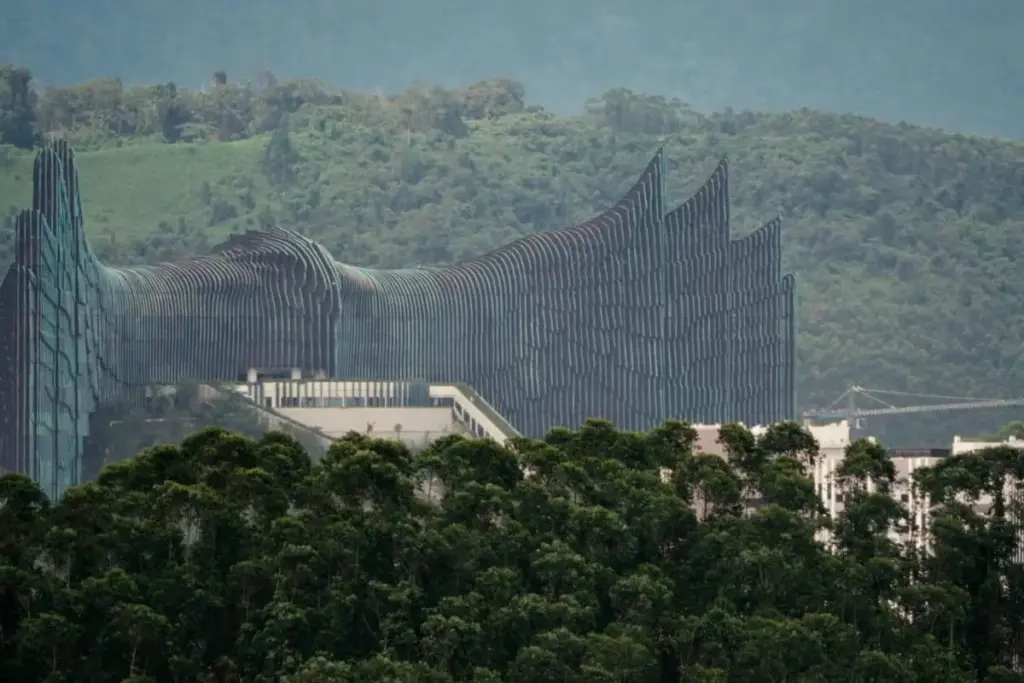
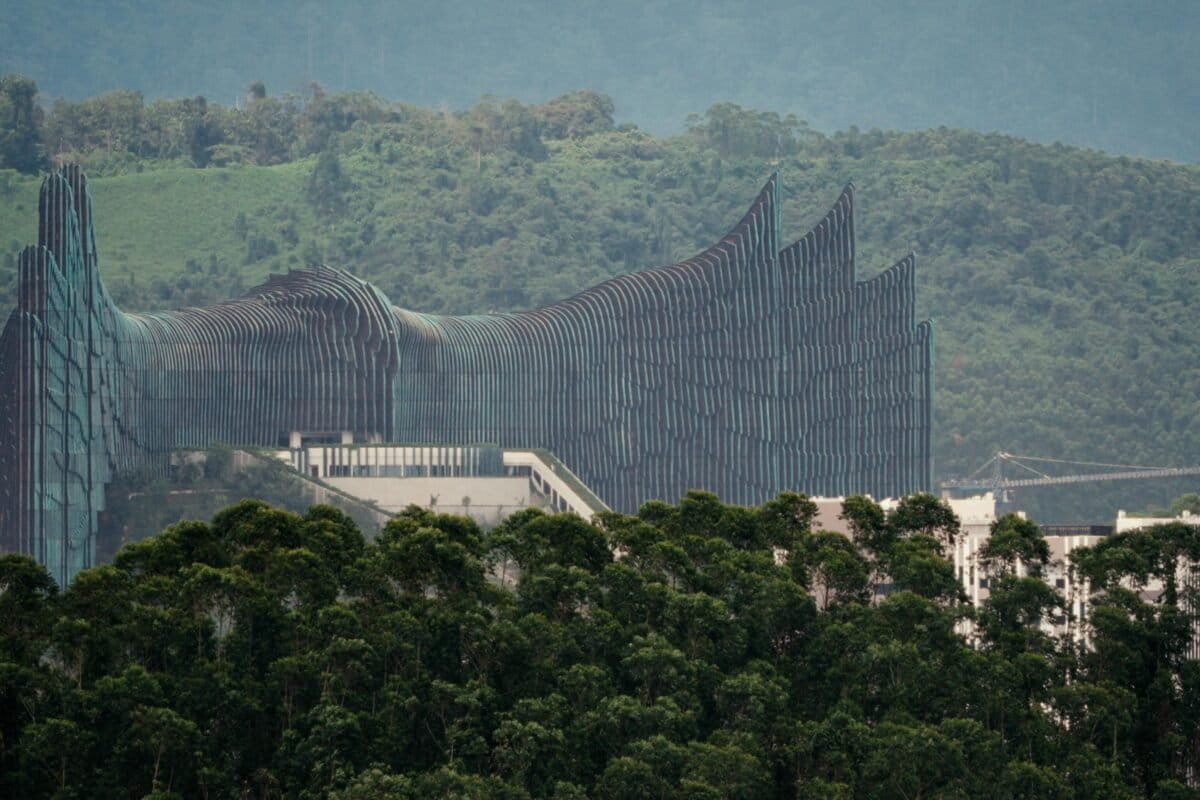
Marketed by urban planners and government officials as an eco-friendly "smart forest city," Nusantara is envisioned as a utopian blueprint where high-tech modern infrastructure and rich tropical biodiversity seamlessly coexist. Yet, as asphalt roads, sleek apartment complexes, luxury hotels, and the monolithic silhouette of the new presidential palace steadily replace old-growth rainforest, the reality on the ground tells a more complex story. The acoustic sensors in Pemaluan are capturing this tension in real-time, archiving the calls of agile gibbons, nocturnal amphibians, resonant hornbills, and a symphony of insects before the soundscape is permanently rewritten by urban noise.
Beyond its ecological value, the project has woven together Western scientific methodology and traditional ecological knowledge (TEK). Researchers are collaborating closely with the Indigenous Balik people, whose generational understanding of the forest’s acoustic signatures is vanishingly rare among the younger generation. Through this synergy of bioacoustics and ethnography, the initiative aims to document not just the presence of declining wildlife species, but also the fading cultural heritage of a community facing the realities of displacement and forced modernization. While the recorders cannot halt the relentless march of construction, they serve as an unblinking, unyielding witness to the ecological and cultural trade-offs of Indonesia’s boldest geopolitical gamble.
Detailed Chronology: From Concept to Construction and Conservation
To fully understand the gravity of the acoustic monitoring project in Pemaluan, it is essential to trace the historical timeline that led to the birth of Nusantara and the rapid mobilization of conservation scientists in East Kalimantan.
Phase I: The Crisis of Jakarta and the Genesis of Nusantara (2019–2021)
For decades, Jakarta has stood as the political and economic heart of Indonesia. However, home to over 10 million residents in the urban core (and upwards of 30 million in the greater metropolitan area), the city became a victim of its own success. Plagued by chronic gridlock, severe air pollution, and inadequate waste management, Jakarta’s most existential threat has been its physical descent. Built on a swampy plain intersected by 13 rivers, and suffering from massive underground water extraction, parts of northern Jakarta are sinking at rates of up to 25 centimeters per year, leaving large neighborhoods permanently below sea level.
Recognizing that Jakarta was environmentally and structurally unsustainable as the nation’s capital, the Indonesian government announced a radical solution in August 2019: the relocation of the capital to the province of East Kalimantan. The chosen site, spanning nearly 256,000 hectares across the regencies of North Penajam Paser and Kutai Kartanegara, was lauded for its central geographical location within the archipelago and its lower risk of natural disasters compared to Java.
Phase II: Legislative Frameworks and Groundbreaking (2022–2023)
Following the initial announcement, the COVID-19 pandemic temporarily slowed momentum, but legislative and physical groundwork accelerated rapidly into 2022. In January 2022, the Indonesian Parliament passed the National Capital Law (Undang-Undang Ibu Kota Negara), formally establishing the legal foundation for Nusantara.
By mid-2022, heavy machinery began carving access roads through the rolling hills and secondary forests of East Kalimantan. The Indonesian government established the Nusantara Capital City Authority (Otorita Ibu Kota Nusantara or OIKN) to oversee development. Groundbreakings for foundational infrastructure—including dams, worker dormitories, and the initial highway networks—commenced. International architecture and engineering firms submitted designs emphasizing renewable energy, electric vehicle integration, and green buildings, laying the groundwork for the "smart forest city" marketing campaign.
Phase III: The Bioacoustic Baseline and the Arrival of Researchers (2024–2025)
As bulldozers transformed the topography, the scientific community mobilized to measure the ecological footprint of the early construction phases. Recognizing the dearth of comprehensive baseline data regarding local wildlife distribution prior to intensive development, researchers from the Cornell K. Lisa Yang Center for Conservation Bioacoustics, alongside regional partners, launched their 18-month acoustic sampling campaign across 20 distinct sites.
Positioned in remote, rugged terrain—ranging from mountainous elevations to secluded cave systems and vulnerable mangrove fringes—automated recording units (ARUs) began logging thousands of hours of audio. This period also marked active engagement with the Indigenous Balik communities. Researchers integrated local guides into the fieldwork, mapping traditional ecological knowledge onto the scientific acoustic datasets.
Phase IV: Acceleration, Documentation, and the Present Reality (2026 and Beyond)
By mid-2026, the visual and acoustic landscape of East Kalimantan has undergone a staggering metamorphosis. Key architectural centerpieces, most notably the gargantuan, Garuda bird-inspired presidential palace, have materialized against the horizon. Luxury hotels, government office complexes, and housing blocks now dominate areas that were recently quiet forest fringes.
It is against this backdrop of rapid urbanization that the documentary produced by Mongabay, Scientific American, and Project Multatuli was released in July 2026. Bringing international media attention to the micro-level impacts of the mega-project, the film highlights the silent drama unfolding in the forest canopy. The acoustic data gathered over the preceding 18 months now serves as the definitive baseline—a digital archive of an ecosystem undergoing industrial compression, providing researchers with the empirical metrics needed to track species displacement, localized extinctions, and the ultimate ecological viability of the "smart forest city" model.
Supporting Context & Metrics: Ecology, Technology, and Demographics
To appreciate the ecological stakes of Nusantara’s construction, one must examine the biological richness of East Kalimantan and the specific technological methodologies being deployed to monitor its disruption.
Biodiversity Hotspots of East Kalimantan
Borneo is one of the most biologically diverse regions on Earth, renowned for its high levels of endemism. The forests surrounding Pemaluan and the broader Nusantara development zone serve as vital habitats for numerous iconic and vulnerable species:
- Bornean Gibbons (Hylobates albibarbis / H. muelleri): Highly vocal primates whose territorial morning calls carry for kilometers across the forest canopy. Their presence is a primary indicator of primary and mature secondary forest health.
- Hornbills (Family Bucerotidae): Including the rhinoceros hornbill (Buceros rhinoceros) and the helmeted hornbill (Rhinoplax vigil), these magnificent birds play a crucial role as seed disperses. Their resonant wingbeats and loud vocalizations are staples of the Bornean soundscape.
- The Great Argus (Argusianus argus): A notoriously shy, ground-dwelling pheasant famous for its elaborate courtship displays and booming, echoing calls that reverberate through the understory.
- Herpetofauna and Entomofauna: A vast array of endemic frogs, reptiles, and insects that form the foundational trophic layers of the forest ecosystem.
The Science of Bioacoustics
Traditional wildlife surveys rely heavily on visual sightings, transect walks, and camera traps. While effective, these methods are labor-intensive, geographically constrained, and often fail to capture elusive, cryptic, or canopy-dwelling species. Bioacoustics bypasses these limitations through passive acoustic monitoring (PAM):
$$textPAM Efficiency = fractextContinuous 24/7 MonitoringtextHuman Field Constraints times textLong-Term Ecological Data Archive$$
By deploying robust, weather-resistant automated recording units (ARUs), researchers can capture acoustic data continuously across extended periods—surviving torrential downpours, high humidity, and extreme temperatures.
- Passive Recording: ARUs record ambient soundscapes at pre-set intervals or continuously.
- Acoustic Indices: Algorithms process the audio files to measure metrics like acoustic complexity, entropy, and bioacoustic index, giving a macro-view of ecosystem health.
- Species Identification: Machine learning models trained on specific vocalizations identify individual species presence, population density shifts, and seasonal behavioral changes.
Socio-Economic Realities and the Indigenous Balik Perspective
The human element of the Nusantara project is just as critical as the biological one. The Indigenous Balik people have inhabited the forests of East Kalimantan for generations, maintaining a reciprocal relationship with their natural environment. Their oral traditions are deeply entwined with the sounds of the forest. For instance, the dawn calls of gibbons were historically interpreted as natural timekeepers and, in specific cultural contexts, as omens or warnings regarding community events.
However, the rapid influx of construction workers, government bureaucrats, and commercial enterprises has fractured this traditional lifestyle. Elders like Abidin, a lifelong resident of Pemaluan, express profound anxiety about the future. While the scientific project archives animal calls, Abidin worries about a more fundamental cultural loss: the disconnection of the younger generation from the forest. As modern education systems take precedence and traditional lands are cleared for urban infrastructure, younger Balik children increasingly fail to recognize the call of the great argus or understand the medicinal and ecological secrets of the trees. Furthermore, local residents face the daunting challenge of adapting to a high-tech urban economy without the formal training or institutional skills required to compete for professional employment in the new capital.
Official Statements and Stakeholder Perspectives
The debate surrounding Nusantara is characterized by starkly contrasting narratives: the optimistic vision of government planners versus the sobering empirical observations of scientists and the lived anxieties of local Indigenous communities.
The Government and Urban Planners: A Vision of Sustainable Modernity
Proponents of the Nusantara Capital City Authority (OIKN) and federal officials maintain that the city represents a revolutionary leap forward in urban design. Rejecting comparisons to traditional, ecologically destructive mega-projects, government representatives emphasize the "smart forest city" paradigm:
- Land Allocation: Planners frequently highlight that roughly 75% of Nusantara’s designated area will remain forested or green space, with only 25% allocated for physical infrastructure and urban development.
- Green Infrastructure: Official policy mandates net-zero carbon emissions by 2045, 100% renewable energy integration, smart waste management systems, and wildlife corridors designed to allow fauna to traverse the urban landscape safely.
- Decongesting Jakarta: Officials stress that the move is an absolute national necessity to relieve Java’s crippling demographic and environmental pressures, fostering a more equitable distribution of wealth and economic growth across the eastern islands of the Indonesian archipelago.
Scientists and Researchers: Empirical Caution and Ecological Realism
In contrast, independent researchers and conservation biologists maintain a posture of cautious skepticism, viewing the government’s ecological claims through a strictly empirical lens:
- Dr. Wendy Erb (Cornell K. Lisa Yang Center for Conservation Bioacoustics): Emphasizes that while acoustic monitoring cannot halt the bulldozers, it provides an unvarnished, objective record of ecological change. The data acts as an accountability mechanism, empirically tracking whether wildlife populations are resilient, declining, or successfully migrating away from heavy construction zones.
- Independent Ecologists: Point out that fragmenting continuous rainforest tracts—even with supposedly "green" urban infrastructure and wildlife corridors—inevitably leads to edge effects, increased human-wildlife conflict, genetic isolation of species, and irreversible biodiversity loss.
Indigenous Voices: Preservation of Memory Amid Displacement
For the Balik community, the discourse transcends abstract urban planning metrics and enters the realm of cultural survival:
- Abidin (Pemaluan Resident): Articulates the poignant dichotomy of the project, noting that while he hopes the audio archives will serve as educational tools for his children, he fears they are being pushed into an alien urbanized future unprepared. For him, the forest is not merely a backdrop for conservation science, but a living classroom, a pharmacy, and an ancestral archive that cannot be adequately replaced by digital recordings or manicured city parks.
Future Outlook: What Lies Ahead for Nusantara and Its Ecosystems?
As Nusantara transitions from a blueprint on paper into a sprawling administrative reality, the coming years will serve as the ultimate proving ground for the Indonesian government’s environmental claims. Several critical trajectories will define the capital’s future:
1. The Verdict of the Acoustic Data
Over the next decade, Dr. Erb’s team and affiliated bioacousticians will continue processing the massive influx of audio data from Pemaluan and surrounding sites. This longitudinal study will provide the scientific community with an unprecedented dataset detailing the exact trajectory of tropical wildlife under the pressure of rapid urbanization. If the acoustic indices show a sharp decline in species richness and vocal activity, it will empirically dismantle the narrative of harmonious coexistence between a mega-city and a tropical rainforest.
2. The Efficacy of Wildlife Corridors and Reforestation
Government planners have promised extensive reforestation initiatives and dedicated wildlife corridors within the 75% green zone quota. The future of Nusantara’s biodiversity hinges entirely on whether these corridors are scientifically designed, strictly protected from illegal encroachment, and actually utilized by hesitant fauna like gibbons and hornbills. If these spaces become isolated biological islands surrounded by concrete and high-density traffic, local extinction rates will inevitably spike.
3. Socio-Cultural Integration and Indigenous Rights
The long-term success of the capital will also be measured by how it treats the human populations that pre-date its construction. Ensuring that the Balik and other Indigenous communities are not marginalized into urban poverty—while simultaneously safeguarding their traditional ecological knowledge—requires robust legal protections, culturally sensitive education programs, and genuine economic inclusion. Without these safeguards, the "smart forest city" risks becoming a monument built upon the erasure of local heritage.
Conclusion
Nusantara stands as a monumental gamble by the Indonesian state—a high-stakes attempt to engineer a sustainable future while grappling with the ghosts of Jakarta’s past. In the forests around Pemaluan, the automated audio recorders tick away silently in the humidity, capturing the final echoes of a wild landscape before it is reshaped by human ambition. They will not stop the chainsaws, nor will they restore the ancient wisdom of the Balik people’s relationship with the forest canopy. However, by recording the soundscape in transition, science has ensured that the true ecological and cultural cost of building Indonesia’s new frontier will neither be ignored nor forgotten.