

Executive Overview
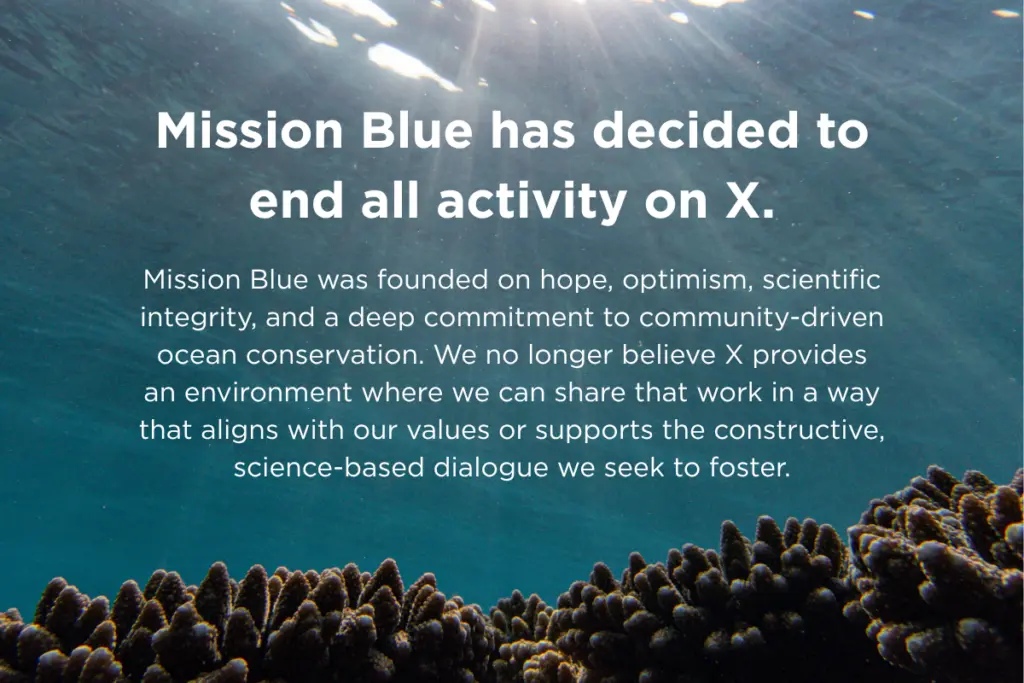
In a decisive strategic pivot reflecting a broader institutional reckoning across the environmental sector, ocean conservation organization Mission Blue has officially announced the termination of its active engagement on X (formerly Twitter). Founded by legendary oceanographer Dr. Sylvia Earle, the global initiative has spent decades championing marine protection through optimism, scientific rigor, and community-driven advocacy. However, the organization’s leadership has concluded that the digital ecosystem fostered on X no longer aligns with its core values of constructive dialogue, factual integrity, and solutions-oriented hope.
Effective immediately, Mission Blue will cease all new content publication, community engagement, and ad-spend on the platform. While the organization’s historical profile will remain accessible in a static, archived state for reference, its digital communications team will entirely redirect its resources toward platforms that it believes better cultivate respectful, curious, and welcoming communities. These alternative channels include Instagram, Facebook, LinkedIn, YouTube, and the organization’s direct-to-consumer email newsletter.
This departure is not merely an isolated public relations maneuver; it represents a growing case study in how mission-driven scientific entities evaluate the return on investment—not just financial, but ethical and reputational—of participating in high-friction social media environments. As digital town squares grapple with rising tides of polarization, automated misinformation, and the systematic erosion of scientific consensus, organizations dedicated to empirical reality are increasingly forced to ask a fundamental question: Does the reach provided by a platform outweigh the toxicity of its foundational architecture? For Mission Blue, the definitive answer is no.
Detailed Chronology: The Evolution of Mission Blue’s Digital Strategy
To understand the weight of Mission Blue’s departure from X, one must examine the arc of how environmental organizations originally embraced the platform and how the digital terrain shifted beneath their feet.
Phase 1: The Era of Optimistic Connectivity (2009–2018)
When Mission Blue first established its presence on Twitter, the platform was widely viewed by the non-profit sector as an unprecedented democratic megaphone. For an organization dedicated to identifying and protecting "Hope Spots"—special places that are critical to the health of the ocean—Twitter offered a frictionless way to bridge geographical divides.
During this formative era, the platform facilitated real-time dispatches from marine expeditions, rapid coordination among global scientific cohorts, and direct engagement with grassroots advocates, affectionately known within the network as "Ocean Champions." Threads detailing coral reef bleaching events, policy victories, and marine protected area (MPA) designations could be shared instantly with policymakers, journalists, and everyday ocean lovers. The environment, while occasionally contentious, was largely governed by norms that rewarded informational utility and rapid-fire networking.
Phase 2: Algorithmic Shifts and Cultural Polarization (2019–2022)
As the platform matured—and particularly following structural and algorithmic transformations implemented in subsequent years—the underlying mechanics of user engagement began to shift. Metrics that prioritized virality over nuance increasingly rewarded outrage, provocation, and division.
For scientific organizations, this shift created a hostile diagnostic dilemma. Posts grounded in complex data, peer-reviewed marine biology, and incremental conservation progress routinely struggled to gain traction against sensationalized or misleading content. More alarmingly, institutional accounts dedicated to environmental science found themselves frequently targeted by coordinated campaigns of hostility, climate change denialism, and anti-science rhetoric.
Phase 3: The Breaking Point and Strategic Realignment (2023–Present)
The final catalyst for Mission Blue’s exit involved a steady accumulation of operational friction. Leadership observed a sharp escalation in the prevalence of unmoderated misinformation, bad-faith actors, and an overall degradation of discourse regarding ecological crises. Discussions concerning biodiversity loss, climate change, and ocean acidification—topics requiring sober, multi-faceted analysis and collaborative problem-solving—were routinely hijacked by polarized rhetoric that undermined constructive dialogue.
Recognizing that its brand equity and psychological safety were being compromised by association, Mission Blue’s executive leadership initiated a comprehensive audit of its digital footprint. The resulting directive was clear: continuing to invest time, creative labor, and organizational prestige into X contradicted the very ethos of hope and respect upon which Mission Blue was built. The decision was finalized to archive the account and redistribute digital assets to platforms better suited to nurturing long-term, community-centric environmental stewardship.
Supporting Context & Metrics: The Mass Migration of Science from X
Mission Blue is far from an outlier. Its departure mirrors an accelerating exodus of academic institutions, scientific journals, conservation groups, public health agencies, and independent researchers who are systematically reevaluating their digital strategies in the wake of platform-wide policy and cultural shifts.
The Degradation of the Information Ecosystem
Independent audits and digital media studies conducted over the past three years reveal a troubling transformation in how scientific information circulates on X. Following reductions in Trust and Safety personnel, alterations to content moderation algorithms, and the dismantling of verified institutional badging systems, the visibility of authoritative scientific sources has noticeably declined.
- Amplification of Disinformation: Research into environmental discourse on the platform indicates that climate-skeptical narratives and misleading claims regarding renewable energy and marine conservation frequently achieve significantly higher algorithmic reach than consensus-backed scientific reports.
- The Cost of Engagement: Social media managers across the environmental non-governmental organization (ENGO) sector report spending an unsustainable amount of time mitigating targeted harassment, managing bad-faith arguments, and combating coordinated bot activity rather than educating and inspiring supporters.
- Brand Safety Concerns: For organizations funded by philanthropic donors, corporate partners, and public grants, appearing adjacent to toxic discourse or unverified commercial promotions poses a tangible risk to institutional fundraising and credibility.
Comparative Platform Dynamics
In pivoting away from X, Mission Blue has chosen to concentrate its digital footprint on platforms where community architecture supports deeper, more values-aligned engagement:
- Instagram: Highly visual and community-centric, Instagram allows Mission Blue to leverage its vast repository of underwater photography, short-form reels, and direct storytelling to evoke the visceral emotional connection people have with the ocean.
- Facebook: Despite its own challenges with algorithmic polarization, Facebook’s robust group infrastructure enables Mission Blue to cultivate dedicated, localized communities of advocates who actively coordinate regional conservation efforts.
- LinkedIn: Serving as the professional nexus for the organization, LinkedIn connects Mission Blue with policymakers, corporate sustainability officers, marine researchers, and institutional funders who engage in career-oriented, intellectual dialogue.
- YouTube: As the premier repository for long-form documentary content, webinars, and expedition logs, YouTube provides a permanent, searchable educational archive that stands in stark contrast to the ephemeral, high-velocity outrage cycle of X.
- Direct-to-Consumer Newsletters: By prioritizing email subscription models, Mission Blue reclaims ownership of its audience data and communication channels, ensuring that its vital updates bypass algorithmic gatekeepers entirely.
Official Statements and Institutional Perspective
The decision to leave X was approached with solemn deliberation, reflecting the organization’s foundational commitment to unity and constructive engagement.
In its official transition statement, Mission Blue emphasized the sacred trust it shares with its global community:
"We are all connected to the same ocean. Through our digital strategy, we seek to build a curious, welcoming online community. We cannot, in good faith, continue to use the X platform."
This sentiment strikes at the heart of modern organizational ethics. For decades, non-profits operated under the assumption that they needed to maintain a presence "everywhere" to maximize visibility. However, contemporary institutional theory suggests that digital presence without value alignment carries a hidden cost. When a platform’s overarching culture actively undermines the psychological safety and informational clarity required to discuss planetary crises, withdrawal becomes a statement of principle.
Dr. Sylvia Earle’s overarching philosophy—frequently summarized by her emphasis on "hope spots" and the power of collaborative action—underpins this move. Hope, in the context of marine conservation, is not passive optimism; it is an active, disciplined choice to focus human energy where it can yield measurable results. Continuing to shout into an algorithmic storm designed to divide rather than unite was deemed antithetical to the mission of fostering global ocean stewardship.
Future Outlook: The New Frontier of Ocean Advocacy
As Mission Blue closes the digital chapter on X, the organization’s leadership is looking forward with a renewed sense of focus and strategic clarity. The pivot marks a broader maturation in how environmental groups utilize digital technology—moving away from the frantic pursuit of vanity metrics (impressions, retweets, and algorithmic virality) and toward high-intent, community-deepening engagement.
1. Reclaiming Ownership of the Audience
By channeling displaced resources into its proprietary email newsletter ecosystem, Mission Blue is insulating itself from the whims of capricious platform algorithms. Direct communication ensures that Hope Spot updates, breaking marine policy alerts, and educational curricula land directly in the inboxes of dedicated supporters without mediation by commercial tech entities.
2. Investing in Immersive Storytelling
The reallocation of creative capital toward visual and video-first platforms (Instagram and YouTube) points toward an era of more immersive, emotive conservation storytelling. Protecting the high seas requires bridging the psychological gap between urban populations and remote marine ecosystems. Cinematic video, interactive maps of Hope Spots, and transparent field reports from scientists out at sea offer audiences a tangible window into the biosphere that brief text posts on X could rarely achieve.
3. Fostering Solutions-Oriented Coalitions
On platforms like LinkedIn and Facebook, Mission Blue will continue to foster high-value partnerships with governments, indigenous communities, corporate leaders, and academic institutions. By focusing on spaces where policy and professional implementation intersect, the organization can better leverage its influence to establish legally protected marine areas around the globe.
Conclusion
Mission Blue’s departure from X serves as a bellwether for the scientific community. It demonstrates that institutional integrity, mental safety, and factual fidelity must take precedence over the hollow pursuit of algorithmic reach. As the global community confronts existential environmental challenges, organizations like Mission Blue are reminding us that the tools we choose to communicate our message matter just as much as the message itself. By stepping away from the noise, Mission Blue is doubling down on what matters most: uniting humanity in a shared, hopeful crusade to protect the blue heart of our planet.



