

Executive Overview
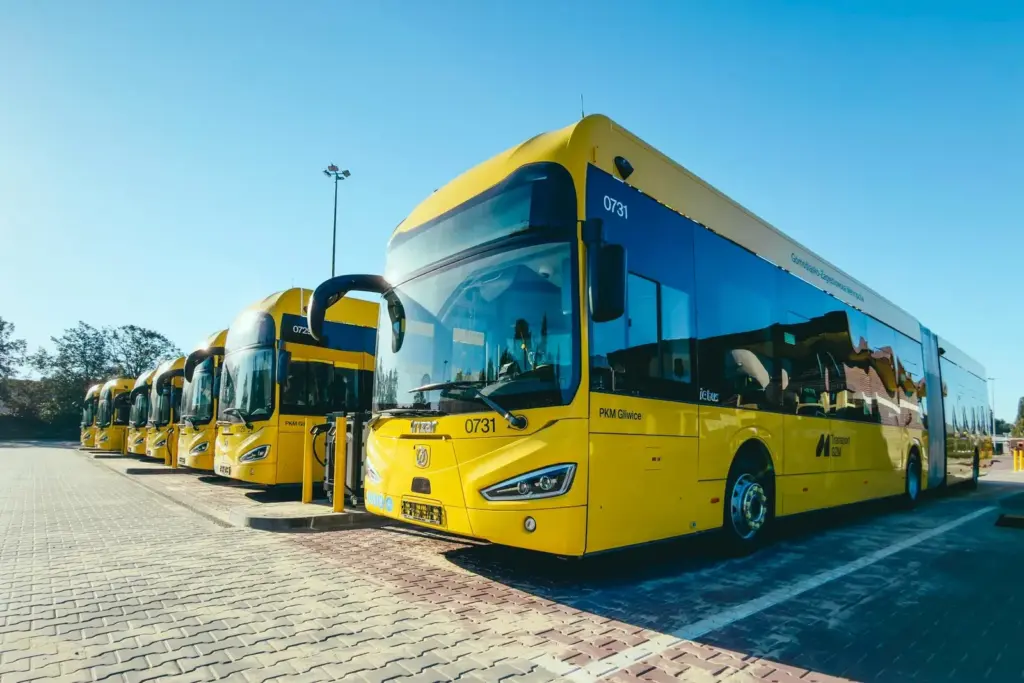
In a landmark milestone for European clean transportation, Spanish electric bus manufacturer Irizar e-mobility has successfully completed the delivery and technical commissioning of 31 battery-electric buses to the Górnośląsko-Zagłębiowska Metropolia (GZM). Operating in Poland’s densely populated Upper Silesian metropolitan area, this robust fleet expansion represents a fundamental leap forward in municipal decarbonization.
Officially showcased in July following rigorous early-year technical acceptances, the new transit vehicles are now actively serving four major municipal operators across Sosnowiec, Świerklaniec, Katowice, and Gliwice. Valued at roughly PLN 133.7 million (approximately $36 million), the overarching project is heavily backed—over 91% of eligible expenses—by Poland’s National Recovery Plan.
This multi-faceted initiative transcends a simple vehicle procurement. It includes the complete installation of 20 depot-charging units, extensive electrical infrastructure overhauls, comprehensive warranties, post-warranty maintenance, technical support, and dedicated operator training. As Poland steadily evolves into one of Europe’s most dynamic and established e-mobility markets, this deployment underlines a decisive shift away from internal combustion engine (ICE) fleets toward cleaner, quieter, and entirely zero-emission urban transit networks.
Detailed Chronology: From Concept to Asphalt
The integration of Irizar’s state-of-the-art electric fleet into the GZM transport network was not a sudden occurrence; it is the culmination of years of targeted strategic planning, contract amendments, and rigorous logistical execution.
The Foundation and Regional Distribution
The 31-bus strong fleet features a strategic mix of vehicle configurations tailored to the distinct operational profiles of the four participating municipal operators:
- PKM Sosnowiec: Integrated eight standard 12-meter buses into its daily routes.
- PKM Świerklaniec: Adopted seven standard 12-meter buses to service regional lines.
- PKM Katowice: Deployed nine large 18-meter articulated buses to handle high-capacity urban corridors.
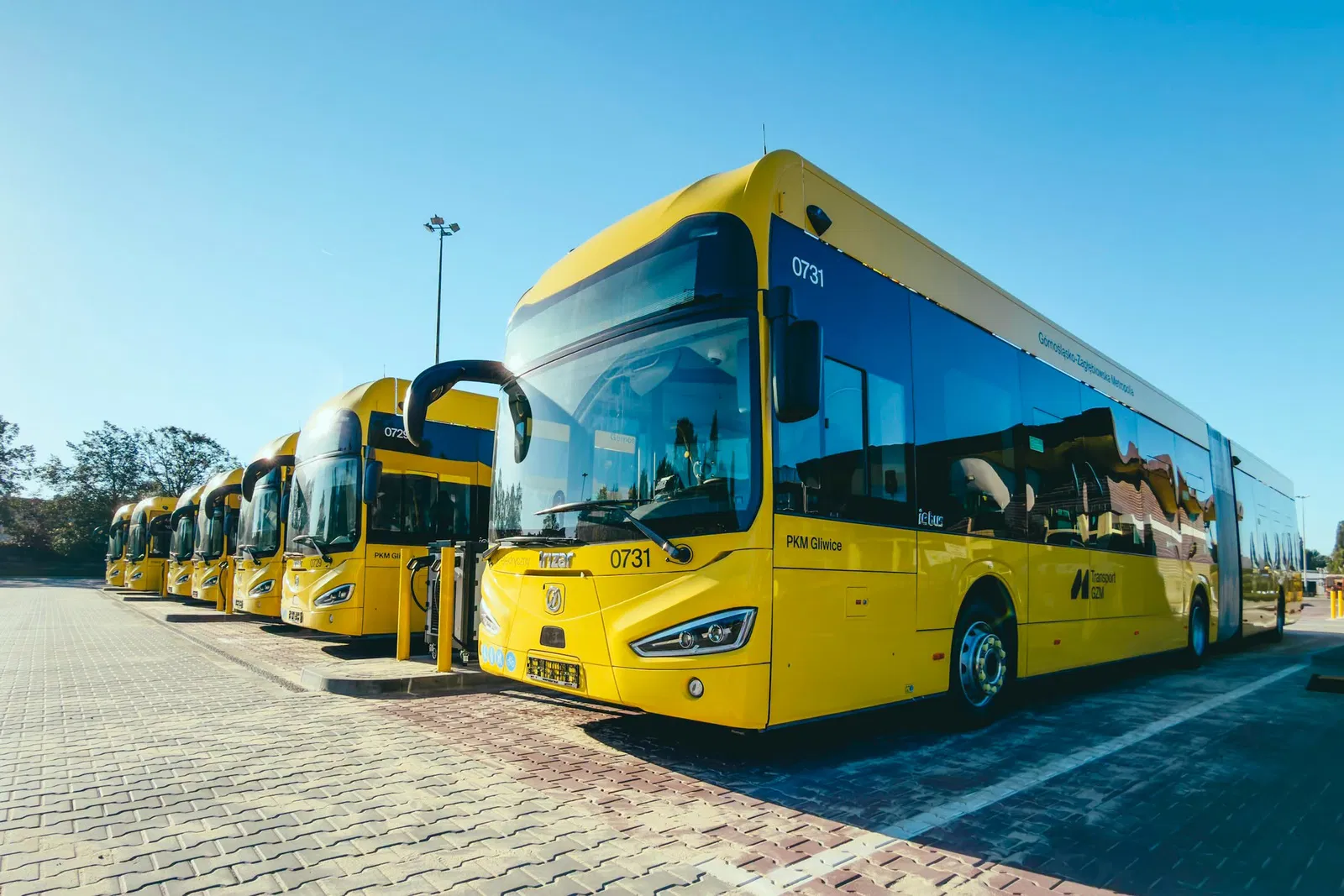
- PKM Gliwice: Received seven 18-meter articulated buses to optimize commuter-heavy routes.
This deployment model ensures that GZM gains extensive operational data regarding passenger load efficiencies, battery degradation metrics, and energy consumption patterns across both standard and articulated vehicle chassis.
Contract Milestones and Infrastructure Integration
The partnership between GZM and Irizar matured through several key institutional phases:
- Late 2025 Market Expansion: Irizar formally announced a wave of major Polish contracts covering 80 electric buses across multiple cities, solidifying its manufacturing presence beyond its previous modest footprint in Kraków.
- April 2026 Contract Amendment: A pivotal administrative step formally locked in the inclusion of 19 advanced chargers, along with comprehensive technical support and operator training packages, ensuring zero operational downtime post-delivery.
- Mid-2026 Technical Acceptance and Public Unveiling: Following successful winter and spring test phases, GZM officially presented the fleet to the public in July, marking the operational launch of the vehicles.
Supporting Context & Metrics: Financials, Hardware, and Regional Scope
The scope of the GZM electrification initiative extends far beyond the buses themselves. The financial and technical infrastructure required to support these heavy-duty electric vehicles is vast, technologically sophisticated, and deeply integrated into Poland’s national green energy strategies.
Financial Engineering and Funding
The project carries a hefty price tag of PLN 133.7 million (~$36 million). However, the heavy financial lifting is shouldered by national reform funds. More than 91% of eligible costs are directly subsidized through Poland’s National Recovery Plan (KPO), shielding municipal authorities from crippling local tax burdens while accelerating the country’s carbon-neutral mandates.
Charging Infrastructure Breakdown
A battery-electric fleet is only as reliable as its charging ecosystem. Irizar’s turnkey delivery included 20 depot-charging units designed to handle rapid overnight and turnaround charging sequences. The hardware configuration includes:
- 18 dual 80-kW chargers for simultaneous, balanced overnight depot re-fueling.
- 1 triple 120-kW charging unit for flexible intermediate top-offs.
- 1 high-power 180-kW charger designed for rapid-charge operational demands.
The Broader GZM Electrification Landscape
The Irizar delivery is merely one component of GZM’s broader Zielony Transport GZM (Green Transport GZM) initiative. When viewed in aggregate, the numbers reveal a massive infrastructural overhaul:
- Total Battery-Electric Procurement: 73 battery-electric buses are being funneled to four municipal operators under National Recovery Plan projects, with 42 supplied by Solaris and 31 by Irizar.
- Charging Network: A collective total of 45 charging units are being deployed across the metropolitan area.
- Technological Diversification: GZM is not putting all its eggs in one basket. Alongside its battery-electric fleets, the region has already received eight hydrogen fuel-cell buses under the Hydrogen GZM project. Furthermore, a subsequent phase of the Green Transport GZM program is already queued to bring an additional 24 battery-electric buses and 16 chargers online.
Irizar’s Wider Polish Footprint
Irizar e-mobility’s success in Upper Silesia mirrors its broader expansion across Poland. Having previously established a small foothold with four buses in Kraków back in 2023, the Spanish manufacturer has rapidly scaled its presence:
- Kraków: Expanding its existing fleet by adding 22 new 12-meter Irizar buses.
- Bielsko-Biała: Securing an order for 12 standard 12-meter buses.
- Nowy Sącz: Introducing five compact 10-meter vehicles to navigate narrower historic streets.
- Warsaw: Finalizing an order for 10 specialized 10-meter buses slated for late 2026 delivery—complete with an option for 10 more and integrated solar panels rated at over 1 kW to assist auxiliary electrical systems.
Official Statements and Industry Perspective
While specific individual quotes from municipal leaders remain closely tied to regional press briefings, the consensus from transit authorities and industry analysts points toward a transformative era for Polish public transport.
Regional transport coordinators have repeatedly emphasized that transitioning to zero-emission fleets is no longer a futuristic aspiration, but an immediate public health and environmental necessity. Industrial analysts monitoring the Central and Eastern European (CEE) transit market note that Poland has emerged as a premier battleground for European e-bus manufacturers.

By leveraging the National Recovery Plan, Polish metropolitan areas like GZM have bypassed traditional municipal budget constraints. They are effectively forcing transit operators to modernize, upskill their technical workforces, and adopt unified software platforms for fleet telematics and energy management.
For Irizar, cementing its reputation in Poland represents a critical strategic victory. Competing against deeply entrenched domestic and regional giants like Poland’s own Solaris, Irizar’s ability to deliver comprehensive turnkey solutions—spanning vehicle manufacturing, heavy-duty depot charging architecture, and long-term maintenance agreements—has proven to be its primary competitive differentiator.
Future Outlook: The Road Ahead for GZM and Polish E-Mobility
As the dust settles on the initial roll-out of the 31 Irizar buses, the focus in Upper Silesia is already shifting from the introduction of zero-emission technology to its large-scale expansion and optimization.
Phase Two and Beyond
The roadmap for GZM leaves little room for complacency. With the current batch of 73 battery-electric buses and associated charging arrays successfully integrated, planning is already underway for the next tranche of the Green Transport GZM framework. This next wave will add another 24 battery-electric buses and 16 high-capacity chargers, further shrinking the footprint of older diesel-powered transit assets.
Technological Co-existence: Battery vs. Hydrogen
One of the most fascinating aspects of GZM’s long-term strategy is its dual-track approach to zero-emission mobility. While battery-electric buses (such as those from Irizar and Solaris) dominate high-frequency, predictable urban corridors, GZM is simultaneously testing the waters with hydrogen fuel-cell technology through its Hydrogen GZM project.
This dual-technology strategy provides municipal operators with invaluable comparative data on lifecycle costs, winter climate performance (a critical factor in Polish winters), and grid stability requirements. Over the next decade, GZM’s operational insights will likely serve as a blueprint for other European metropolitan regions navigating the complex transition away from fossil fuels.
Conclusion
The arrival of Irizar’s 31 battery-electric buses in the Górnośląsko-Zagłębiowska Metropolia is much more than a routine commercial delivery. It is a physical manifestation of Europe’s green transition happening in real-time. Backed by robust national funding, sophisticated charging infrastructure, and a clear-eyed multi-technology strategy, Poland’s public transit network is rapidly cementing its status as one of the most progressive, forward-thinking urban mobility ecosystems on the continent.



