

Executive Overview
In an era where digital platforms serve as the primary lifeblood for global advocacy, non-profit organizations face an increasingly complex calculus regarding where they invest their digital footprint. On one side lies the immense reach of legacy social networks; on the other lies a rapidly deteriorating digital landscape characterized by algorithmic polarization, unchecked misinformation, and a hostile civic discourse.
For Mission Blue—the internationally renowned ocean conservation foundation founded by legendary oceanographer Dr. Sylvia Earle—this tension has reached a breaking point.
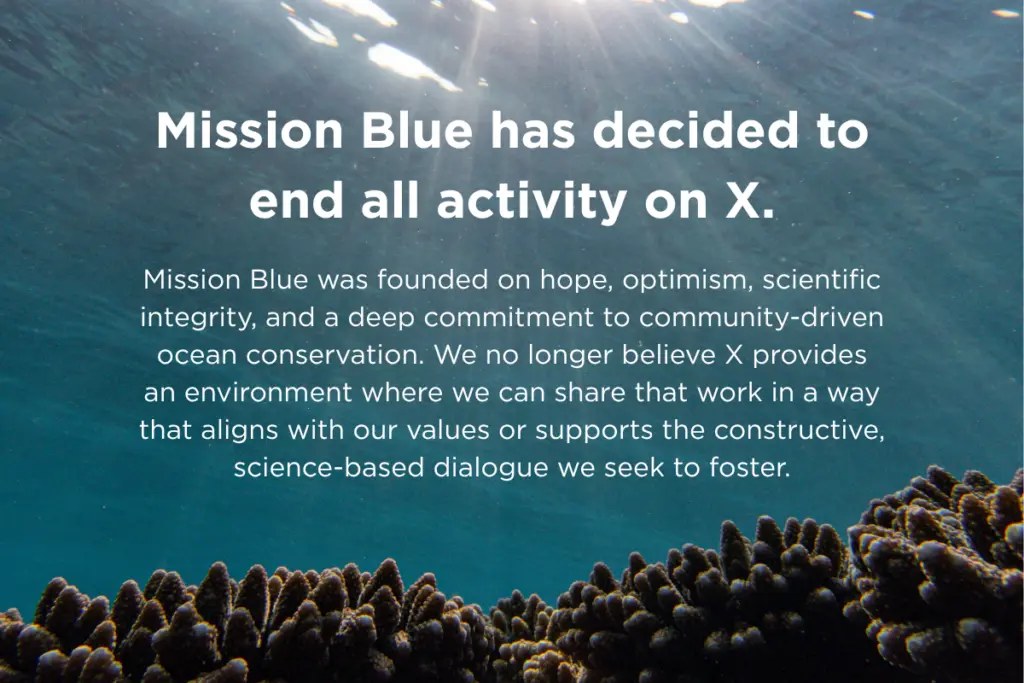
In a definitive strategic pivot, Mission Blue has officially announced the cessation of all active operations on X (formerly Twitter). Moving forward, the foundation will redirect its resources, community engagement initiatives, and digital storytelling to alternative channels, specifically Instagram, Facebook, LinkedIn, and YouTube.
This decision is not merely a routine administrative update; it represents a watershed moment for environmental NGOs navigating the modern digital ecosystem. Mission Blue’s departure underscores a growing institutional consensus: that the foundational architecture and cultural climate of certain social media platforms are no longer compatible with evidence-based advocacy, scientific integrity, and constructive public discourse.
By stepping away from X, Mission Blue is drawing a hard line in the digital sand, prioritizing the psychological safety and intellectual rigor of its community over raw metrics and reach. This report provides a comprehensive examination of Mission Blue’s departure from X, analyzing the institutional motivations, the broader socio-technological shifts driving this migration, the state of environmental communication in the digital age, and the foundation’s strategic roadmap for the future.
Detailed Chronology: The Evolution and Exit of Mission Blue on X
To understand the weight of Mission Blue’s departure, it is necessary to examine the historical trajectory of the organization’s engagement with the platform formerly known as Twitter.
The Early Years: Building a Blue Community
When Mission Blue first established its presence on Twitter, the platform was heralded as a revolutionary tool for democratization, real-time communication, and grassroots mobilization. For an organization dedicated to safeguarding the world’s oceans—vast, interconnected, and severely underrepresented in traditional media—Twitter offered an unprecedented direct pipeline to a global audience.
In its nascent stages, Mission Blue utilized the platform to:
- Connect with Field Scientists: Marine biologists, oceanographers, and conservationists deployed in remote corners of the globe could beam real-time updates, research breakthroughs, and crisis reports directly to a centralized digital hub.
- Empower Hope Spots Champions: Local leaders spearheading grassroots campaigns to protect specific marine ecosystems found a vocal amplifier in Mission Blue’s digital network, sharing victories and rallying international solidarity.
- Foster Optimistic Discourse: True to Dr. Sylvia Earle’s lifelong ethos of "hope, optimism, and dedication," the feed functioned as an educational forum where marine wonder was celebrated, and collaborative solutions to overfishing, plastic pollution, and climate change were debated in good faith.
The Shift: A Transforming Digital Ecosystem
Over the course of several years, however, the foundational ethos of the platform began to warp. Following high-profile corporate restructuring, leadership changes, and shifts in content moderation policies, the operational environment on X experienced a profound degradation.
For Mission Blue, the warning signs accumulated gradually before crystallizing into an institutional crisis:
- The Rise of Science Skepticism: Content that directly undermined peer-reviewed climate science, marine biology, and ecological urgency began to gain algorithmic traction, often platformed by verified accounts that drowned out credible researchers.
- Amplification of Hostility: Constructive dialogue—the lifeblood of democratic environmental stewardship—was increasingly supplanted by polarized vitriol, bad-faith arguments, and coordinated harassment campaigns targeting conservationists.
- Erosion of Trust: As the baseline civility of the platform deteriorated, the cognitive load required to parse signal from noise became unsustainable for a lean non-profit communications team.
The Tipping Point and Final Decision
The inflection point arrived when Mission Blue’s leadership confronted a stark contradiction: the organization exists to build a curious, welcoming, and interconnected global community dedicated to the health of the ocean. Yet, the architectural incentives of X actively fostered division, hostility, and anti-science sentiment.
Recognizing that continued participation lent tacit legitimacy to a degraded information ecosystem, Mission Blue made the definitive call to sever active ties. Eschewing a quiet fade-out, the organization chose transparency, releasing a public statement explaining that it could not, in good faith, continue to utilize the platform.
Crucially, Mission Blue opted to archive its historical profile rather than delete it entirely. This ensures that years of valuable educational threads, historical documentation of Hope Spots, and archival resources remain accessible to the public, even as the organization halts all incoming content creation and community management on the site.
Supporting Context & Metrics: The Mass Exodus from X and the Crisis of Environmental Misinformation
Mission Blue’s departure from X does not occur in a vacuum. It is part of a broader, accelerating migration of academic institutions, journalistic outlets, public health organizations, and environmental groups away from the platform.
The Macro Trend: Institutional Disengagement
In the wake of sweeping changes to trust-and-safety teams, the relaxation of content moderation guidelines, and the monetization of platform verification, researchers and civil society organizations have documented a steep rise in toxic content.
According to various digital media watchdogs and academic studies tracking platform health:
- Surge in Climate Misinformation: Content explicitly denying the severity of climate change or mocking marine conservation efforts has seen a resurgence, often amplified by algorithmic preference for high-engagement, emotionally charged controversy.
- The Academic Flight: Major universities, scientific journals, and research foundations—long-time staples of the Twitter ecosystem—have systematically scaled back or entirely shuttered their accounts, citing a hostile environment for evidence-based dialogue.
- The Brand Safety Calculus: For non-profits dependent on philanthropic donations and corporate partnerships, brand association with an unregulated digital public square poses significant reputational and financial risks.
The Unique Vulnerability of Environmental Communication
Environmental communication faces distinct challenges in the modern social media ecosystem. Unlike political debates that often center on policy interpretation, ecological communication relies heavily on complex, long-form empirical data, slow-moving ecological recovery timelines, and nuanced scientific consensus.
Platforms optimized for short, snappy, conflict-driven engagement (such as X) are fundamentally hostile to this type of nuance. Complex marine issues—such as the multi-faceted impacts of deep-sea mining, acidification, and coral bleaching—are easily flattened into polarizing talking points or outright dismissed by coordinated disinforming networks.
When an organization dedicated to the global ocean finds its feeds inundated with anti-science rhetoric and bad-faith hostility, the return on investment for digital engagement plummets. The time and emotional labor expended by communications professionals moderating toxic comment sections or refuting fabricated claims diverts critical resources away from actual conservation work on the water.
Official Statements and Institutional Philosophy
The philosophical underpinning of Mission Blue’s exit is inextricably linked to the vision of its founder, legendary oceanographer and National Geographic Explorer-in-Residence Dr. Sylvia Earle. Often referred to as "Her Deepness," Dr. Earle has long championed the concept of "ocean hope"—the belief that humanity still possesses the narrow window of opportunity required to reverse ecological collapse, provided we act collectively, rationally, and with deep empathy for the natural world.
The Philosophy of "Ocean Hope"
In articulating the reasons behind the platform exit, Mission Blue’s communications leadership emphasized that digital strategy must mirror institutional values.
"We are all connected to the same ocean," the foundation noted in its official transition bulletin. "Through our digital strategy, we seek to build a curious, welcoming online community. We cannot, in good faith, continue to use the X platform."
This statement strikes at the heart of modern digital ethics. For decades, non-profits operated under the assumption that they needed to be present on every platform, regardless of the cultural cost, simply because "that is where the eyeballs are." Mission Blue’s decision challenges this utilitarian calculus. It asserts that the quality of engagement, the psychological safety of the community, and the integrity of the message supersede raw audience metrics.
Redefining Community Standards in Conservation
By walking away from a platform boasting hundreds of millions of users, Mission Blue is sending an authoritative signal to the wider non-profit sector: digital presence must not come at the expense of institutional integrity.
Conservation requires trust. If an organization dedicated to preserving the life support systems of our planet is forced to operate in a digital town square overrun by hostility and institutionalized science denial, its credibility is inevitably compromised. By pivoting away, Mission Blue reclaims its narrative autonomy, ensuring that its communications remain anchored in hope, education, and actionable science.
Future Outlook: Charting a Sustainable Digital Course
Closing the chapter on X does not mean Mission Blue is retreating from the digital realm. On the contrary, the foundation is executing a sophisticated, deliberate reallocation of its digital resources to platforms that better align with its mission of fostering vibrant, respectful, and visually compelling educational communities.
The New Digital Portfolio
Mission Blue’s digital engagement strategy is now anchored across four primary powerhouses, each serving a distinct function in the foundation’s outreach architecture:
- Instagram: Serving as the visual crown jewel of the foundation’s digital outreach, Instagram allows Mission Blue to leverage breathtaking underwater photography, short-form reels of marine expeditions, and immersive storytelling to connect emotionally with audiences. The platform’s community standards and visual-first nature provide a more fertile ground for inspiring ocean wonder.
- Facebook: Acting as a vital hub for community building, Facebook enables the foundation to mobilize multi-generational demographics, host deep-dive discussions on Hope Spots, and coordinate grassroots advocacy campaigns with localized chapters and international supporters.
- LinkedIn: Recognizing that ocean conservation is profoundly intertwined with global economics, corporate policy, and marine governance, Mission Blue utilizes LinkedIn to engage with thought leaders, corporate sustainability officers, policymakers, and scientific institutions driving systemic environmental change.
- YouTube: As the premier repository for long-form educational content, documentary-style features, and deep-dive expedition logs, YouTube empowers Mission Blue to showcase comprehensive narratives about marine protected areas and interviews with leading marine scientists.
Direct-to-Consumer: The Resurgence of the Newsletter
Beyond third-party social media platforms—which remain perpetually vulnerable to algorithmic shifts, corporate whim, and platform degradation—Mission Blue is heavily investing in direct-to-consumer communication channels, most notably its official email newsletter.
In an era of rented digital land, owning one’s audience through direct communication channels is paramount. By encouraging supporters to subscribe directly to its mailing list, Mission Blue ensures an unmitigated, algorithm-free pipeline for delivering Hope Spot updates, critical conservation alerts, and inspiring ocean stories straight to the inboxes of its global community.
Conclusion: A Blueprint for the Environmental Movement
Mission Blue’s departure from X is more than an isolated corporate realignment; it is a bellwether for the future of environmental advocacy in the digital age. As social media platforms grapple with governance crises, ideological polarization, and the spread of anti-science rhetoric, civil society organizations are being forced to re-evaluate their digital dependencies.
By prioritizing constructive dialogue, scientific integrity, and an optimistic community ethos over the hollow metrics of a toxic digital ecosystem, Mission Blue has charted a courageous and principled course. As the foundation dives into its next chapter across Instagram, Facebook, LinkedIn, YouTube, and its direct newsletter network, it extends an open invitation to the global community: to leave behind the noise of the digital wilderness and rejoin a unified, hopeful movement dedicated to healing the blue heart of our planet.



