

Executive Overview
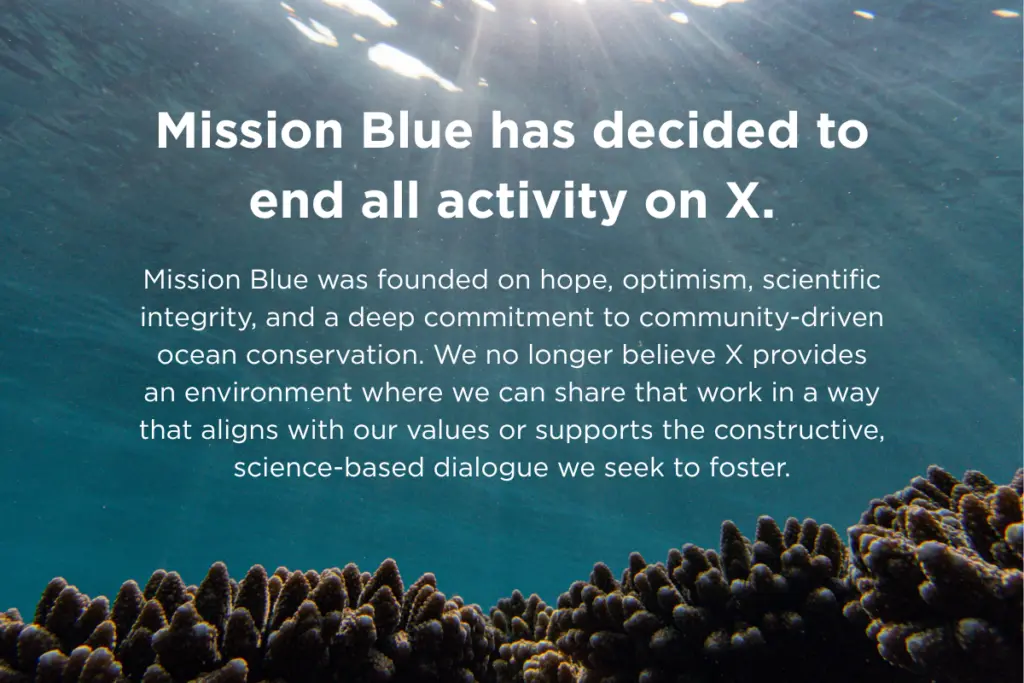
In an era defined by rapid digital transformation and shifting socio-political landscapes, organizations dedicated to global advocacy face complex decisions regarding their communication channels. Mission Blue, the renowned ocean conservation foundation founded by legendary oceanographer Dr. Sylvia Earle, has officially announced that it is ending its active use of X (formerly Twitter). The decision marks a significant pivot in the organization’s digital outreach strategy, moving away from a platform that has experienced exponential cultural and algorithmic shifts, and refocusing its energy toward ecosystems that foster constructive, science-backed dialogue.
For years, social media platforms served as vital public squares where environmental scientists, policymakers, and impassioned citizens could converge instantly to share breaking discoveries, coordinate conservation efforts, and rally global support for fragile marine ecosystems. However, as the digital terrain evolves, many non-profit organizations and scientific bodies are reassessing the utility and safety of maintaining a presence on platforms where misinformation frequently vies with peer-reviewed facts.
Mission Blue’s departure from X is not merely a logistical migration; it is a principled stand. By stepping away from an environment characterized by rising hostility and the systemic spread of anti-science rhetoric, the foundation is prioritizing the integrity of its message. Moving forward, Mission Blue will channel its resources into platforms—namely Instagram, Facebook, LinkedIn, and YouTube—that better align with its core values of hope, optimism, and community-driven action. This report provides an in-depth examination of Mission Blue’s strategic exit from X, contextualizing the move within broader trends of scientific communication, examining the shifting nature of digital platforms, and outlining the foundation’s future digital roadmap for global ocean advocacy.
Detailed Chronology: The Evolution and Exit of an Environmental Advocate
To understand the weight of Mission Blue’s recent decision, one must examine the trajectory of the organization’s digital engagement over the past decade. When Mission Blue established its presence on the platform then known as Twitter, the digital environment was markedly different. It was an era characterized by optimistic connectivity, where real-time microblogging offered a revolutionary way to bridge the gap between researchers in remote field stations and the global public.
Phase 1: The Era of Discovery and Connection (Early Adoption)
In its foundational years on the platform, Mission Blue utilized the tool to amplify the voices of "Hope Spot" champions—local leaders, indigenous communities, and marine biologists fighting to protect critical marine areas around the globe. The platform allowed for rapid-fire updates from expeditions, immediate sharing of peer-reviewed marine science, and direct engagement with an audience eager to learn about the ocean. For a small, globally focused non-profit, the platform acted as a megaphone, democratizing access to conservation news and allowing grassroots movements to gain international visibility.
Phase 2: Algorithmic Shifts and Cultural Polarization
As the years progressed, however, the structural and cultural architecture of the platform underwent profound transformations. Changes in ownership, leadership, and content moderation policies led to a palpable shift in the user experience. The algorithms increasingly favored sensationalism, outrage, and viral conflict over nuanced, educational discourse. For environmental organizations, this shift created a hostile ecosystem where complex ecological arguments and factual reporting on climate change and marine degradation were frequently drowned out—or worse, actively attacked—by organized campaigns of disinformation and climate denialism.
Phase 3: The Tipping Point and Strategic Realignment
The tipping point for Mission Blue arrived when the internal ethos of the platform no longer resembled the respectful, solutions-oriented community the foundation sought to cultivate. The proliferation of unverified content, hostile interactions, and the undermining of foundational scientific principles made continued participation untenable. Recognizing that their brand association with the platform could undermine their core mission of inspiring hope and driving informed action, leadership made the definitive choice to halt all active publishing.
While the historic archive of Mission Blue’s tweets will remain viewable for posterity, the channel is now officially dormant. The organization’s digital team has formally redirected its focus toward cultivating deeper, more meaningful engagements on alternative platforms where the digital culture still supports constructive, community-led environmental stewardship.
Supporting Context & Metrics: The Mass Migration of Science from X
Mission Blue’s departure is far from an isolated incident. Across the scientific, academic, and non-profit sectors, a quiet yet massive exodus from X has been underway for months. Understanding this macro-trend requires looking closely at the metrics of platform degradation and the shifting preferences of science communicators globally.
The Rise of Scientific Disinformation
Recent studies in digital sociology and communication science indicate a sharp rise in the visibility of anti-science content on X following policy rollbacks related to content moderation and automated threat detection. Topics ranging from climate change mitigation to ocean acidification have become lightning rods for coordinated disinformation campaigns. For organizations whose entire mandate relies on absolute fidelity to empirical data and peer-reviewed research, sharing space with unchecked misinformation poses a severe reputational and educational risk.
Algorithmic Bias Toward Outrage
Data analytics firms specializing in social media ecosystems have consistently demonstrated that X’s recommendation algorithms heavily reward posts that generate high levels of friction, anger, and polarization. In contrast, hopeful, educational, and constructive content—the very pillars of Mission Blue’s philosophy—frequently suffer from suppressed reach unless amplified by controversy. For a movement founded on the principle of "ocean hope," an algorithm engineered to monetize despair and division is fundamentally incompatible with institutional goals.
The Multi-Platform Diversification Strategy
In response to these platform-level changes, environmental NGOs are increasingly adopting a multi-tiered diversification strategy. Rather than placing all digital eggs in one basket, organizations are recognizing the distinct advantages offered by different social media ecosystems:
- Visual Storytelling (Instagram & YouTube): Marine conservation is inherently visual. The breathtaking beauty of coral reefs, the majesty of pelagic species, and the raw power of ocean expeditions are best communicated through high-resolution imagery, immersive video reels, and documentary-style long-form content.
- Professional Networking (LinkedIn): Environmental advocacy requires heavy collaboration with corporate partners, policymakers, institutional donors, and marine policy experts. LinkedIn offers a professional, highly literate environment where complex environmental strategies can be discussed with industry leaders.
- Community Building (Facebook & Direct Newsletters): Fostering long-term engagement requires spaces where supporters can form enduring communities and receive curated updates directly in their inboxes, free from algorithmic interference.
Official Statements and Institutional Philosophy
The philosophical underpinnings of Mission Blue’s decision are deeply rooted in the vision of its founder, Dr. Sylvia Earle. Often referred to as "Her Deepness," Dr. Earle has long championed the concept that saving the ocean requires inspiring humanity through wonder, education, and collective resolve rather than alienating audiences through cynicism and division.
In official communications regarding the platform exit, Mission Blue representatives emphasized that the organization’s digital strategy must always mirror its real-world conservation ethos:
"We are all connected to the same ocean. Through our digital strategy, we seek to build a curious, welcoming online community. We cannot, in good faith, continue to use the X platform."
This statement underscores a vital truth in modern non-profit management: digital spaces are not neutral tools. They shape the tone, temperament, and psychological state of the communities that inhabit them. When a digital public square ceases to be constructive and instead fosters hostility and scientific denialism, walking away becomes an act of institutional preservation.
Furthermore, leadership has underscored that this pivot is designed to deepen engagement rather than diminish it. By reallocating the hours and creative energy previously spent managing X-specific content crises, Mission Blue’s digital team can now focus on producing richer, more impactful educational resources across channels where audiences are actively seeking hope-driven conservation narratives.
Future Outlook: Charting a Course for Digital Ocean Advocacy
As Mission Blue closes the chapter on its active presence on X, the organization is looking forward with a revitalized digital roadmap designed to maximize its global impact leading up to critical international conservation milestones.
Deepening Engagement on Core Channels
The foundation’s immediate focus is on optimizing its presence across its remaining primary channels:
- Instagram: Serving as the visual vanguard for Hope Spots, Instagram will continue to host striking photography, short-form educational reels, and real-time updates from marine expeditions.
- Facebook: Acting as a central hub for community discussion, event coordination, and mobilization around grassroots marine protection initiatives.
- LinkedIn: Providing a platform for thought leadership, corporate sustainability partnerships, and deep dives into the economics and policy of marine protected areas (MPAs).
- YouTube: Housing longer-format documentary content, expert interviews, and immersive deep-dives into the health of the global ocean.
The Power of Direct-to-Consumer Communication: The Newsletter
Perhaps the most crucial component of Mission Blue’s future-proofing strategy is its emphasis on direct-to-supporter communication via its official newsletter. In an age where social media algorithms can arbitrarily restrict reach, alter visibility, or expose users to toxic environments, the traditional email newsletter remains a sacred, direct line of communication.
By encouraging followers to subscribe to regular updates, Mission Blue ensures that vital news regarding Hope Spot designations, policy victories, and urgent calls to action land directly in the hands of supporters, unmediated by opaque algorithms or hostile platform dynamics.
Conclusion: A Beacon of Hope in a Fragmented Digital Sea
Mission Blue’s departure from X serves as a bellwether for the broader environmental movement. It demonstrates that mission-driven organizations are increasingly unwilling to compromise their institutional integrity or subject their communities to toxic digital environments for the sake of mere visibility.
By turning its back on hostility and leaning into spaces designed for education, visual storytelling, and respectful dialogue, Mission Blue is proving that ocean conservation is guided by the same principle that Dr. Sylvia Earle has championed for decades: a resolute, unbreakable commitment to hope. As the foundation steers its digital vessel toward brighter horizons, it invites its global community of ocean lovers, scientists, and champions to join the journey—ensuring that the voice for the blue heart of our planet remains clear, resonant, and profoundly optimistic.



