As the global community confronts the compounding crises of rapid climate change and severe biodiversity loss, the scientific world is increasingly looking backward to move forward. Historical archives—long sequestered in physical library stacks, museums, and private collections—harbor critical baselines of environmental data. For two decades, the Biodiversity Heritage Library (BHL) has served as the vanguard of this archival resurrection. Growing into the world’s largest open-access digital library for biodiversity literature, BHL now houses a sprawling corpus exceeding 64 million pages.
Yet, digitizing published texts is only the first phase of a broader scientific imperative. Buried within handwritten field journals, notebooks, and informal bird lists of 19th- and early 20th-century naturalists lies an immense, untapped repository of historical ecological data. Extracting these fragmented, highly contextual observations has historically posed a monumental bottleneck for researchers.
Enter a pioneering collaboration between Harvard University’s Ernst Mayr Library (EML) and the BHL: a project leveraging advanced artificial intelligence to transcribe over 2,200 pages of manuscript materials belonging to Walter Faxon, a distinguished 19th-century zoologist and field ornithologist. Spearheaded by Harvard PhD candidate and 2026 Pforzheimer Fellow Mohit Mandal, this initiative bridges the gap between fragile historical artifacts and modern global biodiversity databases like the Global Biodiversity Information Facility (GBIF). By pairing cutting-edge AI large language models with rigorous human oversight, this project charts a viable, scalable path for transforming analog historical observations into actionable digital data streams, ultimately empowering contemporary efforts to mitigate accelerating species decline.
Detailed Chronology: From 19th-Century Fieldwork to 21st-Century AI
To understand the weight of the data now being integrated into the BHL, one must trace the timeline from Faxon’s meticulous 19th-century observations to the modern technological interventions that finally brought them into the digital light.
The Life and Observational Rigor of Walter Faxon (1848–1920)
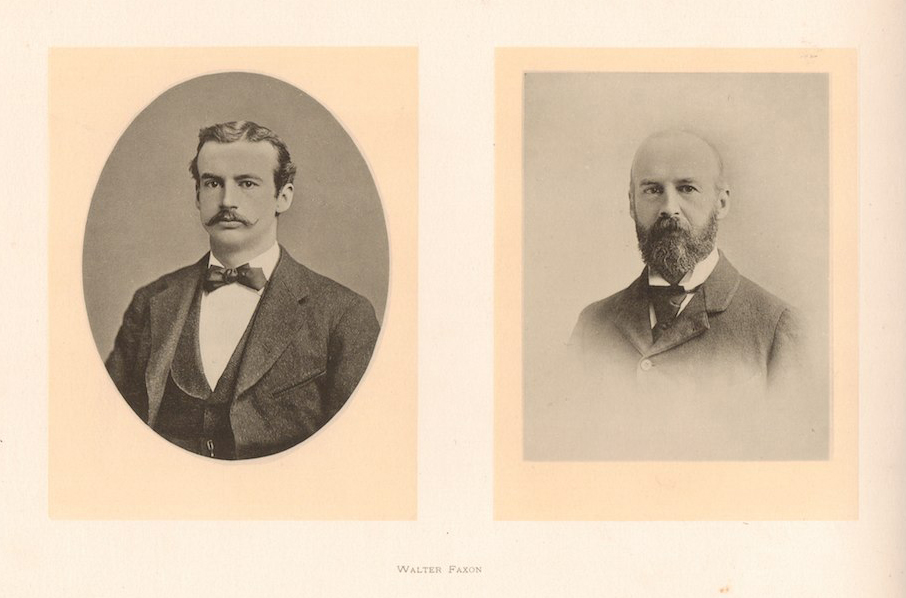
Born in Massachusetts on February 4, 1848, Walter Faxon dedicated his life to the rigorous study of the natural world. Serving as an Assistant Professor of Zoology at Harvard University from 1872 to 1886 and as the Curator of the Invertebrate Department at Harvard’s Museum of Comparative Zoology (MCZ) for an astonishing 46 years (1874–1920), Faxon was primarily renowned for his expertise on crustaceans and mollusks.
However, ornithology was his lifelong avocation—one he pursued with the identical empirical precision that defined his institutional curatorial work. A Fellow of the American Ornithologists’ Union from 1901 to 1904, Faxon spent nearly six decades in the field. Biographers and contemporaries frequently noted his exceptional acuity of sight, hearing, and intellect, combined with a scrupulous fear of error. In the words of his peers, the identification of a bird by Faxon was never questioned.
Spanning 33 years from 1886 to 1919, Faxon compiled thousands of bird observations within manuscript field journals, notebooks, and species lists. These records captured species names, exact dates, localities, and individual counts, frequently supplemented by granular details regarding sex, life stages, and specific vocalizations.
Modern Digitization and Fellowship Infrastructure (2025–2026)
Following Faxon’s death in 1920, his ornithological papers were preserved within the collections of the Ernst Mayr Library at Harvard’s MCZ, alongside extensive correspondence with contemporaries like William Brewster. For decades, these manuscripts remained accessible only to physical visitors.
The turning point arrived in 2025, when the collection was prioritized for high-resolution imaging under the auspices of the Harvard Library Collections Digitization Program, aligned specifically with institutional themes focusing on climate change and environmental history.
Building upon this digital foundation, the EML hosted a prestigious Pforzheimer Fellowship in the summer of 2026. From June 1 to August 31, 2026, Mohit Mandal—a Harvard PhD candidate in Anthropology—took the helm of the project. Mandal’s core mandate was to evaluate, test, and implement AI-powered transcription workflows capable of converting Faxon’s notoriously complex handwritten notebooks and species lists into searchable, machine-readable digital text.
Supporting Context & Metrics: Navigating the Technological Frontier
The integration of handwritten historical manuscripts into modern databases like BHL and GBIF is fraught with technical hurdles. Mandal’s fellowship provided critical empirical data regarding the capabilities, limitations, and operational mechanics of contemporary artificial intelligence models when applied to archival zoological literature.
Model Evaluation: ChatGPT vs. Google Gemini vs. Claude
Mandal’s methodology began with a rigorous comparative evaluation of leading generative AI platforms, specifically assessing ChatGPT and Google Gemini for their efficacy in paleographic transcription—the interpretation of historic handwriting.
Google Gemini: Initial testing revealed that Gemini possessed a slight edge in raw orthographic accuracy when deciphering difficult cursive scripts. However, its utility was severely hamstrung by restrictive file upload limitations and a lack of software ecosystem flexibility, as it integrated primarily with Google Workspace tools and offered limited interoperability with standard word processing formats.
ChatGPT: While presenting occasional challenges in initial raw transcription accuracy compared to Gemini, ChatGPT proved vastly superior in flexibility, user-friendliness, and iterative prompting. Mandal was able to train and adapt the model through custom specifications, establishing stylistic consistency across batch transcriptions.
Claude: To ensure verification and quality control, initial transcripts generated via ChatGPT were cross-examined and verified using Anthropic’s Claude. This dual-model approach successfully leveraged the complementary strengths of both architectures, elevating overall fidelity.
Metrics of the Faxon Collection
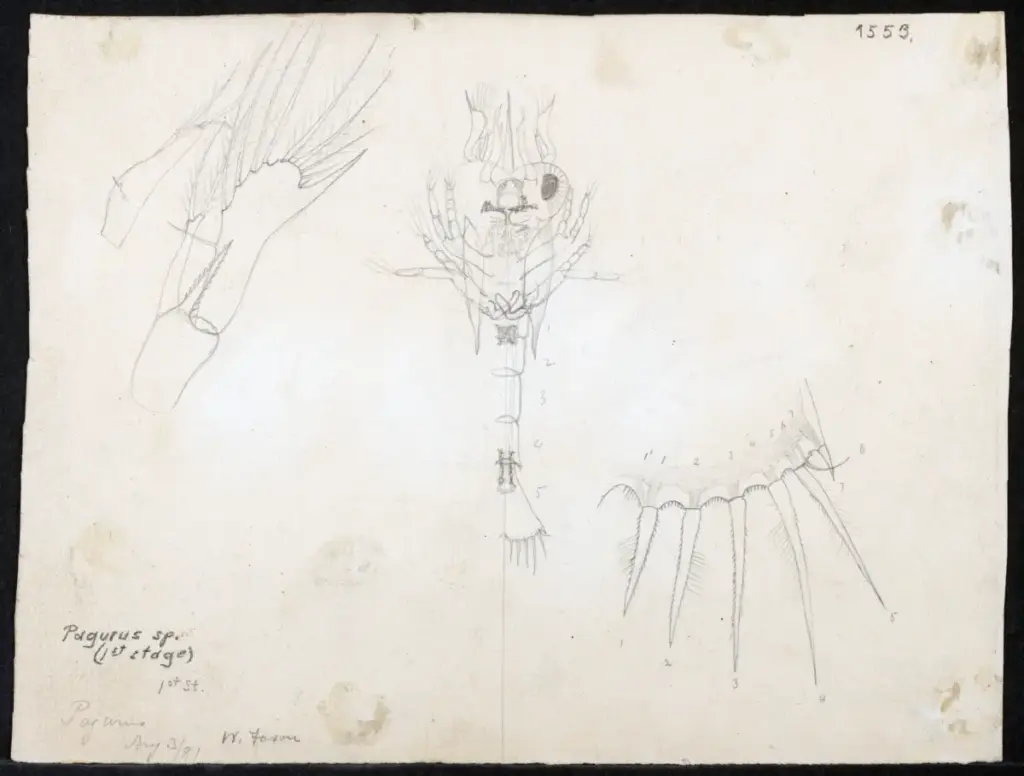
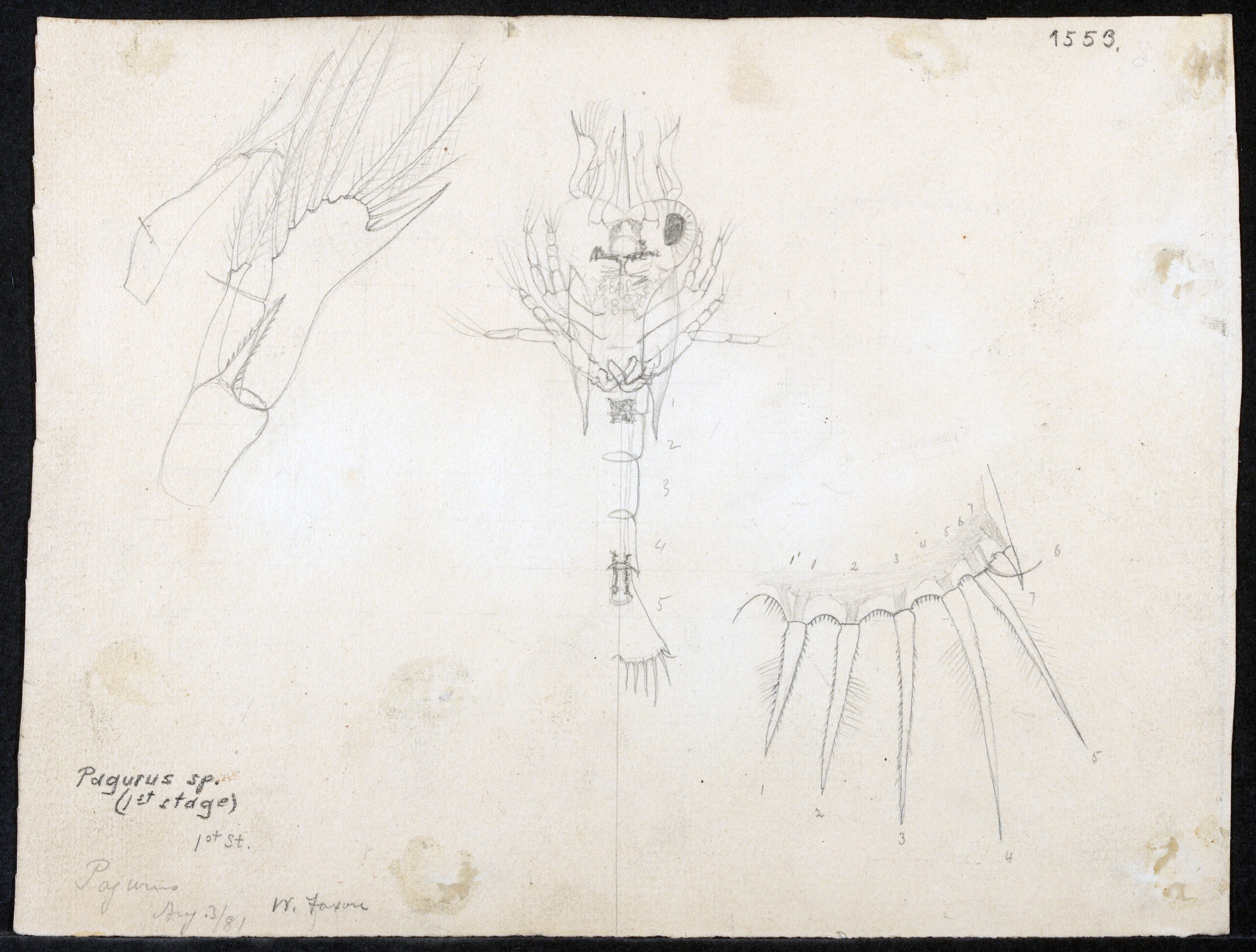
Total Manuscript Scope: Just over 2,200 pages housed in the Ernst Mayr Library, including field journals, bird lists, field notebooks, correspondence, and eight historical pencil drawings of Arthropoda and Crustacea.
Core Ornithological Data: 1,640 pages specifically dedicated to bird observations compiled systematically between 1886 and 1919.
Output Achievement: The primary fellowship goal—transcribing nearly 2,000 manuscript pages—was successfully accomplished within the three-month operational window, making the texts fully searchable within the BHL book viewer alongside original page imagery.
Paleographic and Technical Challenges Encountered
Despite the sophistication of modern LLMs, historical manuscripts present distinct obstacles that push current AI capabilities to their limits:
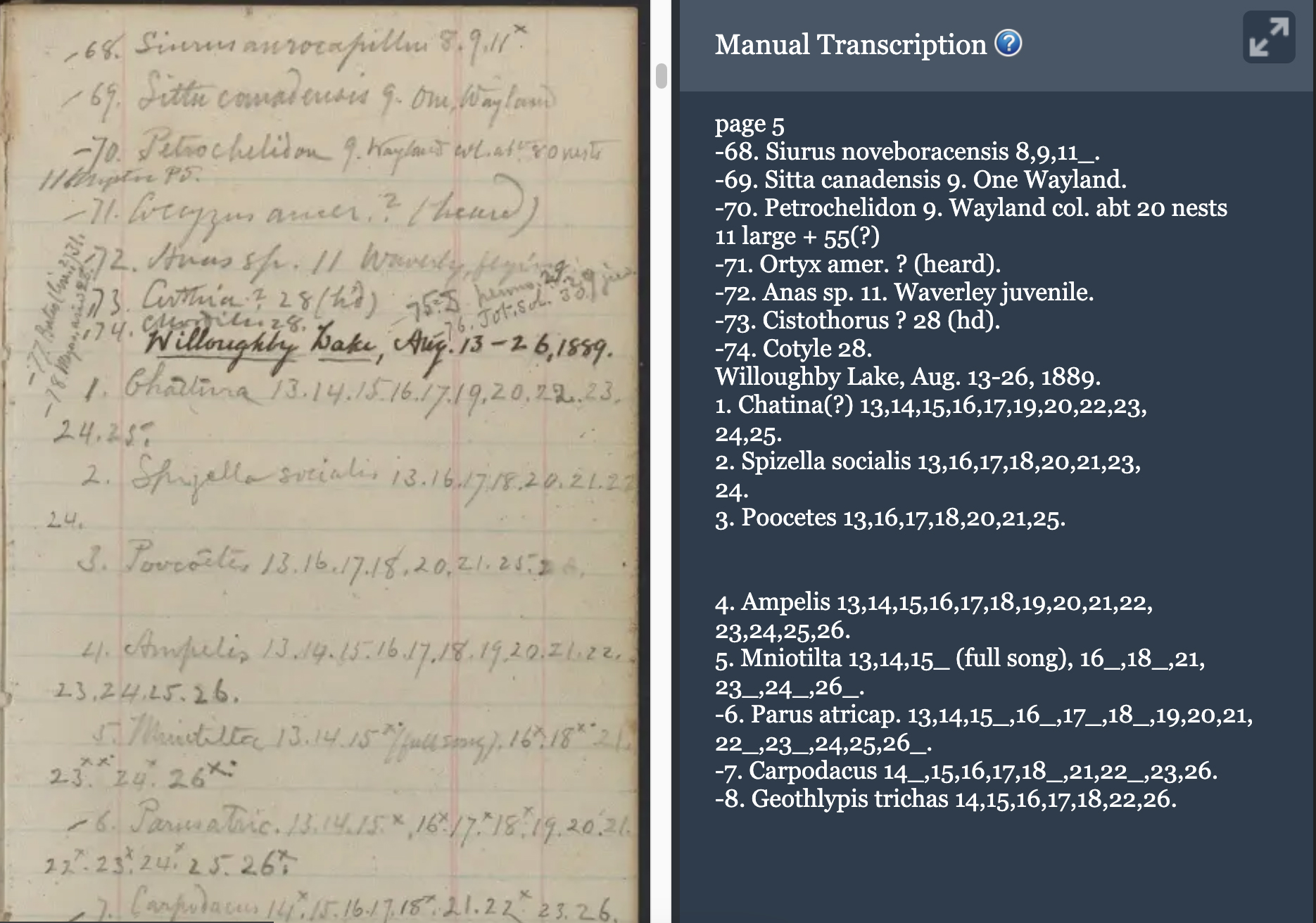
Physical Degradation and Pencil Smudges: Many of Faxon’s field entries were jotted down in pencil under field conditions, resulting in graphite smudging and faded contrast that frequently baffled optical character recognition (OCR) and initial AI vision layers.
Angled and Marginal Annotations: Notes scribbled at severe diagonal angles along the margins of pages were routinely missed or catastrophically mis-transcribed by AI models, which are inherently optimized for linear, horizontal text flows.
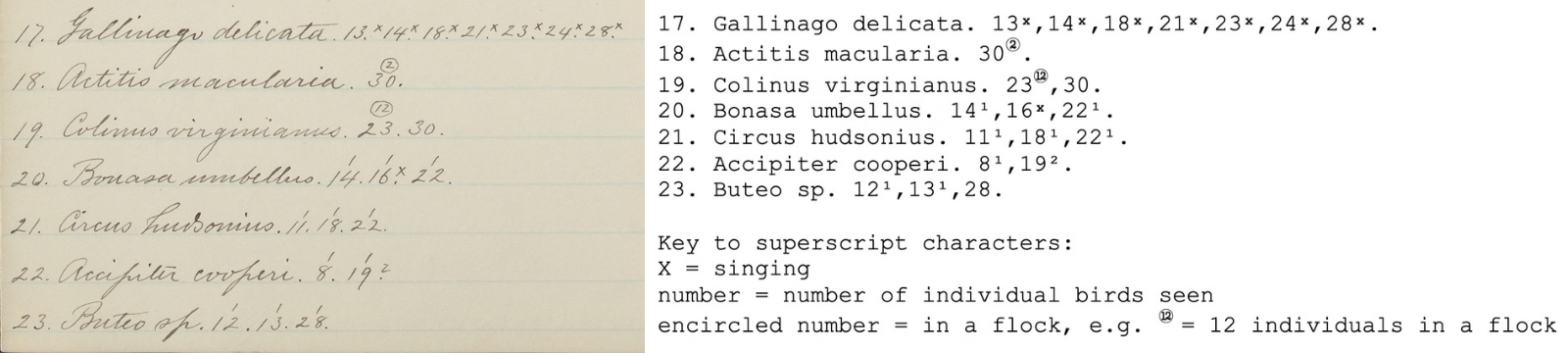
Interlinear Characters and Micro-Notations: One of the most stubborn hurdles involved Faxon’s frequent use of tiny, interlinear numbers and symbols placed directly between primary lines of text. These superscripts denoted critical data points—such as exact counts of individuals, flock structures, and behavioral cues like singing. Standard word processors (Microsoft Word, Google Docs) imposed rigid line-spacing constraints that initially caused models to drop these floating markers entirely. Mandal ultimately resolved this by training the model to format interlinear insertions as structured superscript text.
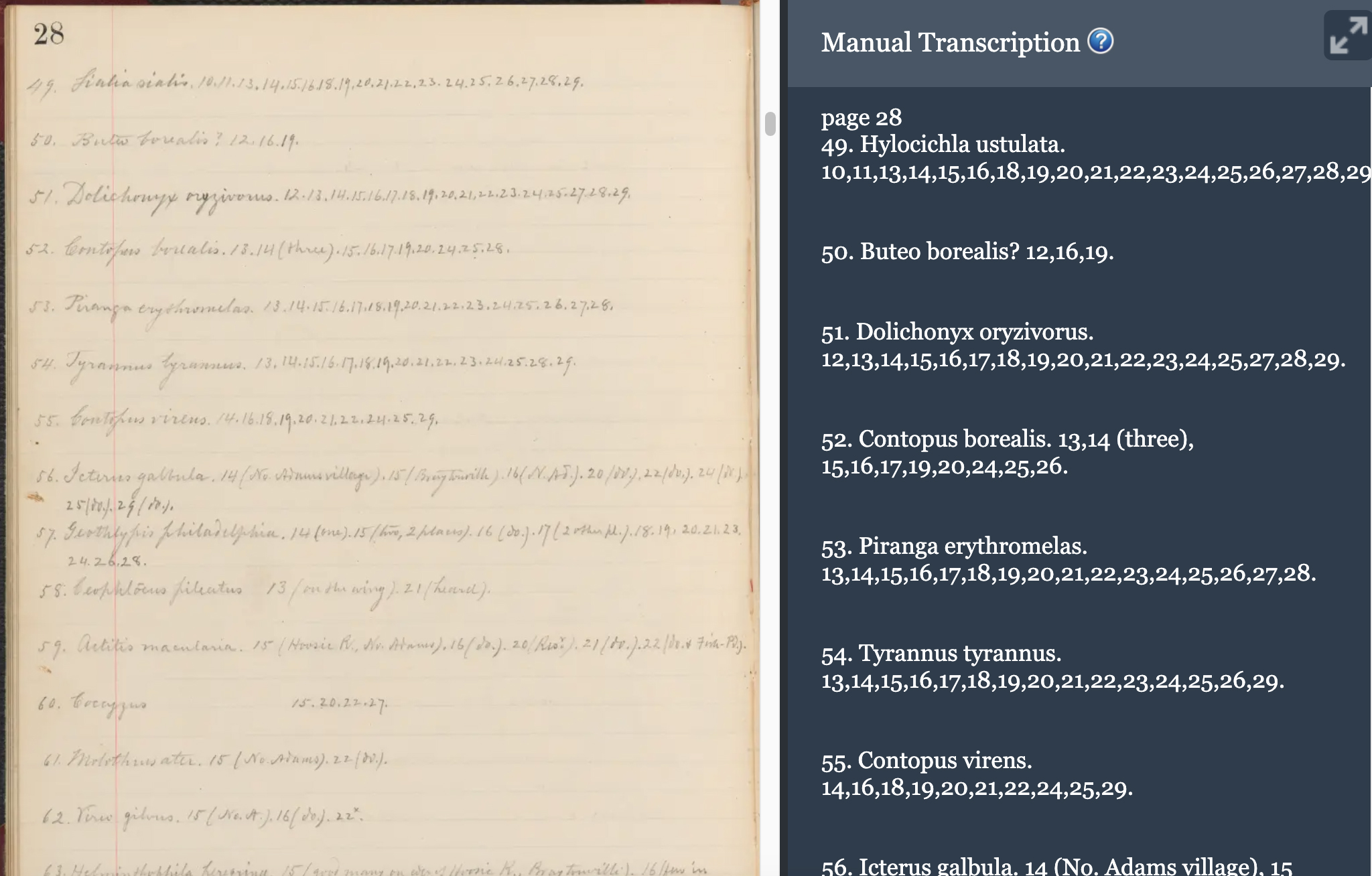
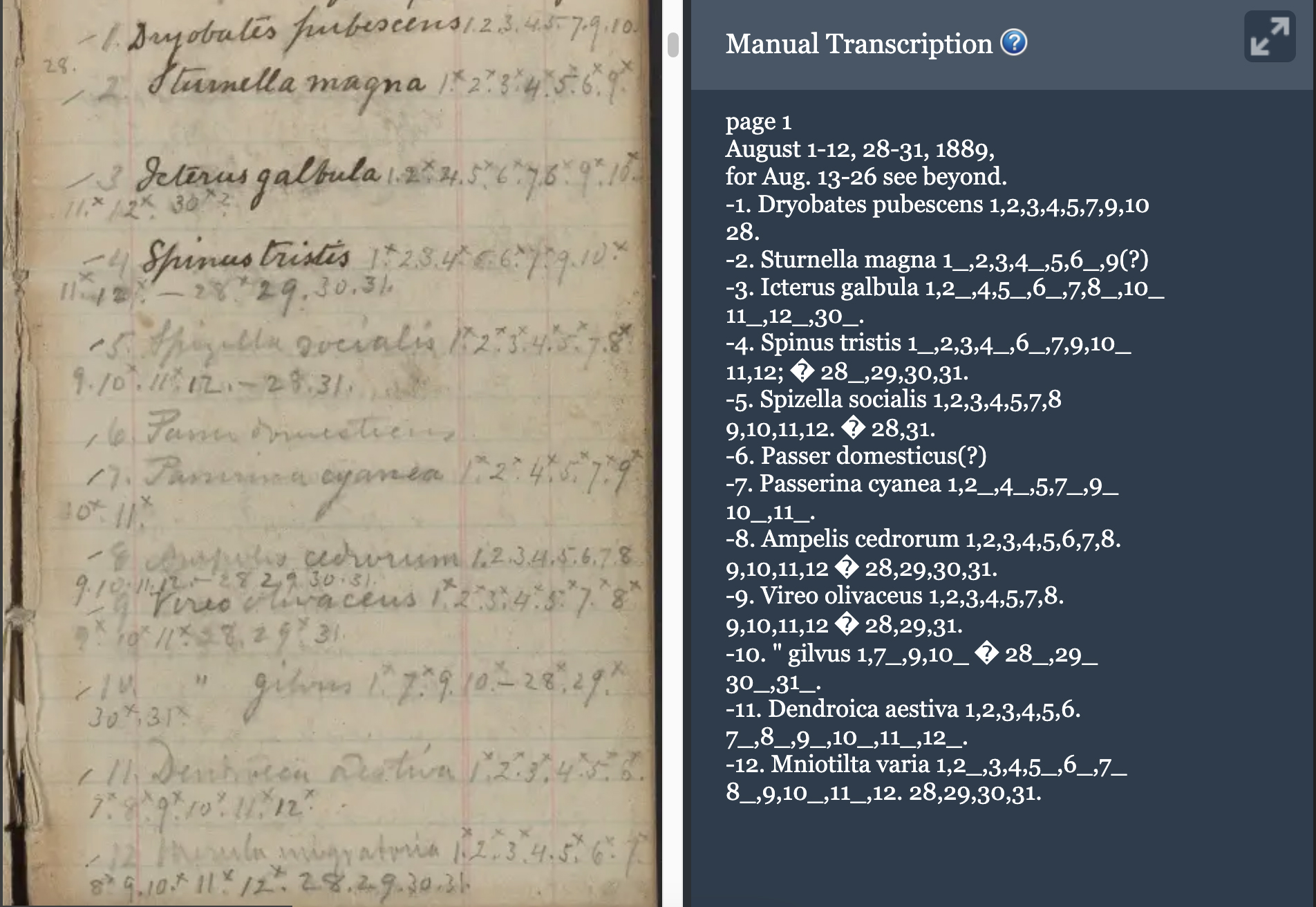
AI Hallucinations in Biological Nomenclature: A particularly striking risk identified during the project was the phenomenon of AI "hallucination" when processing specialized scientific lists. For instance, in Faxon’s 1889–1891 Field Journal (Volume 1), the species Sialia sialis (Eastern Bluebird) was erroneously transcribed in line 49 as Hylocichla ustulata (Swainson’s Thrush) by ChatGPT-5.5 Pro. Similarly, Merula migratoria (historical nomenclature for the American Robin) was mis-transcribed in a field notebook as Mniotilta varia (Black-and-white Warbler) by ChatGPT-5.5 Thinking. These errors underscore the absolute necessity of expert human oversight when processing specialized taxonomic data.
Official Statements and Perspectives
Reflecting on the convergence of digital librarianship, artificial intelligence, and historical ecology, project leaders emphasize that technology remains a powerful tool rather than a standalone solution.
"The human element remains central to guide the goals and direction of the project, without which A.I. tools—at least at this stage of their development—often falter in accuracy, especially when handling complex page layouts and difficult handwriting."
— Mohit Mandal, 2026 Pforzheimer Fellow and Harvard PhD Candidate in Anthropology
The institutional framework supporting this initiative highlights the enduring value of foundational library collections in addressing modern ecological crises. Joe deVeer, Co-Secretary of the BHL Executive Committee and Digital Projects Manager at the Ernst Mayr Library—who has stewarded EML’s contributions since the inception of BHL twenty years ago—notes that projects like the Faxon transcription initiative represent the core mission of modern digital archives.
By taking fragile historical manuscripts and exposing their underlying data to machine-readable indexing, institutions like Harvard Library and BHL are effectively converting dusty archival shelves into dynamic environmental monitoring stations.
Future Outlook: Scaling Biodiversity Data for Global Conservation
As the Biodiversity Heritage Library celebrates its 20th anniversary as the preeminent open-access digital library for biodiversity literature, its strategic focus is expanding from passive digital preservation to active data extraction and global integration.
The successful transcription of Walter Faxon’s 19th-century ornithological journals serves as a proof-of-concept for broader archival initiatives worldwide. By formatting these transcripts into standardized schemas, the Ernst Mayr Library is preparing to export Faxon’s multi-decade species occurrence datasets directly into the Global Biodiversity Information Facility (GBIF).
Once integrated into GBIF, these historical observations will merge seamlessly with contemporary ecological monitoring data. Researchers studying phenological shifts—such as changes in bird migration timing, breeding seasons, and population distributions over the past 140 years—will possess access to robust, granular baselines predating intensive industrialization and modern climate change.
Looking forward, the rapid evolution of artificial intelligence models, coupled with ongoing platform modernization efforts across the BHL network, promises to streamline the extraction of handwritten field notes on an industrial scale. However, as Mandal’s fellowship conclusively demonstrated, the future of digital conservation science will not rely on automation alone. It will depend on the synergistic partnership between advanced machine learning tools and the irreplaceable expertise of human researchers, archivists, and taxonomists guiding them.
Discover More and Support the Biodiversity Heritage Library
For two decades, the Biodiversity Heritage Library has kept biodiversity knowledge free, open, and accessible to researchers, conservationists, and educators across the globe. Preserving historical treasures like Walter Faxon’s field journals—and unlocking the irreplaceable environmental data trapped within their handwritten pages—requires ongoing global support.
To learn more about the BHL’s ongoing initiatives, subscribe to digital updates, or contribute to the preservation of natural history literature, visit the Biodiversity Heritage Library Blog and explore ways to support the next twenty years of open-access ecological discovery.