Paraguay has submitted updated management plans and territorial zoning data to the United Nations Educational, Scientific and Cultural Organization (UNESCO), narrowly meeting a high-stakes September deadline regarding the critically endangered Chaco Biosphere Reserve. Spanning approximately 7.5 million hectares (18.5 million acres) of the Gran Chaco—one of the world’s most vital tropical dry forests—the reserve is the frontline in a brutal ecological and humanitarian conflict.
For the past two decades, vast swaths of this biodiverse biome have fallen to industrial agriculture, specifically large-scale farming and cattle ranching. This rapid land conversion has not only degraded a globally significant carbon sink and wildlife habitat, but it has also imperiled the survival of vulnerable Indigenous communities. Most notably, the ancestral homelands of the Ayoreo-Totobiegosode—the last uncontacted Indigenous group in South America outside of the Amazon Basin—are being systematically fractured. Members of this group live in voluntary isolation within the dense brush of the Chaco, rendering them profoundly vulnerable to external diseases and the systemic loss of their traditional way of life as commercial operations encroach upon their territories.
While the submission of the updated documentation to UNESCO’s Man and the Biosphere (MAB) Program offers a procedural step toward compliance, conservationists and human rights advocates remain deeply skeptical. Critics argue that the Chaco Biosphere Reserve has long functioned as a paper park—a protected designation in name only, undermined by lax enforcement, selective regulation, and the overriding economic clout of agribusiness. As UNESCO initiates an internal review process slated to conclude in 2027, the future status of the reserve hangs in the balance, serving as a litmus test for international conservation frameworks and national environmental accountability.
Detailed Chronology of a Conservation Crisis
To understand the current standoff between Paraguayan authorities and international conservation bodies, one must examine the timeline of the Chaco Biosphere Reserve, its governance failures, and the mounting pressure applied by global watchdogs.
Establishment and Expansion (2001–2011)
2001: The Chaco Biosphere Reserve was officially established by the Paraguayan government to protect a unique transitional ecosystem characterized by thorny scrub forests, palm savannas, and arid woodlands.
2005: Recognizing its ecological importance and the complex socio-environmental dynamics at play, UNESCO formally integrated the site into its prestigious Man and the Biosphere (MAB) Program. This initiative seeks to balance biodiversity conservation with sustainable economic development, fostering a harmonious relationship between human populations and their environments.
2011: Responding to mounting evidence that uncontacted Indigenous groups were using and roaming across broader tracts of land, the reserve was significantly expanded. This expansion was explicitly designed to safeguard the territorial rights and physical security of nomadic groups like the Ayoreo, who intentionally retreat from broader Paraguayan society.
The Turning Point and Enforcement Deficit (2021–2023)
2021–2022: Investigative reports and civil society organizations, such as Iniciativa Amotocodie, increasingly highlighted a paradox: while the Chaco Biosphere Reserve expanded on paper, illegal and legal deforestation rates within and adjacent to its borders skyrocketed. Cattle ranches cleared millions of hectares of pristine dry forest, driving uncontacted bands of the Ayoreo-Totobiegosode into tighter, more dangerous corners.
2023: Prompted by mounting civil society pressure and satellite data revealing rampant habitat destruction, the MAB Program formally intervened. UNESCO requested that Paraguay develop a comprehensive, updated management plan alongside clearly defined buffer and transition zones. Crucially, UNESCO mandated that these plans account for all local stakeholders, placing heavy emphasis on the inclusion of Indigenous communities in governance and territorial monitoring. Paraguay was given until late September to fulfill this mandate.
The Deadline and the Current Horizon (2026–2027)
May 2026: As the deadline loomed, local and international environmental journalists brought renewed scrutiny to the reserve. Experts pointed out that private property ownership is legally permitted within the boundaries of the biosphere reserve, subject to strict environmental clearance regulations. However, enforcement mechanisms have historically proved porous or entirely absent.
September 2026: The Paraguayan government submitted its long-awaited documentation package to UNESCO, meeting the final deadline. However, neither state authorities nor UNESCO officials immediately released the contents of the submission to the public. UNESCO indicated that an exhaustive internal review process would be conducted, with findings and potential status decisions expected to materialize publicly in 2027.
Supporting Context, Metrics, and the Agribusiness Onslaught
The Gran Chaco is South America’s second-largest forest ecosystem after the Amazon Basin, spanning parts of Paraguay, Argentina, Bolivia, and Brazil. Yet, despite its ecological equivalency in terms of carbon sequestration and biodiversity, the Chaco receives a fraction of the international attention directed at its northern neighbor. This neglect has allowed industrial actors to operate with relative impunity.
The Scale of Deforestation
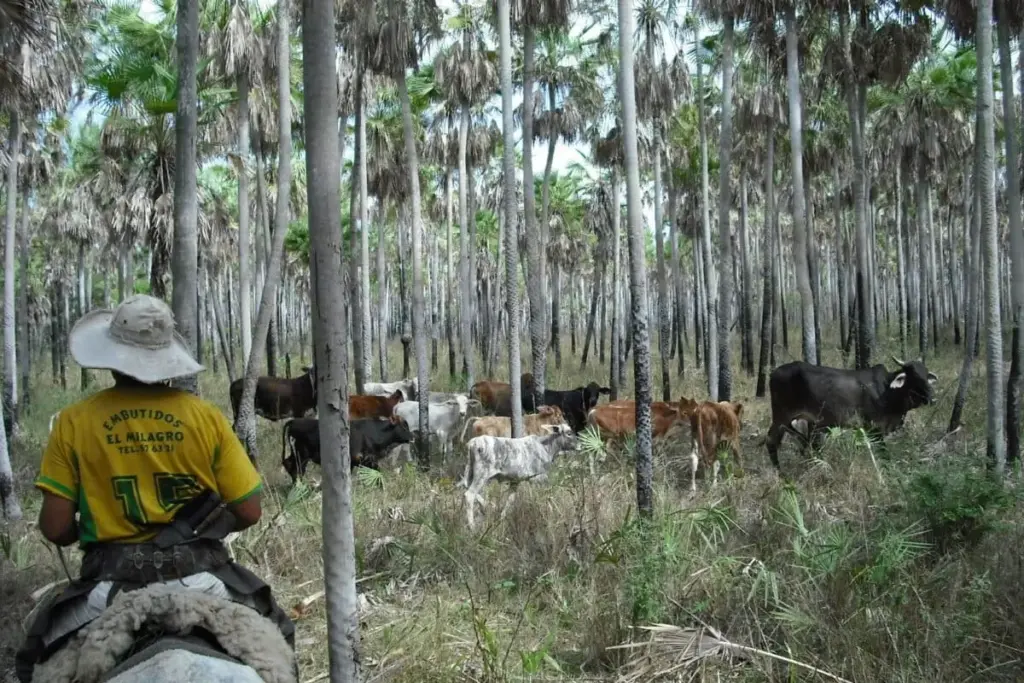
Over the last two decades, the Paraguayan Chaco has experienced one of the highest rates of deforestation globally. Millions of hectares of ancient, thorny dry forest have been bulldozed and burned, converted almost exclusively into fenced pastures for beef cattle and mechanized agriculture (primarily soy and feed grains).
The Economics of Beef: Paraguay has emerged as a major global beef exporter, supplying markets in Europe, Russia, and neighboring South American nations. The high profitability of cattle ranching has incentivized land speculation and rapid clearing, often outpacing the capacity or political will of state environmental agencies to monitor compliance.
The "Paper Park" Reality: Miguel Ángel Alarcón, general coordinator of Iniciativa Amotocodie—a prominent nonprofit organization dedicated to helping the Ayoreo defend their ancestral forests—summarized the situation bluntly in a May interview with environmental media: "In practice, the biosphere reserve hasn’t gone beyond being just a designation, a protection category, without actually advancing to a stage of regulation or stronger control over human activity."
The Ayoreo-Totobiegosode: A Vulnerable Frontier
The human cost of this unchecked agricultural expansion is catastrophic. The Gran Chaco is the ancestral and contemporary home of the Ayoreo people, a subgroup of whom—the Ayoreo-Totobiegosode—continue to live in voluntary isolation.
The Last Uncontacted Group: Outside of the Amazon Rainforest, the Ayoreo-Totobiegosode are the last remaining uncontacted Indigenous group in South America. They rely entirely on the intact forest for foraging, hunting, and spiritual sustenance.
Epidemiological Vulnerability: As bulldozers push deeper into the biosphere reserve, the physical distance between industrial ranches and nomadic Ayoreo bands shrinks. Experts warn that even brief, indirect contact between isolated Indigenous groups and farm workers poses severe health risks. Having had no historical exposure to common pathogens such as influenza, the common cold, or measles, an outbreak could prove devastating, potentially wiping out entire family units.
Territorial Displacement: Despite holding ancestral land claims and benefiting from legal protections under international human rights frameworks, the Ayoreo find their traditional trails severed by barbed-wire fences, private titles, and private security guards employed by large agro-industrial conglomerates.
Official Statements and Institutional Responses
Navigating the bureaucratic architecture of international conservation reveals a tension between diplomatic encouragement and stringent accountability.
UNESCO’s Dual Approach: Support vs. Oversight
UNESCO representatives have maintained a measured public posture, balancing the need to build institutional capacity within member-states with the imperative to protect the integrity of its global designations.
In an email statement provided to environmental reporters in September, a UNESCO official emphasized the organization’s developmental mandate:
"We aim to provide member-states with the necessary technical support and opportunities to complete or improve their documentation, with the ultimate objective of ensuring strong and functional biosphere reserves."
At the same time, the international body has made it clear that designations are not permanent entitlements. Membership in the MAB network carries ongoing responsibilities. When questioned about the lack of automatic penalties for missing deadlines, UNESCO officials stressed that sites are continuously monitored to ensure they do not degrade to a point that warrants stripping their status.
In a previous statement issued in May, the UNESCO official elaborated on the criteria governing the review process:
"The future status of the reserve will depend on progress in these areas, including effective management, stakeholder inclusion, and alignment with MAB criteria."
The Silence of National Authorities
While the Paraguayan government successfully transmitted its updated management plans and zoning maps before the September deadline, its transparency regarding the contents of the report has been notably lacking. Requests for detailed breakdowns of the new zoning boundaries, enforcement protocols, and specific mechanisms for Indigenous inclusion submitted to relevant Paraguayan ministries went unanswered.
Similarly, the MAB Program declined to disclose the specifics of Paraguay’s submission, citing standard administrative protocol which mandates that documents undergo internal committee evaluation before being made fully accessible to the public and civil society watchdogs—a transparency lag that environmental advocates argue shields governments from immediate public critique.
Future Outlook: What Lies Ahead for the Chaco Biosphere Reserve?
The submission of updated paperwork to UNESCO marks the end of a preliminary administrative battle, but it is merely the opening chapter in a much larger struggle for the soul of the Gran Chaco. Several critical milestones and variables will determine whether the Chaco Biosphere Reserve becomes a genuine tool for conservation or remains an empty label on a map.
The 2027 Evaluation and Possible De-listing
All eyes are now turned toward 2027, when UNESCO’s internal review committees are expected to evaluate Paraguay’s submission against the rigorous benchmarks of the MAB Program.
The Standards: To retain its standing without facing downgrades or recommendations for corrective action, Paraguay must demonstrate that its new management plan is not only comprehensive on paper but backed by verifiable enforcement on the ground.
The Consequences of Inaction: If satellite monitoring continues to show rampant, illegal deforestation within the reserve’s core and buffer zones, or if Indigenous rights continue to be systemically violated, UNESCO may face mounting pressure from international civil society to issue formal warnings, place the reserve on a danger list, or, in extreme cases, revoke its biosphere designation. While de-listing carries few direct economic sanctions, it represents a severe diplomatic and reputational blow to a nation seeking international trade partnerships and green investment.
The Imperative of Indigenous Inclusion
True progress in the Chaco cannot be measured solely by hectares of forest mapped in a bureaucratic office in Asunción. Conservation biologists and human rights lawyers agree that any sustainable management plan must center on the active participation, leadership, and territorial autonomy of the Ayoreo-Totobiegosode and other local Indigenous communities.
For decades, conservation models imposed from the top down have failed to halt the chainsaws. Empowering Indigenous guardians—who possess ancestral knowledge of the land and a vested interest in its preservation—offers the single most effective barrier against agricultural encroachment.
The Global Economic Dimension
Ultimately, the fate of the Chaco Biosphere Reserve is tethered to global consumption patterns and international finance. As long as global markets demand cheap beef and feed crops produced in the Gran Chaco, private landowners will find financial incentives to push boundaries, bypass regulations, and absorb minor legal risks.
For Paraguay’s updated UNESCO submission to translate into real-world change, the political will of Asunción must match the expectations of the international community. Only by pairing strict environmental enforcement with corporate accountability and human rights protection can the Chaco Biosphere Reserve be pulled back from the brink of ecological collapse.