

Executive Overview
As the European Union prepares to define its post-2030 renewable energy framework, Brussels faces a pivotal strategic crossroads. At the center of the debate is a fundamental question of political will and energy sovereignty: Will Europe continue its historical vulnerability to imported fossil fuels, or will it pivot decisively toward a domestic, electricity-led transport ecosystem?
For decades, the EU’s Renewable Energy Directive (RED) has framed the decarbonization of the transport sector primarily through the lens of fuel substitution. Policy discussions have typically revolved around calculating how many barrels of petrol and diesel could be offset by alternative liquids, such as conventional or advanced biofuels and e-fuels. However, a growing body of research suggests that this approach misses a foundational physical reality: the cleanest, most efficient fuel is not a fuel at all—it is electricity.
Direct electrification achieves something that no liquid alternative can replicate. Because electric motors enjoy massive inherent efficiency gains over internal combustion engines, switching to battery-electric vehicles (BEVs) drastically reduces the absolute volume of energy required to move people and goods in the first place. Consequently, prioritizing direct electrification is not just an environmental imperative aimed at meeting climate targets; it is arguably the most potent energy security and industrial autonomy measure available to EU policymakers.
A new study highlights that the EU’s upcoming 2040 renewable energy transport targets hinge directly on the defense of policies that drive road transport electrification—most notably, the bloc’s stringent car and van $textCO_2$ emission standards. Diluting these standards would create a false equivalence, allowing policymakers to superficially claim similar headline renewable energy share (RES) targets on paper. In practice, however, achieving those targets without widespread road electrification would require an unsustainable reliance on scarce, expensive, and largely imported alternative fuels.
To safeguard its economy from volatile global energy markets, Europe must pair its post-2030 renewable transport targets with aggressive, unyielding electrification mandates. This article examines the strategic choices facing the EU, analyzing the data behind import dependency, the risks of diluting vehicle standards, and the roadmap required to secure a resilient, electrified transport sector by 2040.
Detailed Chronology: The Evolution of EU Transport Decarbonization Policy
To understand the stakes of the upcoming post-2030 framework negotiations, it is necessary to examine how the European Union’s legislative approach to transport emissions has evolved over the past two decades.
Phase I: The Era of Voluntary Commitments and Biofuel Push (2000–2010)
In the early 2000s, EU climate policy in transport was largely defined by voluntary agreements with auto manufacturers and early, rudimentary blending mandates for biofuels. The initial Renewable Energy Directive (RED I), adopted in 2009, set a binding target of 20% renewable energy by 2020, including a specific 10% renewable target for the transport sector.
During this period, "decarbonization" was almost synonymous with the introduction of first-generation crop-based biofuels (such as ethanol from wheat or biodiesel from rapeseed and palm oil). Little attention was paid to systemic energy efficiency or the electrification of light-duty vehicles. This approach quickly ran into unintended consequences, including indirect land-use change (ILUC) concerns, food-versus-fuel debates, and questions over the actual greenhouse gas savings of certain biofuels.
Phase II: The Introduction of Tailpipe Standards and RED II (2010–2020)
Recognizing that fuel blending alone could not curb soaring transport emissions, the EU introduced mandatory $textCO_2$ performance standards for new passenger cars and vans in 2009, with tightening targets implemented for 2015 and 2025. These tailpipe standards forced automotive original equipment manufacturers (OEMs) to begin investing seriously in powertrain efficiency.
Parallel to this, the revised Renewable Energy Directive (RED II), finalized in 2018 for the 2021–2030 decade, sought to cap the contribution of food- and feed-based biofuels while gradually introducing incentives for advanced biofuels and renewable electricity. Yet, direct electrification of road transport remained secondary in the directive’s primary accounting mechanisms, treated as just one option among many compliance pathways.
Phase III: The Green Deal and the 2035 Combustion Engine Ban (2020–2026)
The launch of the European Green Deal in late 2019 fundamentally shifted the policy landscape. Under the "Fit for 55" legislative package, the EU committed to reducing net greenhouse gas emissions by at least 55% by 2030 compared to 1990 levels.
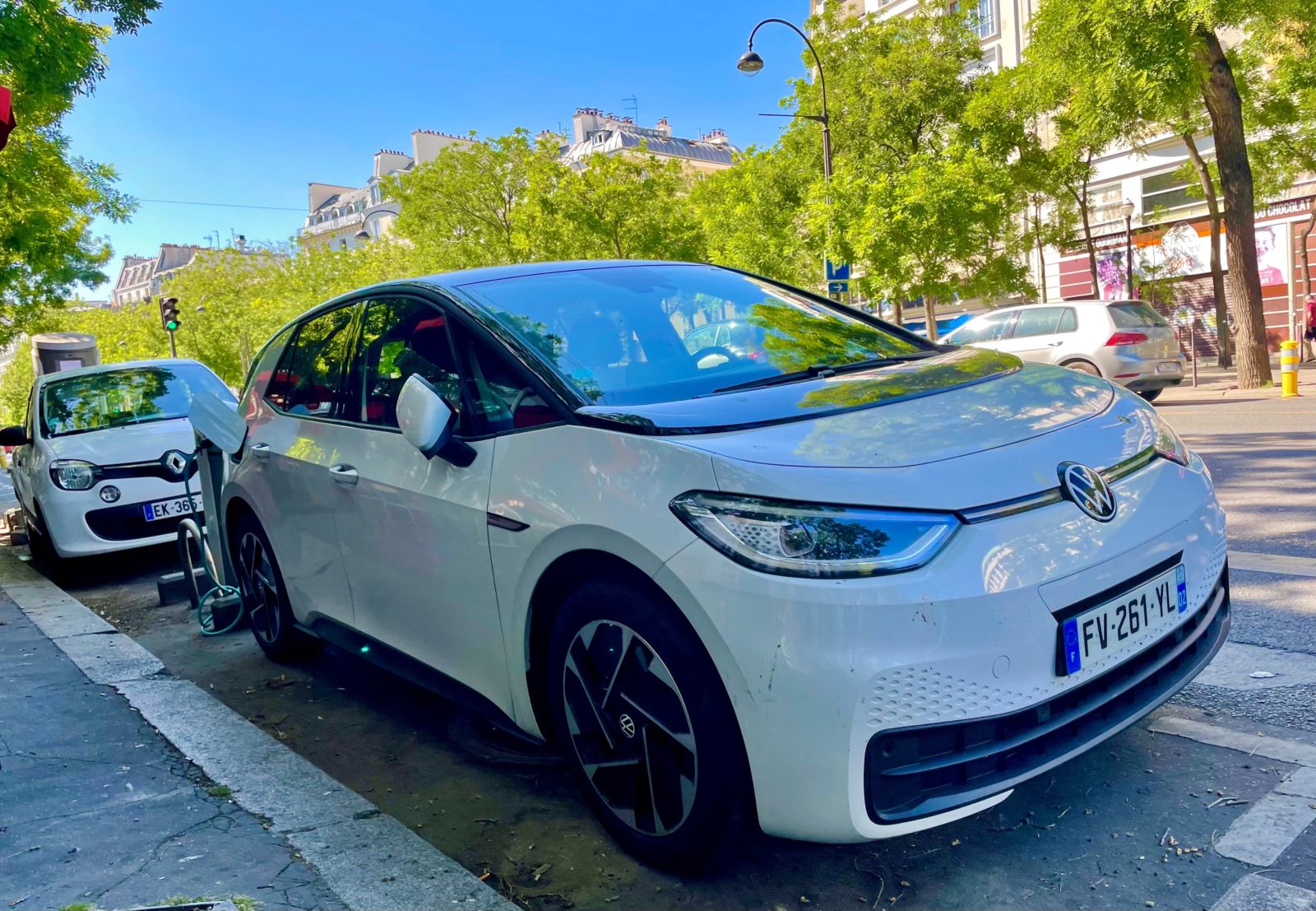
In the transport sector, this culminated in the landmark agreement to mandate a 100% $textCO_2$ reduction for new cars and vans by 2035, effectively ending the sale of new internal combustion engine (ICE) vehicles fueled by fossil petrol and diesel. This regulatory certainty unleashed unprecedented capital investments into European gigafactories, charging infrastructure, and EV supply chains.
Phase IV: The Current Horizon — Shaping the Post-2030 Framework (2026 and Beyond)
Today, European policymakers are shifting their focus beyond 2030, drafting the legislative architecture that will govern energy and climate policy up to 2040 and 2050. As geopolitical tensions in Eastern Europe and the Middle East continue to destabilize global energy markets, energy security has surged back to the top of the European political agenda.
This current debate centers on whether the EU will maintain its commitment to road electrification or bow to lobbying efforts seeking to water down car $textCO_2$ standards in favor of prolonged liquid fuel dependence. The decisions made in Brussels over the next 18 months will dictate whether Europe achieves true energy autonomy or remains tethered to external commodity suppliers for decades to come.
Supporting Context & Metrics: The Mathematics of Efficiency and Autonomy
The core argument for prioritizing direct electrification over alternative fuel substitution rests on hard thermodynamic principles and economic modeling.
The Thermodynamic Advantage of Electrons Over Molecules
When energy is used to power a vehicle, every conversion step incurs efficiency losses.
- Battery Electric Vehicles (BEVs): Electricity generated from renewable sources (wind, solar, hydro) is transmitted via grid infrastructure and stored directly in a chemical battery to power an electric motor. The "well-to-wheel" efficiency of a BEV typically ranges between 70% and 80%.
- Hydrogen Fuel Cell Vehicles (FCEVs): Electricity is used to split water via electrolysis to produce hydrogen, which is then compressed, transported, and converted back into electricity via a fuel cell. This multi-step process drops overall efficiency down to roughly 30% to 35%.
- Electro-fuels (E-fuels) & Advanced Biofuels: Synthesizing liquid fuels requires capturing carbon dioxide, producing green hydrogen, and running energy-intensive chemical synthesis reactors. Burning these synthetic fuels in a modified internal combustion engine yields a well-to-wheel efficiency of only 10% to 15%.
[ Renewable Electricity ]
       │
       ├─► Direct to EV Battery ──────────► 75% Efficiency (High Electrification)
       │
       ├─► Hydrogen Electrolysis ─────────► 32% Efficiency (FCEV)
       │
       └─► E-Fuel Synthesis & Refining ──► 12% Efficiency (Synthetic Liquids)
Because e-fuels and advanced biofuels require up to five to six times more renewable electricity input than direct electrification to travel the same distance, relying on them for mass-market passenger transport creates an astronomical demand for renewable power generation. In a resource-constrained world, this inefficiency translates directly into higher costs, slower decarbonization, and bloated energy demand.
Modeling Import Dependency and the 2040 Horizon
Recent analytical modeling by Transport & Environment (T&E) provides a clear quantitative contrast between two distinct legislative pathways for Europe’s transport sector up to 2040:
- The High-Electrification Pathway: This scenario defends and builds upon the existing car and van $textCO_2$ standards, rapidly scaling up BEV adoption across light-, medium-, and heavy-duty transport where technically feasible.
- The Low-Electrification Pathway: This scenario weakens car $textCO_2$ standards, allowing a higher proportion of ICE vehicles to remain on the road, supplemented by alternative liquid fuels (biofuels and e-fuels) to meet headline renewable energy targets.
The modeling results reveal striking divergence:
- Import Dependency Reduction: A high-electrification pathway brings the EU transport sector’s import dependency down by nearly a quarter (approx. 24%) compared to today’s baseline levels. By contrast, a low-electrification pathway achieves roughly 15% less reduction, leaving Europe significantly more exposed to foreign energy suppliers.
- Resource Allocation: In the high-electrification scenario, electricity assumes the heavy lifting for road transport, freeing up scarce, sustainably sourced alternative fuels for "hard-to-abate" sectors that lack viable direct electrification options—most notably aviation and maritime shipping.
Official Statements and Stakeholder Perspectives
As consultations open around the post-2030 Renewable Energy Directive and related transport regulations, key institutional voices and industry bodies are staking out polarized positions.
"Europe is about to decide what its renewable energy framework should look like for the decade after 2030. For transport, the political question is simple: Does Europe want to keep depending on imported oil and fossil fuels or does it want its transport system to rely more on European electricity?"
— Marion Revest, Transport & Environment (T&E)
Advocates of industrial sovereignty emphasize that the European battery value chain, despite facing stiff global competition from Asian manufacturers, represents a foundational domestic asset. Proponents argue that unwinding regulatory pressure on electric vehicles would strand European investments in gigafactories and charging networks while handing technological leadership to international competitors.

Conversely, legacy fuel producers, certain chemical conglomerates, and traditional automotive associations have pushed back, arguing for technological neutrality. Their position maintains that keeping the door open for e-fuels and drop-in biofuels is essential to protect existing vehicle fleets, secure jobs in the liquid fuel refining sector, and provide a safety net should public charging infrastructure deployment lag in certain rural or peripheral member states.
However, energy analysts counter that "technological neutrality" is frequently invoked as a Trojan horse to dilute emissions standards, since the physics of energy conversion heavily penalizes synthetic fuels in applications where batteries are readily deployable.
Future Outlook: The Policy Roadmap for Brussels
To future-proof Europe’s economy and achieve net-zero transport emissions by mid-century, EU legislators must navigate several critical policy junctures over the coming years.
1. Hardwiring Direct Electrification into the RED Framework
The post-2030 Renewable Energy Directive must explicitly mandate that renewable electricity targets in transport (often referred to as RES-T) are met primarily through direct electrification measures. Vague accounting methodologies that allow double-counting of inefficient alternative fuels in road transport must be phased out.
2. Defending Fleet-Wide $textCO_2$ Standards
The upcoming reviews of car and van $textCO_2$ performance standards must withstand political pressures for dilution. Preserving the trajectory toward zero tailpipe emissions is the single most effective guarantee that passenger transport demand remains tethered to the European grid rather than imported hydrocarbon markets.
3. Protecting Scarce E-Fuels and Biofuels for Aviation and Shipping
Because sectors such as long-haul aviation and maritime shipping cannot easily rely on chemical battery storage given current energy-density limitations, they will require massive supplies of sustainable aviation fuels (SAFs) and green marine e-fuels. By aggressively electrifying light- and medium-duty road transport, Europe can preserve its limited biomass and green hydrogen resources for these unavoidable non-road applications.
4. Accelerating Grid Modernization and Charging Infrastructure
Electrifying transport is only half the equation; the underlying power grid must expand in tandem. European policymakers must streamline permitting processes for renewable energy generation (wind and solar) and prioritize massive investments in high-voltage transmission grids and smart-charging infrastructure. This ensures that the influx of millions of EVs acts as a stabilizing grid resource through vehicle-to-grid (V2G) capabilities rather than a localized bottleneck.
Conclusion
The policy choices facing the European Union regarding its post-2030 renewable energy framework transcend simple carbon accounting. They strike at the very heart of European strategic autonomy, economic resilience, and industrial competitiveness.
By recognizing that direct electrification is vastly superior to fuel substitution in terms of energy efficiency, resource allocation, and import reduction, Brussels has a clear path forward. Defending rigorous vehicle emission standards and anchoring transport policy in domestic renewable electricity will liberate Europe from the volatile geopolitical dependencies of the past. For European policymakers, the directive is clear: embrace the efficiency of electrons, or remain shackled to the volatility of imported oil.



