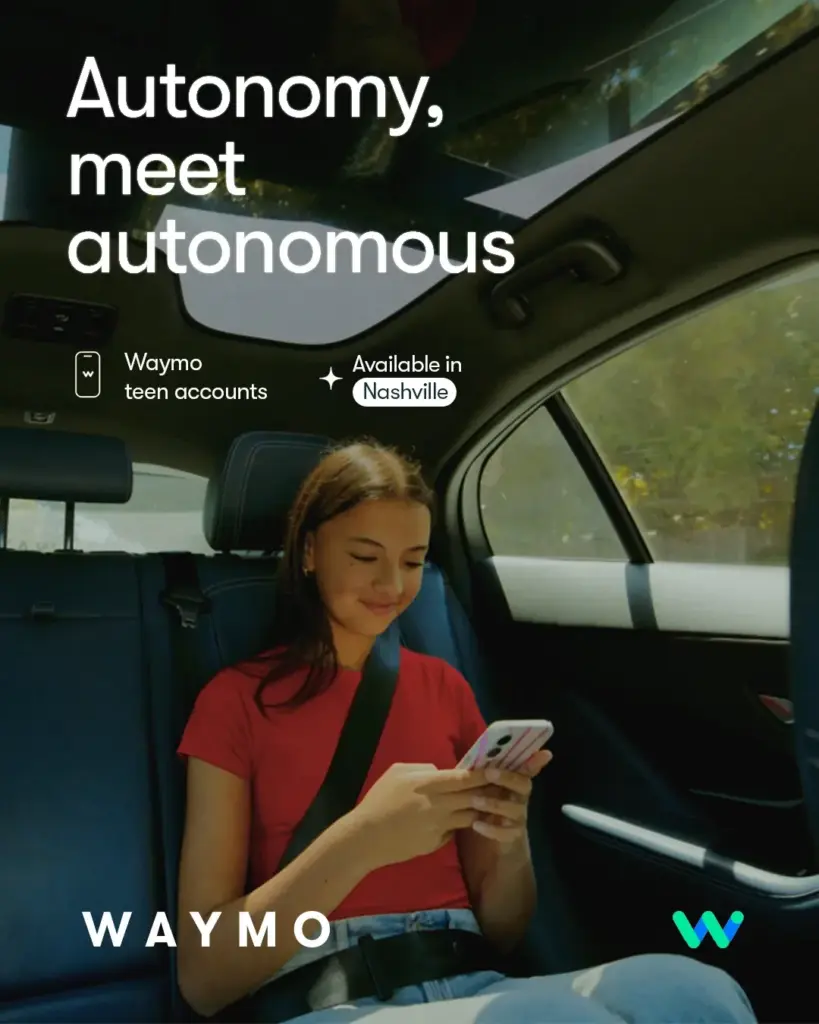
The landscape of urban mobility is undergoing a quiet, high-tech revolution, and the latest frontier involves the demographic that arguably needs flexible transportation the most: teenagers. Autonomous vehicle (AV) leader Waymo has officially launched its dedicated "teen accounts" service in Nashville, Tennessee. Following a successful introductory rollout in Phoenix, Arizona, the expansion allows adolescents between the ages of 13 and 17 to independently hail and ride in fully autonomous, driverless vehicles across a sprawling 50-square-mile territory within Music City.
Linked directly to a parent or legal guardian’s master account, the service is designed to solve a perpetual modern dilemma: how busy families manage the frantic choreography of school drop-offs, sports practices, musical rehearsals, and social engagements without straining parental work schedules. Beyond mere convenience, the deployment of teen-accessible autonomous fleets represents a profound shift in how communities view safety, independence, and the integration of artificial intelligence into daily family logistics.
This article explores the mechanics of Waymo’s teen account rollout in Nashville, examines early user experiences, analyzes the broader socio-economic impacts of autonomous commuting on youth independence, and contextualizes how autonomous ride-hailing is transforming modern urban infrastructure.
Detailed Chronology: From Phoenix Pilots to Nashville Deployment
The journey toward independent teen mobility via autonomous vehicles did not happen overnight. It is the result of methodical regulatory navigation, rigorous safety validation, and phased consumer rollouts.
The Foundation: Phoenix and the Genesis of Teen Accounts
Waymo’s path to serving minor passengers began in earnest with the introduction of its teen accounts feature, initially piloted and refined in the Greater Phoenix area. Transporting minors presents distinct regulatory, safety, and liability challenges that traditional ride-sharing companies manage through human drivers. For an autonomous fleet, however, passenger management requires a delicate balance of software-enforced guardrails and remote human oversight.
During the Phoenix rollout, safety engineers and product developers tested account-linking protocols, remote support response times, and geofencing limits. By restricting teen accounts so that they must be tied to a parent or guardian’s primary payment and profile method, Waymo established a chain of accountability. Parents retain ultimate control over authorized riders, can monitor trip trajectories in real-time, and receive automated notifications regarding trip statuses.
The Nashville Expansion: Scaling the Footprint
Building on the operational data gathered in Arizona, Waymo turned its sights toward Nashville—a booming, culturally vibrant metropolis marked by dense urban corridors, sprawling suburbs, and notoriously heavy traffic during peak commuting hours.
Beginning today, the service covers a substantial 50-square-mile zone in Nashville. This footprint includes residential neighborhoods, commercial hubs, and educational corridors, ensuring that teens can realistically utilize the service for daily transit needs rather than just novelty rides. To ensure the launch went smoothly, Waymo implemented an early-access program, distributing invitations to select Nashville families to stress-test the application interface, vehicle onboarding process, and customer support infrastructure under real-world conditions.
Supporting Context & Metrics: Safety, Stress Reduction, and Modern Logistics
Integrating autonomous vehicles into the daily routines of minors requires overwhelming evidence of safety and reliability. Critics and cautious parents naturally question the wisdom of placing teenagers in driverless cars. However, data compiled by autonomous tech developers and independent research institutions suggest that AVs may offer a safer, more predictable alternative to traditional teenage transit options.
Safety Architecture and Parental Controls
Waymo’s teen accounts are built on a multi-layered security framework designed to mitigate parental anxiety:
Account Tethering: Teens cannot create standalone profiles; every account must be tied to an adult who oversees billing, permissions, and emergency contacts.
Real-Time Monitoring: Parents can track the vehicle’s exact location via GPS throughout the duration of the trip, receiving updates when the rider is picked up and successfully dropped off.
Dedicated Rider Support: Specially trained support agents monitor the cabin environment and can intervene remotely or coordinate with local emergency services if a passenger requires assistance.
Automated Receipts and Summaries: Comprehensive trip logs provide parents with exact route details, travel times, and fare breakdowns.
Quantifying the Impact: Commuting Stress and Youth Opportunity
The benefits of autonomous youth transport extend far beyond saving parents time; they directly impact the psychological well-being of families and open doors to educational and professional opportunities.
In a recent study conducted in partnership with the Boys & Girls Clubs of the Valley and the Legacy Institute, researchers analyzed the impact of reliable, autonomous commuting on youth participating in summer internship programs. The findings were stark: providing consistent, independent transportation cut reported commuting-related stress in half, dropping from 86% down to 43%.
For many teenagers, lack of reliable transportation is a silent barrier to entry for after-school employment, tutoring, volunteering, and extracurricular activities. When public transit is sparse or inflexible, and working parents cannot leave their jobs early to provide rides, opportunities are missed. Autonomous ride-hailing bridges this equity gap, offering a dependable mobility safety net.
Official Statements and Local Perspectives
To understand the human impact of this technological leap, one must look to the families who have lived with the service. During the Nashville early-access trial, local residents provided candid feedback on how the integration of autonomous vehicles altered their daily routines.
Asher Huffman, a Nashville teen who participated in the early-access program, praised the psychological comfort and autonomy the service provided:
"I really enjoyed being able to hail a ride home from a concert without having to bother my parents, and I even got to show Waymo off to my friend. Getting to play my music as loud as I want, with no one else in the car, was also awesome. Kind of like I was in my own little bubble."
The sentiment was echoed by Asher’s mother, Amy Huffman, who highlighted the tangible relief the service brought to household management:
"It was a huge help to our family. Whether my son was staying late at school or going to a concert downtown, I didn’t have to worry about how he was going to get home or rearrange my own plans to pick him up. It gave him more independence and took a real burden off of us as parents."
From an industry perspective, Waymo’s leadership views the teen account feature as a natural evolution of mobility-as-a-service (MaaS). As autonomous fleets mature, their utility must expand from single-user business commuters and weekend tourists to foundational pieces of municipal transit ecosystems that serve households in their entirety.
Future Outlook: The Road Ahead for Autonomous Family Transit
The launch of Waymo teen accounts in Nashville marks a significant milestone, but it is merely a stepping stone toward a broader transformation in how cities operate.
Scaling to New Markets
Following the successful deployments in Phoenix and Nashville, industry analysts anticipate that Waymo will look toward other major metropolitan areas currently hosting its autonomous fleets—such as San Francisco, Los Angeles, and Austin—as prime candidates for teen account integration. Each city presents unique geographic and traffic challenges, but the foundational software and safety protocols established in Tennessee and Arizona provide a scalable blueprint.
The Broader Implications for Urban Infrastructure
As autonomous vehicle adoption normalizes among younger demographics, cultural attitudes toward car ownership and driving are shifting. Teenagers coming of age in cities with robust AV options may view vehicle ownership not as a mandatory rite of passage, but as one of many on-demand utility choices. This shift could have profound long-term implications for urban planning, parking space requirements, and traffic congestion mitigation.
Furthermore, as municipalities look for ways to reduce carbon emissions and modernize public transit, partnerships between cities and autonomous fleet operators could eventually see AVs acting as micro-transit feeders, connecting suburban residential zones to major light rail and bus corridors for riders of all ages.
Conclusion
Waymo’s introduction of teen accounts to Nashville is more than a software update or a marketing expansion; it is a tangible glimpse into the future of autonomous mobility. By carefully balancing robust parental oversight with the empowering gift of independence, Waymo is addressing modern logistical bottlenecks while simultaneously reshaping how the next generation interacts with transportation. For Nashville families navigating the frantic pace of modern life, the future has officially arrived—and it is driving itself.
For families interested in signing up for the service or learning more about safety protocols, additional information and registration details are available directly through Waymo’s Teen Accounts portal.