

This story was produced by Grist and co-published with The Kyiv Independent.
Executive Overview
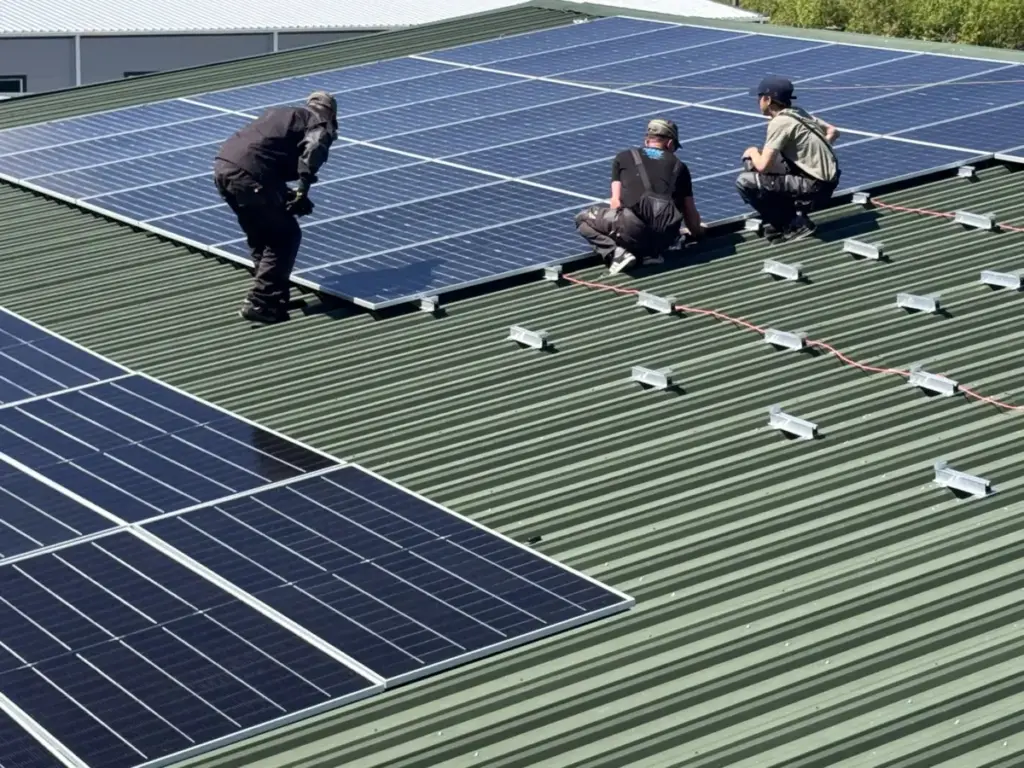
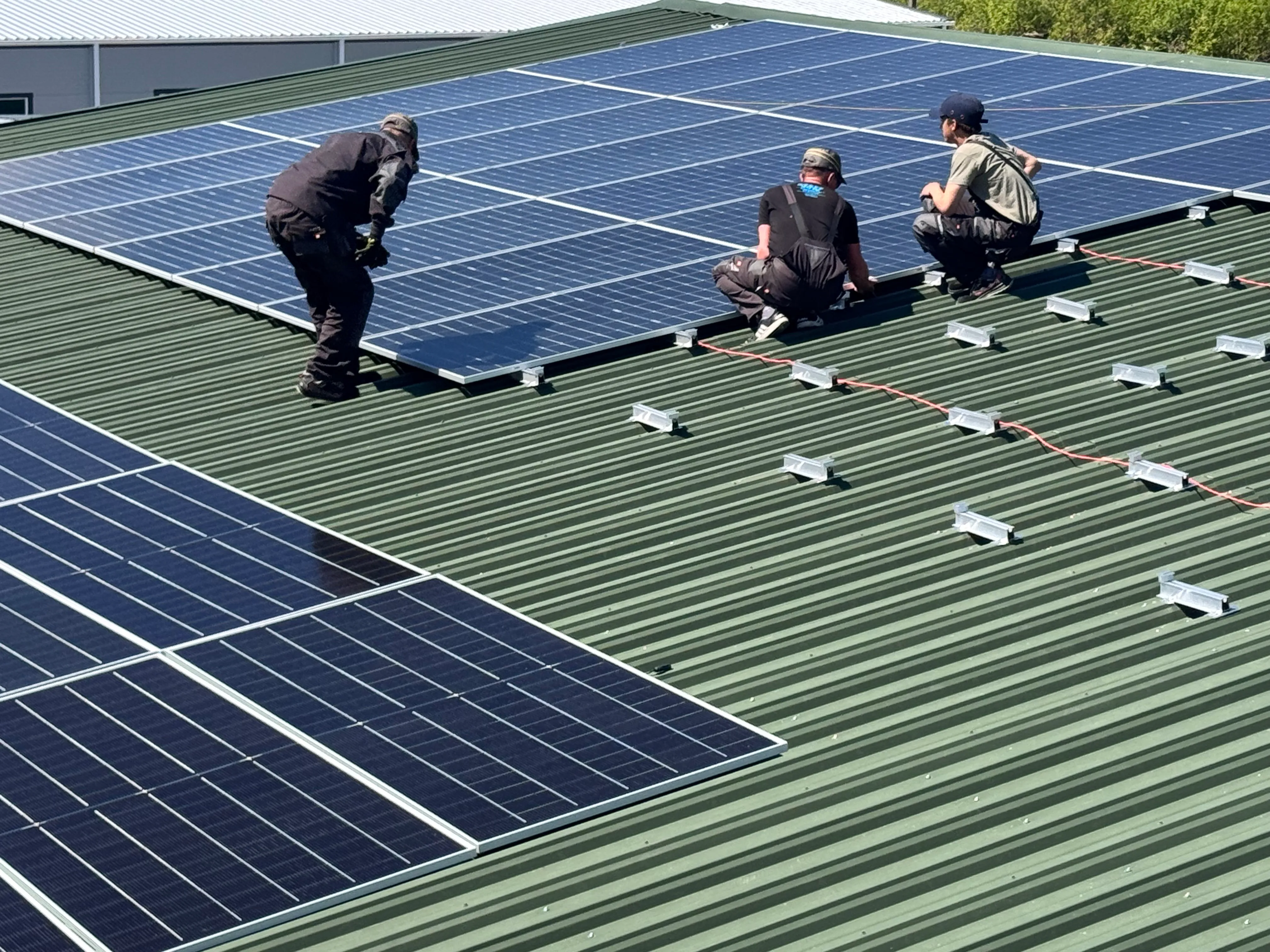
On a bright spring morning in the central Ukrainian town of Bila Tserkva, a small crew of technicians stood atop the roof of a local door-manufacturing facility. Surrounded by rows of freshly mounted photovoltaic panels, they surveyed a landscape transformed not just by industry, but by survival. Since the full-scale Russian invasion began in 2022, this manufacturing hub—like thousands of critical infrastructure points across Ukraine—has endured relentless targeting. The resulting rolling blackouts and catastrophic electricity deficits have crippled manufacturing schedules and plunged local communities into winter freezes.
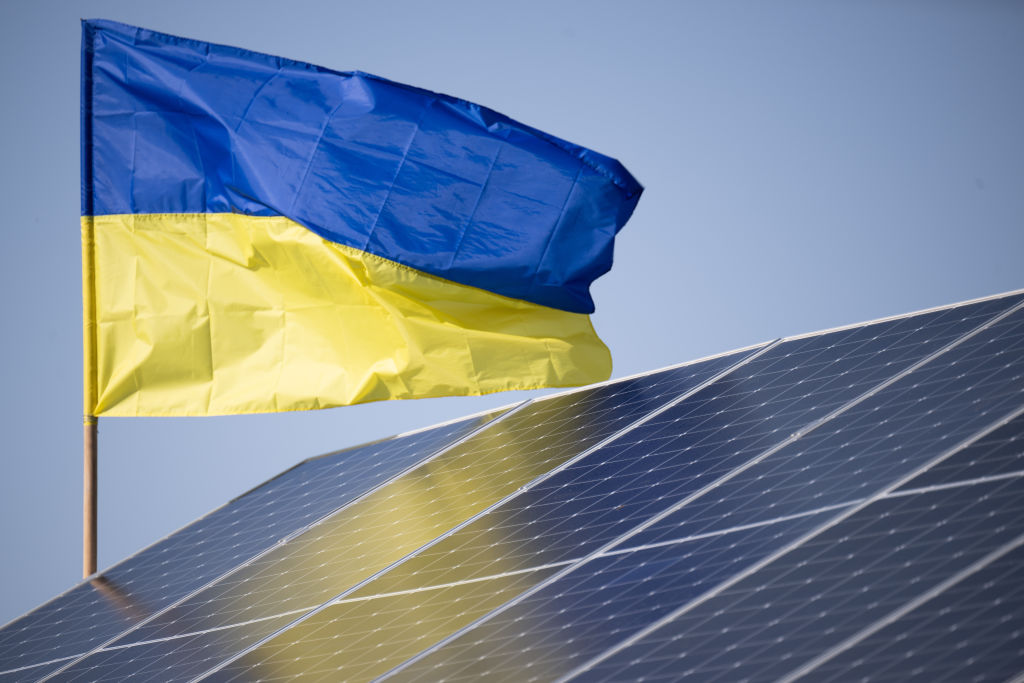
Faced with a centralized energy grid weaponized by persistent missile and drone strikes, Ukrainian businesses, residential complexes, and frontline communities are executing a historic pivot. Rather than repairing massive, easily targeted power stations, the country is rapidly decentralizing. By leaning heavily into rooftop solar arrays, battery storage, and government-backed financing incentives, Ukraine is transforming its energy architecture from a fragile, top-down system into a resilient, distributed network.
What began as an emergency measure to keep assembly lines running and residential water pumps working has evolved into a strategic green-energy transition. As analysts note, solar power in wartime Ukraine is no longer merely an ecological choice; it is a fundamental pillar of national security, economic survival, and basic human dignity.
Detailed Chronology: From Centralized Vulnerability to Distributed Adaptability
The Pre-War Paradigm and the Shock of 2022
Before the roar of Russian artillery shattered the peace in February 2022, Ukraine’s energy system was defined by scale and centralization. Dominated by massive nuclear power plants that generated more than half of the nation’s electricity, alongside coal- and gas-fired plants supplying the remainder, the grid was an inheritance of the Soviet era. While the country had made strides in expanding its renewable energy portfolio—buoyed by a lucrative "green tariff" system that drove installations to roughly 8 gigawatts by 2022—renewables still comprised a minor fraction of the baseload capacity.
When the invasion materialized, this heavy centralization became an acute vulnerability. Russian forces systematically targeted high-voltage substations, transmission lines, and power plants. The geopolitical nightmare deepened when the Zaporizhzhia nuclear power plant—Europe’s largest—was seized and shut down, compounding a pervasive generational anxiety rooted in the legacy of Chernobyl.
Within the first two years of the full-scale war, roughly 30 percent of Ukraine’s installed solar capacity and the vast majority of its southern wind farms were either physically destroyed, swallowed by Russian occupation, or cut off from data monitoring systems.
The Survival Winter and the Pivot to Rooftop Power
As the war dragged on, the weaponization of winter became a harrowing reality. During the coldest months, when temperatures plummeted well below freezing, Russian bombardments crippled heating and electrical grids across the nation. In Kyiv, President Volodymyr Zelenskyy was forced to declare a state of emergency after the capital was left with merely half the electricity supply required to sustain basic urban functions.
At the Bila Tserkva door factory, the situation was emblematic of the national struggle. Rolling blackouts left the manufacturing floor dark and freezing. Employees burned discarded wood in makeshift fireplaces to keep warehouses habitable. While the facility owned backup diesel generators, the skyrocketing cost of fuel made them financially unsustainable for continuous operation.
Tired of tethering his business to a routinely bombed grid, the factory’s owner—identified only as Yaroslav for fear of Russian retaliation—made a definitive choice in early 2024. He contacted Yasno, a prominent private Ukrainian electricity and gas supplier, to commission a rooftop solar installation.
"Switching to solar energy will enable us to further expand our capacity and be a bit more independent from the general grid," Yaroslav explained. "It will be cheaper, more economical, and more ecological."
Yasno, which paused its commercial installation projects during the initial shock of the war, resumed operations in the summer of 2024. By 2026, the company had completed solar installations at 117 distinct sites, amassing a combined capacity of 23 megawatts. Across the nation, this sentiment caught fire. In 2025 alone, the Solar Energy Association of Ukraine estimated that 1.5 gigawatts of new solar capacity was brought online—nearly double the output of the previous year—with projections indicating that 2026 installations will match or exceed that breakneck pace.
Supporting Context & Metrics: Economics, Incentives, and the Frontlines
The explosive growth of distributed solar across Ukraine is not happening in a vacuum. It is heavily catalyzed by agile public-private partnerships and state-sponsored financial mechanisms designed to keep the domestic economy afloat.
The "Affordable Loans 5-7-9" Framework
Recognizing that upfront capital expenditures for solar arrays and energy storage systems are prohibitive during wartime economic contraction, the Ukrainian government introduced targeted financial incentives. Chief among these is the "Affordable Loans 5-7-9" program.
Through this initiative, businesses and housing cooperatives can secure preferential loans featuring interest rates fixed at 5, 7, or 9 percent, depending on the commercial sector. These loans can cover up to 80 percent of total installation expenses. Private suppliers like Yasno guide clients through the application process, enabling warehouse operators, office complexes, and multi-story residential buildings to transform their rooftops into private power generators.
Residential Adaptation and Urban Life
The shift extends far beyond industrial warehouses. In Kyiv, residential management companies are increasingly utilizing the 5-7-9 framework to install photovoltaic panels on apartment blocks.
Volodymyr, a Kyiv-based taxi driver whose apartment building lost power and heating during sub-zero winter blasts, noted the psychological and practical shift among urban dwellers. His building’s management recently approved a rooftop solar project designed to keep emergency water boilers and elevators functioning during grid failures.
"It’s a cool thing that the government covers at least part of the cost," Volodymyr said. "In emergency cases, during power outages, you could turn to the solar panels. There is no harm to the planet. It’s a good thing."
The Frontline Crisis: Solar as a Lifeline
While urban centers grapple with scheduled rationing and infrastructure deficits, the situation in communities closest to the active combat zones is catastrophic. As Russian forces shell frontline towns, power lines are severed repeatedly. Because repair crews face targeted sniper and drone fire, restoring centralized power is frequently impossible, leaving remote villages entirely cut off from electricity, telecommunications, and heating.
In these forsaken pockets, grassroots humanitarian organizations and non-governmental groups have stepped into the breach. Initiatives like Kosmo Tabir, founded by Denny Ugorchuk, specialize in deploying modular solar panels and localized battery storage systems to isolated homes and community centers. Funding for these projects relies on a hybrid model of Western international aid and small-scale crowdfunding from everyday Ukrainians.
The impact of these micro-installations is deeply personal. Ugorchuk recalls a village where solar panels mounted on a private home restored a 50-year-old resident’s access to the internet, allowing her to continue her university education despite the surrounding devastation.
"In Ukraine, solar panels are a basic human right," Ugorchuk asserted. "People should have access to communicate with one another—you can call a doctor, the police, and it helps you feel safe."
Official Statements and Industry Perspectives
Key stakeholders across Ukraine’s energy, regulatory, and humanitarian sectors emphasize that distributed renewables have transitioned from a supplementary power source to the country’s primary defensive energy strategy.
-
Volodymyr Hershtun, Service Maintenance Manager at Yasno:
Leading the Bila Tserkva installation project, Hershtun articulated the core philosophy guiding Ukraine’s engineering response:
"The enemy is trying to destroy energy infrastructure, and we are building what is very easy to restore. And those same systems can store electric energy."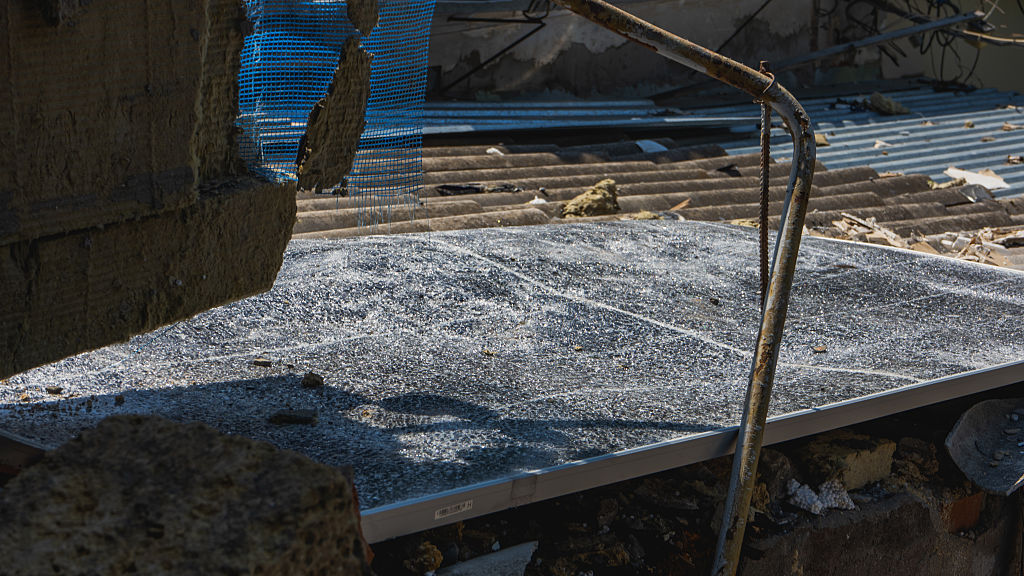
-
Anastasia Vereshchynska, Director of the European-Ukrainian Energy Agency:
Highlighting the structural permanence of the green pivot, Vereshchynska noted:
“Renewables have become the very obvious choice for Ukraine when the full-scale invasion started and when Russia started deliberately and heavily attacking the energy infrastructure, especially the centralized generation facilities.” -
National Bank of Ukraine Assessments:
Economic forecasts underscore the severe macro-level pressures driving this energy shift. In its inflation and economic reports, the National Bank of Ukraine noted that ongoing Russian strikes against power facilities have systematically worsened electricity deficit projections, elevating domestic energy shortfall assumptions from 3 percent to 6 percent. This chronic deficit makes decentralized generation an absolute economic prerequisite.
Future Outlook: Building a Green, Decentralized European Future
As Ukraine looks toward the horizon, the ongoing war has inadvertently accelerated a structural decarbonization and decentralization process that might otherwise have taken decades.
The trajectory of the nation’s energy sector points firmly toward a decentralized model characterized by thousands of micro-grids, commercial rooftop arrays, municipal solar farms, and advanced battery storage units. This architecture makes it mathematically and logistically impossible for an adversary to knock out the national power supply with a single wave of missile strikes.
Furthermore, this rapid integration of renewable generation aligns seamlessly with Ukraine’s long-term ambitions of European Union integration. By embedding green energy standards, honoring its pre-2030 green tariff commitments, and modernizing its grid to be compatible with the European Network of Transmission System Operators for Electricity (ENTSO-E), Ukraine is positioning itself not just as a survivor of aggression, but as a future exporter of clean, resilient energy to the wider European market.
Back on the rooftop in Bila Tserkva, as the technicians secure the final bolts on the array, the symbolism is unmistakable. Beneath a sky shadowed by the ongoing threat of war, the roofs of Ukraine are quietly flowering with silicon and glass—forging an enduring shield of clean, decentralized power that no missile can permanently extinguish.



