


By Tristan Bronca
With reporting updates for the national energy transition framework.
Executive Overview
Today, approximately 80% of Canada’s electricity is generated from emissions-free sources, placing the nation in a strong position relative to many of its global peers. Yet, as the country actively shifts away from fossil fuels across transportation, residential heating, commercial infrastructure, and heavy industry, energy demands are set to skyrocket. According to global accounting firm Lazard’s 2026 levelized-cost-of-energy report, wind and solar remain, by far, the cheapest new sources of electricity that can be rapidly integrated into the national grid.
However, building a truly low-carbon grid requires a massive expansion of capacity. Based on the federal government’s own projections, the widespread adoption of electric vehicles (EVs), heat pumps, data centres, and industrial electrification will require Canada to double its current electricity production in less than 25 years.
Achieving this monumental transformation will not come cheap. A comprehensive sector-by-sector analysis of the capital investments needed to decarbonize the Canadian economy—published via the Corporate Knights Climate Dollars framework—indicates that this comprehensive shift will require approximately $2.17 trillion in capital investments over the next quarter-century. Of that total, $1.26 trillion must be injected directly into grid infrastructure, while $915 billion is required for end-use sector transformations. For the electrical grid alone, this translates to an average capital expenditure of roughly $50 billion per year for 25 years.
While these figures initially appear staggering, experts argue they are not a drain on public coffers, but rather a blueprint for long-term economic resilience, grid security, and dramatically lower electricity rates for everyday Canadians.
Detailed Chronology of Canada’s Energy Transition
Understanding how Canada arrived at this critical juncture requires tracing the policy decisions, legislative actions, and market shifts that have shaped the nation’s electrical grid over the past two decades.
- 2009: Ontario enacts the landmark Green Energy Act, introducing guaranteed, long-term, fixed-price energy contracts designed to incentivize renewable energy development. While successful in launching thousands of megawatts of wind and solar capacity, the top-down legislation strips municipalities of their ability to block green-energy projects, triggering widespread local backlash. Ultimately, 155 Ontario municipalities formally denounce wind turbines raised across rural farmlands.
- 2010: SolarShare, which will grow to become Canada’s largest renewable-energy co-op, is founded in Ontario. It establishes a model enabling everyday retail investors to fund local solar projects through community bonds, returning fixed interest while democratizing clean energy ownership.
- 2016: Canada’s renewable-energy co-op movement hits its historic peak. Shortly thereafter, federal and provincial policy shifts—most notably the discontinuation of guaranteed, long-term fixed-price energy contracts—lead to a sharp contraction. Over the ensuing decade, the number of active renewable-energy co-ops across Canada is cut in half.
- 2024–2025: Capital investments in Canadian grid infrastructure steadily climb. Grid spending—encompassing new power generation projects, battery storage solutions, and network upgrades—totals $32 billion in 2024, rising to $34 billion in 2025. This baseline capital expenditure establishes the energy sector as the second-highest recipient of capital in the nation, trailing only oil and gas extraction ($42 billion).
- May 14, 2026: Prime Minister Mark Carney’s government formally announces the much-anticipated National Electricity Strategy, accompanied by major federal commitments to improve interprovincial grid connections and clear regulatory bottlenecks.
- June 2026: Natural Resources Canada rolls out targeted funding and policy frameworks aimed at advancing a stronger, more reliable, and affordable national grid under the newly minted strategy, reinforcing the federal government’s pledge to backstop the clean-energy transition.
Supporting Context & Metrics: The Cost of Action vs. Inaction
Transforming Canada’s sprawling, fragmented energy grids requires confronting systemic financial and logistical realities. Annual investments of $50 billion may seem daunting when compared against the $34 billion spent on grid updates in 2025. Yet, failing to make these investments carries an even higher economic penalty.
According to research conducted by Corporate Knights, the long-term cost savings of an integrated national grid dwarf the initial capital outlays. A single, well-coordinated trans-Canada transmission line—estimated to cost roughly $100 billion—would yield up to $255 billion in net savings by optimizing load balancing and preventing regional energy shortages. Furthermore, subsequent system-wide improvements could save hundreds of billions of dollars more in fuel imports, maintenance, and redundant local infrastructure, ultimately driving down utility bills for millions of Canadian households and businesses.
The Funding Breakdown
Of the $1.26-trillion grid-funding equation outlined in the Climate Dollars report:
- 20% to 25% will be financed directly by government mechanisms, including direct funding programs (such as the Smart Renewables and Electrification Pathways Program), specialized tax credits, and public-private financing bodies.
- 75% to 80% must be mobilized by private-sector players, including institutional investors, pension funds, private utilities, and citizen-led capital initiatives.
The Geography and Regulatory Maze
Canada’s unique geography presents some of the most complex engineering and regulatory challenges in the world:
- Provincial Jurisdiction: Canada’s electricity systems are strictly administered on a provincial and territorial basis, resulting in a fragmented regulatory landscape that complicates cross-border energy sharing.
- Remote Diesel Dependence: More than 200 remote, off-grid communities—predominantly in the northern territories and remote rural pockets—still rely entirely on diesel generators year-round for electricity and heat.
- The NIMBY Challenge: While centralized capital is essential for large-scale generation, top-down directives frequently face local resistance. The historical fallout from Ontario’s 2009 Green Energy Act—where 155 municipalities formally opposed wind turbine expansions—demonstrates that social license is just as vital as financial capital.
Official Statements and Policy Frameworks
The unveiling of the federal National Electricity Strategy in mid-2026 marked a pivotal shift in how Ottawa views federal-provincial cooperation. For decades, provincial autonomy over natural resources and power generation created a patchwork of isolated electrical islands.
In announcing the forthcoming national strategy, Prime Minister Mark Carney emphasized that the challenges of climate change, economic competitiveness, and surging electricity demand require an unprecedented level of national unity. Natural Resources Canada echoed this sentiment in its subsequent June policy briefs, noting that "Canada takes action to advance a stronger grid and increase reliable, affordable energy" by bridging regulatory divides and incentivizing interprovincial transmission corridors.
However, federal officials acknowledge that public funds alone cannot bridge the $1.26-trillion infrastructure gap. Private capital and retail investment vehicles—such as community bonds—are viewed as essential tools for securing local buy-in and accelerating project deployment without inflating government debt.
The Opportunity: Democratizing Capital Through Community Bonds
While institutional investors and pension funds are expected to shoulder the vast majority of the private-sector funding burden, community bonds offer a compelling mechanism to bring ordinary citizens directly into the energy transition.
Requiring a relatively low minimum investment—often starting at just $1,000—community bonds allow retail investors to act as direct financiers for renewable energy projects administered by local cooperatives. These initial investments function essentially as loans to the co-op, which are then repaid with interest over an agreed-upon term.
Advantages of Renewable Energy Co-ops
- Fixed-Income Stability: Unlike public stock in a for-profit corporation, bonds provide fixed returns that are not directly tied to the fluctuating equity value of the enterprise.
- Democratic Governance: As Brian Chang, general manager of Canada’s largest renewable-energy co-op SolarShare, explains: "If you invest in a solar company, you also don’t get much say. Here, every member gets one vote." Regardless of whether an individual invests $1,000 or $100,000, governance remains strictly egalitarian.
- De-Risked Development: Established co-ops typically conduct rigorous internal feasibility analyses, outsource initial construction to vetted contractors, and buy project ownership back at a premium once operational risks have been mitigated.
Potential Risks for Retail Investors
Financial advisors note that while community bonds can offer attractive returns—with SolarShare rates hovering around 4% on three- to seven-year bonds—investors must weigh specific structural risks:
- Lack of a Secondary Market: Community bonds generally lack a robust secondary market, meaning investors may find them difficult to sell before their official maturity date.
- Issuer Risk: Unlike government-guaranteed bonds or GICs, community co-op bonds carry the inherent risk of issuer default if a project underperforms.
The Momentum: Case Studies in Decentralized Success
Despite regulatory headwinds, grassroots renewable energy co-ops are demonstrating what is possible when communities take energy production into their own hands.
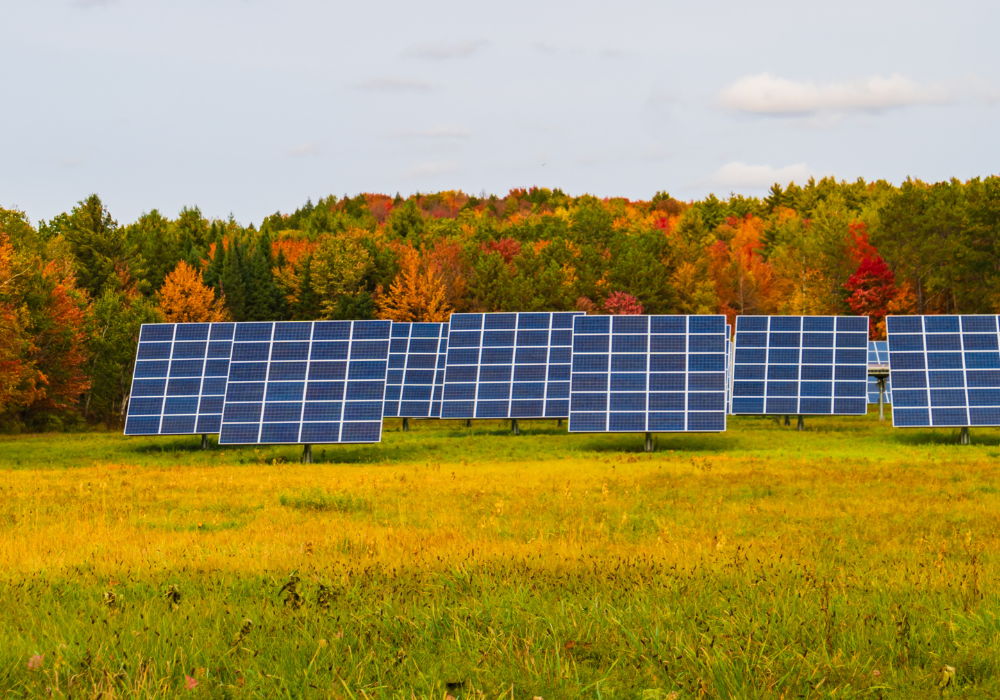
SolarShare currently owns and operates 51 solar projects across Ontario. Its portfolio ranges from commercial rooftop solar installations on factories and community centres throughout the Greater Toronto Area to massive ground-mount "Sundance" arrays situated on non-arable agricultural land in Timiskaming, north of Sudbury. Collectively, these installations generate enough clean electricity to power approximately 2,000 homes annually, offsetting roughly 560 tonnes of carbon dioxide equivalent each year.
Since its founding in 2010, SolarShare’s membership has expanded to include more than 2,000 active investors who have collectively earned upward of $17 million in interest on a total capital deployment of roughly $80 million. While bond yields were historically much higher due to lucrative government-backed contracts, today’s rates remain highly competitive with conventional fixed-income products, inspiring the co-op to continually explore new revenue-generating ventures.
Future Outlook: Decentralization as the Cornerstone of Grid Resilience
Canada stands at a crucial crossroads. According to data compiled by Royal Roads University researchers, there are currently just 82 active energy co-ops across Canada, collectively owning or co-owning 214 renewable-energy projects. By contrast, European nations have embraced decentralized models far more aggressively: Germany boasts 847 energy co-ops, and the Netherlands accounts for 713.
The number of active renewable cooperatives in Canada has been cut in half since its 2016 peak, hampered by complex fundraising regulations and restrictive provincial rules governing how independent power producers sell electricity back to the main grid.
Yet, the overarching trajectory of Canada’s energy sector is undeniably shifting. Decarbonizing the national grid will require more than just massive, centralized megaprojects. While a trans-Canada transmission line is vital for moving offshore wind power generated in the Maritimes to meet peak winter demand in southern Ontario, that continental backbone must be reinforced by a resilient web of localized power-generation nodes spanning every province and territory.
Canada’s historical energy playbook prioritized centralized, top-down electricity generation and distribution. Today, policymakers, economists, and engineers increasingly recognize that decentralized solutions coupled with deep community buy-in are essential to the nation’s energy future. If the political will holds and regulatory frameworks continue to modernize, community-backed financing and cooperative models may well prove to be Canada’s most effective instruments in building the grid of tomorrow.



