Executive Overview
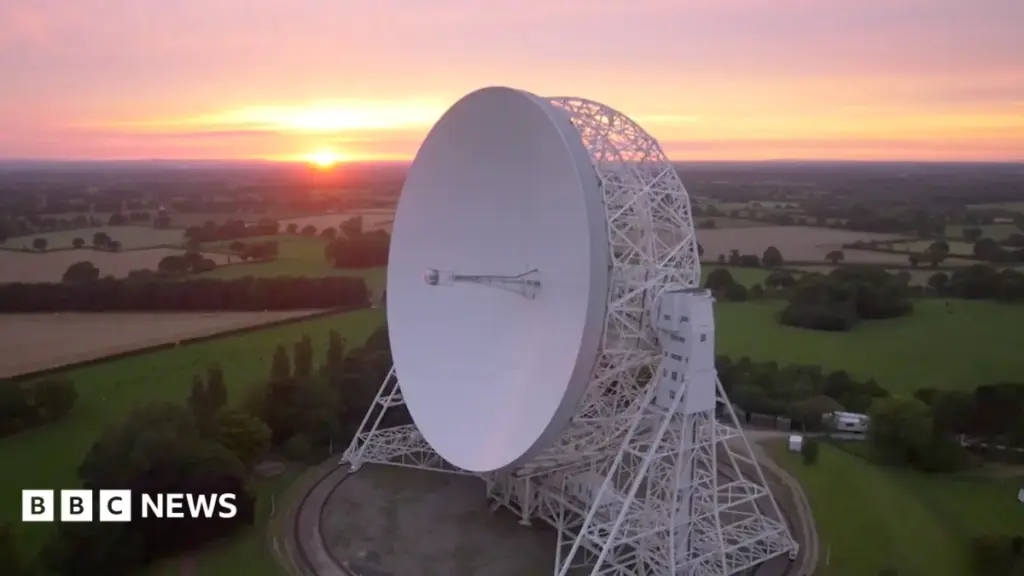
In a dramatic and definitive intervention in the House of Commons, Prime Minister Andy Burnham has pledged to secure the long-term future of the iconic Jodrell Bank Observatory, directly challenging a controversial funding decision that threatened to decommission one of the crown jewels of global astronomy. At the center of the controversy is the historic Lovell Telescope—an engineering marvel that has stood as a monumental silhouette on the Cheshire plains since 1957. As the world’s third-largest steerable radio telescope, the site has not only charted the course of the space age and mapped the invisible universe, but has also served as a cornerstone of British scientific prestige and educational inspiration for nearly seven decades.
The existential threat to the facility materialized earlier this year when UK Research and Innovation (UKRI) announced that the observatory would not be prioritized for further funding once its current operational agreement expires in March 2028. This revelation triggered widespread alarm within the international scientific community, local government, and heritage preservation circles. The decision exposed a glaring friction point between modern bureaucratic funding models and the preservation of irreplaceable national infrastructure.
Facing intense parliamentary pressure from local representatives, Prime Minister Burnham delivered a robust counter-commitment from the despatch box. Rejecting the notion of the telescope’s decline, the Prime Minister framed Jodrell Bank not merely as a utilitarian instrument for contemporary astrophysics, but as an indispensable cultural and historical heritage asset. By committing to spearhead a direct intervention involving regional members of parliament and key stakeholders, the Prime Minister has set the stage for a high-stakes rescue operation, injecting renewed hope into the future of British space exploration and science heritage.
Detailed Chronology: From Space Race Pioneer to Funding Crisis
1940s–1957: The Genesis of a Technological Titan
The history of Jodrell Bank is inextricably linked to the visionary ambition of its founder, Sir Bernard Lovell. In the aftermath of the Second World War, Lovell—then a young physicist at the University of Manchester—sought to investigate cosmic rays using surplus radar equipment. Moving his operations to the Cheshire countryside to escape the electrical interference of urban Manchester, Lovell conceived of an unprecedentedly large, fully steerable radio telescope.
Despite facing severe financial hurdles, political skepticism, and monumental engineering challenges, construction began in the early 1950s. When the colossal dish was completed in 1957, just in time to track the Soviet launch of Sputnik 1, it fundamentally altered humanity’s relationship with the cosmos. It was the first telescope of its kind capable of tracking artificial satellites and deep-space probes, instantly thrusting Britain to the forefront of the nascent space age.
Decades of Discovery: Mapping the Cosmos
Over the subsequent decades, the Lovell Telescope and its successors at Jodrell Bank played pivotal roles in major astrophysical breakthroughs. From confirming general relativity through precise pulsar timing to discovering gravitational lenses and mapping the structure of the Milky Way, the observatory evolved into a global nerve center for radio astronomy.
In recognition of its profound contributions to human knowledge and architectural ingenuity, the site was inscribed as a UNESCO World Heritage Site in 2019. This designation placed Jodrell Bank alongside global treasures such as the Grand Canyon and the Taj Mahal, cementing its status as a monument of outstanding universal value to humanity.
July 2024: The UKRI Funding Decision
Despite its protected heritage status and ongoing scientific relevance, the operational future of the observatory was cast into deep shadow in July. UK Research and Innovation (UKRI)—the national funding agency that coordinates public investment in science and research—released a strategic assessment indicating that Jodrell Bank would not be prioritized for funding renewal following the expiration of its current multi-year grant agreement in March 2028.
UKRI defended the decision by framing it as the inevitable outcome of a rigorous, evidence-based prioritization process designed to balance finite public budgets against competing demands within the UK science ecosystem. However, critics argued that the decision failed to account for the unique dual nature of the facility as both an active research installation and a revered public heritage landmark.
Autumn: Parliamentary Mobilization
The fallout from the UKRI announcement quickly spilled into the political arena. Constituents and local leaders expressed outrage over the prospective loss of an institution that has defined the regional identity of Cheshire and Greater Manchester for generations. Sarah Russell, the Member of Parliament for Congleton—whose constituency encompasses the Jodrell Bank site—began mobilizing parliamentary allies to demand government intervention. Supported by Macclesfield MP Tim Roca, Russell pressed the administration to recognize the medium-term financial cliff edge facing the observatory.
The Despatch Box Pledge
The crisis reached a legislative climax when Prime Minister Burnham was directly questioned on the floor of the House of Commons regarding the observatory’s fate. Rejecting the bleak outlook presented by the funding withdrawal, Burnham offered an unequivocal guarantee that the facility would not be allowed to fail under his administration, setting in motion a high-level rescue plan.
Supporting Context & Metrics: The Value of Jodrell Bank
To fully comprehend the gravity of the standoff between UKRI and the government, one must examine the multifaceted value proposition that Jodrell Bank represents to the United Kingdom and the global scientific community.
1. Scientific Output and the Jodrell Bank Centre for Astrophysics (JBCA)
Jodrell Bank is far more than a single historic instrument; it is the operational heart of the Jodrell Bank Centre for Astrophysics (JBCA), one of the largest and most successful astronomy research groups in Europe.
- The Lovell Telescope: Boasting a dish diameter of 76 meters, it remains an exceptionally sensitive instrument, particularly valuable for pulsar timing arrays, multi-wavelength astronomy, and tracking space probes.
- e-MERLIN: Jodrell Bank coordinates e-MERLIN, a National Facility operated by the University of Manchester on behalf of UKRI. This array links radio telescopes across the UK, creating a virtual telescope with a resolution comparable to the size of the country itself.
- The Square Kilometre Array (SKA): Jodrell Bank serves as the global headquarters for the SKA Observatory (SKAO), coordinating what will soon be the world’s largest radio telescope network spread across South Africa and Australia. Losing the foundational node in Cheshire would represent a devastating symbolic and operational blow to the UK’s leadership in the SKA project.
2. Economic and Educational Impact
Beyond pure research, the observatory is a vital engine for regional development and public engagement:
- Tourism and Heritage: Attracting tens of thousands of visitors annually, the site’s Discovery Centre is a premier STEM tourism destination in the North West of England.
- The "Jodrell Bank Generation": Prime Minister Burnham invoked a deeply shared cultural memory when he noted that virtually every schoolchild in his generation took a field trip to the observatory. Educational outreach programs at Jodrell Bank reach tens of thousands of students annually, inspiring the next generation of engineers, programmers, and astrophysicists.
- Soft Power: As a UNESCO World Heritage Site, Jodrell Bank projects British scientific excellence, international collaboration, and cultural heritage onto the global stage.
Official Statements and Political Dialogue
The clash over Jodrell Bank has drawn sharp contrasts between bureaucratic resource allocation and political vision.
Prime Minister Andy Burnham
In his impassioned address to the House of Commons, Prime Minister Burnham made it clear that technocratic funding formulas must not override national heritage and scientific ambition:
"Every one of my generation went on a school trip to Jodrell Bank, and there is no way that we can see its demise, and it won’t happen under my government."
Acknowledging the complex fiscal pressures facing the research sector, Burnham emphasized that Jodrell Bank occupies a singular category that defies standard departmental accounting:
"I know there are changes that have been made in relation to research funding, but Jodrell Bank is a heritage asset for the country, as well as a research asset."
Reassuring local MPs of his administration’s active engagement, the Prime Minister concluded with a definitive pledge:
"There must be a way to save Jodrell Bank, and I give a commitment today, at this despatch box, we will find it."
Congleton MP Sarah Russell
Sarah Russell, whose constituency bears direct responsibility for hosting the observatory, has emerged as a key parliamentary champion for the site. Raising the alarm in Westminster, Russell articulated the immediate danger facing the facility:
"Jodrell Bank is facing a significant problem in the medium term because of funding cuts."
Russell called for a coordinated, cross-regional effort, urging the Prime Minister and No 10 North to collaborate closely with herself and neighboring Macclesfield MP Tim Roca to formulate an emergency rescue package.
UK Research and Innovation (UKRI)
Defending its institutional stance, UKRI maintained that its decisions are anchored in rigorous methodology. In an official statement released following the parliamentary exchange, the agency reiterated:
"The decision regarding the site was the result of a comprehensive, evidence-based prioritisation process."
UKRI officials have argued that while the contribution of Jodrell Bank is undeniable, ongoing budgetary constraints require difficult trade-offs between legacy infrastructure and emerging scientific frontiers, such as quantum computing, artificial intelligence, and next-generation space missions.
Future Outlook: Navigating the Path to 2028
With Prime Minister Burnham having issued a direct mandate from the despatch box, attention now turns to the mechanics of how Jodrell Bank’s funding crisis will be resolved ahead of the March 2028 deadline. Several potential pathways are currently being evaluated by policy analysts, government advisors, and university leaders:
1. Hybrid Funding Models
One likely solution involves decoupling the site’s operational funding into distinct streams: separating pure scientific research grants (managed via traditional academic funding councils) from heritage conservation and educational outreach budgets (supported through departments such as the Department for Culture, Media and Sport or dedicated national lottery heritage funds). By distributing the financial burden across multiple government portfolios, the reliance on a single UKRI funding line can be mitigated.
2. Strategic Partnerships and Endowment Initiatives
University of Manchester administrators, in partnership with regional leaders, are exploring expanded philanthropic fundraising and corporate sponsorship frameworks. While public research infrastructure has historically relied on state backing, the global prestige of Jodrell Bank could potentially unlock significant private-sector endowment capital, particularly from technology and aerospace corporations invested in satellite communications and deep-space research.
3. Ministerial Taskforce and Stakeholder Engagement
True to his commitment in the House of Commons, Prime Minister Burnham is expected to establish a dedicated ministerial taskforce. This body will bring together MPs Sarah Russell and Tim Roca, representatives from the University of Manchester, UKRI executives, and heritage conservationists. The taskforce will be charged with auditing the exact financial shortfall facing the observatory post-2028 and designing a sustainable, long-term funding framework that guarantees the Lovell Telescope remains operational for decades to come.
Conclusion
The political battle over Jodrell Bank transcends a routine budgetary dispute. It touches upon fundamental questions regarding how the United Kingdom values its past while investing in its scientific future. As Prime Minister Burnham’s administration moves to honor its commitment, the historic dishes of Cheshire look set to continue scanning the heavens—ensuring that Britain remains an active participant in humanity’s ongoing quest to understand the universe.