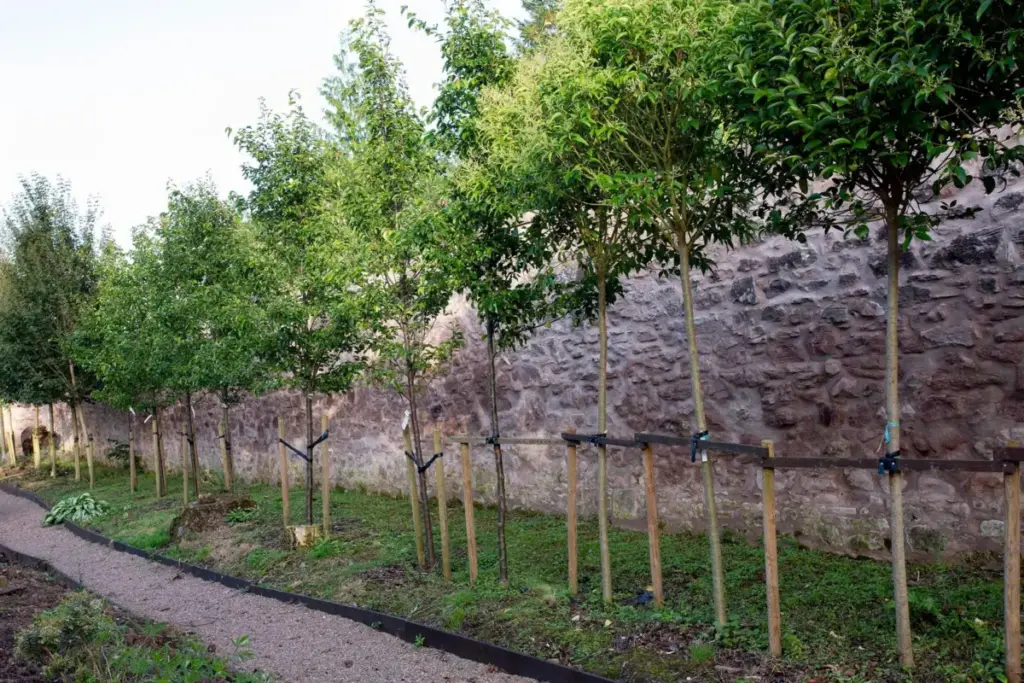
In an era defined by densifying suburban developments, urban infill, and shrinking property footprints, the modern garden has transitioned from a sprawling agrarian escape into a precious, often overlooked micro-sanctuary. Yet, this newfound intimacy frequently comes at the cost of personal seclusion. Whether facing the intrusive gazes of elevated windows, dealing with unsightly boundary walls, or mitigating the psychological encroachment of urban traffic, property owners increasingly find themselves seeking organic solutions to establish boundaries.
While architectural fencing and masonry walls offer immediate, hard-lined solutions, they frequently fail to soften the landscape, lack ecological value, and can induce claustrophobia within smaller plots. The superior, long-term alternative lies within living infrastructure: trees, shrubs, and climbers carefully curated to provide year-round privacy, structural integrity, and ecological richness.
This comprehensive report examines thirty-seven of the most effective botanical species for garden screening. Evaluated through rigorous horticultural criteria—including privacy efficacy, aesthetic value, growth dimensions, and environmental resilience—this guide equips property owners, landscape architects, and urban planners with the authoritative data needed to transform exposed plots into tranquil, verdant retreats.
Detailed Chronology and Botanical Frameworks
Establishing an effective living screen requires a strategic, long-range timeline. Unlike static construction projects, botanical boundaries evolve through distinct life stages: initial establishment (years one through three), structural development (years four through ten), and ultimate maturity (decades one through three and beyond). Understanding this biological chronology ensures that planting decisions align with spatial limitations and immediate privacy requirements.
The Vertical Architects: Trees for Maximum Elevation
For multi-story overlooking issues, standard trees provide an indispensable upper tier of privacy.
1. Italian Cypress (Cupressus sempervirens): Renowned for its pencil-thin, columnar silhouette, this Mediterranean native reaches monumental heights of up to 15 meters within 20 years while maintaining a remarkably narrow spread of just 2.5 meters. With a Privacy Rating of 4/5 and a Beauty Rating of 4/5, it offers an exceptional vertical barrier for tight spaces and exposed spots, demanding minimal lateral footprint.
2. Holm Oak (Quercus ilex): Boasting an impressive Privacy Rating of 5/5, this robust evergreen features dense, leathery, dark green foliage capable of withstanding salt-laden coastal winds and harsh urban pollution. Reaching 8m x 6m in two decades, it forms an impenetrable year-round shield, though caution must be exercised regarding its toxicity to pets and potential invasiveness near ancient woodlands.
3. Silver Birch (Betula pendula): For those seeking a lighter screen that avoids casting dense shade, the silver birch is unmatched. Reaching heights of 25m with a delicate, fluttering canopy, its iconic white bark provides striking winter interest, earning it a Privacy Rating of 3/5 and a Beauty Rating of 4/5.
4. Ornamental Pear (Pyrus calleryana ‘Chanticleer’): Displaying an upright, pyramidal habit (5m x 3m), this cultivar is among the first trees to leaf out in spring and the last to drop foliage in autumn. It is exceptionally tolerant of urban pollution, providing a long season of dense cover coupled with brilliant autumn crimsons and purples.
The Dense Defenders: Evergreens and Security Shrubs
When security and year-round visual blockades are paramount, dense evergreens and thorny specimens deliver unmatched utility.
5. Holly (Ilex aquifolium): A traditional British stalwart combining a Privacy Rating of 4/5 with dense, prickly foliage that forms a formidable security barrier. Thriving in both sun and shade across diverse soil types, its dark green leaves and red winter berries provide vital sustenance for local wildlife.
6. Photinia x fraseri ‘Red Robin’: Valued for its explosive crimson young foliage, this small tree/shrub (6m x 4m) offers a vibrant twist on evergreen screening. It responds exceptionally well to frequent clipping, densifying into a colourful boundary that tolerates urban air pollution.
7. Cherry Laurel (Prunus laurocerasus): Rapid-growing and relentlessly lush, cherry laurel (6m x 5m) quickly establishes a thick, glossy screen. However, due to its potential invasiveness via bird-dispersed seeds and its toxicity to humans and pets, it requires proactive pruning management before berry set.
8. Yew (Taxus baccata): The quintessential choice for formal hedging and topiary, yew commands a Privacy Rating of 5/5. Though slow-growing, its capacity to regenerate from ancient wood makes it an enduring intergenerational investment, provided its toxic foliage is handled with appropriate protective gear.
Supporting Context & Metrics: The Screening Matrix
To assist designers and homeowners in selecting the ideal species, the following data matrix synthesizes critical performance metrics across tree, shrub, and climber categories.
Species Common Name
Botanical Name
Type
Privacy Rating (1-5)
Beauty Rating (1-5)
Average Dimensions (H x W in 20 Yrs)
Italian Cypress
Cupressus sempervirens
Tree
4
4
15m x 2.5m
Holly
Ilex aquifolium
Tree
4
3
15m x 4-8m
*Photinia ‘Red Robin’
Photinia x fraseri
Shrub/Tree
3
4
6m x 4m
Holm Oak
Quercus ilex
Tree
5
3
8m x 6m
Cherry Laurel
Prunus laurocerasus
Shrub
4
2
6m x 5m
Japanese Privet
Ligustrum japonicum
Shrub/Tree
3
4
4m x 4m
Strawberry Tree
Arbutus unedo
Shrub/Tree
3
4
5m x 4m
Tree Fern
Dicksonia antarctica
Fern
3
5
4m x 4m
Hornbeam
Carpinus betulus
Tree
4
4
10m x 6m
Yew
Taxus baccata
Tree
5
3
20m x 10m
Star Jasmine
Trachelospermum jasminoides
Climber
4
5
9m x 3m
Ivy
Hedera helix
Climber
5
3
8m x 4m
Official Statements and Horticultural Best Practices
Professional arborists and landscape horticulturists emphasize that successful garden screening extends beyond mere aesthetic preference; it requires adherence to environmental compatibility, biosecurity, and legal boundaries.
According to leading horticultural bodies, property owners must carefully evaluate toxicological profiles before introducing plants into family gardens:
"Species such as Yew (Taxus baccata), Cherry Laurel (Prunus laurocerasus), and Laburnum possess powerful cardiac glycosides or cyanogenic glycosides that present genuine toxic risks to domestic pets and small children if ingested. Furthermore, vigorous climbers like Ivy (Hedera helix) and Trachelospermum require protective gloves during handling due to potential skin allergen properties."
"Plants selected for urban boundaries must be managed responsibly. Species capable of producing abundant bird-1dispersed seed, such as Cherry Laurel and certain cotoneasters, pose documented ecological threats when escaping into native woodlands and semi-natural habitats."
Maintenance protocols dictate that deciduous hedges—such as Hornbeam (Carpinus betulus) and Beech (Fagus sylvatica)—be pruned annually in late summer to encourage marcescence (the retention of dead brown leaves through winter), ensuring privacy persists even during colder months. Conversely, fast-growing evergreen screens like Leyland cypress or Privet demand strict bi-annual clipping to prevent root-to-shoot imbalances and neighborhood disputes over light obstruction under the High Hedges legislation.
Future Outlook: The Evolution of Vertical Privacy
As urban densities continue to surge over the coming decades, the traditional wooden fence is projected to decline in favour of integrated, multi-functional living boundaries. Horticultural trends indicate a rising demand for climate-resilient, pollution-tolerant species capable of mitigating micro-climatic urban heat island effects while simultaneously filtering particulate air pollution.
Innovations in vertical greening—such as modular living walls featuring evergreen climbers like Star Jasmine (Trachelospermum jasminoides) and self-clinging deciduous species like Parthenocissus henryana—will increasingly replace concrete block walls. These living barriers not only maximize spatial efficiency in compact gardens but also actively support declining urban pollinator populations, merging acoustic dampening, aesthetic elegance, and absolute personal privacy into a single, sustainable horticultural ecosystem.