

Executive Overview
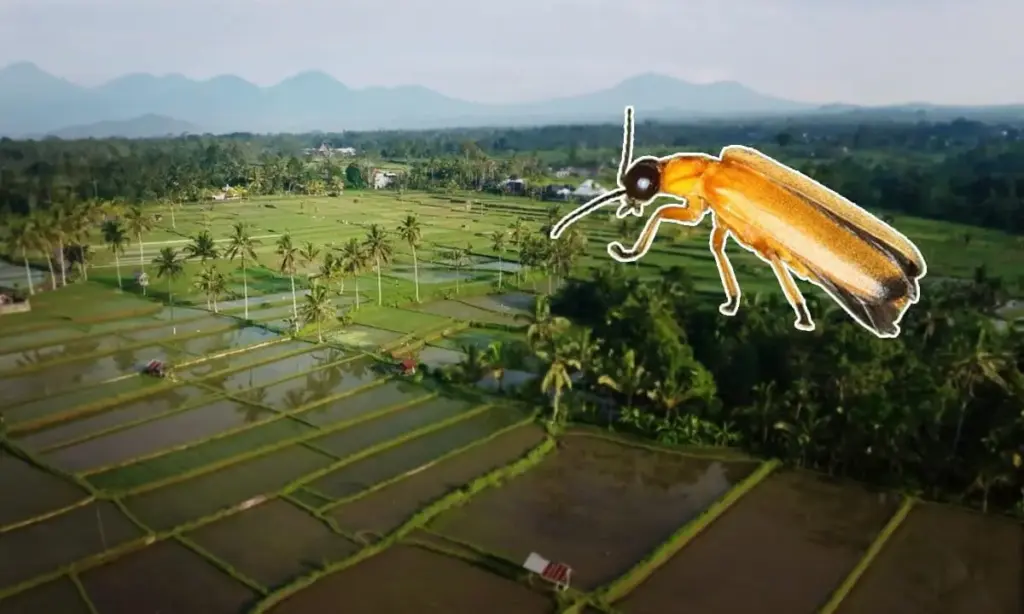
In the fast-developing cultural heartlands of Bali, Indonesia, a quiet ecological crisis has unfolded largely unnoticed beneath the neon glow of expanding tourism and modern urbanization. For centuries, the island’s verdant rice terraces pulsed with the bioluminescent rhythm of countless fireflies—a natural phenomenon so dense it was once remembered by village elders as "clouds of fireflies." For Wayan Wardika, these luminous insects were the defining backdrop of his childhood. Growing up in a rural Balinese village before the widespread arrival of electricity, a young Wardika would collect the gentle bugs, using their organic glow as living lanterns.
Four decades later, that luminous landscape had vanished. Returning to his home village, Wardika was struck by a profound silence and darkness in the air: the fireflies were gone.
This localized disappearance mirrors a broader, alarming trend across Southeast Asia. Driven by relentless habitat loss, encroaching light pollution, the heavy application of synthetic agricultural chemicals, and the accelerating impacts of climate change, firefly populations are in freefall. At least four species in the region currently hover on the brink of extinction. This decline is far more than an aesthetic tragedy; it represents a critical fracture in local ecosystems. Fireflies act as essential pollinators, and certain predatory species serve as natural pest controllers by feeding on snails that devastate rice crops.
Determined to reverse this trajectory, Wardika founded Bring Back the Light in 2020. Based on his family farm, it stands as Indonesia’s sole dedicated firefly conservation initiative. What began as a personal quest to resurrect childhood memories has since evolved into a pioneering, multi-faceted conservation and regenerative agriculture model. Today, Wardika and his small team of scientists are not only breeding and releasing thousands of fireflies back into the wild; they are actively transforming the agricultural economy of rural Bali. By tackling the root causes of habitat degradation—specifically synthetic fertilizers, chemical pesticides, and light pollution—Wardika is proving that economic viability and ecological restoration can go hand in hand, creating a blueprint for coexistence between modern development and vulnerable biodiversity.
Detailed Chronology: From Childhood Memories to Conservation Innovation
The Vanishing Light (The 1980s–2010s)
To understand the urgency of Wardika’s mission, one must look back at the dramatic socio-economic transformation of Bali over the last forty years. In Wardika’s youth, rural infrastructure was minimal. Natural darkness dominated the nightscape, punctuated only by the flickering courtship signals of Lampyridae (fireflies). These insects rely heavily on darkness to communicate, using precise bioluminescent flashes to attract mates and warn off predators.
However, as Bali rapidly developed into a global economic and tourism hub, the introduction of widespread artificial lighting severely disrupted these mating patterns. Concurrently, traditional farming practices gave way to intensive, industrialized agriculture. To maximize short-term yields, local farmers increasingly turned to synthetic fertilizers and broad-spectrum chemical pesticides. These toxins did not just target unwanted pests; they systematically poisoned the soil micro-biome, disrupted water tables, and eradicated the snails, worms, and insects upon which firefly larvae feed. Slowly and methodically, the fireflies were crowded, poisoned, and lit out of existence.
Planting the Seeds of Restoration (2020)
Recognizing that inaction would mean the permanent loss of a keystone species, Wardika took matters into his own hands. In 2020, he established Bring Back the Light on his family’s land. Partnering with a small team of dedicated scientists, including fellow researcher Cindy, Wardika set out to achieve what had never been attempted in Indonesia: a systematic, captive-breeding and repopulation program for native fireflies.
Because little scientific literature existed regarding the breeding habits of Indonesian firefly species, Wardika’s team had to pioneer their own methodologies. The process proved to be exceptionally painstaking and demanding of meticulous care:
- The Egg Stage: Adult fireflies mate and lay tiny eggs, which the scientists painstakingly locate, harvest, and count by hand.
- The Larval Stage: Within a few weeks, the eggs hatch into larvae. This phase represents the longest and most fragile period of the lifecycle, requiring up to two years of continuous monitoring, feeding, and environmental stabilization.
- The Pupal Stage: After maturing, the larvae transform into pupae over the course of a couple of weeks.
- The Adult Stage: Emerging as fully formed fireflies, the adults live for a brief, intense window of just three weeks, during which they feed, mate, and repeat the cycle.
Through relentless effort, the team has successfully bred, nurtured, and released close to 20,000 firefly larvae and adults back into targeted wild habitats across Bali.
Scaling Up: Regenerating the Soil (2020–Present)
As the conservation program progressed, Wardika and his team made a critical scientific realization: simply releasing captive-bred fireflies into a chemically degraded landscape is a futile exercise. Fireflies are sensitive bio-indicators. Their presence or absence serves as an immediate health report card for the environment; if the air, water, and soil are polluted, fireflies cannot survive.
Realizing that systemic ecological revival required fixing the underlying habitat, Wardika expanded his vision four years ago. He shifted his focus from mere captive breeding to total ecosystem regeneration, starting quite literally with livestock waste.
Establishing a partnership with a local holy white cow conservation initiative, Wardika began collecting manure to process into nutrient-rich organic compost. This homemade fertilizer serves as a direct, chemical-free alternative to the synthetic inputs traditionally used by rice farmers.
"We used to choose cow dung to make fertilizer because it already has earthworms and millions of microorganisms that live there, which is what the plants need," Wardika explains. "Our main goal is actually to regenerate the soil so that the plants have all the minerals and the nutrition that they require."
To combat synthetic pesticides, Wardika developed an innovative, closed-loop concoction known as "eco-enzyme." By collecting rejected, surplus fruit from local markets, his team ferments the organic waste into a powerful formula that naturally deters agricultural pests while simultaneously delivering vital nutrients back into the crops and soil.
Supporting Context & Metrics
The intersection of firefly conservation and modern Balinese agriculture is underpinned by unique environmental data, socio-economic challenges, and structural hurdles.
Ecological Metrics of Bring Back the Light
- Total Releases: Nearly 20,000 firefly larvae and adults successfully returned to the wild since 2020.
- Species Lifecycle Timeline: Egg to larva (weeks); Larval growth phase (up to 2 years); Pupal transformation (weeks); Adult lifespan (3 weeks).
- Target Area: Centered initially on Wardika’s family farm, with ongoing efforts to expand outward across regional farming communities.
- Current Farmer Adoption: 4 local farmers actively participating in the core organic transition scheme, with an ultimate target of converting all 35 farmers within the immediate watershed area.
Socio-Economic Realities: "Filling Pockets Before Hearts"
One of the most profound insights generated by Wardika’s initiative is the recognition that conservation cannot succeed in an economic vacuum. Asking impoverished or financially vulnerable smallholder farmers to abandon conventional, high-yield chemical farming overnight is a recipe for failure. Crop transitions carry real economic risks, including temporary yield dips and unfamiliar pest management curves.
Wardika addressed this behavioral and economic barrier through a uniquely supportive, risk-free model:
- Free Inputs: The initiative distributes Wardika’s proprietary organic compost and fruit-based eco-enzymes to participating farmers completely free of charge.
- Financial Insurance: Wardika personally guarantees and pays back farmers for any financial losses incurred during their transition away from synthetic chemicals.
- Circular Economy Creation: By providing all necessary biological inputs locally, the project eliminates reliance on expensive corporate chemical imports.
Funding for this ambitious subsidization model is generated directly through sustainable ecotourism—specifically educational firefly conservation tours hosted on the farm—alongside revenue generated from the sale of high-quality organic produce grown on-site.
Official Statements & Perspectives
The philosophy driving Bring Back the Light transcends local insect preservation; it serves as a philosophical challenge to modern humanity’s relationship with the natural world.
Reflecting on the psychological pivot required to engage local farmers, Wardika notes:
"First, I was trying to touch their hearts. But now I’ve reversed it. I have to fill up the pockets, then we change the hearts." By proving that organic farming ultimately yields healthier, higher-value crops that command better market prices, Wardika bridges the gap between economic survival and ecological stewardship.
Summarizing the ultimate ethos of the project, Wardika emphasizes our collective responsibility to planetary health:
"We humans don’t live alone on this earth. We maintain the sustainability of nature, not just for our generation, but for our future generation. Not just for our kind, but also for the other biodiversity."
Independent scientists and conservationists echo these sentiments, noting that initiatives like Bring Back the Light provide vital templates for grassroots biodiversity protection across Southeast Asia. As urban sprawl continues to fragment remaining wild spaces, decentralized, community-led conservation efforts offer a resilient bulwark against environmental degradation.
Future Outlook: Challenges and Scalability
Looking ahead, Bring Back the Light faces both formidable obstacles and extraordinary opportunities.
The Path to a Pesticide-Free Zone
Wardika’s immediate strategic goal is ambitious: to convince all 35 farmers operating within his local watershed to abandon synthetic chemicals and fully adopt his organic farming model. Achieving this would create a contiguous, pesticide-free sanctuary—a safe haven where fireflies can reproduce, migrate, and thrive without chemical interference.
However, scaling human behavioral change remains the initiative’s steepest challenge. While financial subsidization and risk mitigation have successfully converted pioneering early adopters like Pak Nyoman, convincing a broader network of risk-averse agriculturalists requires patience, undeniable proof of concept, and continuous community engagement. Wardika’s strategy is simple yet powerful: lead by absolute example. By maintaining a flourishing, highly profitable organic demonstration farm, he removes the need for persuasive rhetoric, allowing tangible results to speak for themselves.
Expanding the Blueprint
Beyond the immediate village boundaries, the long-term viability of the project depends on institutional support, broader public awareness, and the continued success of its ecotourism revenue model. If replicated across other regencies in Bali and greater Indonesia, the Bring Back the Light model could fundamentally transform how tropical agricultural landscapes are managed.
Ultimately, the humble firefly has proven to be an unexpected catalyst for profound systemic change. What began as a nostalgic wish to see "clouds of fireflies" once more has matured into a comprehensive blueprint for ecological restoration, proving that when we heal the soil and restore the night, the light—both literal and metaphorical—will eventually return.



