


EXECUTIVE OVERVIEW
The Earth’s climate system has entered dangerous, uncharted waters. Barely two years after the conclusion of the previous cycle, a massive El Niño has materialized in the tropical Pacific, shattering historical temperature records and alarming the global scientific community. Dubbed a "Godzilla" or "super" El Niño by commentators and meteorologists alike, this climatic phenomenon is amplifying the catastrophic baseline of human-caused global heating.
To unpack the mechanics behind this unprecedented event, The Guardian sat down with Professor Mat Collins, a preeminent climate scientist at the University of Exeter. Collins is a world-renowned authority on the dynamics of the El Niño-Southern Oscillation (ENSO) and a lead author on several of the Intergovernmental Panel on Climate Change (IPCC) reports.
According to Collins, while El Niño is a naturally occurring climate pattern, its collision with anthropogenic global heating creates a compounding crisis. Sea surface temperatures in the eastern Pacific have already scaled the 3°C-above-average benchmark—matching the historical highs of 2015—and the event has yet to reach its peak. With projections suggesting regional anomalies could climb as high as 4°C, vulnerable populations across the globe face an escalating barrage of droughts, floods, and food insecurity.
This deep-dive investigation examines the mechanics of the current super El Niño, the complex interplay between natural cycles and fossil-fuel-driven warming, regional vulnerabilities, and the radical adaptation and geoengineering measures scientists are now forced to consider.
What is El Niño? The Mechanics of a Global Disruption
To understand the current crisis, one must first look to the mechanics of the ENSO cycle. El Niño is a natural climate pattern that periodically disrupts normal climatic conditions, instigating cascading weather anomalies across large parts of the globe.
Normally, trade winds blow from east to west across the tropical Pacific, pushing warm surface water toward Asia and Australia while allowing cool, nutrient-rich water to well up off the coast of South America. During an El Niño event, these trade winds weaken or reverse. The warm water pool shifts eastward, smothering the upwelling and causing the central and eastern Pacific to become significantly warmer and wetter.
This massive displacement of heat fundamentally alters global atmospheric circulation, shifting rainfall patterns and triggering severe droughts, floods, and temperature spikes thousands of miles away from the equator. While the cycle typically recurs every three to seven years, its periodicity is notoriously erratic. The previous El Niño occurred during the 2023–24 period, making the rapid return of this new, hyper-charged event a profound concern for meteorologists.
Detailed Chronology and the Overlap with Global Heating
The relationship between natural ENSO variability and human-caused global heating can be conceptualized as two distinct phenomena layering on top of one another.
"The easiest way to think about this is that they are two separate things that layer on top of each other," explains Professor Collins. "If you’ve already got drought conditions as a result of global warming, then an El Niño is going to exacerbate that."
The interaction between these forces, however, is extraordinarily complex. While modern climate models can simulate centuries of interactions to study this layering effect, observational historical records are too sparse to provide absolute clarity. Nevertheless, palaeoclimate reconstructions suggest that the present-day frequency of severe El Niño events is highly unusual in a historical context.

The "Godzilla" Event of 2026
The trajectory of the current El Niño has stunned oceanographers. Sea surface temperatures in the core El Niño region of the Pacific have already equaled the previous historic high of 3°C above average, recorded during the legendary 2015–16 event. Crucially, the system has not yet peaked; climatologists will not know the true ceiling of this event until the end of the year.
Measuring the raw scale of contemporary El Niños is fraught with difficulty because the baseline ocean temperature is steadily ratcheting upward due to climate change. Disentangling how much of the record-breaking warmth is driven by natural variability versus anthropogenic greenhouse gas emissions remains a central challenge for researchers. However, current trends indicate eastern Pacific temperatures could surge to 4°C above average—a threshold far beyond any recorded precedent.
Supporting Context and Metrics: Global Impacts and Regional Fallout
As the El Niño approaches its peak intensity, its fingerprints are already being detected across international agricultural belts, forest ecosystems, and weather systems.
Ecosystems Under Siege: Amazon and Indonesia
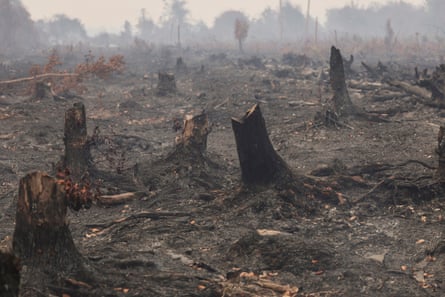
The timing of the El Niño coincides with heightened vulnerability in critical carbon sinks. Around the peak of the cycle, scientists anticipate severe droughts across the Amazon rainforest, dramatically increasing the risk of catastrophic forest fires. Simultaneously, Indonesia faces an acute threat of prolonged dry spells and uncontrolled wildfires, mirroring the devastation seen during past super-events.
Monsoons and the Northern Hemisphere
In South Asia, the vital Indian monsoon has already exhibited signs of structural weakening due to the atmospheric anomalies introduced by the Pacific warming. Meanwhile, weather systems across the Pacific Rim are experiencing extreme volatility.
For the United Kingdom, meteorological projections point toward a wetter-than-average autumn and winter, followed potentially by a drier, colder spring. However, Collins urges caution regarding precise regional forecasts, noting that the inherent variability of local weather systems makes hyper-local predictions difficult.
Debunking Early Misattributions
Addressing public misconceptions, Collins clarifies that the extreme heatwaves and severe wildfires experienced earlier in the year across the UK, Europe, Canada, and the United States were likely not driven by El Niño.
"I don’t think so because they came so soon after the onset of the El Niño and there is normally a lag," Collins notes. Instead, those early climate extremes were driven by the baseline march of global warming, combined with persistent anticyclonic circulation patterns that locked stagnant, high-pressure weather systems over affected regions for weeks on end.
Official Statements and Scientific Debate: Is Climate Change Fueling Super El Niños?
The scientific community is currently engaged in robust debates regarding the future trajectory of the ENSO cycle. Several prominent peer-reviewed papers—including research co-authored by Collins—suggest that human-caused climate change is actively increasing the frequency and intensity of El Niño events.
The lack of an immediate, undeniable "smoking gun" to prove this link with 100% certainty remains a point of academic frustration, but Collins defends the iterative nature of research: "That’s just science. One paper we published suggested the signal will emerge first in terms of rainfall patterns. So I think that we may have a clearer picture in the next decade."
This view is echoed by other scientific giants. Dr. James Hansen, widely regarded as one of the most influential climate scientists of the past half-century, has argued that human-driven global heating is directly responsible for the abnormal, record-shattering strength of this El Niño. Collins describes Hansen’s assertion as a "plausible hypothesis, but hard to prove."
Furthermore, the future intensity of El Niños may not rely exclusively on Pacific Ocean temperatures alone. The impacts of any given event are heavily dictated by the temperature differential between oceans—specifically the contrast between the Pacific, Atlantic, and Indian basins.
"The rainfall goes where the warmest water is found," Collins explains. "If that warmth is distributed, then so will be the rainfall. If that warmth is concentrated in one ocean, then the rainfall will shift around so it is more intense in that basin."
When asked whether the oceans are reaching a physical saturation point—effectively "vomiting" trapped heat into the atmosphere—Collins refutes the apocalyptic framing: "That’s kind of what happens during an El Niño, which is a transfer of heat from the ocean to the atmosphere. But it’s just part of a cycle. It’s not as if the ocean has reached some limit and then can’t hold any more. There’s still plenty of cold water in the world that we can heat up."
Future Outlook: Mitigation, Geoengineering, and Adaptation
Looking toward the decades ahead, Collins holds a sobering outlook. Even if the precise intensification mechanisms remain debated, climate models uniformly point toward heavier, more disruptive rainfall responses and increasingly powerful El Niño impacts.
The Power of Predictive Science
To mitigate catastrophic socio-economic losses, humanity’s greatest asset today is predictive capability. During the devastating 1982–83 El Niño, the scientific community lacked real-time monitoring infrastructure; researchers received distressed messages from ships reporting water temperatures "off the scale" without understanding the planetary mechanisms at play.
Today, advanced forecasting systems can project ENSO events six to nine months in advance. This lead time allows governments and industries to take proactive measures:
- Agricultural Adaptation: Advising farmers in Latin America to pivot toward drought-resistant crop varieties.
- Infrastructure Resilience: Warning governments in south-east Asia to reinforce flood defenses and upgrade wildfire management protocols.
- Early Warning Systems: Maintaining real-time oceanographic data collection buoys across the Pacific basin.
The Controversial Frontier of Geoengineering
While aggressive global emissions reductions remain the only permanent cure for the climate crisis, the sheer scale of the disruption has forced researchers to evaluate radical geoengineering interventions.
One theoretical proposal involves marine cloud brightening—altering the reflective properties of clouds in the eastern Pacific to cool surface waters and prematurely terminate a major El Niño event. However, Collins strikes a deeply cautionary note regarding such technological fixes: "It is not yet clear because the heat comes from the deep ocean. So even if you manage to prevent an event in one year, it may come back the next."
Concluding Reflections
On an emotional level, the prospect of an era defined by hyper-intense, stacked climate anomalies is profoundly heavy. El Niño dismantles agricultural yields, strains global supply chains, and triggers economic shocks that disproportionately crush populations in developing nations—communities that have contributed the least to historical carbon emissions yet bear the brunt of ecological collapse.
Yet, in the face of these compounding threats, the insistence on maintaining and funding robust scientific observation remains humanity’s best shield. By pairing advanced forecasting with rapid, coordinated adaptation strategies, societies can hope to weather the storm—even as the planet enters uncharted climatic territory.



