Executive Overview
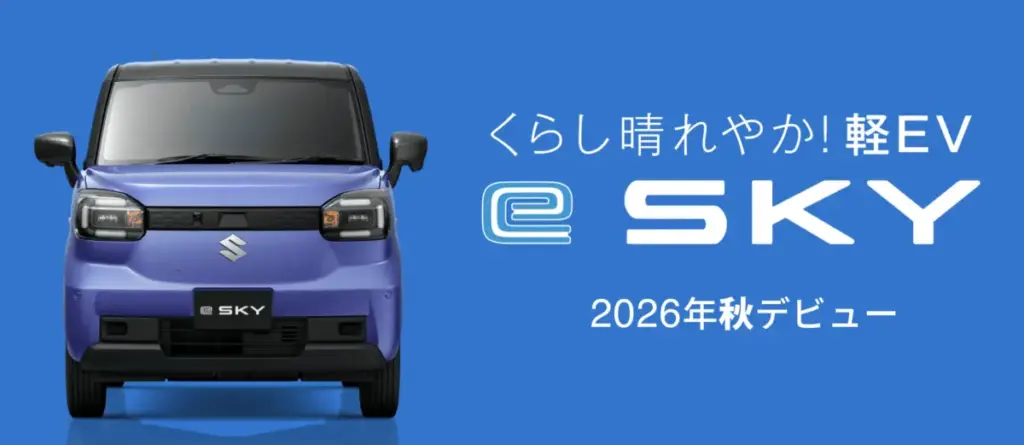
As the global automotive industry races to pack larger, heavier, and more expensive battery packs into electric vehicles to chase arbitrary long-distance benchmarks, one Japanese manufacturer is charting a drastically different course. Suzuki Motor Corporation has officially unveiled preliminary specifications for the e-SKY, its landmark first passenger battery-electric kei car. Eschewing the industry-wide obsession with oversized power storage, Suzuki has engineered an ultra-efficient, lightweight urban commuter designed to maximize every single watt-hour extracted from its compact footprint.
Slated for an official commercial launch in Japan in autumn 2026, the e-SKY is the direct production realization of the Vision e-Sky concept first teased at the Japan Mobility Show in Tokyo. Built strictly within Japan’s tightly regulated, highly competitive kei car dimensions—measuring 3,395 millimeters in length, 1,475 millimeters in width, and 1,625 millimeters in height—the e-SKY manages to deliver an impressive reference driving range of 310 kilometers from a remarkably modest 26-kilowatt-hour lithium iron phosphate (LFP) battery pack.
By prioritizing vehicle weight reduction, advanced aerodynamics, and drivetrain efficiency over brute-force battery sizing, Suzuki is mounting an authoritative masterclass in resource-conscious EV engineering. Weighing in at a featherlight 1,030 kilograms and boasting a stellar energy consumption rate of just 97 watt-hours per kilometer, the e-SKY is poised to disrupt Japan’s bustling small-car ecosystem. It enters a ring already occupied by formidable rivals like the Nissan Sakura, Mitsubishi eK X EV, Honda N-ONE e:, and imported contenders like the BYD Racco.
For global automakers grappling with skyrocketing production costs, raw material constraints, and grid capacity pressures, Suzuki’s pragmatic philosophy offers a compelling blueprint: instead of building heavier cars to carry more energy, build lighter cars that demand less.
Detailed Chronology: From Tokyo Concept to Production Reality
The journey of the e-SKY offers valuable insight into Suzuki’s meticulous, iterative approach to EV development. The timeline from initial concept to upcoming commercial rollout demonstrates a masterclass in engineering refinement under strict regulatory constraints.

October 2025: The Vision e-Sky Debuts in Tokyo
At the Japan Mobility Show 2025, Suzuki captured the attention of the automotive world by presenting the Vision e-Sky concept. Framed as a light passenger battery-electric vehicle tailored explicitly to the daily rituals of kei car users—commuting, school runs, grocery shopping, and family errands—the concept established the styling and dimensional boundaries that the production vehicle would ultimately adopt.
At its debut, the Vision e-Sky featured a projected driving range of "more than 270 kilometers." While respectable for an urban runabout, Suzuki engineers viewed this baseline not as a final achievement, but as a starting point. The company publicly targeted a full commercialization window during fiscal year 2026, signaling to competitors that its entry into the electric kei segment was imminent and calculated.
August 2026: Preliminary Specifications Unveiled
Fast-forward to late August 2026, when Suzuki released comprehensive preliminary specifications for the production-bound e-SKY. Notably, the exterior dimensions remained identical to the 2025 concept: 3,395 mm long, 1,475 mm wide, and 1,625 mm high, complemented by a 2,460 mm wheelbase and a curb weight resting right around 1,030 kilograms.
However, through continuous optimization during the developmental phase, Suzuki managed to push the vehicle’s reference driving range up from the concept’s 270+ km to an impressive 310 km. This 40-kilometer jump was not achieved by enlarging the body shell or stuffing a heavier battery pack into the chassis. Instead, Suzuki squeezed greater efficiency out of the exact same physical package, proving that focused refinement of drivetrains, thermal management, and aerodynamics yields tangible real-world dividends.
Autumn 2026: The Commercial Launch
As the automotive world looks ahead to the upcoming autumn launch in Japan, consumer anticipation continues to build. While Suzuki has yet to disclose final, official pricing and certified production specifications—pending completion of official testing cycles such as Japan’s WLTC—the stage is set for one of the most consequential domestic EV releases of the decade. The autumn debut will test whether Japanese consumers are ready to embrace Suzuki’s "Easy to Switch" philosophy, seamlessly transitioning from legacy gasoline-powered kei cars to battery-electric mobility.

Supporting Context & Metrics: Engineering for Maximum Efficiency
To fully understand the engineering triumph of the e-SKY, one must examine the severe physical limitations imposed by Japan’s unique kei car category. Government regulations strictly cap vehicle dimensions and power output. Automakers cannot simply widen or lengthen the chassis to accommodate larger, high-capacity energy storage systems. Consequently, Suzuki’s engineers had to rethink every single variable of vehicle dynamics.
Architecture and Drivetrain Integration
The foundation of the e-SKY is Suzuki’s dedicated HEARTECT-e electric vehicle architecture. Unlike platforms retrofitted from internal combustion engine vehicles, the HEARTECT-e platform was built from the ground up to optimize interior volume within exterior regulatory constraints.
Beneath the flat floor sits a compact 26-kWh lithium iron phosphate (LFP) battery pack. LFP chemistry was deliberately chosen over traditional nickel-manganese-cobalt (NMC) variants for its superior thermal stability, enhanced long-term durability, and lower material cost—all while eliminating reliance on scarce, ethically fraught minerals like cobalt and nickel.
Power is delivered via an integrated e-Axle system that consolidates the electric motor, inverter, and reduction gears into a single, highly compact unit. This reduces mechanical drag, saves precious spatial volume, and cuts down component weight.
Aerodynamics and Mass Management
One of the most insidious enemies of electric vehicle range is aerodynamic drag, particularly on tall, boxy vehicles like kei cars, which are shaped to maximize interior passenger and cargo space. Suzuki engineers painstakingly reworked the e-SKY’s aerodynamics, optimizing airflow across the upper body and smoothing out the underbody to minimize turbulence, all without altering the iconic upright stance that kei car buyers adore.
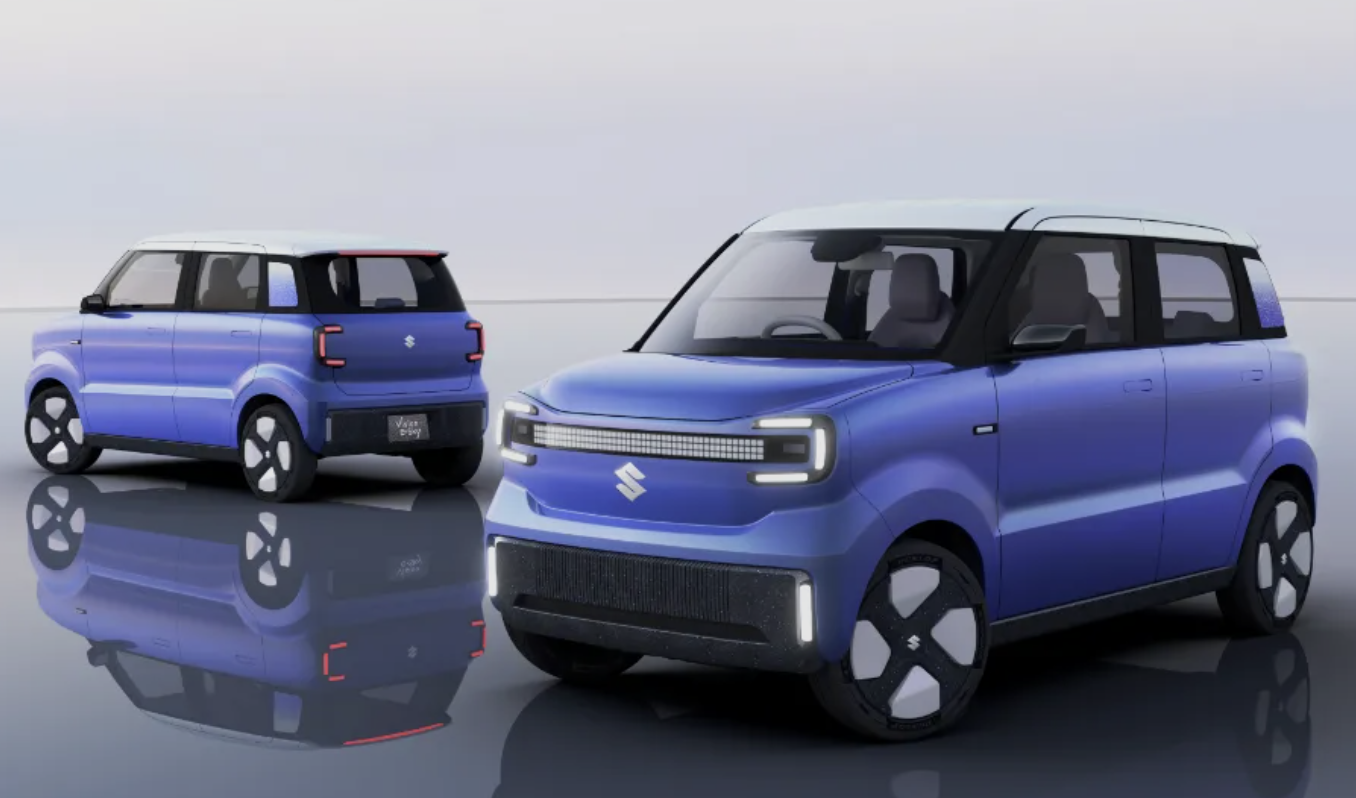
Coupled with a sparse curb weight of roughly 1,030 kg, these aerodynamic updates yield astonishingly low energy consumption figures. The e-SKY boasts a reference energy consumption rate of just 97 watt-hours per kilometer (Wh/km). Translated into practical terms, the vehicle requires a mere 9.7 kWh of electricity to travel 100 kilometers. This hyper-efficiency allows the modest 26-kWh battery to achieve a reference range of 310 kilometers, challenging the notion that EVs require massive battery packs to be practical.
Charging and Bi-Directional Capabilities
Recognizing that the e-SKY is engineered primarily for urban and suburban "quick hops" rather than cross-country marathons, Suzuki tailored the charging ecosystem to match real-world daily routines.
- DC Fast Charging: The prototype supports up to 50 kW of direct current fast charging, capable of replenishing the battery from a low state up to 80% capacity in approximately 25 minutes.
- AC Home Charging: For residential top-ups, a 6-kW AC connection delivers a full charge in roughly 4.5 hours, while a standard 3-kW household outlet takes about 8 hours—perfect for overnight parking.
- Thermal Management: To mitigate the notorious energy drain associated with cabin heating and cooling in EVs, the e-SKY incorporates an advanced heat-pump climate-control system, protecting winter range degradation.
- External Power Supply: Expanding its utility beyond transportation, the vehicle features an integrated 100-volt, 1,500-watt external power outlet, allowing users to draw electricity from the car for camping, outdoor equipment, or emergency power during natural disasters.
Official Statements & Corporate Philosophy
Suzuki’s leadership has been outspoken about the philosophy guiding the e-SKY project. Central to the vehicle’s market positioning is the company’s "Easy to Switch" concept.
In corporate briefings, Suzuki representatives have emphasized that the primary friction point preventing mass-market EV adoption is consumer intimidation—fear of unfamiliar technology, complex charging infrastructures, and high price points. By designing the e-SKY to seamlessly replicate the familiar packaging, seating posture, visibility, and handling dynamics of traditional gasoline kei cars, Suzuki aims to remove psychological barriers.
Furthermore, company engineers have stressed that the e-SKY is a deliberate rejection of the "bigger is better" ethos dominating the Western EV landscape. As a Suzuki spokesperson noted during developmental disclosures, the company deliberately avoided the trap of building a heavy, long-range vehicle for use cases where it isn’t needed.

"A kei car used primarily for daily urban travel—commuting, school runs, shopping, and family transport—does not need to carry the same heavy energy reserve as an electric SUV designed for continuous high-speed highway cruising," engineering notes indicate.
By right-sizing the battery to match the actual, day-to-day radius of the average urban driver, Suzuki not only lowers the vehicle’s retail price point but also lightens the strain on global mineral supply chains and localized electrical grids.
Future Outlook: The Wider Implications of Suzuki’s Strategy
While the e-SKY is purpose-built for the dense urban tapestries of Japan, its underlying philosophy carries profound implications for the global automotive landscape. As regulatory bodies worldwide tighten emission standards and consumers demand more affordable electric options, the industry is reaching a crossroads regarding battery material availability and vehicle pricing.
Redefining the Efficiency Paradigm
For years, the EV transition has been characterized by an arms race of range anxiety. Automakers competed to see who could offer 500, 600, or 700 kilometers of range on a single charge, forcing the installation of massive 80-kWh to 100-kWh battery packs. These large packs drive up vehicle weight, require more raw materials, increase tire wear due to mass, and push vehicle price tags beyond the reach of average working-class buyers.
Suzuki’s e-SKY proves that there is an alternative path: efficiency-first engineering. By focusing heavily on weight reduction, low rolling resistance, advanced aerodynamics, and optimized thermal management, manufacturers can achieve highly usable, real-world driving ranges using fractionally smaller batteries.

Limitations and Scale
To be sure, Suzuki’s formula is not a universal panacea. The e-SKY approach—a 26-kWh battery powering a 1,030-kg chassis over a 310-km reference range—is exquisitely tailored to light urban transit. It is not designed to haul heavy payloads across mountainous terrains at sustained highway speeds without frequent recharging stops.
However, urban and suburban commuters make up a staggering percentage of daily global driving habits. If other manufacturers adopt Suzuki’s ethos of matching vehicle mass and battery capacity strictly to intended use cases, the global market could see a wave of hyper-affordable, resource-efficient EVs that democratize clean transportation.
Conclusion
As Suzuki prepares to roll out the e-SKY in autumn 2026, the vehicle stands as much more than just another entry in Japan’s crowded kei car segment. It is a calculated philosophical statement. By demonstrating that intelligent efficiency can replace brute-force battery capacity, Suzuki has delivered a masterclass in modern EV design—proving that sometimes, less is infinitely more.