Executive Overview
As global economic paradigms shift toward green industrialism, resource security, and technological sovereignty, Canada finds itself locked in a perennial debate: To what extent should the state intervene in the marketplace, and when must it step back to let commercial forces dictate outcomes? This question has taken center stage with the advent of Mark Carney’s industrial-policy agenda, most notably embodied by the proposed C$25 billion Canada Strong Fund.
Designed as a federally backed investment vehicle that would borrow capital to take minority equity positions in strategic sectors, the fund aims to generate commercial returns while shaping Canada’s economic future. However, it also exposes the fundamental tension of modern statecraft. Industrial policy is no longer an abstract academic theory in Canada; it is an active reality spanning defense procurement, housing programs, critical mineral extraction, energy corridors, and carbon capture initiatives.
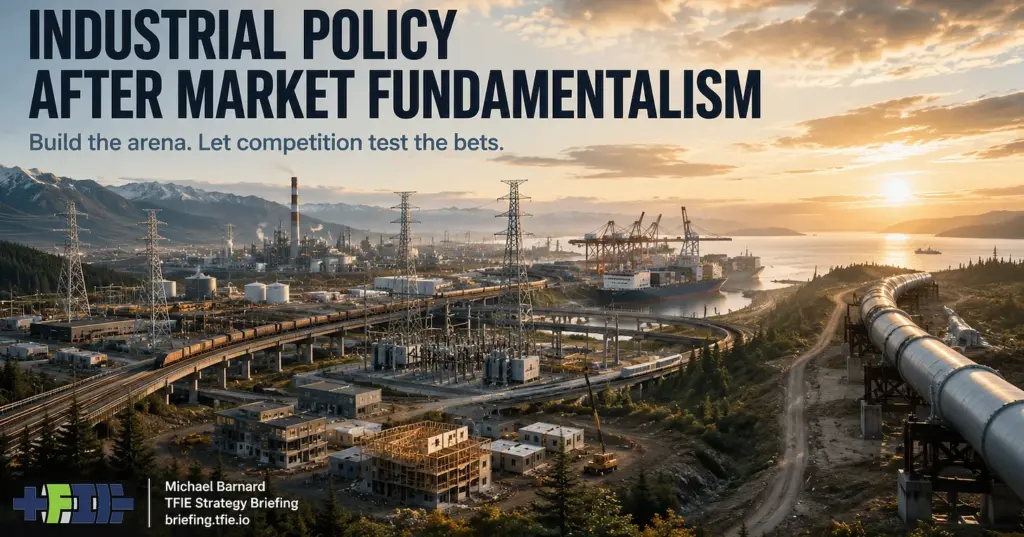
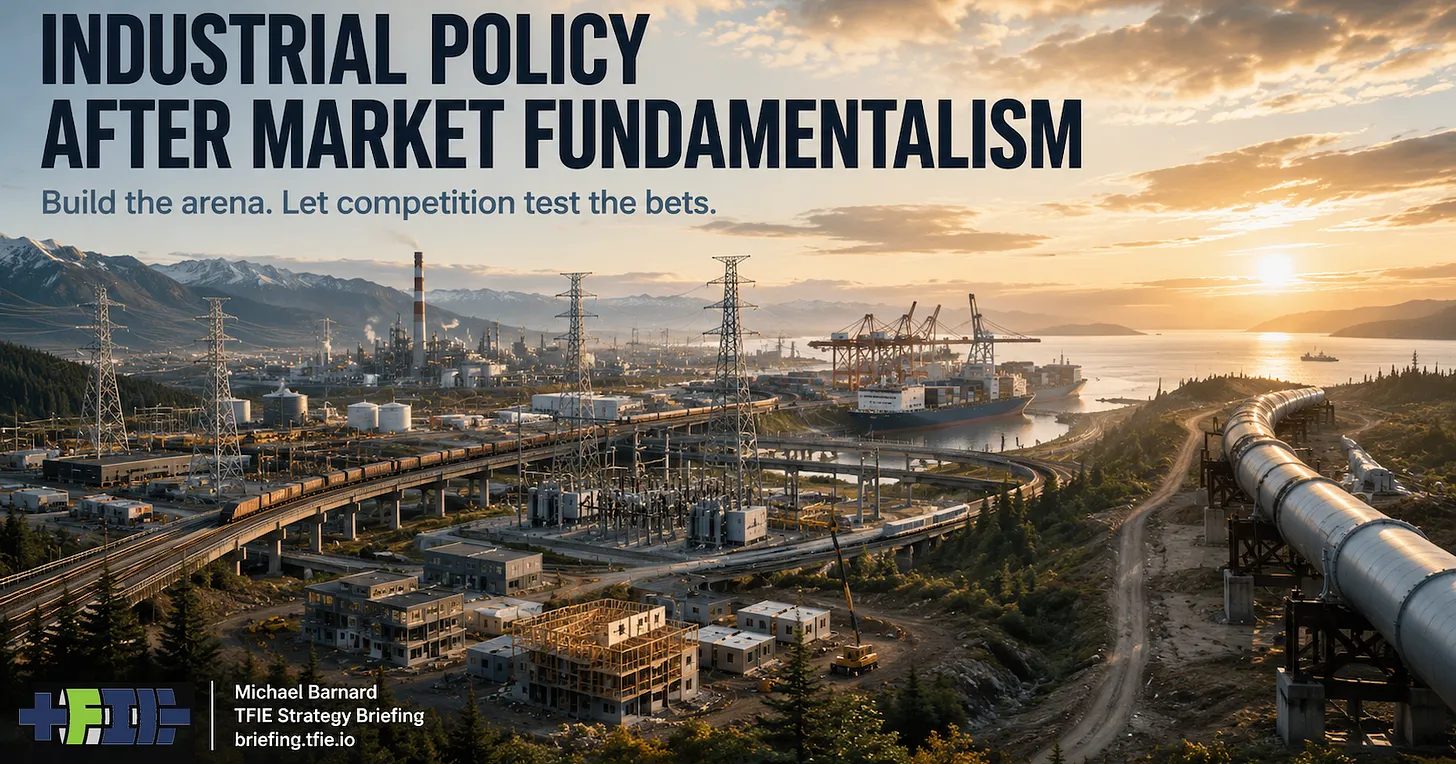
The crux of the matter is not a binary choice between government control and free markets. Rather, it is about how the state applies its leverage. Does public intervention build a neutral, shared "arena" where firms and technologies compete on their own merits? Or does it cross the line into picking winners, progressively absorbing private risk until a politically palatable project is artificially manufactured?
By analyzing Carney’s policy stack through the lenses of economic heavyweights Friedrich Hayek, John Maynard Keynes, and Joseph Schumpeter, this article explores where public capacity creates true option value, where portfolio-based risk management succeeds, and where project-level politics threaten to outrun hard commercial proof.
Detailed Chronology: The Evolution of Canada’s Modern Industrial Policy
To understand the mechanics of the Canada Strong Fund and Mark Carney’s broader policy prescriptions, one must trace the timeline of Canada’s shifting economic philosophy over the past decade.
Phase 1: The Return of Active Statecraft (2015–2020)
For decades following the neoliberal consensus of the late 20th century, Canadian federal policy largely favored deregulation, trade liberalization, and a hands-off approach to industrial development. However, structural disruptions—including global supply chain vulnerabilities, geopolitical friction with major trading partners, and the accelerating urgency of climate change—forced a re-evaluation.
During this initial phase, Ottawa began deploying targeted interventions. These primarily took the form of tax credits for clean technology, strategic infrastructure investments, and sectoral innovation superclusters. While these programs injected capital into lagging sectors, critics frequently pointed out that they lacked a cohesive unifying framework, often resulting in fragmented, ad-hoc funding rounds that struggled to scale.
Phase 2: The Green Transition and Supply Chain Security (2020–2024)
The COVID-19 pandemic and the subsequent passing of aggressive international legislation—most notably the United States’ Inflation Reduction Act (IRA)—transformed Canada’s economic landscape. Ottawa realized that without aggressive state-backed capital deployment, Canadian industries risked losing talent, manufacturing capacity, and critical mineral supply chains to American subsidies.
During this window, the federal government ramped up direct support for electric vehicle (EV) battery manufacturing, committing tens of billions of dollars to attract global auto giants and green tech firms. This period marked a definitive shift: industrial policy was no longer just about research and development; it was about securing foundational industrial capacity in a shifting geopolitical order.
Phase 3: The Carney Blueprint and the Canada Strong Fund (Present)
Mark Carney’s entry into the policy debate introduces a more systematic institutional architecture. The proposed C$25 billion Canada Strong Fund represents a maturation of this strategy. Instead of relying solely on grants, subsidies, or direct government ownership, the fund proposes a blended-finance model. By taking minority equity positions alongside private institutional investors, the state aims to leverage its balance sheet while maintaining commercial discipline.
Yet, this institutional evolution has reignited fierce debates across the political and economic spectrum. As the federal government evaluates applications across electricity grids, critical minerals, LNG facilities, and carbon capture networks, the foundational question remains: Can a politically exposed sovereign fund maintain the discipline required to let underperforming projects fail?
Supporting Context & Metrics: Navigating the Policy Stack
To evaluate the efficacy of Carney’s industrial strategy, one must examine how different sectors react to public intervention. Not all infrastructure is created equal, and the economic risk profile changes drastically depending on the breadth of the asset’s utility.
The Spectrum of Public Investment: Electricity vs. Single-Purpose Projects
[Broad Utility / High Option Value]                                    [Narrow Utility / High Project Risk]
---------------------------------------------------------------------------------------------------------
Electricity Transmission  <--->  Critical Minerals  <--->  Housing  <--->  Carbon Capture  <--->  LNG/Pipelines
1. Electricity Transmission (The Gold Standard of Public Infrastructure)
At the most effective end of the policy spectrum lies electricity transmission. Expanding the power grid serves a vast, diverse ecosystem of users: mines, urban centers, manufacturing hubs, data centers, electric vehicles, heat pumps, and energy storage facilities.
- The Economic Advantage: The government does not need to predict which specific company, technology, or industrial player will dominate the market decades from now. By building out transmission capacity, the state expands the competitive arena, reduces coordination friction, and lets private enterprises compete for the energy. This creates massive option value with minimal technological forecasting risk.
2. Single-Purpose Projects (The High-Risk Domain)
Conversely, single-purpose industrial assets—such as a dedicated export pipeline, a liquefied natural gas (LNG) terminal, or a localized carbon capture and storage (CCS) network—present a fundamentally different risk profile.
- The Economic Challenge: While these projects may possess strategic geopolitical or regional value, their financial viability hinges on a narrow set of assumptions. They rely on tightly coupled variables regarding construction costs, long-term utilization rates, specific global buyers, and evolving regulatory frameworks. If the foundational thesis breaks down, the asset lacks alternative uses, leaving taxpayers exposed to stranded investments.
The Tripartite Economic Framework: Hayek, Keynes, and Schumpeter
To ground this analysis, economic historians frequently rely on three foundational thinkers whose theories seem to pull in opposite directions, yet must be reconciled in any modern industrial strategy.
- Friedrich Hayek and the Knowledge Problem: Hayek warned that central planners can never possess the distributed, localized, and transient information embedded within real-time price signals and competitive markets. However, acknowledging Hayek’s knowledge problem does not mean retreating to market fundamentalism. Rather, it serves as a design constraint: industrial policy must be engineered around open competition, reversible commitments, and data-driven adaptation, rather than rigid bureaucratic mandates.
- John Maynard Keynes and Market Failures: Keynes provided the necessary counterweight, demonstrating that non-intervention is itself an active policy choice—particularly when private markets fail to provide critical infrastructure, macroeconomic resilience, affordable housing, or capital investment during systemic downturns. When private actors hoard liquidity or shy away from long-term capital projects, the state must step in to bridge the gap.
- Joseph Schumpeter and Creative Destruction: Schumpeter reminded economists that dynamic capitalism is an inherently evolutionary process driven by "creative destruction." Failures, bankruptcies, and obsolete technologies are not anomalies; they are the engines of progress. A serious industrial strategy must accept that public investments will occasionally fail. The fatal flaw is not experiencing a loss, but rather falling into the trap of endlessly refinancing a failing project purely out of political embarrassment.
Official Statements and Institutional Perspectives
The debate surrounding the Canada Strong Fund has drawn sharp commentary from fiscal conservatives, industrial strategists, and market analysts alike.

Proponents of the fund argue that modern global economics has rendered nineteenth-century laissez-faire policies obsolete. In an era where major economic superpowers deploy massive state subsidies to secure strategic supply chains, a purely passive posture amounts to unilateral economic disarmament.
"We are no longer living in a world where trade flows purely according to comparative advantage," notes a senior economic policy analyst. "When global competitors are actively reshaping industrial landscapes through sovereign balance sheets, Canada cannot afford to sit on the sidelines. The Canada Strong Fund provides the patient capital required to secure our place in the low-carbon economy."
However, fiscal watchdogs and market purists raise valid governance concerns regarding the intersection of political ambition and commercial reality. The primary apprehension centers on whether a crown-backed investment vehicle can truly insulate its decision-making processes from electoral pressures.
"A minority equity stake and professional management team are steps in the right direction," warns a leading fiscal policy researcher. "They establish a helpful commercial buffer between ministers and boardroom tables. But the ultimate governance test will not be how well the fund invests during a boom; it will be whether the federal financing system retains the institutional courage to pull the plug when a politically favored project fails its commercial milestones."
Future Outlook: The Strategic Test for Canadian Industrial Policy
As Canada looks toward the remainder of the decade, the success of Mark Carney’s industrial strategy will be measured not by the sheer volume of capital deployed, but by the rigor of its institutional execution.
Key Milestones and Watchpoints
- Governance Independence: Watch closely to see how the Canada Strong Fund handles underperforming assets in its early portfolio. The presence of clear, rules-based exit strategies will signal whether commercial logic is truly overriding political expediency.
- Focus on Foundational Enablers: Public capital should increasingly gravitate toward shared productive capacity—such as clean energy grids, digital infrastructure, and multimodal transportation corridors—where private coordination failures are most acute.
- Preserving Market Competition: Interventions must be designed to catalyze competition rather than entrench corporate monopolies or create permanent dependency on public bailouts.
Conclusion
Mark Carney’s industrial-policy agenda correctly identifies that government has an indispensable role to play in building shared productive capacity and shaping the economic arena. By leveraging public balance sheets through vehicles like the Canada Strong Fund, Ottawa can help bridge the gap between long-term national security and short-term market hesitation.
Yet, the ultimate credibility of this strategy rests on two pillars: preserving competitive market dynamics after intervention occurs, and maintaining the fortitude to walk away when commercial evidence dictates failure. In an increasingly volatile global economy, a smart industrial strategy is defined as much by what it chooses to stop funding as by what it chooses to build.