

This coverage is made possible through a partnership between Grist and The Salt Lake Tribune, a nonprofit newsroom in Utah.
Executive Overview
The sweeping red-rock landscapes of southeastern Utah have once again become the epicenter of a high-stakes tug-of-war between conservation and mineral extraction. On September 11, the precise moment 1.2 million acres of land previously protected under the Bears Ears National Monument were legally reopened to entry, local prospectors and small-scale mining operators wasted no time. Within hours of the barrier dropping, miners had officially filed 16 distinct claims, signaling the immediate revival of industrial interest in a region deeply treasured by Native American tribes and environmental advocates alike.
This rapid-fire staking spree followed President Donald Trump’s controversial executive action shrinking the national monument by approximately 90 percent—marking the latest chapter in a bitter, decade-long political and legal battle over the fate of public lands in the American West. The federal government’s decision to strip protections from these vast federal acres has effectively reset the chessboard for uranium prospectors, family-run mining outfits, and energy conglomerates. Driven by a surging national appetite for critical minerals and nuclear power, these stakeholders view the newly accessible terrain as a long-awaited economic frontier.
Conversely, environmental organizations and Indigenous groups view the move as an aggressive corporate giveaway that sacrifices irreplaceable cultural artifacts, fragile desert ecosystems, and pristine wilderness on the altar of short-term industrial gain. As local miners move heavy equipment onto the reopened acreage, legal challenges mount, and the shadow of nuclear revival looms large, the future of Bears Ears hangs precariously in the balance.
Detailed Chronology: A Decade of Political Tug-of-War and the Rush to Claim Land
To understand the sudden flurry of mining activity in September, one must trace the turbulent history of Bears Ears National Monument—a landscape characterized by dramatic sandstone canyons, ancient cliff dwellings, and sacred tribal sites.
The Origins and Initial Backlash (2016–2017)
The modern conflict began during the final weeks of the Obama administration in December 2016. Utilizing the Antiquities Act of 1906, President Barack Obama established the Bears Ears National Monument, wrapping protective legal parameters around 1.35 million acres of federal land in San Juan County, Utah. The designation was celebrated as a historic victory for a coalition of Native American tribes—including the Hopi, Navajo, Ute Mountain Ute, Zuni, and Ute Indian Tribe—who had lobbied for years to protect their ancestral homelands from unchecked commercial exploitation.
However, the celebration was short-lived. The monument immediately became a political lightning rod. Critics, including Utah’s congressional delegation and local county commissioners, argued that the designation was an overreach of executive authority that locked up valuable natural resources and restricted traditional access.
In December 2017, President Donald Trump traveled to Utah to slash the monument’s footprint by roughly 85 percent, dividing it into two smaller, disconnected units: Shash Jaa and Indian Creek. It was the largest rollback of public land protections in American history.
The Biden Restoration and Subsequent Legal Battles (2021–2024)
The pendulum swung back in October 2021 when President Joe Biden restored Bears Ears to its original boundaries, while also adding a small expansion that brought the total protected area to roughly 1.36 million acres. Biden’s proclamation also reinstated the historic tribal commission, empowering Indigenous leaders to co-manage the monument alongside federal agencies like the Bureau of Land Management (BLM) and the U.S. Forest Service.
The restoration drew immediate fire from the mining industry and local developers who had tasted freedom during the Trump interregnum. Among the most vocal opponents was Kyle Kimmerle, a Moab-based contractor, tire shop operator, and mining executive whose family business held stakes in the region. Kimmerle and other stakeholders joined multi-pronged lawsuits challenging Biden’s authority under the Antiquities Act, arguing that the resurrected boundaries unfairly locked up valuable uranium deposits and cost local entrepreneurs millions in prospective profits.
The Latest Proclamation and the September 11 Rush
The legal and political landscape shifted dramatically once again upon Trump’s return to the White House. In a sweeping mid-summer proclamation, the administration dramatically downsized Bears Ears once more, carving away roughly 90 percent of the monument’s protected acres and dissolving the tribal management commission.
Crucially, the proclamation explicitly cataloged a "grab bag" of minerals believed to lie beneath the soil—including silver, copper, molybdenum, lead, zinc, vanadium, and uranium—framing their extraction as an economic imperative for the United States.
Although the White House signed the reduction order in July, the land remained legally closed to mineral location until September 11. Sensing the opportunity, prospectors were poised at the starting line. Records obtained by the Southern Utah Wilderness Alliance (SUWA) reveal that San Juan County recorders were flooded with filings the very morning the land restrictions lifted, setting off a new gold—and uranium—rush in the Utah desert.
Supporting Context & Metrics: The Uranium Revival and Market Pressures
The renewed rush for claims in southeastern Utah is not happening in a vacuum. It is heavily fueled by shifting global energy markets, technological revolutions, and a calculated bet on the future of nuclear power.
The Nuclear Renaissance and Artificial Intelligence
For decades, domestic uranium mining in the United States languished in a prolonged slump following the Cold War and major nuclear accidents like Chernobyl and Fukushima. Facilities shuttered, and prices plummeted, rendering small-scale operations like Kimmerle’s Easy Peasy mine economically unviable. In 2018, Kimmerle extracted approximately 30 tons of uranium ore from the 21-acre site, only to halt operations because market conditions could not sustain the cost of production.
Today, however, the macroeconomic equation has inverted. The meteoric rise of artificial intelligence (AI), coupled with the massive, unquenchable power demands of data centers, has forced technology companies and energy planners to look beyond coal and natural gas. Nuclear energy—hailed as a reliable, zero-emission baseload power source—has experienced a dramatic political and commercial renaissance.
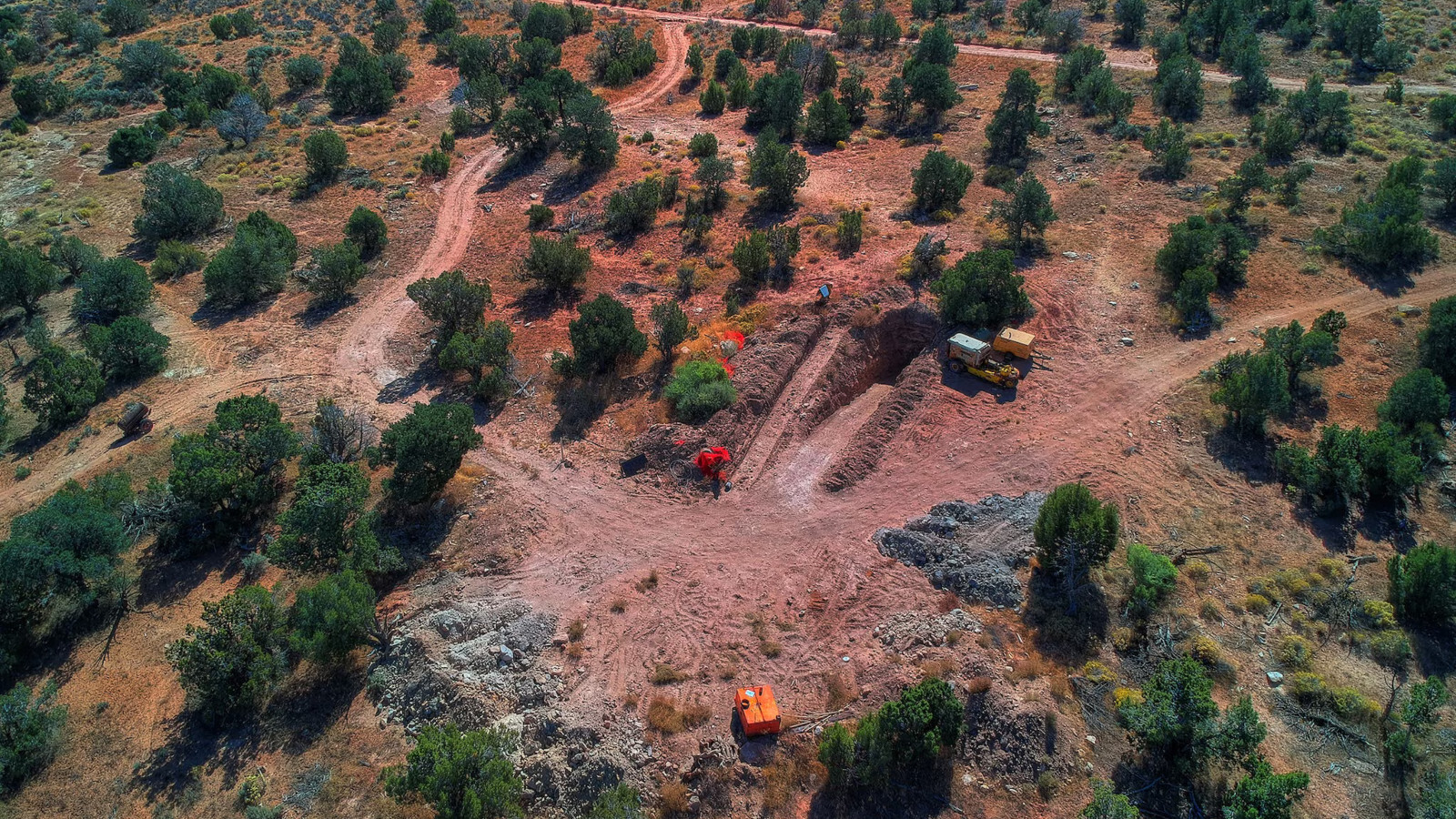
Both the Trump administration and Utah Governor Spencer Cox’s Office of Energy Development have aggressively championed nuclear power as an indispensable pillar of the nation’s energy future. Because uranium is the essential feedstock for nuclear reactors, demand for the heavy metal has climbed, driving up spot prices and breathing new life into dormant domestic mining aspirations.
Corporate Insiders and Infrastructure Proximity
The renewed interest in Bears Ears extends far beyond hobbyists and weekend prospectors. Financial disclosures and corporate filings underscore deep institutional positioning. Notably, the CEO and chairman of Energy Fuels—the company operating the White Mesa Mill, situated directly adjacent to the former Bears Ears boundary and serving as the nation’s last remaining conventional uranium processing facility—purchased thousands of shares of company stock just days before Trump announced the monument’s downsizing.
Energy Fuels and its allies stand to gain immensely from reduced transport distances and accessible local ore bodies. Utah has historically ranked as the third-most productive state for uranium in the United States, with the Colorado Plateau yielding rich deposits that fueled the nation’s atomic programs during the 20th century. Proponents argue that tapping these domestic reserves reduces American reliance on foreign supply chains from countries like Kazakhstan, Russia, and Niger.
Official Statements and Perspectives
The friction between industrial development and environmental preservation has generated sharp rhetoric from all sides of the debate.
Environmental and Indigenous Outrage
Conservation groups have condemned the mining claims as reckless ecological vandalism. Steve Bloch, an attorney for the Southern Utah Wilderness Alliance, warned that the influx of prospectors will inflict irreversible scars on fragile desert ecosystems.
"Hobby miners who want to go locate claims, play miner on the weekend, leave disturbance and pollution in their wake, that really damages the monument resources," Bloch stated.
Bloch also questioned the underlying economic rationale of the rush, pointing out that decades of historical prospecting—both before the monument was initially created and during the first Trump administration—failed to yield a single production-level uranium mine of economic significance.
"It’s not like people weren’t poking around in the monument, locating claims, moving dirt, seeing what was there," Bloch noted. "There were no production-level mines that were established."
Tribal leaders have expressed profound grief and anger over the dissolution of the tribal commission and the degradation of ancestral lands. For Indigenous nations, Bears Ears is not merely a collection of mineral assets or recreational trails; it is a living cultural landscape containing sacred shrines, traditional medicine gathering sites, and the graves of their forebears.
The Miners’ Defense: Multiple-Use Mandates and Economic Rights
Conversely, those staking claims maintain they are operating entirely within their legal rights on public lands explicitly designated for multiple uses by the Bureau of Land Management.
George Schultz, a Moab-based off-roading guide who filed three claims in the Lockhart Basin, defended his actions as a standard procedural step in mineral exploration. While Schultz declined to specify which exact metals he intends to extract from his sites, his professional background includes extensive experience in uranium exploration.
Kyle Kimmerle, whose family enterprise Kimmerle Mining filed 13 separate claims on September 11—including two modifications to the Easy Peasy mine and 11 adjacent plots—has largely declined public comment on the latest filings. However, his previous legal filings speak volumes about his perspective. In a 2023 lawsuit challenging the Biden administration’s monument restoration, Kimmerle argued that locking his claims within the boundaries of Bears Ears rendered them "useless" and deprived his business of up to $3 million in potential profits.
Supporters of the administration’s policy argue that unlocking these federal lands fulfills a vital mandate to create jobs, fuel regional prosperity, and secure America’s industrial independence. Proponents contend that federal public lands should not be locked away in perpetuity when advanced extraction technologies can recover critical minerals safely and efficiently.
Future Outlook: What Lies Ahead for Bears Ears?
As the dust settles from the September 11 land rush, the immediate future of Bears Ears National Monument remains fraught with uncertainty and legal jeopardy.
- Intensified Litigation: Environmental organizations, outdoor recreation coalitions, and tribal nations are preparing a robust legal assault against the latest presidential proclamation. Legal scholars anticipate challenges centered on the limits of presidential authority under the Antiquities Act, questioning whether a president possesses the lawful power to systematically dismantle a national monument through successive executive orders.
- On-the-Ground Activity: In the short term, the 16 newly filed claims—and the anticipated wave of secondary filings—will likely see preliminary exploratory work, including core drilling, geological sampling, and minor road grading. Regulatory agencies like the BLM will face mounting pressure to monitor these operations closely to prevent unauthorized environmental degradation in areas that, while currently outside the monument boundary, remain ecologically sensitive public lands.
- Market Volatility and Viability: Whether these small-scale claims will transform into functioning, profitable mines remains an open question. Industry analysts note that while uranium prices have rebounded, the capital expenditures required to bring a modern mine from the exploration phase to commercial production are immense. Stringent environmental reviews, water rights issues, and local community opposition will serve as formidable hurdles for any company attempting to extract ore in San Juan County.
Ultimately, Bears Ears stands as a glaring symbol of a deeply polarized nation. It reflects a fundamental disagreement over the highest and best use of America’s public lands: whether they should be preserved as sacred, ecological sanctuaries for future generations, or mined as industrial storehouses to power the technological ambitions of the 21st century. As the legal battles grind on in federal court and prospectors break ground in the desert, the soul of the canyon country hangs delicately in the balance.



