


Executive Overview
At first glance, a stroll down the sloping incline toward the East Falmouth harbor on Cape Cod, Massachusetts, offers the classic postcard imagery of maritime New England. Weathered cedar-shingled homes dot the shoreline, pleasure craft and commercial fishing skiffs sit parked in gravel driveways, and a familiar, comforting aroma of damp seaweed and salt hangs heavy on the warm summer breeze.
Yet, beneath this picturesque surface lies a sophisticated, highly strategic environmental intervention. Tucked into the shimmering waters of Waquoit Bay and surrounding estuaries is a sprawling, highly productive aquaculture network. Far from merely supplementing wild-caught seafood stocks to relieve pressure on overexploited ocean fisheries, these shellfish farms have become a cornerstone of municipal environmental engineering.
Facing strict regulatory, environmental, and legal mandates to restore degraded water quality, towns across Cape Cod are turning away from astronomically expensive traditional infrastructure—such as massive sewer main installations and advanced septic overhauls—in favor of a surprisingly natural, highly scalable solution: the humble oyster.
Led by municipalities like Falmouth, local governments are integrating commercial and municipal shellfish aquaculture directly into their clean water strategies. By harnessing the natural filter-feeding capabilities of bivalves, these initiatives successfully strip excess nitrogen from local ecosystems, fulfill federal Clean Water Act obligations, stimulate local economies, and generate municipal revenue. It is a striking intersection of ecology and economics, proving that sometimes the most advanced tool for ecological restoration is one that has been quietly operating in our oceans for millennia.
Detailed Chronology: From Grassroots Exploration to Municipal Expansion
The journey toward making Falmouth a leader in municipal aquaculture did not happen overnight. It is the result of years of methodical research, legal frameworks, and shifting local priorities aimed at solving a mounting ecological crisis.
The Regulatory Catalyst (2018)
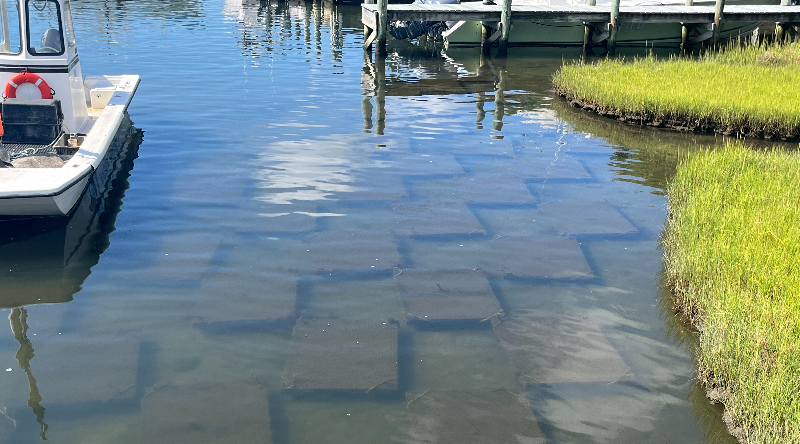
The modern push for structured aquaculture on the upper Cape gained official momentum in 2018, following a comprehensive study by Roger Williams University. The research detailed how Falmouth was actively developing a Rotational Aquaculture Plan designed to permit limited private and municipal shellfish farming. The explicit goal was twofold: to expand aquaculture into local estuaries for broad economic and environmental benefit, and to assist the town in meeting stringent water quality obligations.
At the time, Falmouth was positioning itself at the vanguard of a statewide movement. Several Massachusetts municipalities were beginning to view municipal shellfish farming not just as a commercial enterprise, but as a formal, compliance-driven strategy to satisfy the federal Clean Water Act. Underpinning this movement was a booming state shellfish industry valued at $28 million and rapidly growing, creating robust market incentives for new farm development.
Tasking the Committee
Recognizing the severity of nitrogen-loading in local estuaries—driven largely by decades of coastal development and wastewater runoff—the Falmouth Select Board directed the Water Quality Management Committee to investigate non-traditional remediation methods. The mandate was clear: find the least expensive, most environmentally sensitive ways to remove nitrogen from the water.
For more than a decade, the town had evaluated numerous alternatives to conventional sewering. Ultimately, the committee concluded that shellfish aquaculture was an exceptional alternative. It was quantitatively proven to work, highly cost-effective, and—unlike contentious infrastructure projects—garnered immediate community acceptance. Beyond nutrient mitigation, the municipal design promised to create local jobs, expand a marketable seafood product, and generate a self-sustaining revenue stream for future municipal seed propagation.
Streamlining Siting with GIS Technology
One of the historical hurdles to expanding aquaculture has been the complex web of environmental, legal, and jurisdictional regulations governing coastal waters. To clear this bottleneck, the National Oceanic and Atmospheric Administration (NOAA) Sea Grant Aquaculture Extension and Technology Transfer program stepped in to support an online aquaculture siting tool known as MA-ShellfAST.
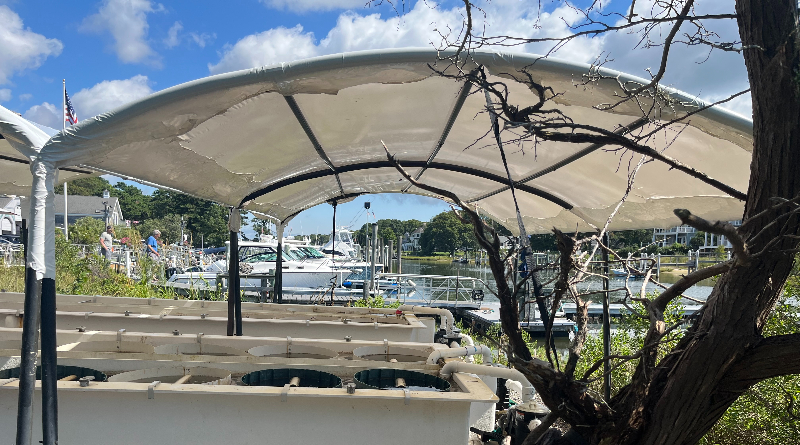
MA-ShellfAST revolutionized the application process by providing growers and regulatory agencies with a sophisticated Geographic Information System (GIS) map-based interface. The tool overlays critical environmental, legal, and municipal data, allowing prospective farmers to evaluate the biophysical characteristics of a site, identify potential conflicts, and understand regulatory hurdles before filing formal applications. Furthermore, it enables growers to digitally map their proposed sites and submit precise boundaries with their permits.
Rapid Scaling (2020–2025)
Armed with advanced planning tools, shellfish farms quickly multiplied across Falmouth’s waterways. Operations established roots in the Eel River, Seapit River, Megansett, and along the ocean-facing shores of Nantucket Sound.
By 2025, the program’s scope underwent a massive upward revision. In a presentation to the Falmouth Water Quality Management Committee, Deputy Director R. Charles Martinsen III announced that the town’s potential aquaculture acreage was on track to "more than quadruple what we have now." Expanding from a modest footprint to between 80 and 140 acres, the local program scaled its production targets to a staggering 1.3 million oysters.
Rather than draining municipal coffers, the program operates as a self-funding economic engine. Commercial growers pay the town roughly $19,600 per farm annually in leasing fees and can rent specialized growing gear, such as bags and floats, directly from the municipality. Once the oysters reach market maturity, growers sell their harvest, while the lease revenues are funneled directly into a dedicated revolving account used exclusively to purchase the next generation of shellfish seeds.
Supporting Context & Metrics: The Economics and Science of Nitrogen Removal
To understand why Falmouth and neighboring Cape Cod towns are heavily investing in bivalves, one must look closely at the math behind nitrogen pollution and biological mitigation.
The Nitrogen Crisis on Cape Cod
For decades, nitrogen loading has been the single greatest threat to Cape Cod’s coastal estuaries. Excessive nitrogen—primarily originating from traditional septic systems, fertilizer runoff, and wastewater—triggers massive algal blooms. These blooms consume dissolved oxygen in the water column, leading to eutrophication events that suffocate finfish, decimate eelgrass beds, and turn once-pristine bays into murky, lifeless zones.
State and federal regulators have imposed strict Total Maximum Daily Load (TMDL) limits on these water bodies, forcing towns to find immediate ways to strip nitrogen from their aquatic ecosystems.
Oysters as Bio-Filters
Oysters are prodigious filter feeders. A single adult oyster can filter up to 50 gallons of water per day, consuming microscopic algae, phytoplankton, and organic particulates. In the process, they ingest nitrogen and incorporate it into their shells and soft tissue. When the oysters are harvested and removed from the bay, that nitrogen is permanently stripped from the ecosystem.
To quantify this biological efficiency, Water Quality Management Committee member Thomas Duncan presented comparative cost-benefit data during a town meeting, drawing from monitoring projects conducted in the Eel River between 2021 and 2024.
The numbers are striking:
- Shellfish Mitigation: The oysters in the Eel River successfully removed an amount of nitrogen equivalent to the output of 26 single-family homes.
- Urine-Diverting Systems: Replicating that exact level of nitrogen reduction via alternative urine-diverting systems would cost approximately $2,088 per home equivalent.
- Innovative Septic Systems: Achieving the same reduction through traditional Innovative and Alternative (I/A) denitrifying septic systems would skyrocket to roughly $1.17 million.
While aquaculture is not a silver bullet capable of single-handedly resolving Cape Cod’s wastewater challenges, its cost-to-benefit ratio makes it an indispensable tool when paired with central sewering, advanced septic upgrades, and land-use management.
Waquoit Bay: A Living Laboratory
Nowhere is this synthesis of science and industry more apparent than in Waquoit Bay. Situated between the Seapit Peninsula in East Falmouth and the pine-shaded bluffs of Washburn Island, the Waquoit Bay National Estuarine Research Reserve encompasses 2,800 acres of open water, salt marshes, barrier beaches, and rivers.
Historically supporting one of the most diverse estuarine fish communities in Massachusetts, Waquoit Bay represents a classic shallow northeastern embayment. Because of its ecological representation and protected status, the Reserve has served for decades as a stable platform for scientific research, making it one of the most intensively studied estuaries in the northeastern United States.
Within this protected ecosystem, multi-farm collaborations flourish. For instance, the Cape Cod Oyster Company manages a 22.8-acre farm in the Seapit River, leveraging nutrient-rich freshwater inputs from the Moonakis and Little Rivers alongside saltwater tides from Vineyard Sound.
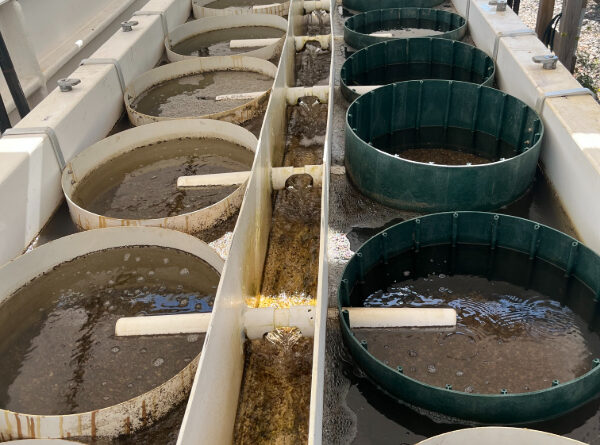
Similarly, Ward Aquafarms—which deployed its first commercial oyster crop in the Eel River in 2020—employs land-based upwellers during the delicate nursery phase to nurture microscopic seed. Once the juvenile oysters are robust enough to withstand open-water conditions, they are transferred to specialized grow-out bags in Eel Pond.

During harsh New England winters, when plunging temperatures and ice cover threaten delicate stocks, growers adapt by moving mature oysters into deep water or land-based cold storage facilities to protect them from thermal shock and handling stress.
Official Statements and Industry Insights
The transformation of Falmouth’s waterways has drawn praise from municipal leaders, marine scientists, and local advocates alike.
- Scaling for the Future: Commenting on the exponential growth of the town’s initiatives, Deputy Director R. Charles Martinsen III emphasized the dual victory of environmental remediation and economic opportunity, noting that expanding the program’s acreage would allow the town to "more than quadruple what we have now" and push production past the 1.3-million-oyster mark.
- The Grassroots Connection: Local resident Jeanne Concannon, who introduced visiting researchers and journalists to Falmouth’s vibrant aquaculture landscape, highlighted how deeply integrated these working waterfronts have become with the local community identity.
- Historical Resurgence: Marine historians point out that while modern oyster farming utilizes cutting-edge GIS mapping, disease-resistant broodstocks, and specialized hatcheries, it is fundamentally a return to cyclical ecological stewardship. Following the depletion of Cape Cod’s natural oyster beds in 1840, early generations of shellfishers recognized the need for active management—a tradition that modern growers have successfully modernized over the past two decades.
Future Outlook: A Sustainable Blueprint for Coastal Communities
As coastal municipalities across the United States grapple with the compounding pressures of climate change, population growth, and stringent environmental regulations, the Falmouth aquaculture model offers an inspiring blueprint for success.
The integration of commercial shellfish farming with municipal water quality management demonstrates that environmental protection does not always require heavy, carbon-intensive industrial infrastructure. By leveraging the natural physiological traits of bivalves, towns can simultaneously restore degraded estuaries, comply with federal clean water mandates, buffer local fisheries, and create sustainable, green-collar jobs.
Looking ahead, the expansion of Falmouth’s aquaculture footprint to over 100 acres signals a permanent shift in how coastal communities view marine resources. Oysters are no longer viewed merely as a culinary delicacy to be enjoyed on a summer evening; they are recognized as vital ecological workers—silent sentinels cleaning our bays, one filter-feed at a time.
Key Resources & Further Reading
- Falmouth Town Documents: Aquacultural production and nitrogen removal in Falmouth, MA: Current progress and projections.
- Legal & Academic Research: Kallie Longval and Read Porter, Creating a spatially-defined tool for marine aquaculture siting and permitting: Case studies for pilot municipalities, Marine Affairs Institute at Roger Williams University School of Law (January 2018).
- Regional Journalism: Katie Nelson, "Falmouth looks to quadruple aquaculture program," Cape News (June 20, 2025); Deborah Scanlon, "Delicious locally grown oysters — A benefit to the ecosystem," oncapemagazine (May 28, 2024).
- Scientific & Institutional Support: WHOI: Setting ‘sites’ for aquaculture; Cape Cod Oyster Company: Waquoit Bay Falmouth; Waquoit Bay National Estuarine Research Reserve.



