

MANILA, Philippines — For generations, the hillsides of the Philippines have told a cautionary tale of well-intentioned environmentalism undermined by political cycles. Millions of saplings have been planted using taxpayer pesos, only to wither or fall to the axe for charcoal once short-term government maintenance contracts expired. The systemic failure of these ephemeral funding models has left hinterland watersheds exposed, directly fueling the devastating floods that routinely paralyze urban centers and rural communities alike.
Now, the Philippine government is attempting a radical pivot. Recognizing that public treasuries alone cannot shoulder the staggering costs of ecological restoration, the Department of Environment and Natural Resources (DENR) is overhauling the nation’s administrative machinery. By partnering with private enterprises, deploying cutting-edge satellite surveillance, and establishing a rigorous national carbon registry, Manila is crafting a framework designed to turn replanted hillsides into verified, tradeable assets across Southeast Asia.
Executive Overview
At a high-level policy forum organized by the CarbonPH Coalition in Manila, DENR officials unveiled a comprehensive blueprint to leverage private capital for long-term forest restoration. The core of this strategy rests on creating an investment-grade ecosystem where corporate balance sheets, debt financing, and long-term project equity merge with textbook forestry.
The initiative addresses a fundamental structural flaw in legacy conservation policy: the abandonment of reforestation sites after initial planting. Under the new paradigm, the government is looking beyond traditional, grant-based conservation and courting corporate balance sheets with the promise of verified carbon credits. These credits are intended to comply with Article 6 of the Paris Agreement, positioning the Philippines to compete within the burgeoning Southeast Asian carbon market.
However, entering this arena requires navigating a complex matrix of regulatory hurdles, stringent international scrutiny over carbon offset integrity, and mandatory protections for indigenous ancestral domains. With regional peers like Indonesia and Malaysia already advancing their digital carbon infrastructures, the stakes for the Philippines are high. Success could secure billions in sustainable private investments; failure risks leaving the country’s natural capital untapped while regional neighbors capture the market.
Detailed Chronology: From Abandoned Saplings to Market-Driven Restorations
The trajectory of Philippine forestry policy is shifting from reactive disaster management to proactive, market-driven asset management. Understanding this evolution requires examining the historical missteps that necessitated the current reform.
The Legacy of Short-Term Funding Cycles
For decades, Philippine reforestation was defined by state-driven, heavily subsidized campaigns. Programs such as the National Greening Program successfully mobilized communities to plant millions of trees across degraded uplands. Yet, these initiatives suffered from a critical design flaw: arbitrary funding cliffs.
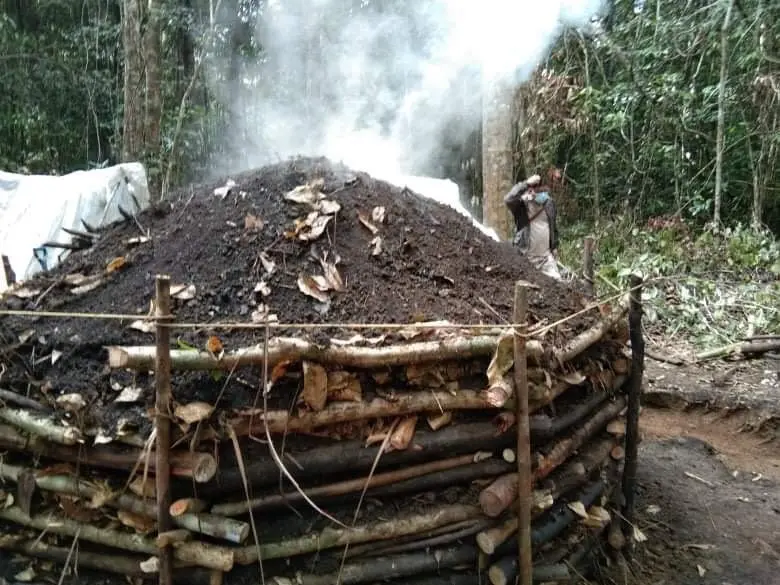
Typically backed by three-year maintenance budgets tied to changing political administrations, these programs evaporated just as young trees required the most active stewardship. Once state funding lapsed, monitoring ceased. Deprived of oversight, large swaths of planted areas succumbed to neglect, invasive species, or illegal logging, with many harvested prematurely for charcoal production. The ecological toll was severe, leaving denuded watersheds incapable of absorbing heavy monsoon rains and directly causing the unchecked runoff responsible for recurring lowland flash floods.
The Policy Shift: Engaging Corporate Balance Sheets
Sensing the urgent need for structural reform, the DENR’s Forest Management Bureau (FMB) has initiated a profound shift in regulatory philosophy. Speaking before corporate executives and carbon market participants, Ray Thomas Kabigting, assistant director of the FMB, articulated a pragmatic new stance.
Kabigting noted that the government is actively altering its policy posture to attract sticky, long-term private capital. Crucially, he signaled that regulators are prepared to pivot away from dogmatic, textbook forestry science toward frameworks that accommodate corporate balance sheets, debt structuring, and long-term project finance. This institutional flexibility acknowledges that private investors require clear, risk-adjusted returns if they are to commit capital over multi-decade horizons.
The Cebu Pilot: A 40-Year Testbed
The practical testing ground for this new policy environment is already underway in Cebu. In alignment with the CarbonPH mandate, the Aboitiz Foundation has committed to a massive, 40-year watershed rehabilitation project spanning 71,000 hectares of degraded land.
Serving as an early commercial laboratory for the DENR’s incoming administrative rules, the Cebu project eschews old-school manual check-ins in favor of community-managed nurseries, automated drone surveys, and satellite tracking. If this public-private partnership proves successful, it will establish a replicable blueprint for deploying corporate capital into long-term ecological restoration across the archipelago.
Supporting Context & Metrics: Navigating the Regional Carbon Architecture
As the Philippines builds its domestic regulatory framework, it is simultaneously seeking integration into the broader Southeast Asian carbon economy. This transition involves reconciling domestic legal safeguards with international market demands and regional trading architectures.
The Mechanics of the National Carbon Registry
To ensure market confidence, the DENR is constructing a national carbon registry designed to eliminate the systemic vulnerabilities that have plagued international offset markets—namely, accusations of greenwashing, double-counting, and inflated baseline numbers.
The upcoming registry will perform several vital functions:
- Baseline Logging: Establishing scientific benchmarks of existing forest carbon stock before project inception.
- Spatial Mapping: Clearly delineating available public lands and preventing overlapping claims.
- Credit Tracking: Issuing, serializing, and retiring credits through a transparent digital ledger to eliminate double-counting.
- Surveillance Integration: Linking directly with the recently activated National Forest Monitoring System (NFMS) to cross-reference ground surveys with real-time satellite data.
Indigenous Rights and Ancestral Domains
A unique operational parameter within the Philippine context is the intersection of environmental restoration and indigenous land rights. Under Philippine law—specifically the Indigenous Peoples Rights Act (IPRA)—project developers cannot simply acquire public land or initiate carbon projects without statutory consultation.
Upland watersheds frequently overlap with ancestral domains inhabited by indigenous communities. Consequently, any commercial carbon contract requires the Free, Prior, and Informed Consent (FPIC) of these tribes. Rather than viewing this as a regulatory bottleneck, progressive developers recognize that local community buy-in and fair benefit-sharing are essential prerequisites for long-term project survival and international credibility.
Regional Integration: The ASEAN Common Carbon Framework
On the geopolitical front, the Philippines is positioning itself within the regional trade architecture. Currently participating as an observer in the ASEAN Common Carbon Framework, the country is aligning its trajectory with initiatives spearheaded by carbon market associations and bourses in Singapore, Malaysia, Indonesia, and Thailand.
The ultimate goal of this bloc is to harmonize trading rules, establish mutual recognition of carbon credits, and build shared digital infrastructure. This connectivity aims to seamlessly channel Southeast Asian natural capital to global buyers under Article 6 of the Paris Agreement, which governs international carbon credit transfers.
Official Statements and Industry Perspectives
The path toward a regulated, high-integrity carbon market in the Philippines has elicited critical commentary from key stakeholders across finance, technology, and corporate sustainability.
The Imperative of Project Integrity
With global offset markets recently battered by scandals regarding exaggerated climate claims and ignored local rights, corporate backers in Manila have emphasized uncompromising project integrity.
"Projects will fail internationally if developers try to cut corners. Carbon markets have to show real, verifiable climate benefits, and local communities doing the planting must see actual income from the trade."
— Ginggay Hontiveros-Malvar, Chief Reputation and Sustainability Officer, Aboitiz Equity Ventures
Hontiveros-Malvar’s warning underscores the commercial reality that modern ESG investors and compliance buyers will reject low-quality offsets. Verifiable permanence and equitable socio-economic returns for local planters are non-negotiable prerequisites.
Regional Coordination and Premium Pricing
From a regional standpoint, financial market operators stress the importance of collective leverage and value positioning.
"Regional coordination gives private operators a unified voice when governments sit down to align trade rules."
— Oi-Yee Choo, Chief Executive, Climate Impact X (Singapore)
Building on this theme of market positioning, investment strategists argue against a race to the bottom.
"Southeast Asia should not try to sell the cheapest credits on the market. By pairing carbon removal with measurable social benefits for rural villages, regional projects can sell at a premium to buyers looking for defensible ESG claims."
— Anshari Rahman, Strategy Director, GenZero (Singapore)
The Technological Edge and the Digital Gap
From a technical standpoint, international analysts recognize the unique strengths and remaining vulnerabilities of the Philippine forestry sector.
Masayuki Kurihara, a senior officer at Japanese satellite analytics firm Archeda Inc., notes that the Philippines holds a distinct operational advantage due to its low field costs and deep reservoir of homegrown forestry expertise. However, Kurihara cautions that the country still lags behind regional neighbors in deploying the sophisticated digital platforms required to feed automated, satellite-verified data directly to international buyers in real time. Bridging this technological divide remains a top priority for DENR administrators.
Future Outlook: A Critical Window for Philippine Forestry
The convergence of corporate climate commitments, advanced satellite analytics, and regulatory reform presents the Philippines with a historic opportunity to rewrite its environmental history.
The Stakes of Administrative Execution
The coming years will serve as a decisive stress test for the DENR. If the bureaucracy can successfully streamline administrative hurdles, operationalize the national carbon registry, and seamlessly plug into regional clearinghouses, the government will have forged a durable, self-funding mechanism for watershed protection. Corporate balance sheets will finally provide the continuous maintenance capital that short-term state appropriations could never secure.
Conversely, should bureaucratic inertia stall the rollout of these digital platforms and regulatory frameworks, the consequences will be severe. International capital is notoriously fluid; if the Philippines fails to create a frictionless, transparent environment for carbon investments, regional funds will inevitably flow toward the better-regulated forests of Indonesia and Malaysia.
Conclusion
The transition from taxpayer-funded sapling drops to market-driven, satellite-verified forestry represents a maturation of Philippine environmental policy. By aligning economic incentives with ecological necessity—and ensuring that indigenous communities share equitably in the rewards—the Philippines is building more than just a carbon market. It is constructing a resilient natural defense against climate change, transforming vulnerable hinterlands into enduring reservoirs of ecological and economic wealth.



