

Executive Overview
Deep within Madre de Dios, a region in southeastern Peru often referred to as the capital of national biodiversity, a quiet yet ferocious war is being waged. It is a battle fought not only with firearms, blockaded highways, and burning police vehicles, but also through an ideological struggle over survival, legitimacy, and the extraction of wealth from the earth. Here, in the sprawling, lawless heart of the Peruvian Amazon, the pursuit of gold dictates the rhythms of daily life. For thousands of local residents, miners, and merchants, gold mining is the sole economic lifeline protecting them from crushing poverty. Yet, this pursuit carries a devastating ecological price tag: widespread deforestation, poisoned waterways, and the insidious, pervasive spread of toxic mercury.
In La Pampa—one of the region’s most notorious and volatile gold-mining hubs—the landscape is defined by stark contradictions. It is a place crippled by informal economies, violent clashes with law enforcement, rampant criminality, and profound government neglect. Yet, amid the chaos and ecological ruin, a small, marginalized faction of formalized artisanal miners is desperately trying to prove that another way is possible.
Armed with solar panels, gravimetric separation tables, and mercury-free extraction techniques, these pioneers are attempting to forge a new path: the production of "ecological" or "clean gold." Their daily struggles, captured in a new investigative short film supported by the Amazon Film Grant as part of the One World Media Fellowship, expose the immense tensions of an extractive economy caught in a perpetual crossfire between total ecological destruction and sustainable human survival.
Detailed Chronology: The Anatomy of Crisis in La Pampa
To understand the fragile existence of mercury-free mining in Madre de Dios, one must first confront the volatile history of the region—a chronology marked by violent crackdowns, state absence, and a deep-seated chasm between the informal workforce and the central government in Lima.
The Flashpoints of Conflict
The tension in La Pampa is rarely subtle. The Interoceanic Highway, a vital artery cutting through the Amazon, frequently serves as a theater for violent confrontations between desperate mining communities and the state. In recent years, flashpoints have erupted into open warfare. In incidents echoing across the region, dozens of enraged miners have set police trucks ablaze, turning sections of the highway into militarized zones.
For the people on the ground, these clashes are manifestations of mutual distrust. Miners report watching their livelihoods threatened by sudden, heavy-handed police interventions, while law enforcement agencies view the region as a hotbed of illegal activity, human trafficking, and environmental crime. When roadblocks are erected at kilometers 109 and 110 of the Interoceanic Highway, the economic heartbeat of Madre de Dios stutters to a halt, isolating communities and deepening the siege mentality shared by both workers and authorities.
The Traditional Extraction Cycle
To witness conventional mining in La Pampa is to see an industry operating largely unchanged for decades, relying on methods that are destructive by design. The process begins with raw mechanical force: diesel-powered pumps drag river gravel and sediment through heavy iron pipes, dumping the slurry into makeshift wooden hoppers lined with carpeting.
"The pump crushes the gravel and throws it into the hopper," explains a local miner. "And in the hopper, that’s where the carpets are laid out. And it’s in those carpets where the gold stays."
While the heavy gold particles are caught in the fibers, the remaining sediment is washed away, choking local streams and compounding the region’s staggering deforestation rates. But the true danger begins once the concentrate is gathered. Traditionally, miners mix raw mercury—known locally as quicksilver—directly into the gold concentrate.
"They keep stomping, stomping, the mercury gathers it, and it stays in the mercury," the miner describes.
To separate the precious metal from the liquid toxin, workers manually squeeze the amalgam through cloth, evaporating the remaining mercury with blowtorches. This process releases toxic heavy metal vapors directly into the atmosphere, settling into the soil and washing into the river systems where it bioaccumulates in the food chain, poisoning local fish stocks and devastating indigenous communities who rely on the river for sustenance.
The Shift Toward Formalization and Ecological Technology
Amid this backdrop of environmental degradation and social stigma, a small group of miners has chosen a different path. Having navigated the bureaucratic labyrinth required to achieve legal, formalized status, these workers are striving to distance themselves from the illicit operations that dominate La Pampa.
However, achieving formal status is only the first hurdle. The second—and perhaps more difficult—challenge is modernizing operations without state financial backing. Slowly, out of pocket and against steep financial odds, some mining collectives have begun replacing mercury with advanced, low-impact technology.
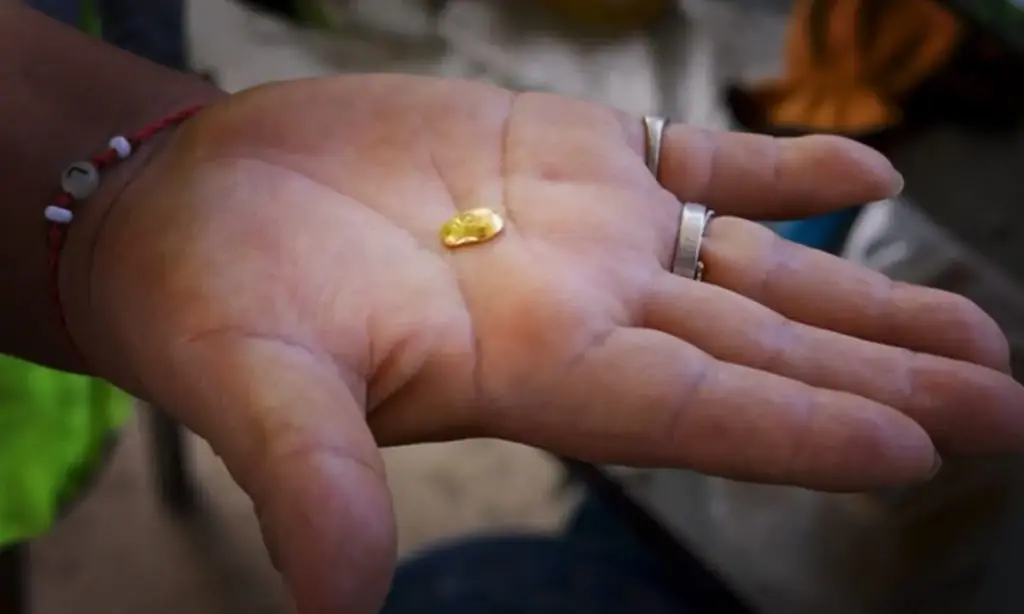
By integrating gravimetric tables powered by solar panels, these miners have managed to bypass the chemical amalgamation process entirely. The solar-powered gravimetric table uses density separation to isolate the gold concentrate, which is then refined through a process known as sintering—turning gold powder into solid pieces of metal using heat, entirely free of mercury.
"Yes, it is possible to produce gold without mercury," affirms a local miner who inherited his trade from his grandparents. "This is what we call ecological gold."

Supporting Context & Metrics: The Human and Ecological Stakes
The Socioeconomic Reality of Madre de Dios
Madre de Dios is one of Peru’s most biodiverse tropical regions, often dubbed the "biodiversity capital of the world." Yet, this ecological crown sits uneasily atop a population heavily dependent on extractive industries. Informal and artisanal gold mining provides the primary economic engine for tens of thousands of people. In regions like La Pampa, where alternative employment opportunities are virtually nonexistent, mining is not merely a career choice; it is the fundamental barrier standing between families and extreme destitution.
The stigma attached to this way of life is heavy. As one formalized miner painfully notes:
"And what do they say about Madre de Dios? That Madre de Dios is a polluter. That we are scum. That we finance crime and prostitution. Who would want to be part of that?"
This sweeping condemnation by the media and urban elites creates a profound psychological barrier. Formalized miners argue that generalized narratives paint all workers with the same brush, failing to differentiate between criminal syndicates operating illegal dredging operations in protected reserves and multi-generational families trying to legitimize their ancestral livelihoods.
Bureaucratic Roadblocks and Economic Penalties
Even for those miners who wish to operate within the bounds of the law, the system is engineered to punish rather than support them. The transition to a fully legal operation requires navigating an expensive and convoluted bureaucratic maze. When purchasing spare parts for machinery, formalized miners face a punitive economic reality: components bought legally with official invoices are significantly more expensive than those bought off the books without documentation.
"We ask for documentation, but many people don’t have it," explains a local merchant. "Unfortunately, there’s no state presence."
This lack of state support creates a perverse economic incentive. By failing to provide tax breaks, micro-loans, or technical subsidies for mercury-free technology, the Peruvian government inadvertently pushes struggling miners back into the informal, unregulated shadow economy. The technology to mine cleanly already exists, but without long-term economic sustainability and infrastructural backing, its adoption remains dangerously out of reach for the average worker.
Official Statements & Local Perspectives
The discourse surrounding gold mining in Madre de Dios is defined by sharp ideological divides between the state, civil society, and the workers on the front lines.
-
The Artisanal Miners’ Plea: Representatives of the formalized mining sector emphasize that they are willing to reform, provided the government stops viewing them purely as adversaries.
"The technology exists. But we need support to implement it and make it economically sustainable in the long term," notes one miner. Despite years of feeling abandoned by Lima, many retain a thread of optimism: "I do have hope. I say that one day, one day I believe our Peruvian state will take us into account. Someday. We just have to keep fighting, keep our courage. We have to take risks."
-
The Critique of State Neglect: Local merchants and community leaders point out that military crackdowns and police raids fail to address the root causes of the crisis. Without providing viable economic alternatives, formal credit lines, and legal pathways that are financially viable, state interventions merely drive illicit operations deeper into remote jungle tracts, where oversight is entirely non-existent and environmental abuses multiply unchecked.
-
Environmental Advocates: Conservationists and researchers maintain that regardless of the social necessity of mining, the ecological toll on the Amazon basin has reached a catastrophic threshold. The continued use of mercury—even on a diminished scale in remote pockets—poses an irreversible threat to the region’s water tables, wildlife corridors, and indigenous populations. For environmental watchdogs, the transition to mercury-free gravimetric mining is not just an alternative option; it is an absolute prerequisite for the continued survival of the Amazonian ecosystem.
Future Outlook: Can "Clean Gold" Save the Amazonian Economy?
As the short film supported by the Amazon Film Grant and the One World Media Fellowship illustrates, the future of Madre de Dios hangs in a delicate balance. The experiment taking place in La Pampa—proving that artisanal miners can transition to solar-powered, mercury-free production—offers a rare beacon of hope in an otherwise bleak landscape.
However, the survival of this model depends entirely on systemic reform. For "clean gold" to transition from an isolated local experiment into a scalable regional standard, several critical steps must be taken:
- Targeted State Support and Subsidies: The Peruvian government must move past punitive policing and begin subsidizing green technologies, such as gravimetric tables and solar power arrays, making it financially advantageous for miners to operate formally.
- Streamlined Legalization Frameworks: Bureaucratic hurdles must be dismantled to make the formalization process accessible and affordable for multi-generational artisanal miners, cutting off the economic oxygen supply to criminal syndicates.
- Fair-Trade Market Access: International and domestic supply chains must establish certified premium markets for mercury-free, ecologically responsible gold from Madre de Dios, ensuring that miners who choose the harder, cleaner path are financially rewarded for their stewardship.
Until these structural changes take root, La Pampa will remain a pressure cooker of tension, where the pursuit of survival clashes daily with the preservation of the earth. Yet, in the quiet hum of solar-powered separation tables and the stubborn optimism of miners refusing to give up on their homeland, lies proof that a different future for the Peruvian Amazon is still within reach.



