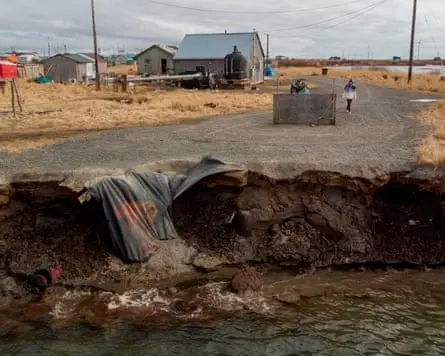
As the global community struggles to rein in the burning of coal, oil, and gas, a critical blind spot has emerged in international climate projections. A groundbreaking new study published in Environmental Research Letters reveals that the Earth’s natural carbon sinks—including pristine forests, vast northern tundras, and delicate wetlands—are undergoing radical transformations driven by rising temperatures. Rather than acting strictly as buffers against climate change, these ecosystems are increasingly transforming into net sources of greenhouse gas emissions.
According to the research, the carbon dioxide and methane released from these natural landscapes could amplify total global heating by an alarming 20% to 30% by the end of this century. This "hidden multiplier" threatens to add an estimated 0.2°C to 0.4°C to the global average temperature trajectory, depending on how aggressively human societies curb industrial emissions in the coming decades.
This alarming feedback loop exposes a dangerous disconnect in current climate policy. Most international models and national carbon-budget calculations have historically treated natural ecosystems as static or reliable sponges for human pollution. The new data shows that assumption is no longer valid. As permafrost thaws, lakes warm, and intensifying wildfires sweep across drying timberlands, ancient carbon locked away for millennia is escaping into the atmosphere. Scientists warn that failing to integrate these natural feedback loops into future climate policies will lead to severe underestimations of future warming and perilous overestimations of the carbon budget humanity can still afford to spend.
Detailed Chronology: The Evolution of Climate Feedback Recognition
For decades, climatologists and earth scientists have understood the theoretical mechanics of climate feedback loops. However, charting the transition of natural environments from carbon sinks to active carbon emitters has been a gradual and sobering evolutionary process in climate science.
Early Warnings and Theoretical Foundations
As early as the late 20th century, paleoclimatologists studying ice cores recognized that historical warming periods were often accompanied by massive releases of methane and carbon dioxide from high-latitude wetlands and thawing soils. Yet, these phenomena were largely categorized as long-term geologic responses rather than immediate variables impacting century-scale policy.
The Real-Time Shift in the 2020s
The reality of these feedback loops began manifesting in real time during the mid-2020s. Consecutive summers marked by unprecedented, record-shattering heatwaves across North America, Europe, and Asia catalyzed unprecedented wildfire seasons. Forests that once served as stable carbon repositories were abruptly incinerated, releasing decades—and sometimes centuries—of stored carbon back into the atmosphere in a matter of days.
Concurrently, high-latitude monitoring stations registered accelerated permafrost degradation across Siberia, Alaska, and Northern Canada. The ground beneath the tundra, previously frozen solid year-round, began collapsing into thermokarst lakes—microbial hotspots that rapidly generate and emit potent methane gas.
The 2026 Policy Awakening
The urgency of these developments reached a critical juncture in late 2026. The United Nations Environment Programme (UNEP) conceded in a milestone report that the landmark international pact to constrain global temperature rises to 1.5°C above pre-industrial levels would likely be breached within the next few years. The report highlighted how climate impacts—such as relentless summer heatwaves and catastrophic wildfires—were striking faster, hitting harder, and lasting longer than previously anticipated.
Building directly upon this grim policy landscape, the new study led by Spark Climate Solutions Research explicitly quantified the planetary toll of four key natural areas: permafrost, wetlands, freshwaters, and wildfires. By mapping how rising global temperatures directly provoke these natural systems to spew additional greenhouse gases, the researchers provided the first comprehensive metric of the hidden multiplier that standard climate policies have largely overlooked.
Supporting Context & Metrics: Unpacking the Numbers
To fully grasp the gravity of the new findings, one must analyze the specific mechanics driving these natural emissions and the numerical realities they introduce to global temperature projections.
The Four Arenas of Concern
The study focuses on four primary natural domains where climate-induced stress triggers greenhouse gas release:
Thawing Permafrost: Covering nearly a quarter of the Northern Hemisphere’s land surface, permafrost stores twice as much carbon as is currently present in the entire atmosphere. As temperatures rise at high latitudes—at rates double or triple the global average—this frozen ground thaws, awakening microbes that decompose organic matter and release carbon dioxide and methane.
Fiercer Wildfires: Prolonged droughts and soaring temperatures create parched landscapes prone to mega-fires. These fires not only destroy living biomass that absorbs carbon, but they also burn organic soils, turning ancient carbon sinks into immediate sources of massive atmospheric pollution.
Warming Wetlands and Freshwaters: Lakes and wetlands are increasingly biologically active as water temperatures rise. Enhanced microbial respiration in warming freshwaters accelerates the production and outgassing of methane, a greenhouse gas with a warming potency many times higher than carbon dioxide over a 20-year horizon.
Quantifying the Heating Multiplier
The mathematical implications of these natural feedback loops are profound:
Amplification Factor: Emissions from natural sources are set to amplify total global heating by 20% to 30% by 2100.
Temperature Additions: Depending on overall global mitigation actions, this natural feedback will add an estimated 0.2°C to 0.4°C to global average temperatures.
Current Policy Trajectory: According to the Climate Action Tracker, current government policies put the world on a path toward a 2.6°C temperature rise above pre-industrial levels. When combined with the newly identified natural amplification, the societal disruption resulting from sea-level rise, agricultural failure, and extreme weather will be vastly intensified.
Even fraction-of-a-degree shifts matter immensely. Moving from a 1.5°C world to a 2°C world—let alone pushing toward 2.6°C or higher—exponentially increases the probability of crossing irreversible planetary tipping points, such as the collapse of major ice sheets or the dieback of the Amazon rainforest.
Official Statements and Expert Perspectives
The publication of this research has elicited urgent calls for action from prominent climate scientists and policy analysts worldwide, emphasizing that time is running out to adjust global mitigation strategies.
"This hidden multiplier is missing from the models guiding climate policy, so those models are likely underestimating how much warming is coming — and overestimating how much carbon we can still afford to emit."
— Sam Abernethy, Lead Researcher at Spark Climate Solutions Research
Abernethy’s assessment underscores the fundamental flaw in current carbon-budget accounting. If nations continue to base their emission reduction targets on models that ignore natural carbon releases, they will inadvertently overshoot their climate goals, assuming a safety margin that no longer exists.
Dr. Rob Jackson, a prominent climate scientist at Stanford University and co-author of the study, emphasized the immediacy of the crisis:
"The disruption of the world’s carbon cycles is now being seen in real time. The results are a wake-up call, and it’s imperative that they be included in the next generation of climate policies. Failure to do so will make meeting the world’s climate goals less and less likely."
Echoing these concerns from the perspective of systemic climate tipping points, Dr. Bill Ripple, an ecologist at Oregon State University who has studied runaway heating phenomena, weighed in on the broader implications:
"One of the most troubling aspects of climate change is that warming can trigger natural processes that cause still more warming. This does not mean that a Hothouse Earth trajectory is inevitable, but it provides another warning about the possibility of reinforcing feedbacks that can amplify the warming humans initiate."
Ripple further highlighted that while the situation is dire, human agency remains the decisive factor:
"The paper also reminds us why every fraction of a degree matters. The more we warm the planet, the more we risk activating natural processes that add still more greenhouse gases to the atmosphere. This makes rapid reductions in fossil fuel emissions even more urgent."
Future Outlook: Navigating the Point of No Return
The intersection of human-driven industrial emissions and natural feedback loops creates a complex, high-stakes trajectory for the remainder of the 21st century.
The Role of Aggressive Mitigation
Crucially, the study emphasizes that human action remains the primary lever controlling the magnitude of these natural emissions. The research outlines two distinct pathways:
Optimistic Scenario: Under a rapid-decarbonization pathway where global society aggressively curbs fossil fuel pollution and achieves net-zero emissions swiftly, the additional warming driven by natural sources is constrained to approximately 0.2°C.
High-Emissions Scenario: Under a business-as-usual or delayed-action scenario, the unchecked heating will push natural systems harder, resulting in the full 0.4°C amplification and dramatically increasing the risk of crossing catastrophic tipping points.
Toward Next-Generation Climate Models
To avoid flying blind into a rapidly warming future, international scientific bodies and policy-making frameworks—such as the Intergovernmental Panel on Climate Change (IPCC)—must urgently integrate dynamic carbon-cycle feedbacks into their assessment models. Accounting for permafrost thaw, wetland emissions, and wildfire carbon releases will require unprecedented interdisciplinary collaboration between ecologists, atmospheric scientists, and climate modelers.
Ultimately, the message from the scientific community is unequivocal. The Earth’s ecosystems are no longer passive bystanders in the climate crisis; they are active participants reacting to the immense pressure of anthropogenic warming. Mitigating fossil fuel emissions is no longer just about stopping what humans pump into the air—it is about preventing human activity from waking sleeping giants within the natural world that could finish the job of destabilizing the global climate.