As world leaders converged on New York for the 81st United Nations General Assembly (UNGA 81) and the concurrent New York Climate Week (NYCW), the international community faced an uncompromising reality: the global climate crisis has entered a volatile and definitive phase. Set against a backdrop of geopolitical fracture, economic disruption, and cascading regional conflicts, this year’s high-level week proved to be a critical junction for international climate governance.
Dominating the discourse was a sobering scientific consensus delivered by the United Nations Environment Programme (UNEP): the world is on an imminent trajectory to overshoot the critical 1.5°C global warming threshold within the next few years. This impending breach threatens to unleash irreversible extreme weather impacts, catastrophic sea-level rises, and socio-economic devastation across vulnerable regions.
Amidst these compounding crises, Greenpeace mobilized a comprehensive live-blogging presence to track high-level negotiations, ministerial dialogues, and frontline resistance. From debates surrounding the future of industrial agriculture and methane mitigation to breakthrough electrification pledges and the global fight to make corporate polluters pay, UNGA 81 served as a crucible for political accountability. This retrospective examines the pivotal developments, key statements, and escalating demands for a fast, fair, and funded transition away from fossil fuels as the world looks ahead to COP31.
Detailed Chronology: Key Events of UNGA 81 and New York Climate Week
September 18–21: Opening Salvos and National Security Imperatives
The high-level week commenced on September 18, immediately establishing climate stability and multilateral cooperation as paramount themes. Outgoing UN Secretary-General António Guterres set a resolute tone for his final UNGA, declaring that joint leadership—not division—remains the singular path to saving the planet.
Early momentum was driven by high-profile addresses during the opening of New York Climate Week. Australian Prime Minister Anthony Albanese delivered a keynote speech framing climate security explicitly as national security. While welcomed by advocacy groups for acknowledging the profound threats faced by Pacific Island nations, Greenpeace Australia Pacific quickly underscored the glaring contradiction in Australia’s domestic policy: having approved 37 new coal and gas projects since taking office, Australia must drastically align its domestic fossil fuel extraction with its aspirations for global climate leadership, particularly as it prepares to co-chair COP31.
September 22–23: High-Level Action, Methane Reductions, and Plastics Diplomacy
As the official General Debate progressed, a flurry of high-level dialogues addressed specialized vectors of the planetary crisis:
The Make Polluters Pay Mobilization: On September 22, the Make Polluters Pay International Coalition—comprising Greenpeace International, 350.org, Oxfam International, and GreenFaith—delivered over two million petition signatures to UN Assistant Secretary-General for Climate Action Selwin Hart. The coalition demanded that fossil fuel giants be held financially accountable for climate damage through permanent windfall profit taxes, subsidy phase-outs, and dedicated loss-and-damage funds.
The Transition Roadmap & Regional Demands: Concurrently, discussions advanced regarding the global roadmap for phasing out fossil fuels championed by Brazil’s COP30 Presidency. Greenpeace emphasized that national roadmaps must prioritize a just transition, protecting vulnerable workers and recognizing Indigenous Peoples as primary guardians of vital ecosystems. Meanwhile, Dr. Oulie Keita, Executive Director of Greenpeace Africa, stressed that restoring trust at UNGA 81 requires translating climate finance promises into tangible national budgets, noting that sub-Saharan adaptation costs have ballooned to $30–$50 billion annually.
Tackling Industrial Agriculture and Methane: Addressing the UN High-Level Solutions Dialogue on Methane, Greenpeace International Executive Director Mads Christensen warned against ignoring the agricultural sector. Pointing out that industrial livestock production is the largest driver of methane emissions and is projected to surge by 30% by 2050, Christensen called for an urgent transition toward nature-friendly farming to slow near-term warming.
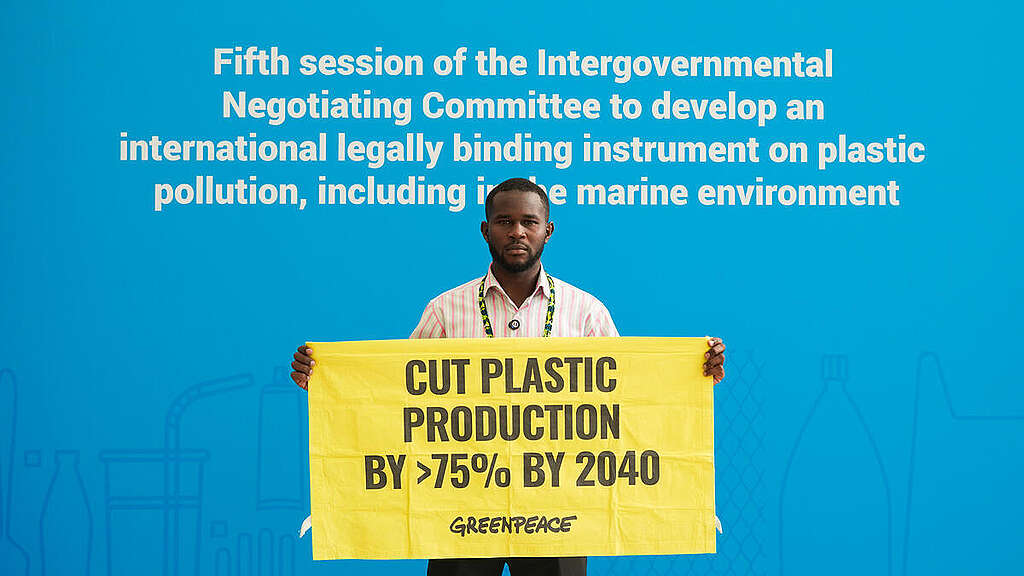
Environmental Multilateralism and the Global Plastics Treaty: Ministerial dialogues hosted by Panama and Vanuatu tackled the triple planetary crisis, focusing heavily on resumed negotiations for a Global Plastics Treaty. Greenpeace reinforced its call for a legally binding treaty to slash global plastic production by at least 75% by 2040, combatting the toxic life cycle of petrochemicals that transcends national borders.
The COP31 "35 by 35" Electrification Pledge: Türkiye’s COP31 President-Designate Murat Kurum announced a flagship global electrification pledge aiming to increase electricity’s share of global final energy consumption to 35% by 2035. While welcomed by climate experts as a vital step, Greenpeace cautioned that electrification cannot be an end in itself; it must be powered entirely by rapid expansions in renewable energy generation and directly displace fossil fuel combustion.
September 24: Confronting Existential Threats of Sea Level Rise
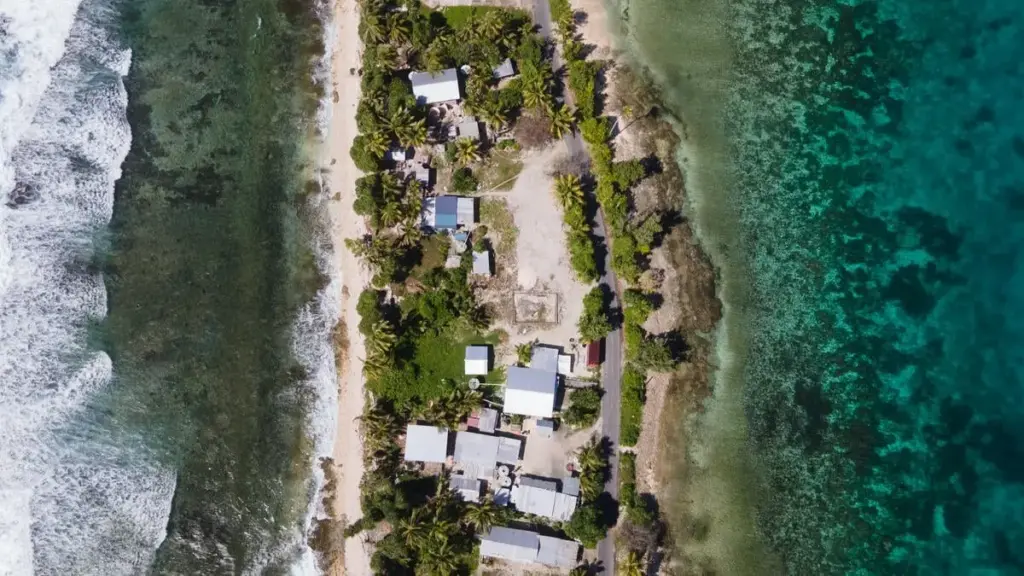
A dedicated high-level meeting addressed the existential threats posed by sea-level rise to low-lying coastal regions and small island developing states. Shiva Gounden, Head of Pacific at Greenpeace Australia Pacific, delivered a stark warning regarding the irreversible 15–20 cm of sea-level rise locked in for the Pacific over the next three decades. Highlighting the plight of climate migrants from Tuvalu, Kiribati, and Fiji, Gounden emphasized that land and identity are inseparable in the Pacific, making aggressive adherence to the 1.5°C limit a non-negotiable survival line.
September 29: The US-China Coal Compromise Examined
Concluding the high-level diplomatic window, a bilateral agreement between US President Donald Trump and Chinese President Xi Jinping emerged, stipulating that China would import 10 million tons of US coal in both 2027 and 2028. Greenpeace East Asia analyzed the commitment as largely symbolic and disconnected from current economic realities. With China’s domestic coal industry in structural decline and renewable energy additions dominating its "new power system," analysts affirmed that 20 million tons of foreign coal imports will offer no lifeline to a dying, uncompetitive industry.
Supporting Context & Metrics
The urgency underscoring UNGA 2026 is anchored in a series of alarming environmental metrics and economic inequities:
The 1.5°C Threshold: UNEP reports confirm that the world is on track to overshoot the Paris Agreement’s 1.5°C limit within the coming years, drastically accelerating extreme weather events, glacial collapses, and coastal flooding.
Adaptation Deficits: Sub-Saharan Africa faces annual adaptation costs ranging between $30 billion and $50 billion, vastly outpacing current international public finance flows.
The Electrification Horizon: Special reports from the International Energy Agency (IEA) indicate that achieving the "35 by 35" electrification goal can generate up to $400 billion in fuel import savings and shave 15% off household energy bills—provided electricity grids transition away from fossil fuel inputs.
Public Consensus on Taxation: Global polling conducted by Greenpeace and Oxfam reveals that over 80% of citizens worldwide support taxing oil and gas corporations to finance climate recovery and adaptation initiatives.
Official Statements & Stakeholder Perspectives
"We are overshooting our climate limits while fossil fuel companies are overflowing with profits. As those most responsible for the climate crisis continue to cash in, this year’s repeated disasters pose a clear question: will politicians finally end the industry’s destruction? Talk is cheap, but life is priceless."
— Jasper Inventor, Deputy Programme Director, Greenpeace International
"Africa has heard decades of climate promises and the time has come to turn those promises into reality. Climate justice cannot remain a promise on paper. It must be felt in people’s lives, protected in their rights, and visible in the opportunities they have to build a better future."
— Dr. Oulie Keita, Executive Director, Greenpeace Africa
"The ocean, our moana, our wansolwara—a source of life and sustenance and security for Pacific communities—is transforming into a malevolent force… Limiting global warming to 1.5°C is a non-negotiable survival line for Pacific people."
— Shiva Gounden, Head of Pacific, Greenpeace Australia Pacific
"We are putting our heads in the sand if we expect to reach the goals of the Global Methane Pledge without addressing livestock. Unchecked industrial livestock production drives superheating emissions, deforestation, water pollution, and extinction."
— Mads Christensen, Executive Director, Greenpeace International
Future Outlook: The Road from New York to COP31
As the 81st United Nations General Assembly drew to a close, the focal point of international climate diplomacy shifted irrevocably toward the upcoming UNFCCC Conference of the Parties. With Türkiye preparing to host COP31 and the Global Tax Treaty negotiations scheduled to resume in Nairobi later in the year, the mandate for world leaders is stark.
Incrementalism, voluntary corporate pledges, and symbolic trade agreements are no longer sufficient to navigate the compounding crises of runaway warming, ocean acidification, and economic inequality. To restore multilateral trust and secure a liveable future, governments must operationalize ambitious national roadmaps. These frameworks must deliver an equitable, fast, and fully funded phase-out of all fossil fuels, enforce strict corporate polluter accountability, and protect the frontline communities bearing the heaviest burdens of a warming world. The transition away from fossil energy is not merely a policy preference—it is the ultimate prerequisite for human survival.