

Executive Overview
The global automotive landscape is undergoing its most radical transformation since the invention of the assembly line. Yet, while countries across Asia, Europe, and South America accelerate toward a zero-emission future, the United States is increasingly moving in reverse.
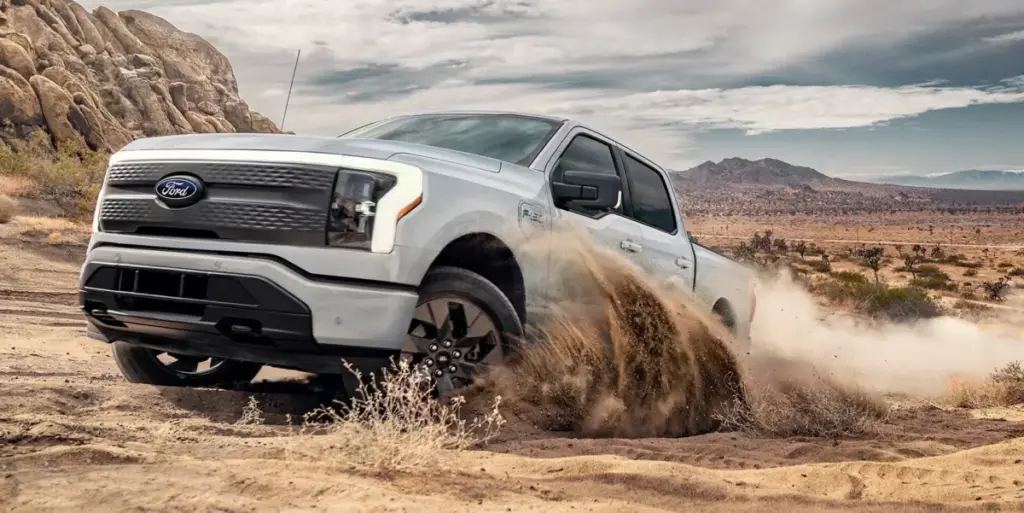
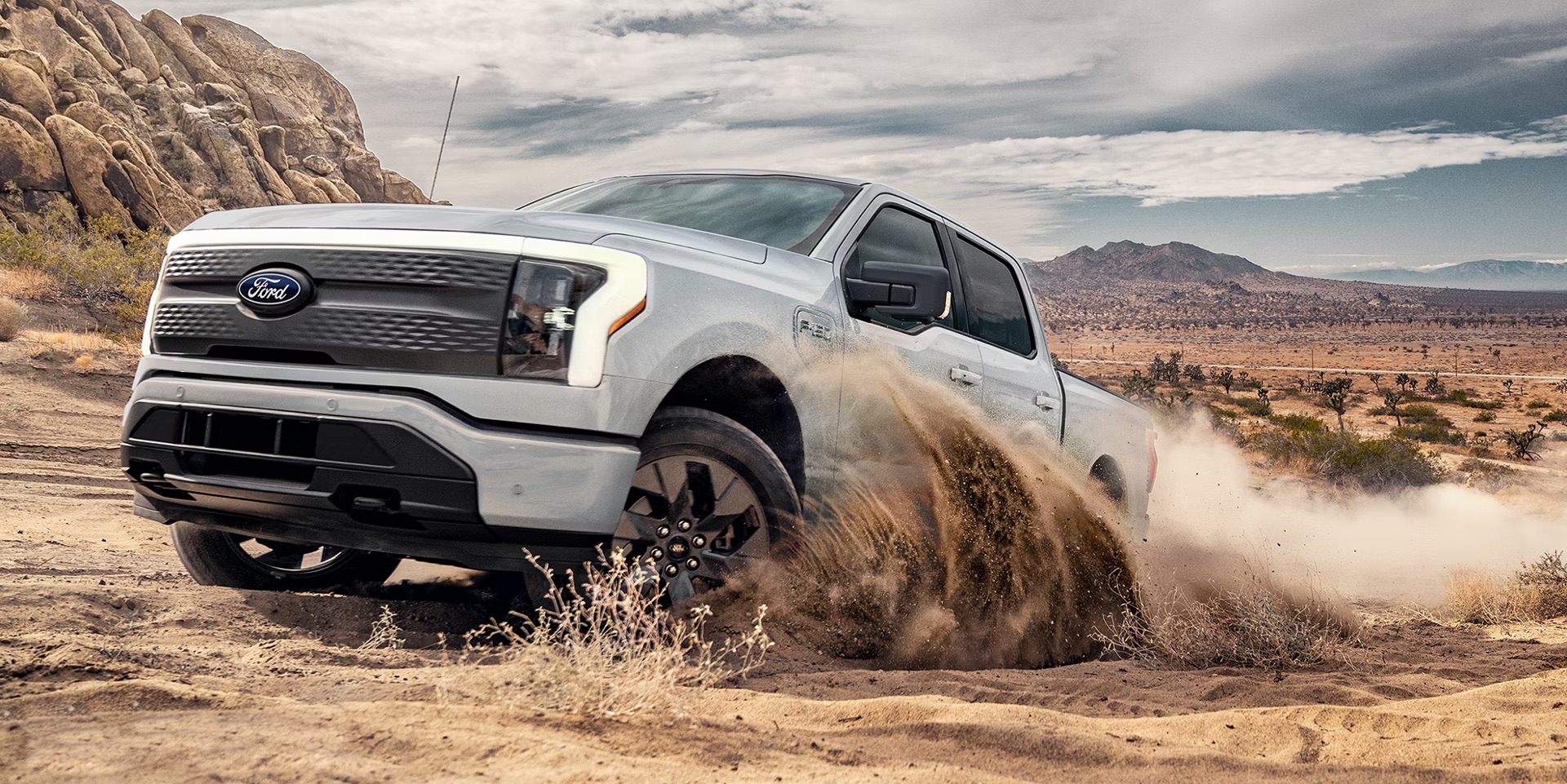
This divergence was starkly underscored by a major development in the domestic market: the complete withdrawal of the fully electric Ford F-150 Lightning from the U.S. auto market. Once heralded as a monumental turning point for American EV adoption—bringing electrification to the heart of the country’s most beloved vehicle segment—the retreat of the Lightning serves as a symptom of a much deeper malady.
Plagued by aggressive regulatory pushback, shifting political priorities, domestic automaker ambivalence, and a fortress mentality against superior foreign competition, the United States is rapidly squandering its early-mover advantage. While nations like Uruguay boast pure electric vehicle (BEV) market shares of 50%, China surges past 45%, and even traditional laggards embrace affordable alternatives, the U.S. is artificially shielding its domestic industry. By walling itself off from globally competitive electric vehicles, the American automotive sector risks isolating itself into obsolescence, leaving open the alarming possibility that the U.S. could end up dead last in the global transition to electric mobility.
Detailed Chronology: From Pioneer to Protectionist
To understand how the United States arrived at this precarious crossroads, it is necessary to examine the trajectory of the American EV market over the past quarter-century.
The Early Innovator Era (Late 1990s–2010s)
For a long time, the United States was not just a participant in the electric vehicle revolution; it was the undisputed architect. The late 1990s saw General Motors introduce the EV1, a pioneering, albeit short-lived, experiment that proved battery-electric vehicles were mechanically viable. A decade later, the birth of Tesla redefined consumer perceptions of electric cars, proving that EVs could be high-performance, desirable luxury items. GM followed up with the Chevy Volt—a crucial bridge technology—and subsequently the Chevy Bolt, which demonstrated that mass-market, long-range electric driving could be achieved at an accessible price point. Bolstered by pioneering mandates from states like California, the U.S. appeared poised to dominate the twenty-first-century auto industry.
The Stalling Momentum and Policy Whiplash (2020–2024)
As global markets began pivoting aggressively toward electrification, American policy became a political football. While federal incentives under various administrations attempted to jump-start domestic manufacturing and supply chains, infrastructure rollout remained sluggish, and legacy automakers struggled to balance legacy internal combustion engine (ICE) profits with massive EV capital expenditures. Despite brief surges in consumer demand, polarization surrounding green energy turned electric vehicles into a cultural flashpoint. Traditional automakers, which had initially committed to aggressive all-electric timelines, began hedging their bets, quietly pushing back production targets, scaling back battery plant investments, and pivoting heavily back toward hybrid and gas-powered vehicles to appease short-term shareholder demands.
The Great Isolation and the F-150 Lightning Exit (2025–Present)
The current phase is defined by systemic retreat and extreme protectionism. As Chinese manufacturers perfected hyper-efficient, technologically advanced, and remarkably affordable EVs, the U.S. erected impenetrable trade barriers, slapping prohibitive tariffs on imported clean energy technology to protect domestic legacy automakers.
However, rather than using this protected breathing room to innovate and drive down costs, American automakers have largely struggled to produce profitable high-volume EVs that everyday consumers can afford. The chickens have now come home to roost. The official pulling of the fully electric Ford F-150 Lightning from the U.S. market is a watershed moment—an admission that, under current economic conditions, regulatory environments, and softening domestic demand, even America’s flagship electric truck could not sustain profitability.
Supporting Context & Metrics: A Global Paradigm Shift
While the American market stumbles, the rest of the world is sprinting. The disparity in adoption rates between the United States and international markets highlights a widening chasm that protectionist walls can only temporarily obscure.
The Latin American Surge
Recent data reveals astonishing growth in regions historically considered secondary automotive markets. In Brazil, the rapid rise of Chinese automotive brands has catalyzed an electrification boom, with pure electric vehicles rapidly closing the gap with U.S. adoption levels. Even more striking is Uruguay, where vehicle electrification has shattered expectations. Recent market reports indicate that Uruguay’s BEV sales soared to an astonishing 50% market share. For perspective, the United States lagged far behind at a meager 5.9% BEV market share during the first half of the year.
The Asian and European Powerhouses
China remains the undisputed epicenter of the global EV revolution. Fueled by fierce domestic competition, world-class battery supply chains, and advanced software ecosystems, China’s BEV market share crossed the 45% threshold.
Meanwhile, Europe—though currently navigating its own regulatory debates and facing stiff competition from Asian imports—remains miles ahead of the United States. European markets comfortably maintained a 26% BEV market share, demonstrating that advanced economies can successfully transition away from fossil fuels when supported by stable, long-term policy frameworks.
| Region / Country | Approximate BEV Market Share | Trajectory |
|---|---|---|
| Uruguay | ~50% | Explosive growth; outpacing expectations |
| China | ~45% | Unstoppable expansion; globally dominant |
| Europe | ~26% | Steady adoption; well-established infrastructure |
| Brazil | Rapidly rising | Accelerated by Chinese market entry |
| United States | ~5.9% | Stagnating; facing rollbacks and protectionism |
The Cost and Competitiveness Crisis
The core issue facing the American consumer is not a lack of interest in cleaner transportation, but a profound market failure in affordability. Chinese automakers have mastered the art of vertical integration, producing feature-rich electric vehicles that routinely undercuts Western combustion-engine equivalents on price. By effectively locking these vehicles out of the country through high tariffs and regulatory hurdles, U.S. policy forces consumers to choose between expensive domestic EVs and traditional gas-guzzlers.
Countries across Asia, Africa, and South America are realizing that cutting dependence on imported oil stabilizes their local economies. Even traditional geopolitical adversaries and resource-rich nations like Russia are eagerly welcoming competitive Chinese EV models to modernize their fleets. The U.S., by contrast, finds itself increasingly isolated, attempting to prop up an internal market that is actively retreating from the future.
Official Statements & Industry Perspectives
The structural crisis facing the American EV ecosystem has drawn sharp critiques from industry analysts, environmental economists, and trade experts alike.
Market observers point out that the withdrawal of vehicles like the F-150 Lightning signals a failure of long-term strategic planning among legacy Detroit automakers. “When a manufacturer is forced to pull a flagship electric vehicle from its home market, it is not merely a product cancellation—it is a flashing red light regarding the health of the entire domestic transition,” notes one senior automotive policy analyst. “American automakers spent billions trying to force high-margin, oversized luxury EVs onto a public struggling with inflation, while completely ignoring the affordable, high-volume segments where the rest of the world is winning.”

Conversely, defenders of current U.S. trade policies argue that strict protectionism is necessary to safeguard domestic manufacturing jobs and national security against a wave of state-subsidized foreign imports. Proponents of these measures argue that allowing unrestricted access to foreign EV giants could devastate domestic industrial capacity.
However, critics counter that this insular strategy creates a dangerous economic bubble. By shielding domestic manufacturers from real global competition, the U.S. risks creating an uncompetitive, bloated auto sector that produces expensive vehicles nobody outside of North America wants to buy.
Furthermore, international trade bodies have expressed growing concern that North America’s rigid stance isolates it from vital global supply chain partnerships. While Canada has begun cautiously exploring avenues to integrate with broader global EV supply chains, the U.S. remains stubbornly committed to a go-it-alone approach that increasingly looks less like self-reliance and more like economic self-isolation.
Future Outlook: Will the U.S. Bring Up the Rear?
As the global automotive industry races toward a mid-century zero-emission deadline, the trajectory of the United States raises an uncomfortable question: Could the U.S. genuinely end up dead last in light-vehicle electrification?
The indicators point to a distinct possibility. If current trends persist—characterized by a retreating domestic lineup, persistent consumer hesitancy fueled by shifting political winds, inadequate public charging infrastructure, and a refusal to engage with the world’s most innovative EV manufacturers—the American auto market risks calcification.
Other emerging economies in Africa and Southeast Asia are leapfrogging traditional fossil-fuel infrastructure entirely, embracing affordable electric mobility as a direct path to energy independence. Meanwhile, European and Asian markets continue to refine their regulatory frameworks to encourage deeper adoption.
The U.S., burdened by political polarization and protectionist blinkers, is running the risk of becoming an automotive backwater. To reverse this trajectory, American policymakers and legacy automakers must undergo a fundamental mindset shift. Clinging to the internal combustion engine as a nationalist security blanket will only delay the inevitable.
If the American auto industry continues down its current path of retrenchment—typified by the quiet exit of the F-150 Lightning and the scaling back of EV ambitions—the United States will not just lose the global clean energy race. It will cross the finish line last, watching from the sidelines as the rest of the world drives into the future.



