This coverage is made possible through a partnership between Grist and The Salt Lake Tribune, a nonprofit newsroom in Utah.
Executive Overview
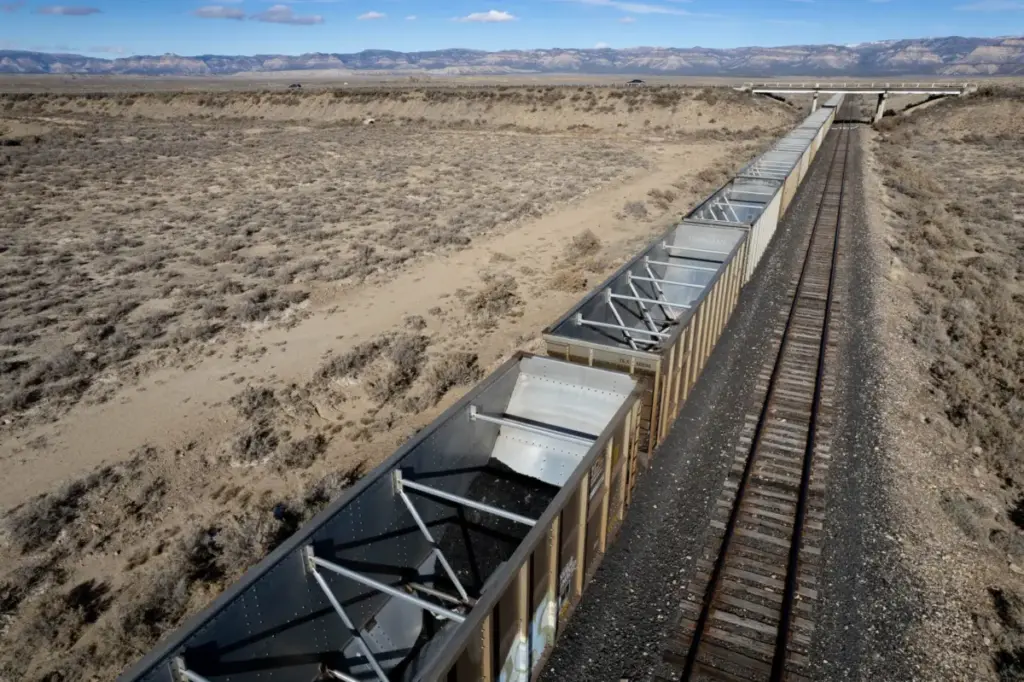
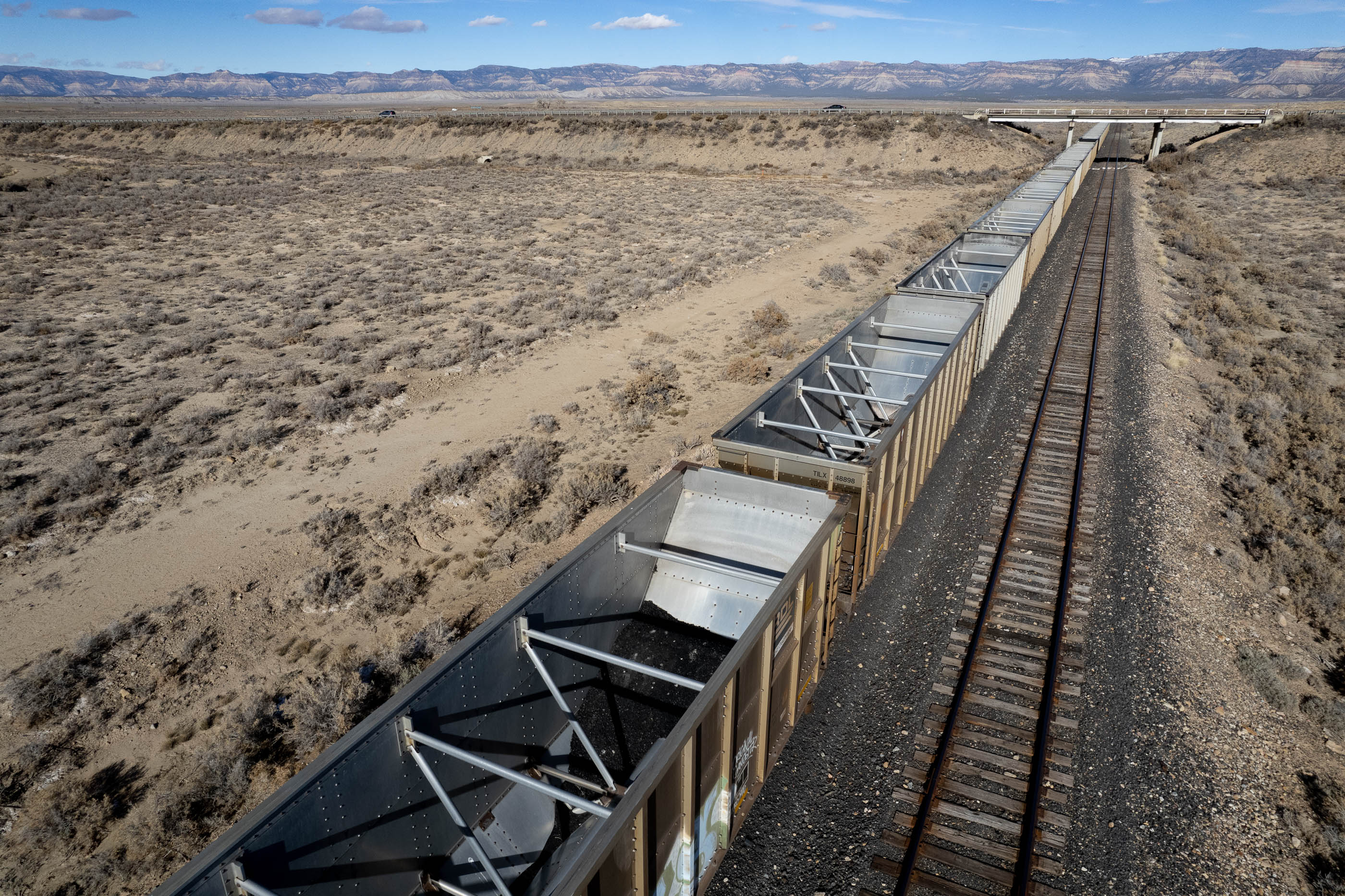
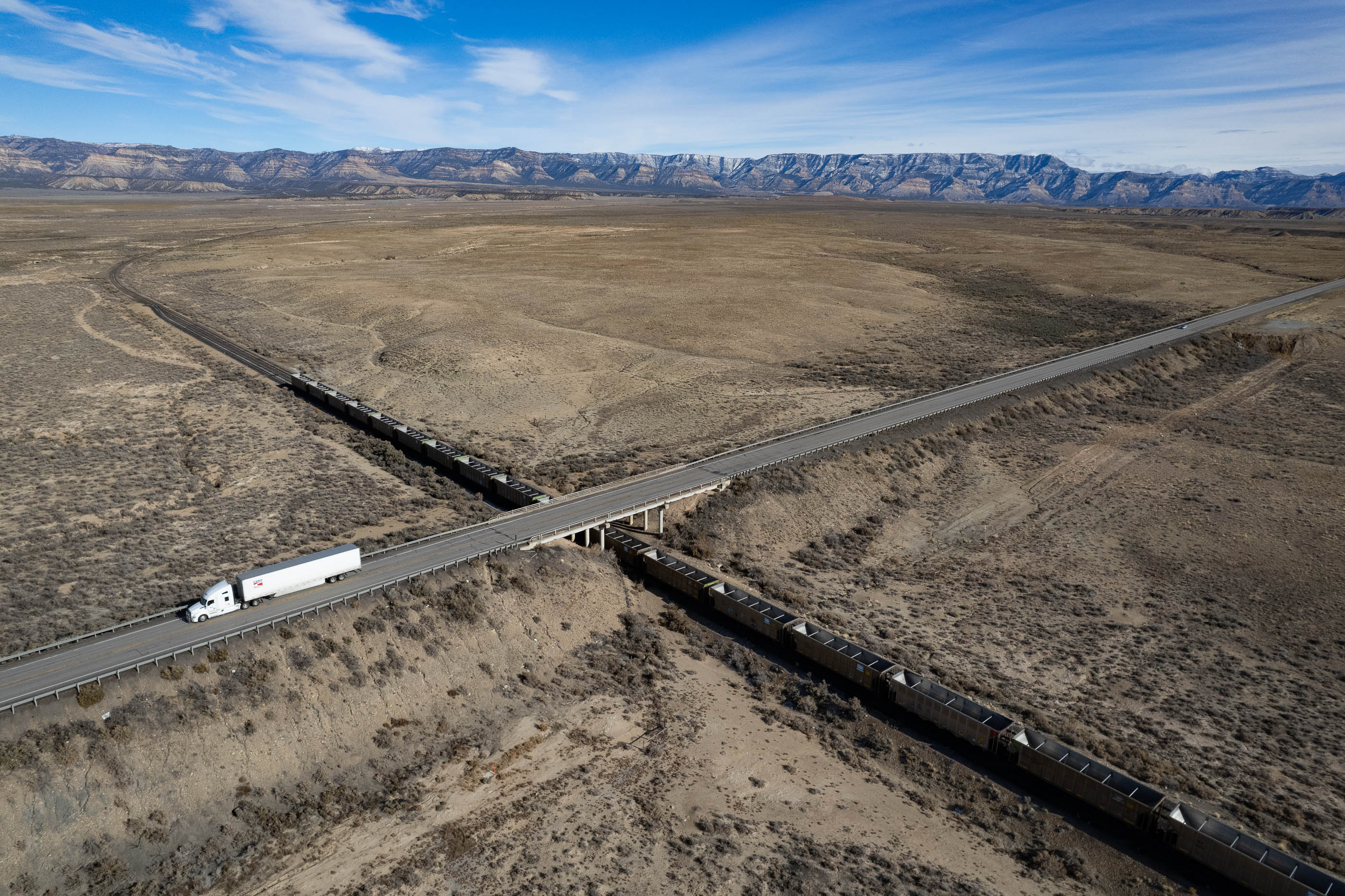
For over a century, the economic heartbeat of Carbon County, central Utah, throbbed to the rhythm of the coal mines. Residents traded their health, safety, and pristine landscapes for the grueling labor that powered the American West, enduring the grim realities of black lung disease, subterranean explosions, and industrial fires. Today, however, that era is entirely consigned to history. By 2023, the region’s last active coal seams fell silent, leaving behind idle railcars, rusted infrastructure, and a local tax base severely depleted by the sudden collapse of its defining industry.
Now, a new kind of economic gold rush is descending upon these rural valleys, driven by the insatiable, exponential power demands of artificial intelligence and digital infrastructure. A wave of high-tech developers, data center conglomerates, and pioneering energy startups are eyeing the wide-open expanses of central Utah as the ideal frontier for massive computational hubs.
Yet, this modern techno-industrial renaissance has ignited a fierce ideological and environmental civil war. At the forefront of this clash is "Project Beehive," a controversial initiative by nuclear startup Valar Atomics to deploy a sprawling mega-complex featuring 456 small modular reactors (SMRs) on Bureau of Land Management territory. Paired with Altigen Energy’s proposed 1,200-acre natural gas and data center hybrid known as "Jurassic Spark," these ambitious undertakings promise to transform the rural landscape completely.
While state officials, county commissioners, and corporate boosters herald these multibillion-dollar investments as a miraculous economic lifeline, local residents are pushing back with unprecedented fury. Haunted by Utah’s dark legacy of downwind nuclear testing, skeptical of secretive non-disclosure agreements, and deeply anxious about scarce water resources and intense localized heat islands, communities in Carbon and Emery counties are demanding transparency. As the battle lines are drawn between local grassroots organizers and county leadership, Utah stands at a critical crossroads, weighing the promise of high-tech prosperity against the environmental and social risks of an untested energy future.
Detailed Chronology: From Fossil Fuels to the Frontier of AI
The economic trajectory of Carbon County has always been defined by boom-and-bust cycles, but the velocity of its recent industrial pivot is staggering. To understand the gravity of the current tension, one must examine the rapid collapse of the region’s foundational industry and the sudden arrival of the digital age.
The Coal Era and Its Demise
In 2006, Carbon County’s underground and surface mines were operating at a blistering pace, yielding nearly 10 million tons of coal annually. For generations, families like Cindy O’Neil’s built their lives around this extraction economy. O’Neil’s husband spent years toiling in the namesake mines. The community accepted the occupational hazards—the chronic respiratory illnesses, the structural collapses, and the constant threat of disaster—as the price of a stable livelihood.
However, a confluence of market forces battered the region in the ensuing decades. The aggressive market shift toward cheaper, cleaner renewables and abundant natural gas, combined with the gradual depletion of accessible coal seams, devastated the local economy. By 2023, the decline became absolute: not a single pound of coal was mined in Carbon County. The departure of the industry left a gaping hole in local government budgets, shifting an disproportionate property tax burden onto homeowners and remaining small businesses.
The Arrival of the Tech Incursion
As the local tax base fractured, state lawmakers and economic development agencies scrambled for solutions. In response to the nationwide surge in artificial intelligence and the massive data centers required to support it, the Utah Legislature passed Senate Bill 132 last year. This legislation authorized private corporations with energy demands exceeding 100 megawatts to construct their own self-contained generating stations, bypassing traditional utility grids to accelerate tech development.
Capitalizing on this legislative green light, tech and energy developers zeroed in on Carbon and Emery counties. Rumors of clandestine land acquisitions soon began to swirl across Facebook community pages, where residents like O’Neil attempted to piece together the puzzle of incoming projects.
The scope of these proposals quickly crystallized:
Valar Atomics’ "Project Beehive": A massive complex utilizing hundreds of small modular reactors to power industrial activities, heavy manufacturing, and massive AI data centers.
Altigen Energy’s "Jurassic Spark": A 1,200-acre development east of Wellington, designed to house high-density data centers powered initially by a massive natural gas facility.
Supporting Context & Metrics: Assessing the Scale of the Proposals
The sheer scale of the proposed energy and computational infrastructure projects in Carbon County is difficult to overstate, particularly when measured against the region’s quiet, rural footprint.
Project Beehive and Valar Atomics
Valar Atomics has secured a monumental agreement with the Utah Trust Lands Administration, leasing a square mile of state-owned land for up to 100 years. The financial terms of the lease will generate approximately $35 million over 50 years, with revenues directly benefiting public schools across Utah.
However, the technology underpinning the project is entirely unproven on a commercial scale within the United States. Valar plans to build 456 small modular reactors. These systems will not only generate electricity for data centers but will also process uranium TRISO-fuel, facilitate water desalination, manufacture steel, and refine critical minerals.
Earlier this year, high-ranking officials—including Governor Spencer Cox and U.S. Senator John Curtis—welcomed Valar to the state, granting permission to test its "Ward250" microreactor at the San Rafael Energy Lab in neighboring Emery County. In June, Valar achieved "self-sustaining criticality," a milestone where atoms split and maintain a steady fission chain reaction without external neutron feeds. The company now aims to power a 30-megawatt nuclear-powered AI data center in Emery County in direct partnership with semiconductor giant Nvidia.
Jurassic Spark and Natural Gas Expansion
Running parallel to Valar’s nuclear ambitions is Altigen Energy’s "Jurassic Spark" campus. Selected on an expansive site east of Wellington, the project dwarfs the Valar footprint. According to Community Economic Development Board minutes, the campus will initially deploy a 250-megawatt natural gas plant, with long-term projections scaling production up to 3 gigawatts of electricity.
To put that metric into perspective, the entire state of Utah currently consumes approximately 4 gigawatts of electricity. A single data center campus in Carbon County could theoretically match nearly three-quarters of the state’s total current electrical consumption.
Official Statements and Local Polarization
The profound divergence in perspective between state leadership, county commissioners, and the local populace has created an environment of deep mutual distrust.
The Pro-Development Stance
County commissioners and state officials argue that Carbon County has been handed a historic opportunity to revitalize its economy and repair its tax rolls. Larry Jensen, a Carbon County commissioner, defended the board’s unwavering support for the initiatives during a heated public meeting.
"We realize that this topic is a hot button now, along with data centers," Jensen acknowledged. "It’s important that you understand that the Carbon County commissioners are committed to allowing these things to move forward. Even with the pushback—we realize that there are a few in our community who will push back—but the silent majority are the ones that we really represent."
The Utah Trust Lands Administration shares this pragmatic, growth-oriented vision. During a board meeting discussing the Valar lease, board chair Mike Nelson candidly addressed the unprecedented nature of the agreement. "We weren’t always sure what to ask about," Nelson admitted, offering praise for the startup, "and probably still aren’t sure of everything to ask about because this is a first, right?"
Furthermore, the county issued an official statement on July 3, emphasizing that the severe economic contraction following the death of the coal industry has left homeowners bearing an unsustainable tax burden. The statement defended the use of non-disclosure agreements, noting, "Without these agreements, some companies would choose not to explore projects in Carbon County."
The Grassroots Backlash
On the other side of the divide, residents feel entirely marginalized by closed-door negotiations and swift bureaucratic approvals. Cheryl Lupo, a long-time Carbon County resident and unaffiliated candidate for the county commission, strongly disputed Commissioner Jensen’s claims of a "silent majority" supporting the projects. To secure her spot on the ballot, Lupo collected 300 signatures from local voters, finding nearly universal resistance to the industrial plans.
"People are up in arms," Lupo said. "Torches and pitchforks. Because they’re not being heard."
Lupo’s opposition is deeply personal. Her family carries the generational trauma of Utah’s troubled history with nuclear energy. Her mother passed away at the age of 38—a tragedy Lupo attributes to the downwind fallout of radioactive weapons testing conducted in neighboring Nevada during the 1950s. Believing that the same atmospheric contamination claimed her grandfather’s life, Lupo remains unshakeable in her stance: "I will never, ever be a proponent of nuclear."
Other residents, such as Cindy O’Neil, express frustration over the lack of transparency from local government. Confined to her home along U.S. Highway 6, O’Neil watches as corporate representatives and state officials map out the future of her neighborhood without community input. "You shouldn’t be hiding what you and the company are going to bring to a community," O’Neil remarked, "and not tell the community until it’s too late and a done deal."
Future Outlook: Environmental Pressures and the Path Ahead
As Carbon County barrels toward this high-tech industrial transformation, scientists and environmental advocates warn that the region faces severe cumulative impacts that extend far beyond economics.
Heat Islands and Atmospheric Concentration
Both natural gas combustion and nuclear fission generate immense amounts of thermal energy. Robert Davies, a physics professor at Utah State University, points out that nuclear reactors actually produce more waste heat than natural gas plants due to thermodynamic inefficiencies.
"If you’re in a contained valley, it concentrates the problem," Davies explained.
This geographic reality poses an immediate ecological concern. Wellington and the surrounding communities sit tightly enclosed within a basin, hemmed in by the Wasatch Range to the west and the Book Cliffs to the north and east. Aspen Westenskow, a lifelong resident of Carbon and Emery counties, voiced deep concern over the microclimatic alterations these projects will cause.
"The heat island that the data centers produce, that concerns me," Westenskow said. "They go clear all this land, the brush, the trees. What helps cool the planet down? Not flat dirt."
The Water Crisis
Beyond thermal pollution, the most pressing anxiety for residents centers on water scarcity. The arid landscapes of central Utah are chronically water-strapped, with every available drop of moisture already allocated to agriculture, municipal use, and ecological preservation.
While Valar Atomics maintains that its SMRs will utilize closed-loop helium cooling systems requiring minimal water, and data center developers pledge similarly conservative usage, local communities remain highly skeptical. The prospect of heavy industrial water consumption in a desert environment threatens to strain an already fragile watershed.
Conclusion
Carbon County stands at a historic crossroads. The ghosts of the coal mining era still loom large over the landscape, serving as a reminder of an economy built on extraction, sacrifice, and eventual abandonment. Now, as tech conglomerates and nuclear startups offer a futuristic alternative powered by artificial intelligence, natural gas, and unproven microreactors, residents are forced to ask a fundamental question: Is exchanging coal for code and radiation worth the risk?
For local officials, these projects represent a vital financial lifeline necessary for survival. But for residents like Cindy O’Neil, Cheryl Lupo, and Aspen Westenskow, the rush to embrace the digital age feels less like a renaissance and more like a gamble with their health, their environment, and their home. As "Project Beehive" and "Jurassic Spark" advance through the regulatory pipeline, the battle over Carbon County’s future has only just begun.