

Executive Overview
The United States clean energy transition suffered a severe blow in September, as private enterprises scrapped or drastically scaled back nearly $1.6 billion worth of major factory and green infrastructure projects nationwide. According to the latest monthly analysis released by environmental business network E2 (Environmental Entrepreneurs) and the Clean Economy Tracker, this localized capitulation brings the cumulative total of private-sector project cancellations for the year past the alarming threshold of $24 billion.
What began as a steady trickle of corporate caution following shifting macroeconomic tides and policy recalibrations has evolved into a persistent trend of retrenchment. Electric vehicle (EV) manufacturing, battery innovation, and energy storage supply chains bore the brunt of September’s downturn. Four major production facilities spanning Kansas, Michigan, North Carolina, and Tennessee were either entirely abandoned or significantly downsized, wiping out thousands of high-paying jobs in the process.
Compounding the private sector’s retreat, federal backing has simultaneously contracted. The U.S. Department of Energy (DOE) recently canceled nearly $8 billion in funding across more than 200 federally supported clean energy initiatives nationwide. Though distinct from E2’s figures tracking private capital flight, the concurrent withdrawal of public and private investment paints a sobering picture of an industry grappling with unprecedented regulatory, political, and financial headwinds.
Paradoxically, geospatial analysis of these cancellations reveals an acute political irony: Republican-led districts have absorbed the vast majority of the economic damage, losing more than double the investment capital and three times as many jobs compared to Democratic-leaning districts. As capital flees overseas and foreign competitors race to capture dominance in the industries of the future, industry advocates warn that America risks forfeiting its hard-won leadership in the global clean energy economy.
Detailed Chronology and Sector Impacts: The September Anatomy of Retreat
The month of September proved to be a watershed moment for corporate contraction within the green technology sector. The decisions made by major automotive and energy storage players last month underscore a broader, systemic anxiety regarding consumer adoption rates, infrastructure readiness, and political volatility.
General Motors Scales Back EV Operations
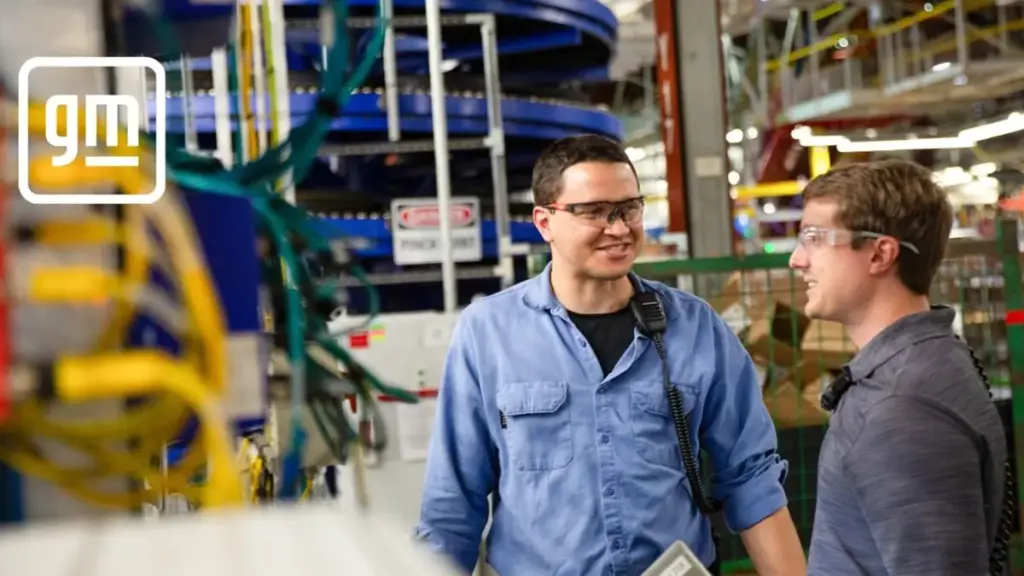
General Motors, once vocal about its aggressive, all-electric ambitions, served as a primary driver of September’s bad news. The automaker officially reduced production plans across two critical manufacturing lines situated in Tennessee and Kansas. The pullback at these plants resulted in the immediate elimination of 1,600 jobs, signaling a retreat from previous volume projections for upcoming EV platforms, including the heavily anticipated all-new Chevy Bolt and associated structural architectures.
The cutbacks in Spring Hill, Tennessee, and Kansas City underscore the widening chasm between legacy automakers’ initial production targets and the reality of near-term market demand. While executives continue to frame these adjustments as prudent responses to market pacing, the human and economic toll on local communities has been swift and severe.

Natron Energy’s Double Blow
If GM’s cuts demonstrated the vulnerability of legacy manufacturing giants, the collapse of Natron Energy’s expansion plans exposed the fragile reality facing emerging green tech startups. Natron Energy, a pioneer in sodium-ion battery technology—a promising alternative to lithium-ion that avoids scarce raw materials like cobalt and nickel—was forced to take drastic defensive measures.
The company shuttered its $40 million manufacturing plant in Michigan, resulting in the layoff of 150 workers who had been pioneering next-generation stationary storage solutions. More damaging to the long-term outlook of American battery independence was Natron’s simultaneous cancellation of a planned $1.4 billion manufacturing facility in North Carolina. That single project would have generated roughly 1,000 advanced manufacturing jobs and anchored North Carolina’s growing reputation as a hub for energy innovation.
The Human and Economic Toll
When tallied together, the closures, cancellations, and downsizings executed in September wiped out more than 3,000 green jobs in a single month. This brings the running tally of private clean energy jobs lost throughout 2025 to nearly 21,000.
These losses represent more than simple corporate housekeeping; they dismantle regional supply chains that took years to construct. Specialized engineers, line technicians, logistics coordinators, and local construction crews find themselves displaced as capital investments evaporate. Furthermore, these contractions trigger secondary economic shocks, reducing demand for local housing, commercial retail, and municipal tax revenues necessary to support community services.
Supporting Context & Metrics: The Macro Picture Since 2022
To properly contextualize the turbulence of September 2025, one must examine the trajectory of the clean energy sector following the passage of landmark federal legislation in August 2022.
The Post-Legislation Boom and Subsequent Correction
In the wake of federal clean energy tax credits and modern industrial policy tools, the United States experienced an unprecedented renaissance in domestic manufacturing. Between August 2022 and late 2024, companies announced roughly 415 major clean energy projects spread across 42 states and Puerto Rico. This flood of enthusiasm represented a staggering $135 billion in planned private investments, projected to create approximately 125,000 permanent, high-quality jobs.
However, the momentum has stalled dramatically. Out of those hundreds of announced initiatives, 65 projects have since been canceled, closed, or permanently scaled back. The vulnerability of these investments is heavily concentrated in the current calendar year: 42 of those 65 failures occurred during the first nine months of 2025 alone. In total, these recent setbacks have erased roughly $27 billion in capital investments and cost the American workforce approximately 30,000 promised jobs.

The Counter-Trend: Glimmers of Resilience
Despite the overwhelming wave of cancellations, the sector has not ground to a complete halt. E2’s tracking data revealed that companies still managed to announce roughly $542 million in new clean energy investments during September.
These resilient projects were predominantly clustered in two high-demand areas:
- EV and Solar Component Manufacturing: Specialized facilities dedicated to domestic solar supply chains and localized vehicle components continue to attract cautious capital.
- Grid Infrastructure and AI Data Center Support: Driven by the explosive power demands of artificial intelligence and cloud computing infrastructure, investments in grid modernization and localized clean generation to power data centers provided a vital counterweight to automotive cutbacks.
These new September announcements are projected to inject just under $542 million into the economy and create nearly 1,000 new jobs. While a welcome injection, this influx is dwarfed by the $1.6 billion extracted from the economy during the exact same period.
Official Statements and the Political Fallout
The economic contraction of the American clean energy sector has triggered sharp debate among analysts, industry advocates, and political strategists. Crucially, empirical data compiled by economic watchdogs reveals an ironic and politically sensitive reality regarding where the damage is hitting hardest.
The Geographic and Political Irony
A geographic breakdown of E2’s data indicates that Republican-led congressional districts are bearing the brunt of the capital flight. Driven in large part by where heavy manufacturing facilities, battery plants, and solar installations were initially sited—often in suburban and rural districts prioritizing industrial development—Republican districts have absorbed the heaviest losses.
- Republican Districts: Have lost over $12.4 billion in private-sector investments and nearly 15,000 jobs throughout 2025.
- Democratic Districts: Have experienced comparatively lower losses, totaling about $7.5 billion in investments and approximately 5,000 jobs over the same period.
This disparity highlights a profound disconnect between legislative rhetoric targeting federal clean energy incentives and the ground-level economic realities experienced by constituents in conservative districts who stand to benefit directly from industrial green investments.
Industry Leaders Sound the Alarm
Michael Timberlake of E2 did not mince words when addressing the broader implications of the September data release, warning that the localized pain points are symptoms of a national competitiveness crisis.

"The loss of these projects isn’t just a setback for clean energy — it’s a setback for America’s workers and competitiveness," stated Timberlake. "For every canceled factory or downsized plant, many more projects aren’t even being announced at all as more capital flees and businesses look overseas to invest instead. That means fewer paychecks, less local investment, and fewer opportunities for US workers to lead in the industries of the future."
Industry analysts echo these concerns, pointing out that global competitors—particularly in China and the European Union—are aggressively capitalizing on American policy uncertainty. As U.S. firms scrap domestic factories due to regulatory mixed signals, shifting subsidy frameworks, and financing pressures, international competitors are solidifying their grip on the supply chains that will dominate global trade for the next half-century.
Future Outlook: Navigating Uncertainty in the Energy Transition
As the fourth quarter of 2025 begins, the American clean energy landscape stands at a critical crossroads. The convergence of private project cancellations, sweeping federal funding rollbacks, and shifting political landscapes has introduced a degree of volatility unseen since the early stages of the modern energy transition.
Key Factors Shaping the Road Ahead
- Regulatory Stability and Tax Credit Expirations: With key federal incentives facing sunsets—such as the looming expiration of the 30% federal solar tax credit at the end of the year—investors and developers face compressed timelines. Consumer behavior in the residential solar and EV markets will likely experience a short-term rush followed by a prolonged period of adjustment as financing structures change.
- The Infrastructure-AI Nexus: The unprecedented energy demands of artificial intelligence and data center proliferation may serve as a stabilizing force for clean energy. Technology giants desperate for 24/7 carbon-free power are increasingly bypassing traditional utility timelines, forging direct partnerships with wind, solar, and advanced nuclear developers to secure private-wire generation. This corporate appetite could insulate certain segments of the clean energy economy from broader consumer market fluctuations.
- Global Market Realities: Ultimately, multinational corporations answer to global market dynamics. While domestic policy swings can temporarily suppress local investments, the global demand for decarbonized industrial processes, advanced batteries, and efficient electric mobility continues to expand. Whether the United States chooses to remain a primary architect of these technologies or transition into a net importer remains the defining question for the remainder of the decade.
For American workers, local communities, and industrial planners, the coming months will test the resilience of an economic transformation that promised to revitalize the nation’s manufacturing heartland. Unless policy predictability is restored and capital confidence rebounds, the $24 billion wiped off the books in 2025 may represent merely the opening chapter of a much larger retreat from industrial leadership.



