Executive Overview
Completing an Ironman triathlon is widely regarded as one of the most demanding and prestigious achievements in the world of endurance sports. Requiring months—often years—of grueling, multi-disciplinary preparation, the event pushes the human body to its absolute limits across a punishing course: a 2.4-mile open-water swim, a 112-mile bicycle ride, and a full 26.2-mile marathon run. To wear the coveted finisher’s medal and hear the iconic proclamation, "You are an Ironman!" is a lifelong dream for thousands of athletes worldwide.
Yet, for the approximately 2,000 competitors who gathered in Yorkshire for Ironman Leeds, that crowning moment came with a frustrating asterisk. Due to an aggressive proliferation of toxic blue-green algae, the swimming leg of the race was abruptly canceled, transforming the full-distance triathlon into a de facto duathlon.
While organizers and local authorities prioritized athlete safety, the cancellation highlights a growing, systemic crisis facing open-water sports across the United Kingdom and Europe. Fueled by a compounding cocktail of consecutive summer heatwaves, prolonged drought conditions, and severe agricultural runoff, toxic algal blooms are becoming an increasingly common hazard. As waterways across Britain—from regional triathlon courses to London’s newly established Thames bathing sites—fall victim to these environmental disruptions, the future of open-water endurance racing hangs in the balance. This report examines the fallout from Ironman Leeds, the broader ecological pressures turning British waters toxic, and the mounting tension between athlete aspirations and environmental reality.
Detailed Chronology: The Unraveling of Ironman Leeds
The morning of August 16 promised to be a triumphant culmination for the international field gathered at Ironman Leeds. Athletes representing 58 countries had converged on Yorkshire, bringing with them thousands of hours of intense training regiments, specialized and expensive equipment, and immense personal sacrifices.
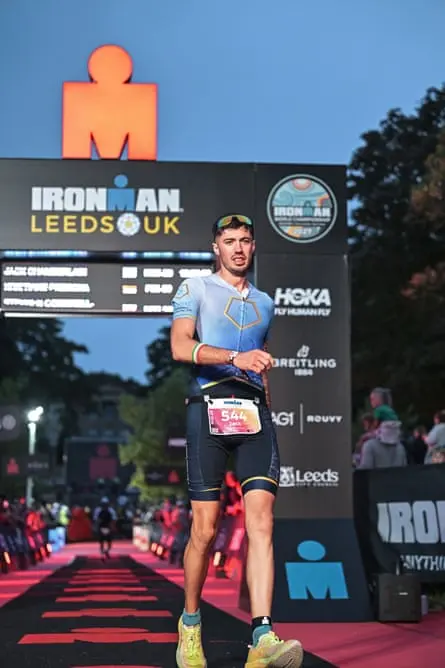
For many, the weeks leading up to the race were defined by absolute lifestyle subordination. Jack Chamberlain, a dedicated triathlete aiming for his first-ever full Ironman finish, was typical of the field. "My life, for the past four or five months, has been completely consumed by this," Chamberlain reflected, noting that his weekly training load routinely hovered around 15 hours. Having successfully navigated shorter triathlons in the past, Sunday was meant to be his coronation as a bona fide Ironman.
Instead, athletes arrived at the venue to face a jarring reality: the swimming portion in Waterloo Lake was scrapped entirely. Consecutive summer heatwaves had baked the British Isles, triggering a rapid and hazardous bloom of cyanobacteria, commonly known as blue-green algae.
The decision, made in close coordination with Leeds City Council—which holds jurisdictional authority over Waterloo Lake—left competitors in a state of emotional limbo. According to data compiled by British Triathlon, the governing body overseeing triathlons, duathlons, and aquathlons in the UK, this marked the fourth competitive event forced to cancel its swimming leg due to algae blooms during the season.
Faced with the loss of the 2.4-mile discipline, competitors responded in varied ways. Eager to salvage the integrity of their preparation, Chamberlain and several fellow athletes took matters into their own hands the day before the race. They swam the equivalent distance in a nearby lake unofficially, while others scrambled to secure lanes in local leisure centers before opening hours.
When race day arrived, the psychological weight of the altered course was palpable. "When you cross the finish line, you hear those famous words, ‘You are an Ironman,’ and that comes from finishing a triathlon, not a duathlon," Chamberlain said. "So I’m proud of myself, but it felt off."

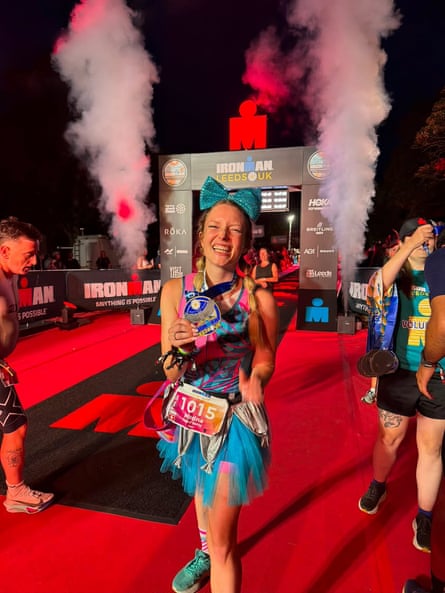
Yet, perspectives within the athlete community were sharply divided. Marina Angela Andresen, an ultra-committed marathoner pursuing the audacious goal of completing 10 full Ironman events within a 12-month span, chose to look past the disappointment. For Andresen, the overarching priority of athlete safety eclipsed the traditional purity of the race format.
"This was the first time in my life I’ve had a full swim cancellation. I’ve had swims shortened before because of temperatures, but not this," Andresen noted. "Honestly though, I was very happy with it. Because I know Ironman looks out for the athletes, and I would not want to swim with blue-green algae—it’s dangerous." Despite the missing leg, Andresen embraced the spirit of the day, praising the electric atmosphere and the supportive crowds of Yorkshire that sustained the competitors through the bike and run disciplines.
Supporting Context & Metrics: The Anatomy of a Global Crisis
To understand the scale of disruption at Ironman Leeds, one must examine the rarified air of the sport itself. Globally, only about 50,000 athletes successfully complete a full-distance Ironman race each year. The barrier to entry is notoriously high; the financial investment in high-end aero bikes, wetsuits, nutrition, and coaching easily runs into the thousands of pounds, while the physical toll requires a near-monastic dedication of time.
When external factors invalidate a discipline, the psychological and financial investment of the competitors is heavily compromised. Chamberlain voiced a sentiment shared by many international participants: a feeling of systemic unpreparedness from event organizers.
"It’s something they should have been checking weeks in advance," Chamberlain argued. "There were something like 58 countries represented in the race, so people came from all over the world. I think with people putting in time and effort and, you know, thousands of pounds into such events, things should be put in place."
However, the phenomenon restricting these athletes is far larger than any single race organizer. The proliferation of blue-green algae is symptomatic of a nationwide aquatic crisis. In the same week as the Leeds disruption, public health warnings rippled across the UK. Most notably, warnings were issued for the Thames bathing site at Ham in London—the capital’s first official open-water swimming site—urging the public to steer clear of the water until toxic concentrations subsided.
According to environmental experts, the crisis is driven by a toxic synergy of climate change and systemic pollution. Daniel Start, an acclaimed author and passionate wild swimmer who has extensively documented Britain’s waterways, emphasizes that rising temperatures are only half the battle.
"It’s not a problem that is going away any time soon," Start warned. "It’s getting worse with more intensive farming and more fertiliser being put on fields that trickle down into lakes and rivers."
When prolonged heatwaves and drought conditions—such as those that left reservoirs across England and Wales at exceptionally low levels—coincide with agricultural nutrient runoff (rich in nitrates and phosphates), water bodies effectively hyper-fertilize. This creates ideal incubator conditions for cyanobacteria. These blooms not only discolor the water and rob aquatic life of oxygen, but they also release neurotoxins and hepatotoxins that can cause severe skin rashes, gastrointestinal illness, liver damage, and neurological issues in humans and fatal poisoning in pets and wildlife.
Official Statements and Institutional Responses
In the wake of the race, the Ironman Group issued an official statement addressing the difficult decision to truncate the Leeds event:
"Ironman was devastated to have to cancel the swim portion of this year’s Ironman Leeds. We know how hard our athletes train across all three disciplines (swim, bike, run) and how disappointing it was to forgo the swim segment due to water quality issues.
Continuous hot weather and the absence of rain contributed to a bloom of blue-green algae, which can be hazardous to humans and made the lake unsafe for swimming. The decision to cancel the swim was made in conjunction with Leeds City Council, who has jurisdiction over Waterloo Lake. 2026 was the second edition of Ironman Leeds; the swim was successfully conducted the previous year."
While the statement highlights the immediate meteorological triggers—namely, a severe lack of rainfall coupled with relentless heat—it also underscores the vulnerability of urban and semi-urban water venues like Waterloo Lake.
Local authorities and sports governing bodies like British Triathlon find themselves caught in an increasingly difficult bind. On one hand, cancelling a discipline alienates dedicated athletes who have spent small fortunes preparing for a complete test of endurance. On the other hand, permitting athletes to plunge into waters choked with cyanotoxins opens municipalities and event promoters to catastrophic legal and public health liabilities.
Future Outlook: Adapting Endurance Sports to a Warming Planet
As global weather patterns become increasingly erratic and British summers grow hotter and drier, the triathlon community faces an existential reckoning. The traditional blueprint of open-water racing is colliding with the harsh realities of degraded ecosystems and climate breakdown.
For race directors, safeguarding future events will require proactive, multi-layered strategies. Experts suggest that reliance on reactive testing days before an event is no longer sufficient. Future-proofing Ironman and other open-water events will likely demand:
- Advanced Biosecurity and Monitoring: Implementation of continuous, real-time bio-sensor monitoring systems weeks in advance to track nutrient levels, water temperature shifts, and early-stage algal development.
- Alternative Course Contingencies: Establishing pre-approved backup swim venues or adaptable duathlon conversion protocols that are communicated transparently to athletes well ahead of race day, minimizing psychological shock.
- Catchment-Level Environmental Advocacy: Collaborating closely with environmental agencies, water utility companies, and agricultural stakeholders to curb the upstream flow of fertilizers and sewage spills that feed these toxic cycles.
For athletes like Jack Chamberlain and Marina Angela Andresen, the passion for endurance sport remains undimmed, even as the waters they train in grow increasingly unpredictable. Yet, the asterisk placed next to Ironman Leeds serves as a sobering reminder: the future of elite human performance is inextricably bound to the health of the natural world. If the planet’s ecosystems continue to sour under the weight of climate change and pollution, the ultimate test of human endurance may soon be measured not just by how far athletes can push themselves, but by whether the environment can sustain them at all.