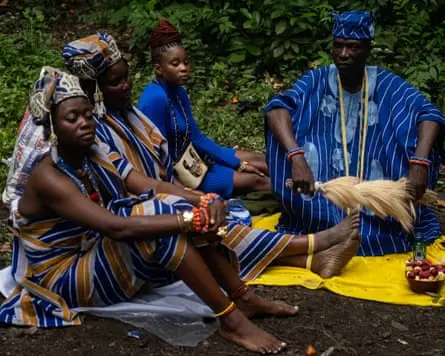
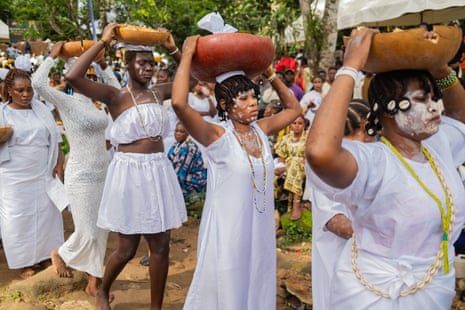
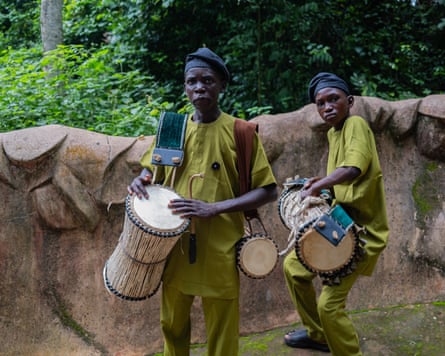
For centuries, the winding currents of the Osun River have served as a physical and spiritual lifeline for the Yoruba people of southwestern Nigeria. Flowing directly through the Osun-Osogbo Sacred Grove—a 75-hectare UNESCO World Heritage site recognized globally for its ecological and cultural significance—the river is revered as the earthly domain of Osun, the Yoruba goddess of fertility, beauty, healing, and prosperity. Every year, hundreds of thousands of devotees, traditional priests, and international pilgrims converge on the riverbanks to celebrate the historic Osun Osogbo festival, participating in centuries-old rituals that bridge communities across the global African diaspora.
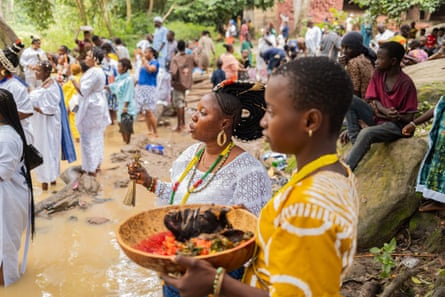
Yet, this living heritage is facing an unprecedented existential threat. Once celebrated for its pristine clarity, the Osun River has turned a thick, discolored brown, heavily laden with toxic sediment and dangerous heavy metals. Independent scientific testing commissioned by environmental justice organizations has revealed alarming concentrations of lead, mercury, and cyanide—poisons directly linked to illegal and artisanal gold mining operations thriving miles upstream in Osun State. Despite government crackdowns and public health warnings advising worshippers not to consume the water, a profound cultural tension persists. Devotees, driven by unyielding faith in the healing powers of the deity, continue to drink from and bathe in the polluted stream, caught in an impossible dilemma between honoring sacred traditions and protecting their physical well-being.
Experts warn that the ecological devastation extends far beyond human health. Heavy metals accumulating in river sediments and bioaccumulating through aquatic food chains threaten long-term biodiversity, local fisheries, and the economic resilience of downstream communities. As environmentalists and cultural leaders call for immediate government intervention, a stark question emerges: Can Nigeria successfully balance the short-term economic gains of gold extraction with the preservation of a priceless, irreplaceable 700-year-old cultural landscape?
Detailed Chronology of an Environmental Crisis
To understand the scale of the crisis currently facing the Osun-Osogbo Sacred Grove, one must trace the timeline of environmental degradation that has transformed a crystal-clear watercourse into a toxic channel.
Pre-2018: A Pristine Sanctuary
For generations, the Osun River was famously pure. Flowing uninterrupted through the dense canopy of the sacred grove, the water was widely consumed raw by pilgrims and locals alike, treated not merely as a hydration source, but as a direct manifestation of divine grace and healing energy.
2018–2020: The Upstream Gold Rush
Sparked by rising global gold prices and lax regulatory enforcement within Nigeria’s mineral-rich western states, small-scale and artisanal prospectors began aggressive, unregulated mining operations along the 132-mile (213-kilometer) course of the Osun River. Lacking proper infrastructure or environmental oversight, these operations began channeling untreated mining runoff, chemical slurries, and heavy sediment directly back into the watercourse. Within a short span, the river’s transparent turquoise waters were choked out, replaced by a permanent, opaque brown turbidity.
2021: The Launch of #SaveOsunRiver
Confronted by the glaring deterioration of the heritage site, Urban Alert—a prominent Nigerian social and environmental justice organization—stepped into the advocacy vacuum. In 2021, the group launched the #SaveOsunRiver campaign. By commissioning independent laboratory testing across six distinct geographical locations along the river, Urban Alert provided undeniable, empirical proof of contamination, documenting toxic levels of heavy metals that posed severe health risks to the populace.
2022–2024: The Gap Between Rhetoric and Remediation
Pressured by public outcry and civil society campaigns, state authorities responded with periodic enforcement sweeps. Law enforcement agencies arrested select illegal prospectors and physically sealed off a number of unauthorized mining pits upstream. However, local activists and traditional leaders point out that these measures were largely cosmetic. No comprehensive environmental remediation plan was enacted, no long-term water purification measures were implemented, and new illicit mining sites continued to proliferate—some established less than four miles from the protected borders of the UNESCO World Heritage grove.
Supporting Context & Metrics: The Science of Contamination
The degradation of the Osun River is not merely an aesthetic tragedy; it is a severe public health and ecological emergency backed by hard data.
Toxicological Findings
Independent water quality analyses orchestrated by Urban Alert and academic researchers have confirmed the presence of several hazardous chemical agents within the Osun River basin:
Lead: A potent neurotoxin that accumulates in soft tissues and bones. Long-term exposure damages the nervous system, kidneys, and reproductive systems, posing catastrophic developmental risks to fetuses and young children.
Mercury: Extensively utilized in artisanal gold extraction to amalgamate gold particles, mercury methylation in riverbeds creates organic methylmercury—a highly toxic compound that readily absorbs into living tissue and magnifies up the aquatic food chain.
Cyanide: Employed in extracting gold from refractory ores, cyanide compounds are lethal in small doses and disrupt cellular respiration in both aquatic life and human consumers.
Ecological Impacts
Sekinat Ojeniyi, a risk analyst at the business consultancy Africa Practice, emphasizes that the ecological footprint of mining extends far beyond the immediate visibility of turbid water.
"Heavy metals persist indefinitely in river sediments," Ojeniyi explains. "They accumulate steadily in fish and aquatic vegetation, biomagnifying as they move up the food chain. This means the ecological and ecotoxicological impacts will continue to reverberate long after individual mining operations cease."
The disruption of the aquatic ecosystem directly threatens the livelihood of downstream fishing communities, erodes regional biodiversity, and undermines the long-term economic resilience of populations that have relied on the river basin for centuries.
Official Statements and Competing Perspectives
The contamination of the Osun River has ignited a fierce ideological and cultural debate involving government regulators, traditional leaders, environmental campaigners, and international tourists.
The Authorities and Activists: A Call for Enforcement
Government agencies, recognizing the undeniable hazard posed by the heavy metal concentrations, have publicly warned festival-goers, tourists, and local residents against drinking from the river. Ahead of recent annual celebrations, state ministries issued stern public health advisories.
However, civil rights leaders argue that warnings alone are completely inadequate. Anthony Adejuwon, the founder and team lead of Urban Alert, criticizes the government’s superficial approach to enforcement:
"That gap between announcement and action is itself part of the story," Adejuwon asserts. "They must not wait until it is too late, when the impact starts to reflect massively on people’s health. The authorities must independently characterize and map the full extent of the contamination along the river, which would give way for a comprehensive, time-bound, and well-funded remediation plan. Remediation simply cannot happen if mining does not stop."
Chief Yemi Elebuibon, a revered writer and the chief Ifá priest of Osogbo, echoes these sentiments from a spiritual standpoint:
"What we are telling those running the mining operations is for them to turn their mining in another direction so it can stop polluting Osun," Elebuibon states. "Osun is naturally pure; it should not be polluted."
The Devotees: Faith Overrides Empirical Warning
Despite official warnings and scientific data, a significant portion of the festival’s participants continue to ingest the water as part of their sacred rituals. For practitioners, the physical reality of the water is transcended by deep spiritual conviction.
Yeye Omifunto Ojo, an ardent devotee, captures the prevailing sentiment among worshippers:
"We see it as an herbal concoction; it is not ordinary water to us. Any harmful substance in it has been removed by Osun."
During the festival, pilgrims from across Nigeria and the global diaspora—including Brazil, Cuba, and the United States—can be seen lining the riverbank, filling plastic kegs and glass bottles with the brown water to carry home to their families and local shrines. For these individuals, the river water remains a divine elixir capable of granting fertility, career promotions, financial prosperity, and spiritual cleansing.
Personal testimonials reinforce this unwavering devotion. Osunfunmito Eyeyemi, a 31-year-old devotee who attended the festival to offer thanksgiving after praying for property and a car the previous year, shared her testimony:
"Here I am to give my own testimony because I am now a landlady and I drive my own car. There is nothing you ask Osun that she will not do for you."
International visitors are similarly drawn to the deep cultural resonance of the site. Pippa Mistry-Norman, a 33-year-old traveler from London who spent six months planning her pilgrimage, noted:
"A couple of my friends are Nigerian, and I sit opposite them every day. They have such a rich, deep, and spiritual culture, and I wanted to experience it first-hand, but you can’t do that from an office in London."
Future Outlook: Protecting Heritage Against Industrial Greed
As the annual Osun Osogbo festival concludes, the future of the sacred landscape hangs in a delicate balance. The intersection of lax regulatory enforcement, state-level economic reliance on solid mineral extraction, and ancient religious traditions creates a uniquely complex policy challenge.
Environmental experts emphasize that time is running out. While a gold deposit can be systematically exhausted and mined out over decades, a living cultural landscape that has evolved and sustained itself for over 700 years cannot simply be artificially reconstructed once its ecological and spiritual integrity has been permanently compromised.
To secure the future of the Osun-Osogbo Sacred Grove, stakeholders agree that a multi-pronged strategy is urgently required:
Total Cessation of Upstream Mining: State and federal environmental protection agencies must enforce an absolute ban on mining activities within the Osun River watershed.
Rigorous Scientific Mapping & Remediation: Independent environmental auditors must conduct comprehensive soil and sediment testing to design a fully funded, transparent cleanup strategy.
Community Engagement and Safe Alternatives: Rather than merely issuing prohibitive warnings that clash with deeply held spiritual beliefs, authorities must work alongside traditional leaders to provide safe, ritually acceptable alternatives for purification ceremonies, safeguarding public health without alienating the religious community.
Unless decisive, unyielding political will is summoned by Nigerian authorities, the waters of Osun will remain poisoned—transforming a vibrant, life-giving symbol of Yoruba heritage into a tragic monument of unbridled environmental exploitation.