

Executive Overview
In the sprawling, volatile expanse of the Celtic Deep—a dramatic submarine trough located roughly 25 to 30 miles off the rugged Pembrokeshire coast of Wales—nature occasionally delivers moments of breathtaking, unscripted wonder. For Dan Abbot, a seasoned wildlife cinematographer and professional shark guide widely known across digital platforms as "Sharkman Dan," the afternoon of September 25 was designed to be a routine commercial outing. Guiding a group of eager ecotourists on a scheduled four-hour blue shark snorkeling expedition, Abbot expected the usual highlights: vibrant interactions with pelagic blue sharks, soaring gannets, and perhaps pods of common dolphins slicing through the rolling, steel-blue Atlantic swells.
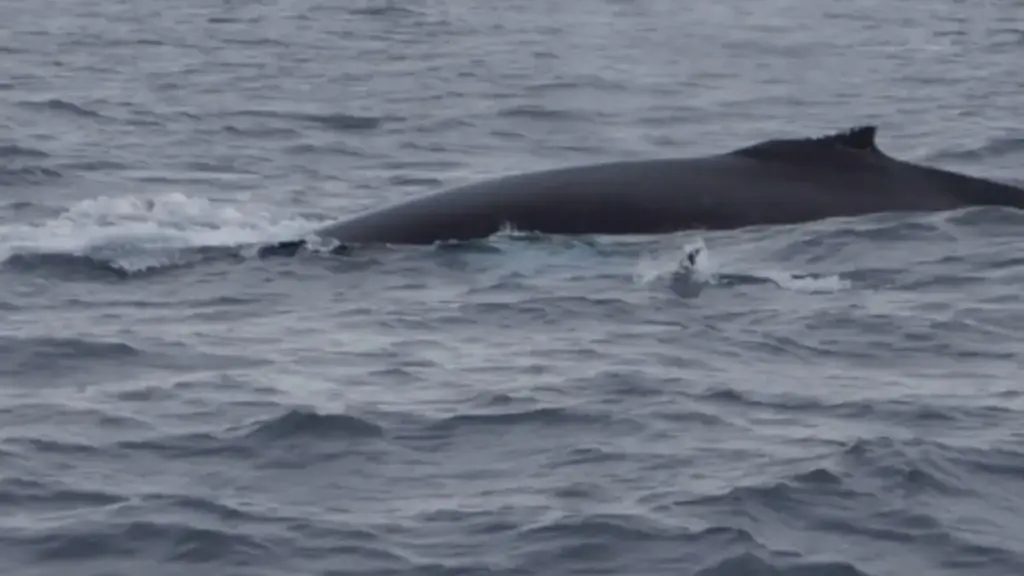
Instead, the excursion mutated into an extraordinary marine spectacle. Roughly 25 miles offshore, amidst a chaotic feeding frenzy involving schools of Atlantic bluefin tuna and over a thousand dolphins, an unexpected plume of mist pierced the horizon. Initially mistaken for the more common minke or fin whale, the animal soon revealed its true identity: a majestic, barnacle-encrusted humpback whale (Megaptera novaeangliae).
While humpback whales are not entirely unknown in British and Welsh waters—appearing on rare occasions roughly once every two to three years—encountering one unexpectedly in this specific offshore ecosystem left an indelible impression on a professional whose life is spent documenting apex predators. Marine conservationists suggest that such sightings, while statistically rare for casual observers, are becoming fractionally more frequent. Experts attribute this positive trend to an abundance of prey driven by shifting marine productivity, highlighting the Celtic Deep as a critical, nutrient-rich feeding station for migratory megafauna.
Detailed Chronology: Anatomy of an Unplanned Encounter
The Setup: Pelagic Explorations off Pembrokeshire
The expedition began in the crisp, salt-laden air of late September. Pembrokeshire’s coastline, renowned for its dramatic cliffs, pristine marine special areas of conservation, and rich biodiversity, serves as a natural gateway to the Celtic Sea. Abbot, whose professional portfolio includes high-end underwater cinematography and the management of ethical shark-snorkeling excursions, operates with the cool detachment characteristic of field veterans.
On September 25, Abbot and his clients successfully completed the primary objective of the trip: diving with blue sharks (Prionace glauca) in the open ocean. These sleek, cobalt-blue pelagic wanderers had provided guests with an adrenaline-fueled, close-quarters snorkeling experience. With the primary itinerary fulfilled, the vessel pulled up its lines and drifted in the vast blue expanse of the Celtic Deep, a submerged basin plunging to depths exceeding 100 meters, where cold, nutrient-dense oceanic currents collide with the continental shelf.
The Feeding Frenzy and the Distant Blow
As the boat lingered miles offshore, the sea around them transformed into a boiling cauldron of marine activity. Abbot noted that the area was thick with ecological violence and vitality: Atlantic bluefin tuna were aggressively "balling" baitfish near the surface, gannets plummeted from the sky like feathered javelins, and hundreds of dolphins broke the surface in a synchronized feeding frenzy. Such displays of marine bounty are typical of the Celtic Sea during the autumn transition, when pelagic species gorge themselves prior to seasonal migrations.
Amidst this chaotic backdrop of surface activity, a guest aboard the vessel drew the crew’s attention toward a distant disruption on the water’s surface.
"A guest saw a whale blow in the distance," Abbot recalled. "Initially, I suspected it was a minke or a fin whale, which are the two most common whale species encountered in Welsh waters. I told the passengers that if it’s a substantial blow, it’s likely a fin whale."
With professional curiosity piqued, the captain maneuvered the boat slowly toward the periphery of the feeding action, keeping a respectful distance to observe without disrupting the marine mammals. They waited, engines idling softly, watching for the animal to resurface.

The Revelation: Spotting the Hallmarks of a Humpback
As the vessel drifted closer, the distance closed enough for Abbot to utilize his trained observational skills. Whalewatching in the open ocean requires a sharp eye for morphological minutiae—fin shapes, blow patterns, and surface behaviors.
When the animal breached the surface for its next breath, the diagnostic markers immediately ruled out a fin whale.
"I noticed that when it came up for a blow, it actually had white pectoral fins, which fin whales simply do not have," Abbot explained. "Furthermore, fin whales do not lift their tail flukes clear of the water when diving, whereas humpbacks famously do. As it got closer, I could clearly see the distinctive knobbly tubercles and barnacles clustered around the front of its head—another feature absent in fin whales."
The realization hit him with physical force. Abbot, a man accustomed to the raw intensity of swimming alongside large sharks, fell entirely silent.
"I actually went quiet for a moment. At that point, it was pretty clear it was a humpback whale," he reflected. "I don’t really get that excited, which sounds strange. I’m usually one of the quietest ones on the boat. But because it was such a complete surprise, it caught me entirely off guard. As a wildlife cameraman, when something happens unexpectedly, there’s an electric quality to it that makes it feel profoundly special."
For the ecotourists on board, who were already riding the emotional high of swimming with blue sharks, the appearance of the humpback whale provided an unforgettable, cinematic climax to their offshore adventure.
Supporting Context & Metrics: The Ecology of the Celtic Deep
To understand the true significance of Abbot’s encounter, one must examine the unique oceanographic profile of the Celtic Deep and the broader status of cetaceans in British waters.
The Celtic Deep: An Ecological Hotspot
Situated between the southwest coast of Wales and southeast Ireland, the Celtic Deep is a geological depression characterized by complex hydrography. Upwelling currents force nutrient-rich deep waters toward the surface, fueling massive blooms of phytoplankton and zooplankton. This primary productivity supports a vast trophic pyramid, attracting schooling fish such as mackerel, herring, and sardines, which in turn draw apex predators, including tuna, sharks, dolphins, and large baleen whales.
In recent years, the return of Atlantic bluefin tuna to UK waters has been one of the most remarkable marine success stories. Once largely absent due to historical overfishing, strict management frameworks and shifting environmental conditions have seen these powerful pelagic predators reclaim their historical feeding grounds. Where tuna thrive, other apex marine predators—including cetaceans—frequently follow.

Humpback Whales in the UK: Rarity vs. Trend
Humpback whales are cosmopolitan species, undertaking some of the longest migrations of any mammal, traveling between polar feeding grounds and tropical breeding areas. Historically hunted to near-extinction by commercial whaling fleets, global populations have experienced a slow, heartening recovery following the 1966 international moratorium on commercial humpback whaling.
In the waters surrounding the British Isles, sightings of humpback whales, while historically sparse, have experienced a gradual upward tick over the past decade. According to marine conservation organizations such as Sea Trust Wales, humpbacks are recorded in Welsh waters approximately once every two or three years—making them an exceptional find for the average coastal beachgoer, and a rare privilege even for professional marine operators.
Marine biologists emphasize that this marginal increase in sightings does not necessarily mean humpbacks are permanently relocating to British coastal waters; rather, it reflects both an expanding global population and increased detectability driven by modern technology, social media reporting, and a higher density of dedicated whale-watchers and marine professionals on the water. Furthermore, the presence of these massive filter-feeders serves as a biological barometer, signaling that the structural health and prey availability within areas like the Celtic Deep remain robust.
Official Statements and Expert Perspectives
The encounter has generated significant interest within the Welsh marine conservation and scientific community, underscoring the collaborative synergy between commercial wildlife guides and research organizations.
Lloyd Nelmes, an aquarium manager and marine project officer with Sea Trust Wales—an organization dedicated to the conservation of marine life in the region—expressed deep professional admiration for Abbot’s sighting. Nelmes is no stranger to the magic of the Celtic Deep himself; in 2024, he made headlines when a humpback whale breached directly in front of his vessel off the Pembrokeshire coast.
"The whale jumped out right in front of us. It was incredible, and it’s still probably the top wildlife moment of my life," Nelmes recalled, describing the visceral thrill of encountering the marine giant at close quarters.
Addressing the statistical rarity of Abbot’s encounter, Nelmes emphasized the unique nature of the event:
"This sighting is unusual even for someone who works in the field—someone who probably has their eyes glued to the water every single day. For a normal person walking the cliffs, it’s insanely rare."
Nelmes contextualized the sighting within the broader ecological narrative of the region, noting that while humpback encounters remain episodic, their frequency is tentatively shifting in a positive direction.

"We’ve seen humpbacks here on rare occasions over the years, but it seems to be becoming slightly more common, which is awesome," Nelmes noted. "It’s quite likely just a direct indication of how much food is about at the moment."
To illustrate this point, Nelmes shared details from his own marine survey work conducted just 24 hours prior to Abbot’s discovery. Venturing out into the Celtic Deep, Nelmes’s team encountered a staggering marine display: six fin whales feeding simultaneously, massive schools of tuna "balling" baitfish at the surface, and an estimated pod of over 1,000 common dolphins.
Given this unprecedented concentration of marine biomass, Nelmes argued that the presence of a lone humpback whale capitalizing on the same biological windfall was entirely logical. "It’s not too surprising that a humpback was out there also making the most of the food," he concluded.
Future Outlook: Protecting and Monitoring Wales’s Marine Giants
As anthropogenic pressures—ranging from commercial shipping noise and offshore renewable energy development to climate-induced shifts in sea temperatures—continue to impact marine ecosystems, the waters off the Welsh coast are receiving heightened scrutiny from conservationists and legislators alike.
The documentation of megafauna such as humpback whales, fin whales, and bluefin tuna in the Celtic Deep reinforces the urgent need for stringent marine spatial planning and protective frameworks. Organizations like Sea Trust Wales rely heavily on opportunistic citizen science, alongside professional contributions from field operators like Dan Abbot, to map cetacean distribution and migratory corridors.
For Abbot, the experience has reinforced his profound connection to the unpredictable wilderness of the sea. Despite spending countless hours submerged alongside some of the ocean’s most formidable predators, it is the unscripted, rare grace of a passing leviathan that reminds him why he holds a camera in the first place.
As marine conservation efforts continue to bear fruit and historical populations of whales and tuna reclaim their ancient oceanic pathways, encounters in the Celtic Deep may gradually transition from once-in-a-lifetime anomalies to celebrated milestones of ecological restoration. Until then, for the charter boat captains, wildlife cinematographers, and adventurous snorkelers navigating the rolling swells off Pembrokeshire, the horizon remains a theater of endless potential—where every distant plume of mist holds the promise of the extraordinary.



