Executive Overview
Modern corporations have long operated under the assumption that operational risks can be compartmentalized, modeled, and mitigated through linear forecasting. Supply chain disruptions are handled by procurement; regulatory shifts by legal and compliance; environmental threats by sustainability teams; and social backlash by public relations. However, a compounding convergence of unprecedented global "wild cards"—ranging from localized data center pushback and energy price shocks linked to geopolitical conflict, to the impending threat of a Super El Niño and a surging anti-oligarchal socio-political sentiment—threatens to shatter these comfortable silos.
As explored in recent discussions on the Two Steps Forward podcast by co-hosts Joel Makower and Solitaire Townsend, the true danger does not lie in any single isolated crisis. Rather, it emerges from the compounding synchronization of multiple shocks hitting the global economy simultaneously. History demonstrates that when seemingly unrelated systemic pressures converge, they do not simply add up; they multiply. They create fertile ground for sweeping, disruptive social movements that can alter regulatory landscapes, rewrite the social contract between enterprise and society, and invalidate corporate strategies overnight.
At the core of this brewing storm is an issue older than modern industry itself: extreme wealth inequality, now echoing the conditions of Victorian Britain’s Chartist movement and America’s Gilded Age. Compounding this economic friction is a powerful cultural shift, driven by a generation of young digital creators for whom "late-stage capitalism" is not a controversial debate, but an everyday reality. For corporate leadership, particularly sustainability and risk management professionals, this means the traditional metrics of success are no longer enough. The "social license to operate"—once a concept largely confined to extractive industries and fossil fuel giants—is now migrating rapidly into the tech, artificial intelligence, and digital infrastructure sectors.
This in-depth analysis examines the anatomy of this multi-vector convergence, reviews historical precedents of unlikely alliances, analyzes the shifting paradigms of corporate social license, and offers a strategic framework for organizations looking to red-team their futures before disruption arrives at their doorstep.
Detailed Chronology: The Anatomy of a Multi-Vector Convergence
To understand how contemporary businesses arrived at this precarious crossroads, it is necessary to trace the individual trajectories of the disruptive forces currently colliding in the public square. Each of these trends carries its own distinct momentum; together, they threaten to coalesce into a systemic challenge to corporate hegemony.
1. The Infrastructure Backlash: Data Centers and Surveillance
The rapid, unchecked expansion of artificial intelligence infrastructure has brought the digital economy into direct physical conflict with local communities. Across suburban and rural landscapes alike, massive data centers are demanding unprecedented amounts of electrical power and water, straining local grids and driving up utility rates for residents. This has sparked fierce, localized pushback that bridges traditional political divides.
Simultaneously, the widespread deployment of automated surveillance technology—such as Flock Safety license-plate reading cameras—has triggered sudden, fierce nationwide backlashes. Citizens, privacy advocates, and municipal leaders are increasingly questioning the normalization of corporate-backed surveillance states, drawing a direct line between big tech data harvesting and the erosion of civil liberties.
2. Geopolitical Instability and Energy-Price Shocks
The modern global economy remains inextricably tethered to traditional energy markets, even as the energy transition accelerates. Conflicts such as the ongoing wars and tensions involving Iran and the broader Middle East have demonstrated how quickly geopolitical flashpoints can trigger violent energy-price shocks. These spikes ripple instantaneously across manufacturing, logistics, and digital infrastructure, destabilizing corporate financial models and exacerbating inflationary pressures on consumers already squeezed by structural economic inequality.
3. Environmental Extremes and the Super El Niño Threat
Climate volatility is moving from a distant statistical probability to an immediate operational hazard. Meteorologists and supply chain experts have increasingly sounded alarms regarding the potential realization of a "Super El Niño." Such extreme climate events disrupt agricultural yields, paralyze maritime logistics corridors, damage physical assets, and threaten global food and water security. For businesses, a Super El Niño represents not just an environmental crisis, but a multi-trillion-dollar macroeconomic shock.
4. The Rise of Anti-Oligarch and Anti-Tech-Bro Sentiment
Perhaps the most volatile psychological thread tying these crises together is the surging populist sentiment directed against economic elites and tech executives. Public tolerance for unchecked technological utopianism has plummeted. The cultural archetype of the "tech bro"—once celebrated as an engine of innovation—is increasingly viewed through a lens of skepticism, accused of evading regulatory accountability, exacerbating housing crises, and displacing labor without societal consent. This sentiment is finding institutional and political backing, creating a hostile regulatory environment for firms perceived as prioritizing shareholder primacy over public welfare.
Supporting Context & Metrics: History, Demographics, and the Social Contract
The Echoes of the Gilded Age and the Chartist Movement
History teaches that extreme concentrations of wealth inevitably provoke structural pushback. The current economic climate exhibits wealth and income inequality levels comparable to two defining historical eras:
- The Gilded Age (Late 19th-Century America): Characterized by rapid industrialization, vast monopolistic trusts ("robber barons"), and severe labor unrest, this era ultimately birthed the Progressive Era, leading to sweeping antitrust legislation, labor laws, and regulatory oversight.
- The Chartist Movement (1930s–1840s Britain): A working-class movement that campaigned for political reform and social justice in response to the upheavals of the Industrial Revolution, proving that economic displacement can rapidly evolve into demands for fundamental systemic change.
When wealth inequality reaches historical extremes, public institutions lose legitimacy, and the social contract frays. Today’s convergence of climate anxiety, technological disruption, and energy insecurity is reawakening these historical dynamics.
The Demographic Shift: The "Late-Stage Capitalism" Generation
A critical demographic wrinkle accelerating this shift is generational. The most prominent political commentary, media critique, and economic analysis aimed at rethinking capitalism, artificial intelligence, and corporate governance are increasingly led by creators and thinkers in their late 20s and early 30s.
For this cohort, phrases like "late-stage capitalism" are not radical theoretical constructs; they are accepted descriptive frameworks for a system defined by unaffordable housing, precarious gig work, climate degradation, and runaway corporate power. As these generations assume positions of greater political influence, consumer purchasing power, and corporate leadership, expectations regarding corporate purpose and accountability will undergo a permanent generational reset.
Historical Precedents: Unlikely Alliances Can Form—and Unravel
When wild cards converge, they tend to forge unexpected coalitions. However, history demonstrates that these alliances are inherently unstable.
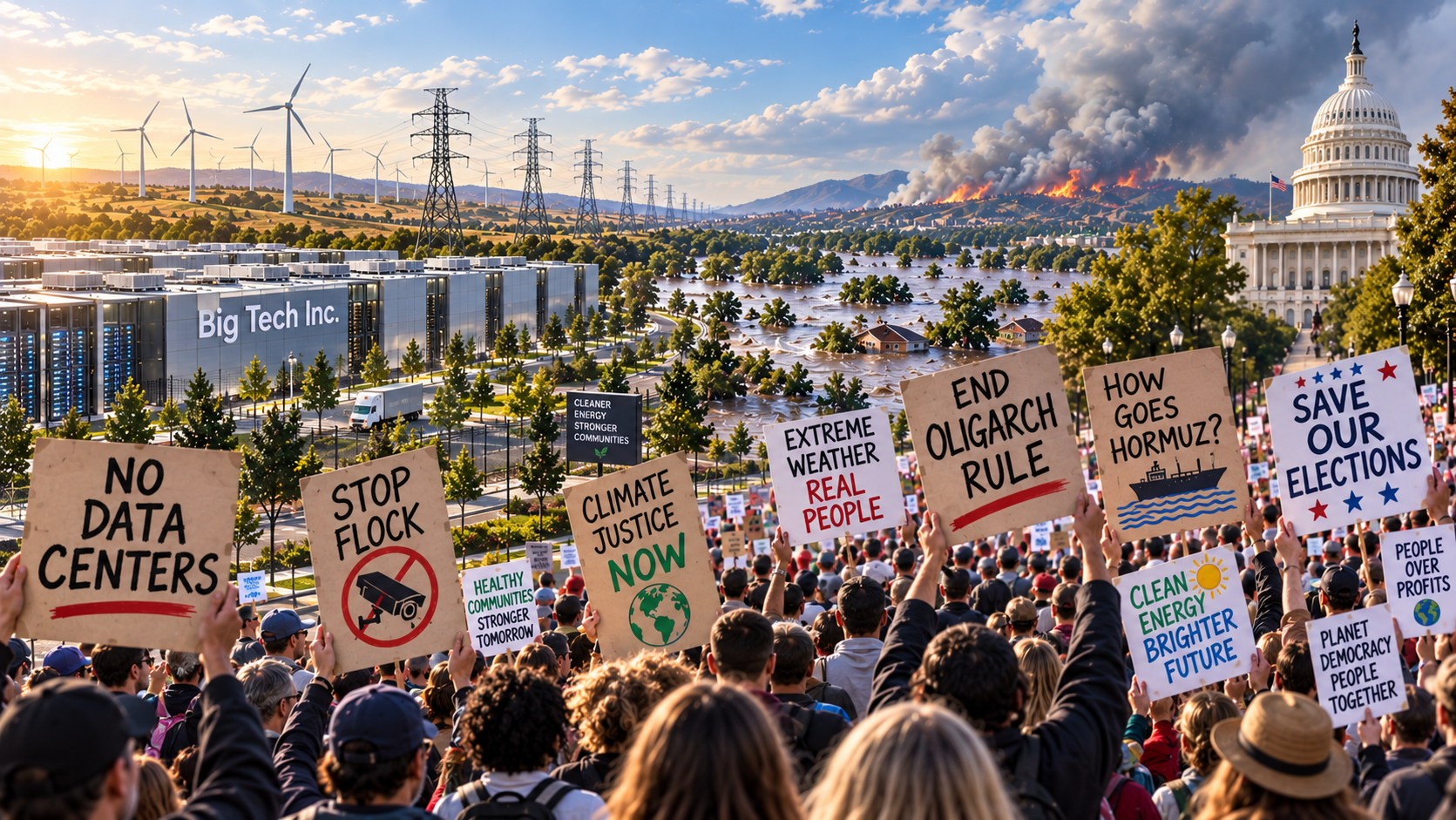
- Case Study 1: The 1999 WTO Protests in Seattle. The massive anti-globalization protests of 1999 brought together an eclectic, seemingly contradictory coalition of labor unions, environmental activists, and human rights advocates. While chaotic at the time, this friction ultimately catalyzed long-term cooperation. It laid the groundwork for organizations like the Blue Green Alliance, where labor and environmental groups found common cause on clean energy policies, enduring for more than a decade.
- Case Study 2: New York’s 2014 Fracking Ban. Initially, the grassroots movement to ban hydraulic fracturing in New York enjoyed broad, cross-partisan support, uniting environmentalists, rural landowners, and public health advocates. However, within a few years, the narrative shifted. Opponents successfully recast the ban as a radical policy that ignored working-class economic realities and energy security. As the coalition fractured, its broader political momentum faded.
The lesson for modern enterprises is clear: alliances formed in response to systemic shocks can either evolve into enduring institutional reform or collapse into partisan gridlock, depending on how effectively businesses and policymakers engage with the underlying grievances.
Official Statements and Expert Perspectives
The shifting nature of corporate accountability and risk management has drawn intense scrutiny from sustainability leaders, economists, and corporate strategists.
Reflecting on the unpredictable nature of modern systemic shocks, Joel Makower, Chairman and Co-founder of Trellis Group, emphasized the necessity of proactive foresight during recent discussions on the Two Steps Forward podcast:
"It’s impossible to know whether some or all of these issues will coalesce into a social or political movement. Still, our advice for sustainability professionals is that this is a moment to look forward—tracking, red-teaming, and asking ‘what if’ before an issue arrives at your doorstep."
Highlighting the cultural and demographic currents reshaping public expectations, co-host Solitaire Townsend pointed to the profound shift in how younger generations conceptualize economic systems:
"Some of the most-watched political commentary aimed at rethinking capitalism, AI, and other things is coming from creators in their late 20s and early 30s, who talk about ‘late-stage capitalism’ as if it were a settled premise."
Corporate governance experts stress that these cultural and economic currents directly impact what is known as the "social license to operate." Historically applied primarily to mining, oil, and gas companies operating in sensitive ecosystems, the concept has broken free of its traditional boundaries. Today, any enterprise whose operations intersect with public infrastructure, personal data, artificial intelligence, or community resources must secure and continually renew this intangible asset.
As regulatory bodies and civil society organizations begin to question the societal net-benefit of rapid technological expansion, companies that fail to maintain their social license risk sudden regulatory crackdowns, consumer boycotts, and reputational collapse.
Future Outlook: Strategic Imperatives for the Modern Enterprise
As the global economy navigates this complex matrix of converging wild cards, the traditional playbook for corporate sustainability and risk management is obsolete. Sustainability teams, which spent much of the past decade focused inward on backward-looking data collection, ESG reporting, and carbon accounting, must urgently pivot toward forward-looking strategic intelligence.
To thrive in an era defined by multi-vector disruption, corporate leaders should adopt the following strategic pillars:
1. Institutionalize "Red-Teaming" for Wild Cards
Organizations must establish cross-functional foresight teams tasked with modeling low-probability, high-impact scenarios. Rather than asking "What are our projected emissions this quarter?", risk committees must ask "What happens if local communities permanently block our digital infrastructure expansion?" or "How will our supply chain survive a concurrent energy price shock and extreme weather event?"
2. Expand the Scope of the Social License
Tech companies, AI developers, and financial institutions must recognize that operational legality is no longer synonymous with societal legitimacy. Securing a social license requires proactive community engagement, transparent data practices, equitable sharing of economic benefits, and a demonstrable commitment to public welfare. Waiting for regulatory mandates is a recipe for catastrophic friction.
3. Move from Backward-Looking Reporting to Forward-Looking Resilience
While regulatory reporting frameworks (such as CSRD, SEC climate rules, and ISSB standards) are necessary for compliance, they are inherently backward-looking. True corporate resilience requires investing in predictive analytics, adaptive supply chains, and stakeholder trust-building initiatives that prepare organizations for the unknown unknowns of tomorrow.
Conclusion
The convergence of data center pushback, energy price volatility, climate extremes, and anti-oligarchal sentiment serves as a stark warning to the corporate world. We are entering an era where systemic shocks do not arrive in isolation; they compound, intersect, and amplify one another. For businesses, the choice is stark: wait for these converging pressures to ignite a hostile social movement that forces change from the outside, or embrace radical foresight, redefine corporate stewardship, and build a resilient social license from within.