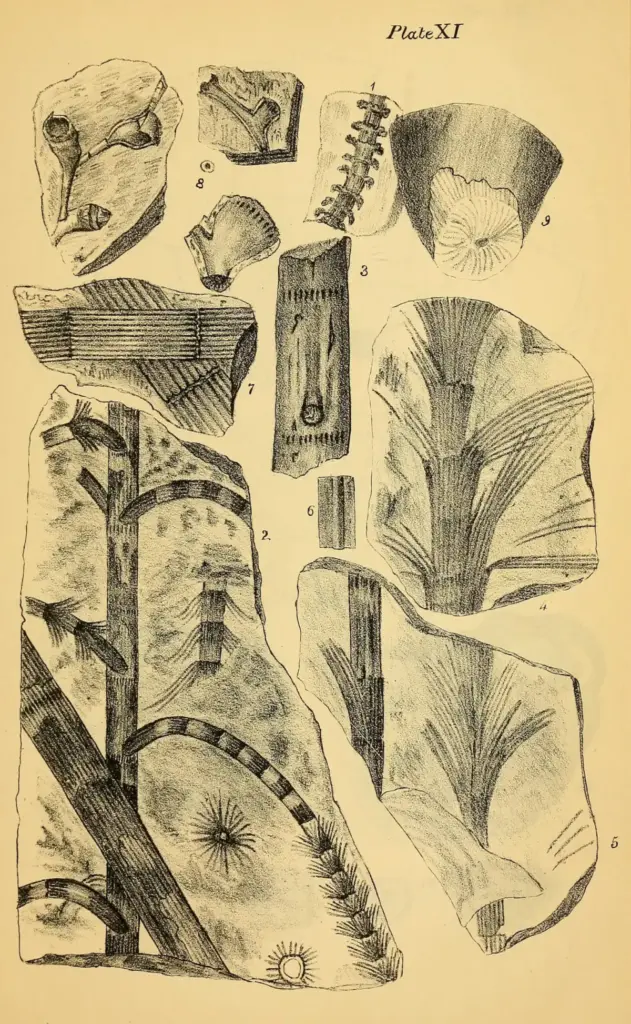
For nearly two centuries, the Papers and Proceedings of the Royal Society of Van Diemen’s Land—later known as the Papers and Proceedings of the Royal Society of Tasmania—has served as an authoritative mirror of scientific inquiry, colonial enterprise, and ecological transformation. Established in 1843 as Australia’s oldest Royal Society, the organization launched its landmark journal in 1849, preserving a dynamic record of a changing island landscape at the edge of the British Empire.
Today, as part of the worldwide celebration for the 20th anniversary of the Biodiversity Heritage Library (BHL)—specifically its ongoing BHL at 20: Treasures from the Biodiversity Heritage Library series—these fragile historical pages are experiencing a global renaissance. Thanks to open-access digital curation, researchers, historians, and conservationists can now explore the complete run of these volumes through advanced computational tools.
Yet, the journal is far more than a repository of Victorian-era taxonomy. It is a complex historical archive. While its pages captured the methodical cataloging of unprecedented flora, fauna, and geology by luminaries such as John Gould and Ronald Campbell Gunn, they simultaneously embodied the perspectives of a colonial administration that systematically overlooked Indigenous voices. Modern volumes of the journal actively confront this legacy, engaging in truth-telling, reconciliation, and contemporary ecological stewardship. This article explores the rich historical tapestry of Volume One, the profound biological lessons embedded in its pages, and how modern digitization is reframing a legacy spanning more than 175 years.
Detailed Chronology: The Birth of a Scientific Tradition in Van Diemen’s Land
The narrative of the Royal Society of Van Diemen’s Land begins in an era of rapid imperial expansion and relentless natural curiosity. Founded in 1843 by British colonists eager to understand the southern frontier, the Society set out to systematically document the geography, meteorology, and natural history of the island then known as Van Diemen’s Land.
By 1849, the vision crystallized into print. Volume One of the Papers and Proceedings, published sequentially in three parts between 1849 and 1851, opened with an exhaustive, nearly fifty-page analysis of the colony’s diverse population and shifting weather patterns. Supported by dense charts, meteorological tables, and demographic data, these early sections established a rigorous scientific baseline for the colonial enterprise.
However, the ambitions of the Society extended far beyond meteorology. The pages of Volume One documented the nuts and bolts of building a society from the ground up:
Papers detailing innovative building techniques,
Early coal exploration initiatives, and
Practical advancements in local agriculture and manufacturing.
Interwoven with these industrial pursuits were foundational contributions to the natural sciences. Global scientific heavyweights—including John Edward Gray, ornithologist John Gould, and paleontologist Frederick M’Coy—contributed papers that unraveled the mysteries of ancient fossils and iconic living creatures, such as the platypus.
Crucially, the journal’s minutes and incidental meeting reports captured the sheer speed at which the landscape was altered following British settlement. In 1849, a colonial official named Mr. Hull detailed a colossal blue gum tree discovered roughly six miles from Hobart Town, measuring an astounding 28 yards (25.6 meters) in circumference and towering at an estimated 330 feet (100.5 meters). In the same meetings, oddities and marvels of the bush were tabled: Mr. Champ donated a small spotted fish preserved in spirits featuring four leg-like appendages with finger-like digits, while Mr. Milligan triumphantly reported the safe arrival of two live thylacines shipped to London the previous year.
Supporting Context & Metrics: Ecological Shifts and Colonial Oversight
The historical value of the Papers and Proceedings lies equally in the unintended ecological warnings buried within its chatty meeting notes and technical reports. The Victorians were enthusiastic acclimatizers, eager to reshape colonial landscapes in the image of the British homeland, often with catastrophic consequences for native ecosystems.
Consider the case of the "native bread" (Mylitta sp.), a subterranean fungus historically harvested and consumed by Tasmanian Aboriginal people. Meeting notes from the era recorded that when grated and prepared into a pudding with milk, the fungus was "very palatable." Alongside traditional food sources, the journal documented rare indigenous flora, such as a sample of white resin collected from the Oyster Bay pine—a tree with an extremely restricted distribution yet immense utility for local carpentry. Today, conservation efforts like the South Esk Pine Nature Reserve protect some of the last remaining stands of this endangered native species.
Conversely, deliberate and accidental species introductions recorded in the journal mapped out future conservation crises:
The Sugar Glider (The "Flying Squirrel"): Renowned naturalist Ronald Campbell Gunn penned an insightful paper detailing how the sugar glider became naturalized in Tasmania after escaping pet captivity during the 1830s. Few readers at the time could have predicted that this pocket-sized mammal would evolve into a severe ecological threat, preying upon the nesting females, eggs, and chicks of the critically endangered swift parrot.
Introduced Fisheries: Captain Charles Stanley contributed a widely read paper analyzing the logistics of introducing trout into Tasmanian waterways. The subsequent transportation of live fish ova to the Salmon Ponds at New Norfolk permanently altered the island’s river systems, establishing an apex predatory fish where none previously existed.
The Administrative Foundation of Tasmanian Culture
Beyond hard science, the journal preserved the mundane administrative records of the Society—office-bearers, financial accounts, and acquisition logs. These dry details reveal the network of influential figures who steered nineteenth-century Tasmania. Regular donations of books, fine art, geological specimens, and ethnographic artifacts formed the institutional bedrock of world-class cultural repositories we know today, including:
The Royal Tasmanian Botanical Gardens
The Tasmanian Museum and Art Gallery (TMAG)
The Royal Society of Tasmania’s dedicated Art and Library Collections
Yet, modern analysis demands critical perspective. Produced entirely by colonial administrators, the early volumes inherently reflect Eurocentric privilege, systematically omitting Indigenous perspectives, land management histories, and the violent injustices of the frontier wars. These silences make the texts compelling yet frequently uncomfortable reading for contemporary audiences.
Official Statements and Expert Insights
Reflecting on the enduring legacy of the journal and its transition into the digital age, current leaders in Tasmanian science and conservation emphasize its evolving role in public accountability and reconciliation.
Dr. Sally Bryant AM—a leading Tasmanian wildlife scientist, long-time ABC radio communicator, and Honorary Editor of the Papers and Proceedings—notes the profound evolution of the publication:
"The journal has always been a reflection of our relationship with the island. While its 19th-century founders looked through the lens of acclimatization and colonial development, today’s publication actively embraces truth-telling, historical accountability, and rigorous conservation science. It connects the deep history of our landscape with the urgent ecological realities we face today."
Scholars collaborating with the Biodiversity Heritage Library emphasize the revolutionary impact of open-access digital repositories. By aggregating over 175 years of continuous publication into searchable, machine-readable formats, platforms like BHL allow modern researchers to apply computational text-mining tools. This technology unearths historical ecological baselines, climate data, and species distribution records that would take decades to compile manually.
Future Outlook: Preserving the Past for Tomorrow’s Generations
As the Papers and Proceedings of the Royal Society of Tasmania looks toward the future, its editorial mission has broadened significantly. While natural sciences—particularly Tasmanian and Antarctic research—remain central, modern volumes actively champion social and cultural healing.
Milestones in this ongoing evolution include the Royal Society of Tasmania’s historic joint Apology to Tasmanian Aboriginal People in 2021, alongside academic papers generated from the Society’s annual Tasmanian Aboriginal Lecture series. These initiatives demonstrate a commitment to historical reckoning, ensuring that modern scientific inquiry operates hand-in-hand with cultural respect and reconciliation.
In an era increasingly dominated by fleeting digital media and algorithmic noise, the enduring legacy of the Royal Society of Tasmania’s journal stands as a testament to the power of structured, long-term scientific documentation. Through the tireless preservation efforts of the Biodiversity Heritage Library during its 20th-anniversary milestone, these irreplaceable volumes remain freely accessible to anyone with an internet connection.
More than mere ink on yellowed paper or digital pixels on a screen, the Papers and Proceedings remains an invaluable living archive—a direct window into the environments, cultures, and sociopolitical shifts that forged the unique identity of Tasmania, echoing across the centuries to guide our path forward.