

Executive Overview
As the global transition toward renewable energy and advanced digital infrastructure accelerates, an unprecedented demand for critical minerals—such as lithium, cobalt, nickel, copper, and rare earth elements—has gripped the manufacturing sector. These materials are the indispensable lifeblood of modern electronics, electric vehicle (EV) batteries, high-powered magnets, and telecommunication systems. However, the geopolitical landscape governing these supply chains is increasingly volatile. Dominated heavily by foreign actors like China, and compounded by ongoing trade tariffs, regional conflicts, and fragile global supply lines, Western nations find themselves scrambling to secure domestic and reliable sources of raw materials.
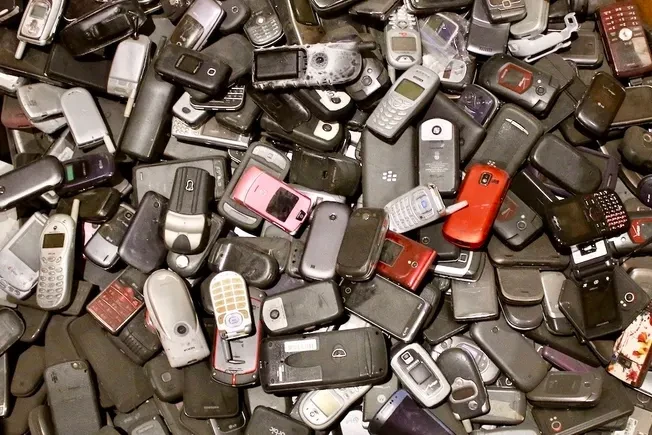
Amid this industrial high-stakes environment, a groundbreaking report by the Ellen MacArthur Foundation (EMF) shines a spotlight on an unlikely, yet immensely valuable, urban mine: the "hibernating device." Millions of consumer electronics—forgotten laptops, obsolete tablets, and, most prominently, old mobile phones—are currently locked away in junk drawers, closets, and storage boxes across North America. In the United States alone, consumers are estimated to be hoarding approximately 223 million smartphones.
Globally, the value trapped inside these forgotten gadgets amounts to an astonishing $67 billion. Yet, because these devices fail to enter formal collection and recycling streams, downstream processors and advanced material recovery facilities remain chronically undersupplied. This systemic leakage forces industries to rely continuously on environmentally destructive virgin mining. To untangle this crisis, experts, lawmakers, and circular economy advocates argue that North America must radically overhaul its approach to electronic waste (e-waste). This necessitates a synchronized push toward standardized extended producer responsibility (EPR) laws, expanded consumer take-back infrastructure, cohesive right-to-repair legislation, and mandatory circular design protocols from manufacturers.
Detailed Chronology: The Evolution of the Critical Mineral Supply Crunch
The convergence of consumer hoarding, geopolitical disruption, and regulatory awakening has not happened overnight. It is the result of a multi-year trajectory characterized by tightening resource dependencies and legislative pivots.
- The Pre-2020s Era of Linear Consumerism: For decades, the global technology market operated on a firmly linear economic model: take, make, and waste. Consumers upgraded their mobile phones every two years, discarding older models into domestic storage or municipal waste streams. Little regulatory attention was paid to the ultimate fate of the internal components, and critical minerals were cheap enough to make virgin extraction the default choice for tech giants.
- The Post-Pandemic Supply Chain Awakening (2021–2022): Global supply chain shocks caused by the COVID-19 pandemic exposed the fragility of international trade routes. Governments realized that reliance on single-source suppliers for critical minerals posed an immediate threat to national security and domestic manufacturing. The United States and its allies began establishing bilateral and multilateral frameworks—such as the U.S.-Australia critical minerals framework—to build secure, allied supply chains.
- Geopolitical Escalations and Legislative Urgency (2023–2024): Geopolitical tensions intensified significantly. Ongoing international conflicts, including unrest in the Middle East and the implementation of aggressive trade tariffs, further strained global logistics. Recognizing the vulnerability of primary extraction, lawmakers began drafting legislation aimed at recycling and domestic recovery. Notably, the U.S. House of Representatives introduced bills aimed at formalizing a comprehensive national critical minerals recovery strategy.
- The Current Circular Economy Shift (2025 and Beyond): Most recently, organizations like the Ellen MacArthur Foundation have turned their analytical lenses toward regional markets, specifically examining North America’s mobile phone ecosystem. With surging demand for decarbonization technologies, policymakers are beginning to recognize that urban mining must complement traditional trade agreements. The focus has shifted from mere waste management to treating end-of-use electronics as vital, strategic mineral reserves.
Supporting Context & Metrics: The Scale of the Hidden Reserve
To grasp the true potential of urban mining, one must examine the staggering volume of electronics currently sidelined from the formal economy. According to EMF’s comprehensive analysis of North America’s mobile phone market, the numbers paint a picture of massive untapped wealth and missed environmental opportunities.
The Numbers Behind the North American Device Surge
- United States: Approximately 2 billion mobile phones are projected to reach their end of life by the year 2040. Currently, U.S. residents alone retain roughly 223 million "hibernating" smartphones that sit unutilized in homes, gathering dust rather than being repaired or recycled.
- Regional Proportions: Beyond U.S. borders, Canada and Mexico add substantial volume to the continental challenge, with roughly 180 million and 410 million end-of-use devices, respectively, weaving through their regional ecosystems.
- The Reuse Gap: Projections indicate that of the 2 billion phones aging out in the U.S. over the next decade and a half, only about half will successfully enter formal reuse pathways, such as secondary resale markets or professional refurbishment programs. The remainder face improper disposal, prolonged storage, or incineration, taking critical metals offline permanently.
Structural Bottlenecks in Secondary Processing
Even when devices are successfully collected, North America faces a severe bottleneck in processing infrastructure. The continent boasts very few secondary smelting and refining facilities capable of recovering high-value metals from complex electronics at a commercial scale.
A prime example is Glencore’s Horne Smelter located in Rouyn-Noranda, Quebec, which stands as one of the few regional installations capable of extracting high-value materials from printed circuit boards. Meanwhile, newer facilities—such as Aurubis’s plant in Georgia—produce intermediate outputs like blister copper, but these materials still require additional downstream refining before they can be reintegrated into manufacturing supply chains. Without an expansion of domestic refining capacity, recovered materials risk being shipped overseas, defeating the purpose of regional supply chain security.
Official Statements and Industry Insights
Experts and institutional leaders emphasize that the status quo is unsustainable. The reliance on linear extraction is environmentally taxing, economically inefficient, and strategically dangerous.
"Demand for the critical minerals powering the energy and digital transitions is surging, yet their supply chains remain linear, fragile, and fragmented," warns Wen-Yu Weng, the Ellen MacArthur Foundation’s executive lead for critical minerals. Weng’s assessment highlights the core vulnerability of the current tech ecosystem: while clean energy and digital connectivity demand endless resources, the pathways to capture and reuse those resources are riddled with friction.
The EMF report elaborates on the consequences of this fragmentation:
"When end-of-use phones fail to enter formal collection, downstream processors cannot secure consistent feedstock, and even advanced material recovery capacity is left undersupplied. The consequent losses push demand back upstream onto virgin extraction, reinforcing its costs and impacts."
Industry stakeholders point to innovative consumer-facing solutions as proof that collection can be frictionless. Companies like ecoATM have deployed automated device drop-off kiosks in major retail spaces. These machines instantly appraise an old phone, pay the consumer on the spot, and securely route the device into pathways dedicated to resale or high-yield recycling. However, businesses note that such private initiatives must be backed by coherent public policy to achieve scale.
Future Outlook: Policy, Design, and the Road Ahead
Transforming North America’s junk drawers into reliable supply chain feeders will require a multi-pronged approach involving legislative harmonization, consumer incentives, and structural redesigns by original equipment manufacturers (OEMs).
1. Harmonizing Extended Producer Responsibility (EPR) Laws
Currently, state-level policies governing electronic waste in the United States form a complicated, inconsistent patchwork. Some states enforce comprehensive electronic stewardship laws, while others entirely exempt mobile phones or fail to account for embedded lithium-ion batteries.
- The Challenge: Inconsistent state mandates create confusion for consumers and complicate national collection programs for major retailers and recyclers.
- The Solution: Policymakers must work toward federal alignment or interstate compacts that standardize EPR frameworks, ensuring that mobile phones and their embedded mineral assets are universally covered under mandatory take-and-recycle programs.
2. Expanding and Aligning Right-to-Repair Legislation
Right-to-repair laws are vital for keeping devices in active circulation longer, thereby delaying their entry into the waste stream. However, state statutes vary wildly. While Minnesota’s legislation covers a broad range of electronics, including mobile phones, states like California, Colorado, and New York have enacted exemptions that exclude specific product types or components vital for comprehensive phone repair.
- The Need for Standardization: To maximize the lifespan of electronics, access to official repair parts, diagnostic tools, and manuals must be guaranteed nationwide without arbitrary carve-outs for specific manufacturers.
3. Mandating Circular Design Principles
Even when repair access is granted, current market dynamics do not incentivize tech companies to engineer phones for easy disassembly. Heavy industrial glues, welded components, and deeply embedded, volatile batteries make taking a phone apart labor-intensive and hazardous.
Consequently, many recyclers choose to focus solely on easily accessible materials like aluminum or copper, abandoning critical minerals like lithium, cobalt, and rare earth elements, or exporting the devices to developing nations with lax environmental standards.
- The Path Forward: Future regulations must tie market access to circular design mandates. By forcing manufacturers to adopt modular designs, use removable fasteners, and safely isolate batteries, recyclers will be empowered to extract higher volumes of critical minerals efficiently.
Conclusion
The global race for critical mineral independence cannot be won through mining alone. Beneath the floors of North American homes lies a multi-billion-dollar urban mine waiting to be tapped. By bridging the gap between consumers, legislators, and manufacturers, North America can transform its millions of "hibernating devices" from forgotten clutter into the bedrock of a secure, sustainable, and circular digital economy.



