By Tsering Lama Storytelling Manager, Greenpeace International
Executive Overview
True allyship can only take hold when we recognize that Indigenous peoples’ struggles are intricately bound up with our collective fate. Our greatest hope against ecological breakdown is to support Indigenous sovereignty and actively join the global resistance against extractive industries. This is a matter of our mutual survival and liberation.
Across the globe, the foundational battlelines of the 21st century are being drawn over the ownership, protection, and exploitation of land. From the tropical canopies of the Amazon, the Congo Basin, and Borneo to the marine sanctuaries of West Papua and the legal arenas of international climate summits, Indigenous communities are standing as the primary shield against ecological collapse. Yet, as the industrial machinery of extractivism accelerates—morphing from traditional fossil fuels into the speculative rush for "green transition" minerals—the forces threatening these guardians are growing more aggressive.
This comprehensive report examines the anatomy of modern extractivism, the staggering human and ecological costs borne by frontline defenders, the paradox of "green extractivism," and the undeniable public mandate supporting Indigenous stewardship. Drawing on recent mobilizations—such as Brazil’s Free Land Camp and the historic Sira Declaration drafted by Indigenous youth—we explore why true climate action requires moving beyond mere technological substitutions to embrace a post-colonial, post-extractive paradigm rooted in Indigenous sovereignty.
Detailed Chronology: Key Milestones in Global Indigenous Resistance
The trajectory of Indigenous resistance is marked by decades of strategic organizing, legal battles, and landmark international mobilizations that have continually reshaped the global environmental landscape.
1989 (ILO Convention 169): The International Labour Organization adopts Convention 169 concerning Indigenous and Tribal Peoples in Independent Countries. This instrument becomes a foundational international legal framework recognizing the rights of Indigenous peoples to land, resources, and self-determination.
2007 (UNDRIP): The United Nations General Assembly adopts the United Nations Declaration on the Rights of Indigenous Peoples (UNDRIP), further codifying the principles of self-determination, cultural preservation, and free, prior, and informed consent (FPIC).
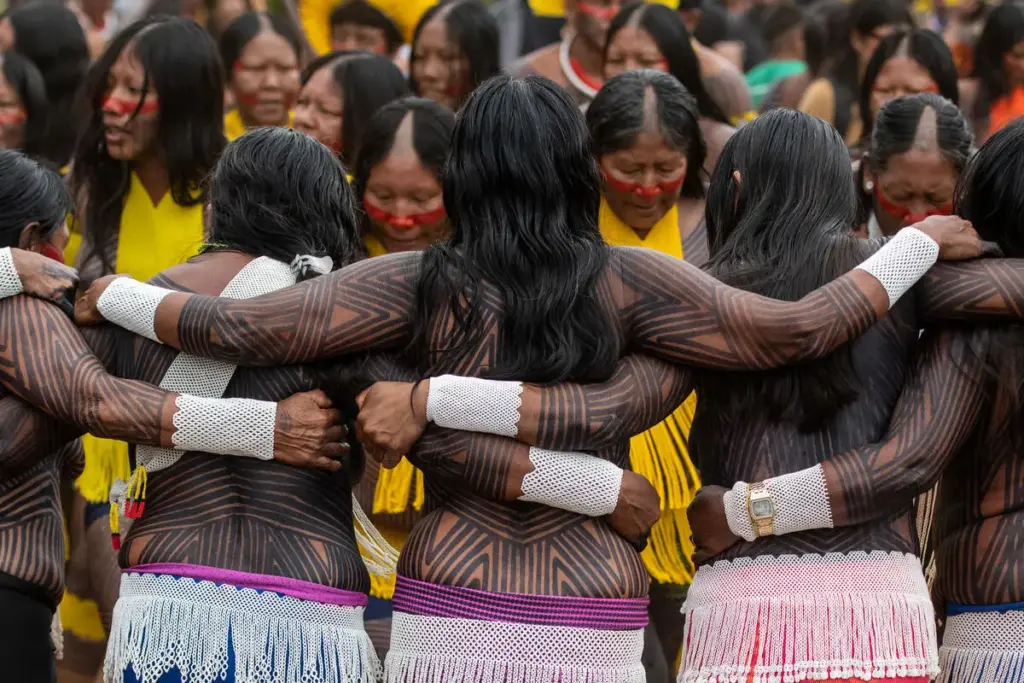
April 2025 (The 21st Free Land Camp / ATL): Held at the Funarte Complex in Brasília, the 21st edition of Brazil’s Acampamento Terra Livre (ATL) takes place from April 7 to 11. Centered on the theme “APIB is all of us: In defense of the Constitution and life,” the mobilization marks the 20th anniversary of the Articulation of Indigenous Peoples of Brazil (APIB). Greenpeace Brazil actively collaborates to amplify the visibility and impact of public demonstrations.
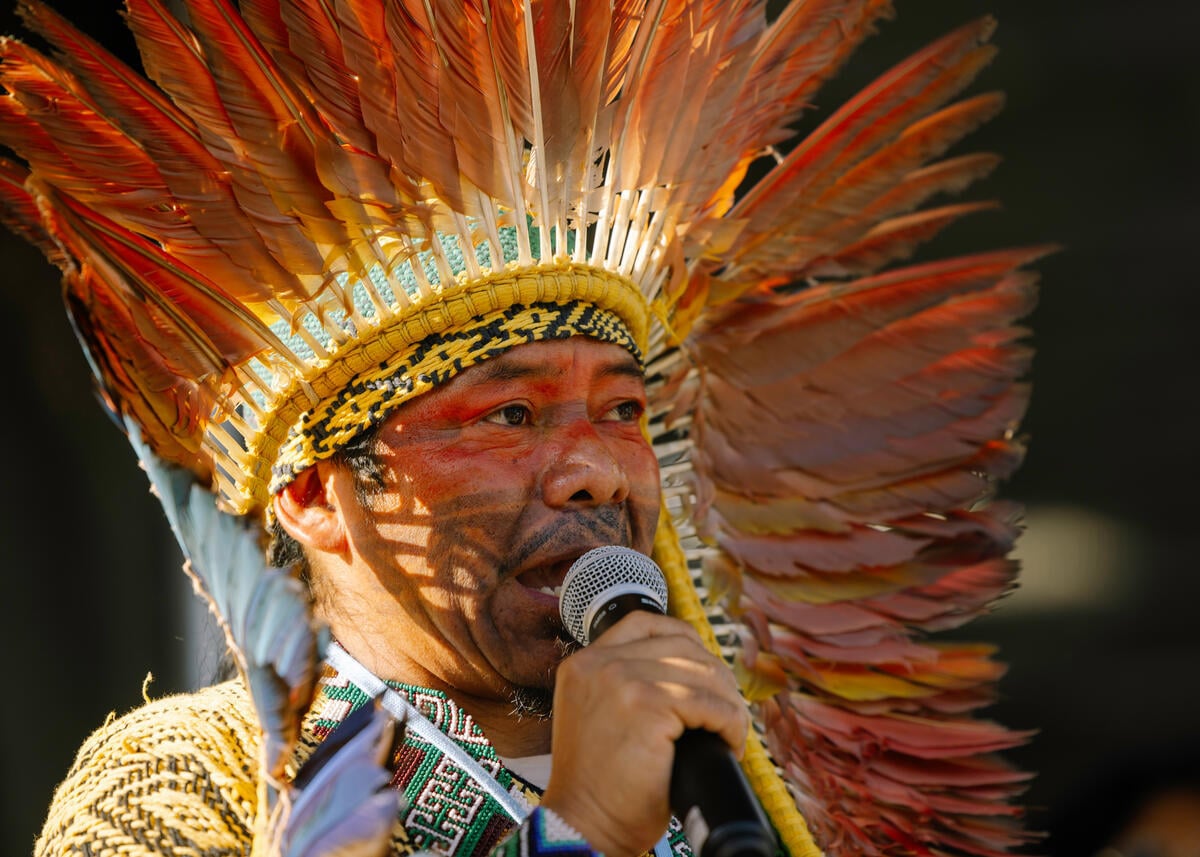
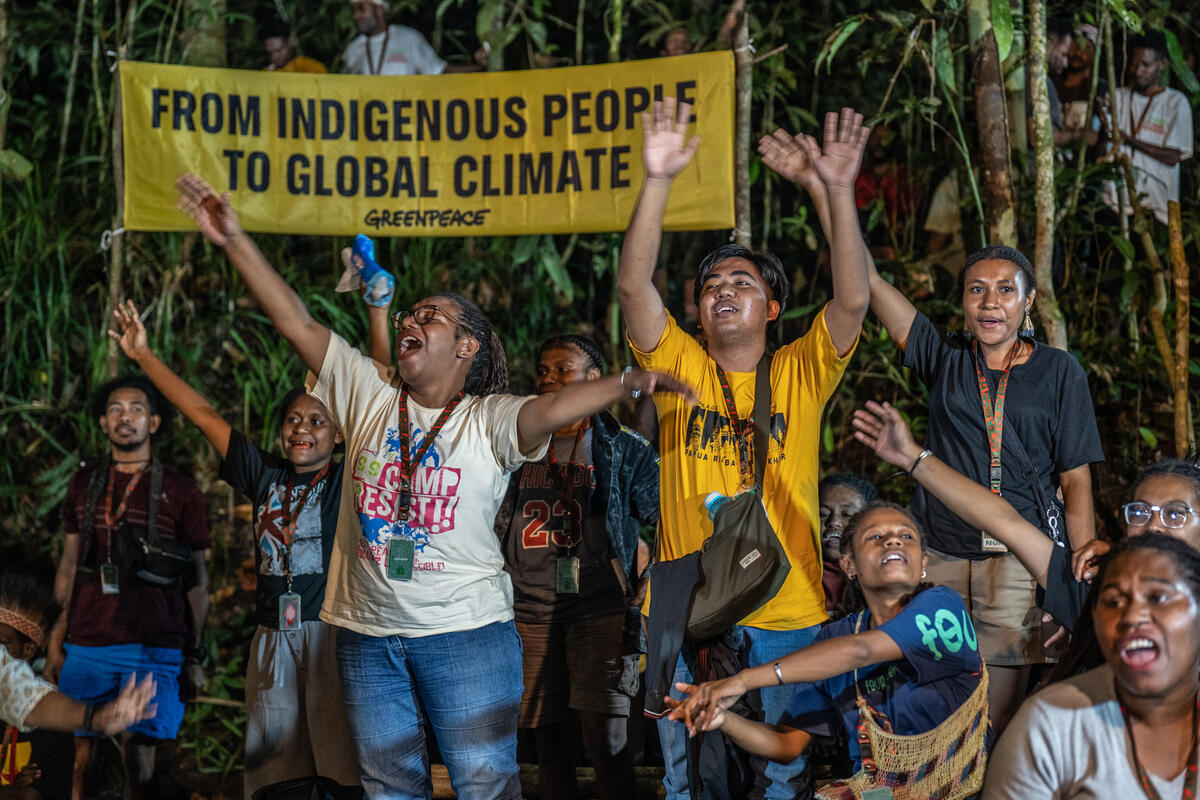
September 2025 (The 2nd Forest Defender Camp): Greenpeace Indonesia convenes its second Forest Defender Camp (FDC) from September 23 to 26 within the Sira village forest in the Knasaimos customary area of South Sorong, Southwest Papua. The camp brings together 89 participants, including Indigenous youth from seven customary areas across Papua Island alongside international delegations from the Congo Basin, the Amazon, and Borneo. This gathering culminates in the historic Sira Declaration.
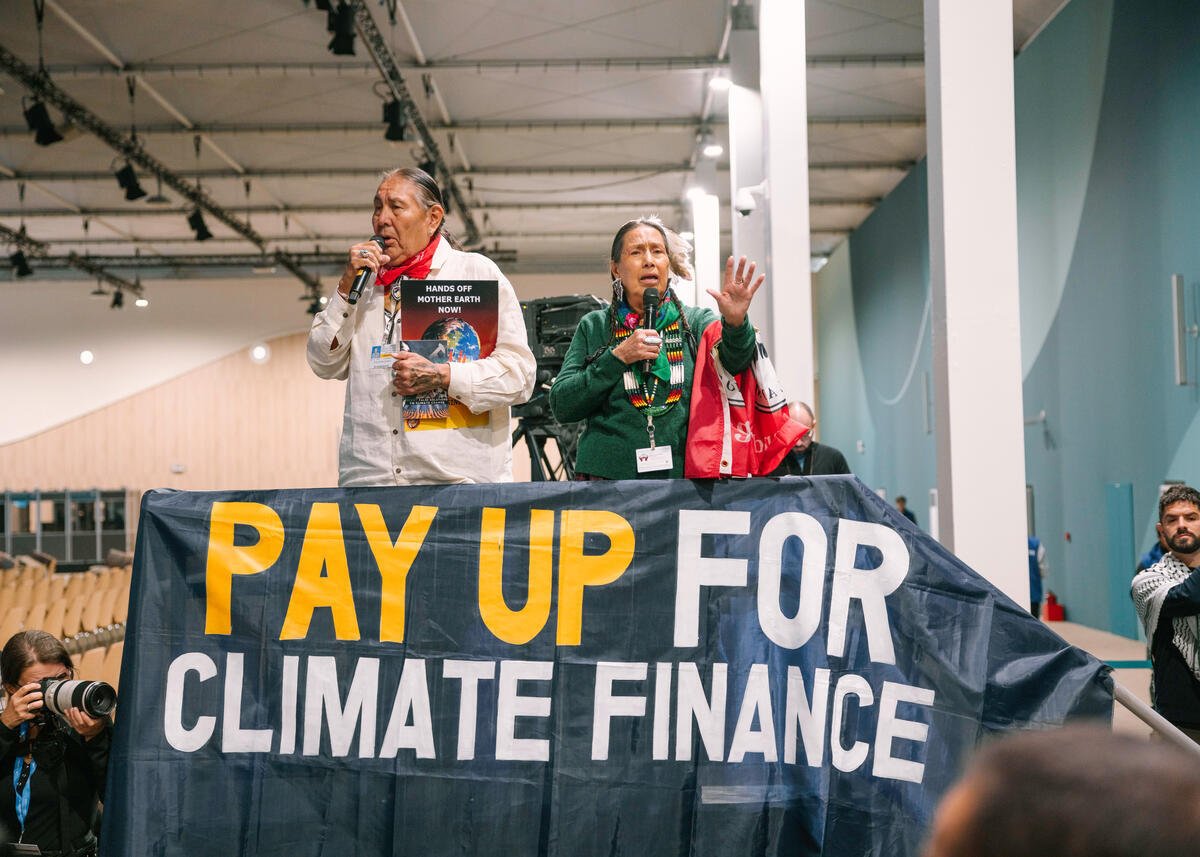
November 2024–Late 2025 (International Climate Conclaves): At summits such as COP29 in Baku and subsequent UNFCCC SB sessions (such as SB62 in Bonn), civil society and Indigenous coalitions launch intensified "Just Transition" campaigns, demanding that governments hold fossil fuel polluters accountable and directly fund Indigenous-led conservation rather than corporate-led mitigation schemes.
Supporting Context & Metrics: The Science and Scale of Stewardship
To understand the urgency of supporting Indigenous sovereignty, one must examine the empirical data regarding their effectiveness as land stewards and the devastating price they pay for that stewardship.
The Power of Indigenous Land Defense
Decades of academic research and environmental monitoring consistently demonstrate that lands managed by Indigenous peoples and local communities (IPLCs) exhibit superior biodiversity preservation and lower deforestation rates than state- or corporate-managed zones.
Furthermore, organized resistance yields quantifiable climate impacts. A landmark report by the Indigenous Environmental Network (IEN) revealed that Indigenous-led resistance movements in North America have successfully delayed or halted greenhouse gas pollution equivalent to at least 25% of annual U.S. and Canadian emissions.
The Cost of Defense: Lethal Violence and Marginalization
Despite representing roughly 6% of the global population, Indigenous peoples consistently account for more than one-third of all land and environmental defenders murdered worldwide each year, according to data compiled by Global Witness. In 2024 alone, at least 146 land and environmental defenders were killed or disappeared globally.
Global Demographics vs. Environmental Defenders Murdered:
[ Indigenous Peoples: ~6% of Global Population ]  ====================>  [ >33% of Murdered Land/Environmental Defenders ]
This systemic violence is enabled by historical and ongoing colonial narratives that frame Indigenous populations as "inferior," disconnecting modern societies from ancient knowledge systems and Earth-centered wisdom that are vital for navigating the climate crisis.
Official Statements and Declarations
The Call for Mutual Liberation
The philosophical core of modern climate solidarity is captured by Lilla Watson, a Gangulu woman and member of the Aboriginal Activists Group:
"If you have come here to help me you are wasting your time, but if you have come because your liberation is bound up with mine, then let us work together."
The Sira Declaration (2025)
Drafted by Indigenous youth representatives from the world’s primary tropical forest basins—the Amazon, the Congo Basin, Borneo, and West Papua—the Sira Declaration sets forth a rigorous call to action for international bodies, governments, and corporations. The declaration demands an immediate halt to industrial incursions, the unconditional legal recognition of customary territories, and direct, unhindered access to climate adaptation and mitigation funding for Indigenous communities.
Public Mandate for Indigenous Leadership
Global public opinion overwhelmingly supports these principles. A comprehensive Greenpeace poll spanning 17 countries across five continents revealed striking confidence in Indigenous stewardship:
78% of respondents trust Indigenous peoples and local communities most to protect forests (compared to just 49% for governments and 42% for corporations).
75% of respondents agree that Indigenous peoples should receive direct climate funding to safeguard their ancestral territories.
(Note: The 17-country poll surveyed populations in Kenya, South Africa, Argentina, Brazil, Colombia, Canada, USA, Indonesia, Malaysia, South Korea, Australia, Denmark, France, Germany, Netherlands, Spain, and the UK.)
Future Outlook: Confronting "Green Extractivism" and Building a Post-Extractivist Society
As the world races to transition away from fossil fuels, a new threat has emerged under the banner of decarbonization: green extractivism.
The Danger of Critical Minerals
The surging demand for "critical minerals" (such as lithium, nickel, cobalt, and rare earth elements) driven by the electric vehicle boom, artificial intelligence, Big Tech, and military defense sectors is spawning a new wave of sacrifice zones.
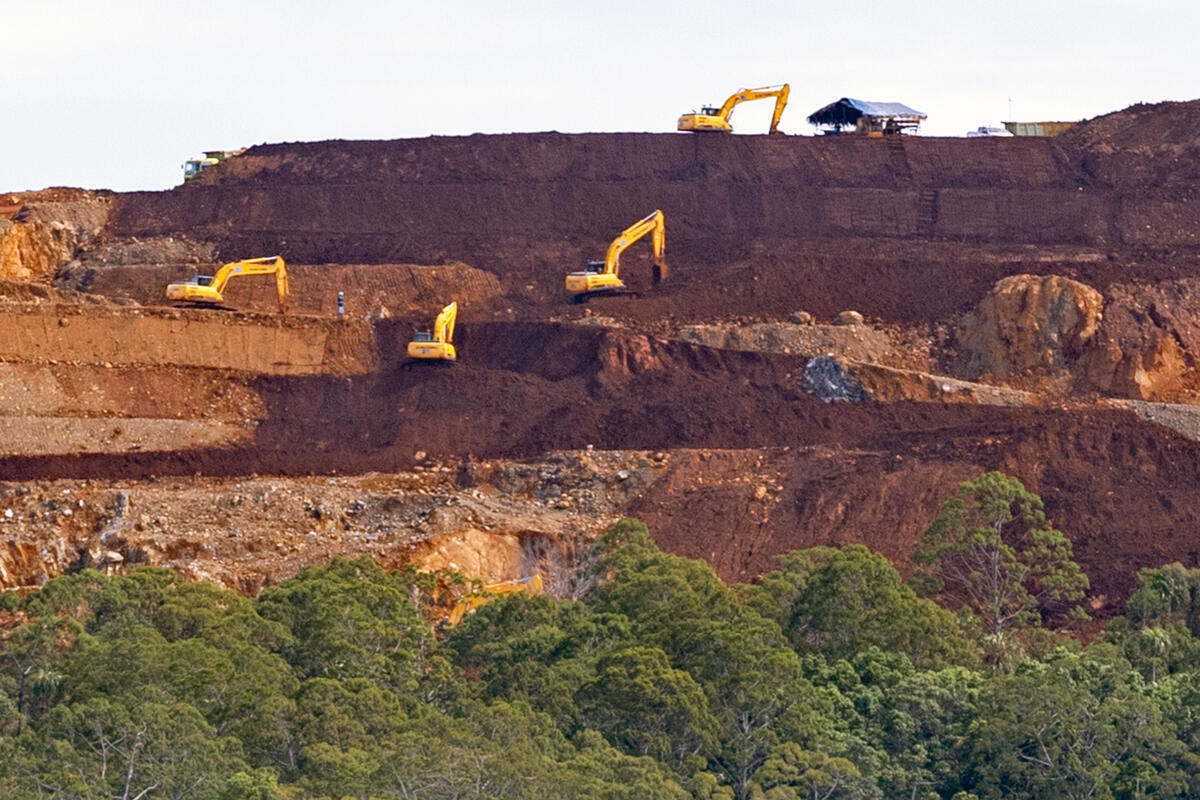
A stark example is visible in places like Kawe Island within the Raja Ampat Regency of Southwest Papua, Indonesia. Here, industrial nickel mining concessions spanning thousands of hectares pose catastrophic risks to globally unique coral reefs and marine biodiversity through toxic sedimentation. Heavy machinery operating in mega-biodiversity hotspots demonstrates that corporate "clean energy" supply chains can replicate the exact colonial extraction models they claim to replace.
Political scientist Thea Riofrancos, author of Extraction, emphasizes that breaking this cycle requires moving far beyond superficial technological swaps—such as merely replacing gas-powered cars with electric ones. True sustainability demands structural shifts, including heavy public investments in mass transit, mandatory circular material recycling, and a deliberate, managed reduction in overall resource consumption.
To combat this speculative rush, Greenpeace and partner organizations have launched the Restricted Areas Map, a critical tool identifying geographical zones where mining poses unacceptable environmental, social, cultural, and human rights risks.
The Path Forward
Stopping destructive corporate projects is merely the first step. A genuinely sustainable future requires a post-colonial transformation. For non-Indigenous allies, this means actively rejecting the foundational extractivist ideology that treats Nature as an endless storehouse of commodities to be dominated and exploited.
By aligning with Indigenous leadership, societies can adopt practical, time-tested blueprints for ecological balance, collective well-being, and regenerative care. The survival of our global ecosystem does not lie in more industrial extraction under a "green" label, but in the radical defense and honoring of those who have protected the Earth since time immemorial.
Take Action: Defend the Defenders
The fight to protect our global commons is shared by us all. You can stand in solidarity with frontline guardians by demanding the unconditional legal recognition of Indigenous rights and ancestral territories.