Executive Overview
KUTZTOWN, Penn. — On Earth Day 2026, the agricultural landscape of America received a powerful reminder that sustainable innovation knows no geographical boundaries. Amid the rugged, isolated expanses of the Eastern Sierra, a horticultural paradigm is quietly taking root. Rachel Kulchin, founder of Blue Heron Farm in Bishop, California, has been named the second annual recipient of The Good Farmer Award U.S., an esteemed honor presented jointly by the Davines Group and the Rodale Institute.
Selected from a nationwide pool of 118 applicants across 25 states, Kulchin’s recognition underscores a growing national appreciation for agricultural pioneers who do more than simply farm—they build community lifelines. In a region where agricultural infrastructure is notoriously fragile and the vast majority of food is imported, Kulchin has transformed a 10-acre parcel into a beacon of food security, soil regeneration, and biodiversity.
The Good Farmer Award U.S. celebrates emerging producers who have worked the land for a decade or less while demonstrating exceptional environmental and social contributions through regenerative organic practices. For Kulchin, the honor brings both global acclaim and tangible support: a $10,000 grant earmarked for critical farm infrastructure and an all-expenses-paid educational expedition to the European Regenerative Organic Center (EROC) in Parma, Italy.
Alongside Kulchin, the 2026 program recognized two outstanding finalists: Nia Kiara Cole of Kin & Flo Farm in North Carolina, lauded for reclaiming ancestral land and advancing BIPOC food sovereignty, and Nailah Marie Ellis of Blessed Up Blooms in Georgia, honored for pioneering urban, soil-first agricultural systems across Atlanta.
This comprehensive report examines the triumph of Blue Heron Farm, the rigorous selection criteria overseen by a panel of distinguished agricultural experts, and the expanding global partnership between the Rodale Institute and the Davines Group that continues to champion the future of sustainable food systems.
Detailed Chronology: From High-Desert Obstacles to Earth Day Honors
The trajectory of Blue Heron Farm is a masterclass in rapid agricultural transformation against the odds. When Rachel Kulchin established the operation in Bishop, California, she stepped into an environment that most conventional agronomists would deem hostile to diversified crop production. High deserts present severe climatic volatility, intense solar radiation, fragile soils, and acute water scarcity. Yet, within a single operational season, Kulchin engineered a productive ecosystem that redefined local agriculture.
The Inaugural Season Breakthrough
During her first full year of operation, Blue Heron Farm achieved metrics that many multi-year farms struggle to attain:
- Production Scale: Cultivating over 1,000 fruit trees alongside a rich matrix of diversified vegetable crops, the farm yielded upwards of 47,000 pounds of nutrient-dense food.
- Market Integration: Through an innovative U-Pick model that invites community members to harvest directly from the earth, Kulchin connected with more than 3,000 direct customers.
- Regional Dominance: These achievements swiftly established Blue Heron Farm as the largest diversified fruit and vegetable producer in the entire Eastern Sierra region.
The Earth Day 2026 Celebration
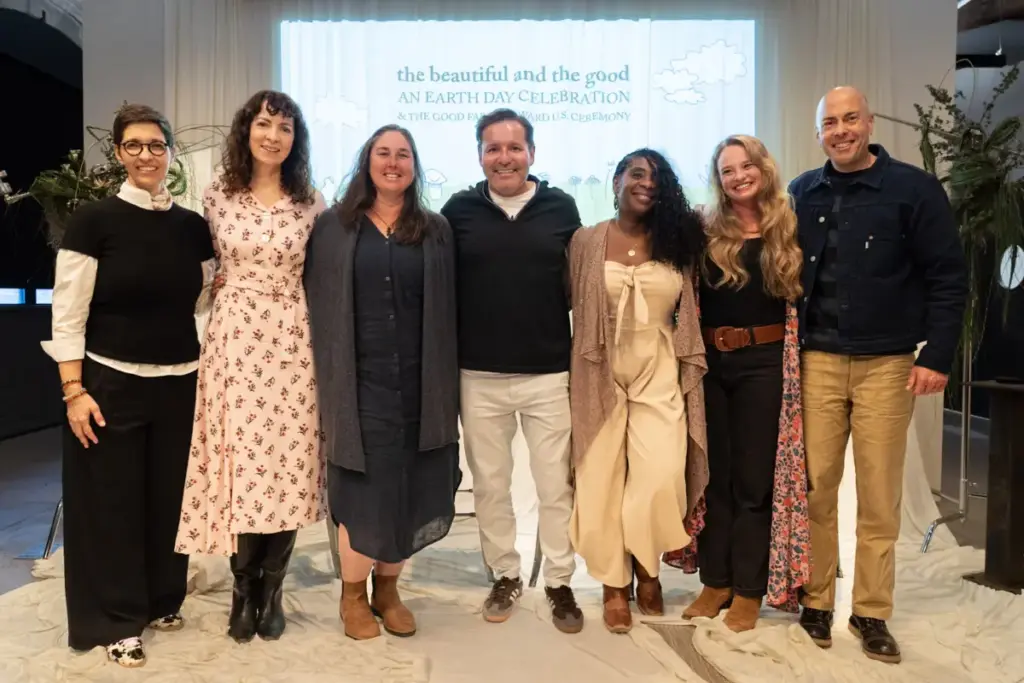
The culmination of Kulchin’s extraordinary first year was marked on April 22, 2026, during a special Earth Day celebration hosted at the Davines Group House in Brooklyn, New York. Surrounded by leaders in sustainable agriculture, environmental advocacy, and ethical beauty, Kulchin, alongside finalists Nia Kiara Cole and Nailah Marie Ellis, accepted national recognition for their groundbreaking contributions.
For Kulchin, the award serves as both validation and fuel for her ongoing mission. "I am standing behind a belief that feels both stubborn and bold," Kulchin reflected during the ceremony. "The recognition through the Good Farmer Award affirms the work we are doing to build something different in the Eastern Sierra. Our goal is not just to grow food, but to demonstrate that regenerative agriculture can thrive in challenging climates and build the resilience our valley desperately needs. This award will be transformational for Blue Heron Farm and for our community."
Supporting Context & Metrics: The Anatomy of Regenerative Success
To understand the significance of Blue Heron Farm’s success, one must examine the broader systemic challenges of rural food deserts and the mechanics of regenerative organic agriculture.
The Fragility of Isolated Food Systems
Many rural and isolated regions in the United States operate under a precarious logistics model. Transporting fresh produce across hundreds of miles of highway burns fossil fuels, racks up carbon emissions, and leaves communities highly vulnerable to supply chain shocks, extreme weather events, and economic inflation. In the Eastern Sierra, where agricultural infrastructure has historically been sparse, local food sovereignty was little more than an aspiration until Kulchin applied a whole-systems design to the problem.
Regenerative Principles in Action
Regenerative organic agriculture goes beyond mere sustainability—it seeks to actively heal and enhance the ecosystem. At Blue Heron Farm, Kulchin implements practices centered around:
- Soil Health Restoration: Minimizing soil disturbance, maintaining living roots year-round, and applying organic matter to foster a thriving subterranean microbiome.
- Water Conservation: Maximizing soil water-retention capacity through organic amendments and targeted, efficient irrigation management.
- Biodiversity Enhancement: Cultivating over a thousand varieties of trees and crops to disrupt pest cycles, attract beneficial pollinators, and build ecological resilience.
The 2026 Award Pool and Rigorous Judging
The 2026 edition of The Good Farmer Award U.S. drew applications from 118 farmers representing 25 distinct states and a rich diversity of cultural backgrounds. Evaluating this national pool required a multidisciplinary panel of judges whose expertise spanned soil science, agronomy, education, and ethical business:
- Renée Baran: Dean of Education at Rodale Institute.
- Dario Fornara: Research Director of the European Regenerative Organic Center (EROC).
- Kegan Hilaire: Farmer, owner of Blackbird Farms, and Small Farms and Diversified Vegetable Consultant at Rodale Institute.
- Hayley and Stephanie Painter: Co-Founders of Painterland Sisters, Icelandic Style Skyr Yogurt.
Candidates were evaluated against stringent criteria: their demonstrated commitment to enhancing biodiversity, their ability to increase regional climate resilience, and their dedication to fostering deep environmental stewardship and social equity within their communities.
Official Statements: Leadership Perspectives on the Global Movement
The partnership between the Rodale Institute and the Davines Group represents a powerful convergence of scientific research, agricultural advocacy, and corporate sustainability. Leadership from both organizations emphasized the broader implications of honoring farmers like Rachel Kulchin.
Jeff Tkach, CEO of Rodale Institute
"Rachel embodies the resilient, systems approach that regenerative organic agriculture demands. In just one year, she has built a thriving 10-acre operation that is not only producing nutrient-dense food and restoring soil health, but also inspiring an entire community to reimagine what’s possible for local food security. Her work proves that small farms can be economically viable and ecologically sound, even in the most challenging climates."
Davide Bollati, Chairman of the Davines Group
"We are delighted to welcome Rachel to Italy and to guide her through our European Regenerative Organic Center. This year’s award demonstrates why Davines continues to partner with Rodale Institute—not only to source regenerative organic ingredients for our products, but to learn from the Institute’s rigorous research and farmer-first expertise. Rachel’s farm is a living example of building resilient systems with regenerative organic agriculture. By supporting farmers like Rachel, we invest in the future of beauty, agriculture, and the planet."
Highlighting the Finalists: Agents of Change
The impact of the 2026 award extends deeply through the work of its runners-up, who are transforming their respective regions:
- Nia Kiara Cole (Kin & Flo Farm, North Carolina): Recognized for her profound work in reclaiming ancestral family land. Cole champions Afro and Indigenous restorative land practices, training the next generation of BIPOC farmers while advancing food sovereignty and cooperative food networks across the North Carolina Piedmont.
- Nailah Marie Ellis (Blessed Up Blooms, Georgia): Honored for establishing a soil-first, community-centered urban farm in Atlanta. Ellis leverages regenerative agriculture and direct-to-consumer models to bring nutrient-dense food and botanical beauty to urban neighborhoods stretching from Bankhead to Buckhead.
Future Outlook: Investment, Education, and Global Exchange
The impact of the 2026 Good Farmer Award will extend far beyond the Earth Day celebrations in Brooklyn. The financial and educational resources provided to Rachel Kulchin are specifically structured to catalyze long-term growth and systemic change.
Strategic Infrastructure Investment
The $10,000 award granted to Blue Heron Farm has been meticulously allocated to drive operational efficiency and community engagement:
- Water Conservation and Irrigation (90%): The vast majority of the funds will be channeled into upgrading water conservation infrastructure and orchard irrigation systems. In the high desert, efficient water management is the literal lifeblood of agricultural viability; these upgrades will allow Blue Heron Farm to optimize every drop while expanding its perennial yield.
- Educational Signage and Demonstration (10%): A portion of the grant will support educational signage and demonstration infrastructure on the farm. By transforming Blue Heron Farm into an interactive outdoor classroom, Kulchin aims to educate visitors, aspiring growers, and community members on the mechanics and benefits of regenerative high-desert farming.
The European Expedition
In addition to financial support, Kulchin has secured an all-expenses-paid educational visit to the European Regenerative Organic Center (EROC) in Parma, Italy. Situated on a 17-hectare site adjacent to the Davines Group Village, EROC stands as Europe’s premier training and research center dedicated exclusively to regenerative organic agriculture.
Founded in 2021 through the strategic alliance between the Davines Group and the Rodale Institute, EROC serves as an international hub for biodiversity conservation, soil science, and the sourcing of natural-origin ingredients for Davines’ professional haircare and skincare formulations. For Kulchin, the journey to Italy represents an invaluable opportunity to exchange knowledge with international agronomists, researchers, and fellow regenerative practitioners, bringing global insights back to the soil of the Eastern Sierra.
Conclusion
The recognition of Rachel Kulchin as the 2026 recipient of The Good Farmer Award U.S. marks a watershed moment for the regenerative agriculture movement. It shatters the myth that resilient, diversified food systems are reserved only for regions with temperate climates and abundant rainfall. Through grit, scientific curiosity, and a deep reverence for the land, Kulchin has proven that a 10-acre high-desert farm can feed thousands, restore local ecosystems, and unite a community.
Supported by the steadfast advocacy of the Rodale Institute and the visionary, B-Corp-certified leadership of the Davines Group, pioneers like Kulchin, Nia Kiara Cole, and Nailah Marie Ellis are scripting a hopeful new chapter for agriculture. As these farmers continue to heal the earth from Bishop to Atlanta and across the Piedmont, they lay down the root systems for a healthier, more secure, and ecologically sound planetary future.