By: Environmental Desk & Special Reporting Unit
Published: April 23, 2026
Executive Overview
In an era defined by intensifying climatic volatility, systemic topsoil degradation, and corporate greenwashing, a quiet agricultural revolution is taking root in one of California’s most chemically intensive landscapes. The Rodale Institute, a global pioneer in regenerative organic research, has announced a landmark $1.55 million, three-year grant renewal from the Holdfast Collective—the nonprofit environmental shareholder and sole owner of outdoor apparel icon Patagonia.
This substantial financial injection is designed to supercharge the Regenerate Ventura project, scaling a hyper-localized agricultural transformation across Ventura County, California. Historically renowned for its microclimates and rich agricultural heritage, the region is simultaneously recognized as one of the most pesticide-intensive farming zones in the state. By bridging the gap between conventional chemical farming and certified organic stewardship, the initiative offers a blueprint for a nationwide transition.
Since its inception in 2024, backed by an initial $1 million investment from Holdfast, Regenerate Ventura has transitioned from an ambitious pilot program into a proven systemic catalyst. The project has already enrolled more than 10,000 acres in active transition toward an ultimate county-wide target of 316,000 acres. More importantly, it has dismantled traditional barriers to entry for growers—particularly BIPOC farmers—offering a comprehensive suite of resources spanning agronomic consulting, financial stipends, legal advice, and localized supply chain integration.
As agricultural economists, environmental scientists, and policymakers search for scalable models to combat biodiversity collapse and sequester carbon, the partnership between Rodale Institute and Holdfast Collective stands out. It demonstrates that transforming the food system requires more than ecological ideals; it demands deeply collaborative, farmer-first financial architectures and rigorous, science-backed execution.
Detailed Chronology: From Pilot Concept to Systemic Shift
To understand the weight of the $1.55 million grant renewal, one must examine the calculated, step-by-step evolution of Regenerate Ventura. The initiative was not born out of abstract environmental theory, but out of an urgent, boots-on-the-ground assessment of the vulnerabilities facing California’s central coast agricultural producers.
The Genesis (2023–Early 2024)
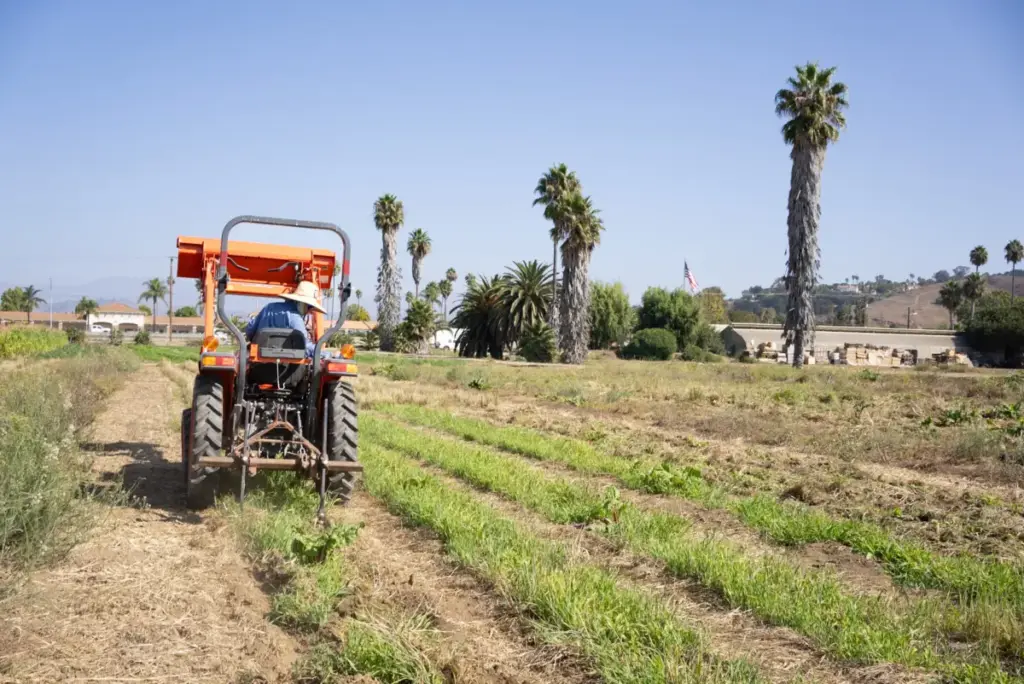
Ventura County has long been an agricultural powerhouse, yielding high-value crops ranging from avocados and strawberries to lemons and row crops. However, decades of intensive conventional farming reliant on synthetic fertilizers, fumigants, and persistent pesticides have left local soils depleted, ecosystems strained, and farmers caught on a costly chemical treadmill.
Recognizing the need for localized intervention, the Rodale Institute conceptualized Regenerate Ventura as a direct-action program. Traditional agricultural extension offices and land-grant universities have historically struggled to bridge the gap between academic research and the day-to-day economic realities of working farmers. Rodale set out to build a different kind of infrastructure—one rooted in peer-to-peer trust, rigorous agronomy, and comprehensive wraparound support.
Phase One Launch and Milestones (2024–2025)
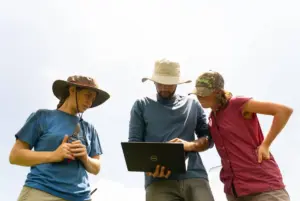
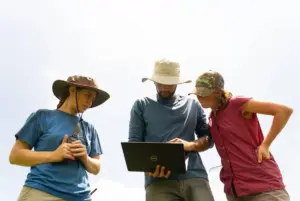
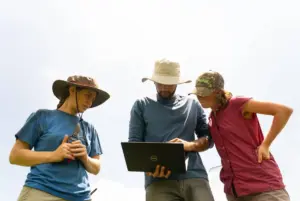
Fueled by an initial $1 million catalyst investment from Patagonia’s Holdfast Collective in 2024, the initiative hit the ground running. Agronomists deployed by the Rodale Institute began meeting with local growers directly in their fields, eschewing one-size-fits-all mandates in favor of tailored transition plans.
The strategy yielded immediate, measurable results:
- A Growing Pipeline: Within two years, the project built a robust pipeline of 57 farms actively transitioning away from conventional practices.
- Certification Milestones: Out of that cohort, 12 farms successfully advanced to formal organic certification application stages, while 40 additional farms made binding commitments to begin their transition within an 18-month window.
- Democratizing Access: Eschewing exclusionary networks, the program achieved a remarkable 39% engagement rate among Black, Indigenous, and People of Color (BIPOC) farmers—a demographic that has historically been underrepresented in federal and state agricultural funding programs.
The Next Frontier: The $1.55 Million Renewal (2026 and Beyond)
Announced on April 8, 2026, in Camarillo, California, the three-year grant renewal marks the transition of Regenerate Ventura from an incubation phase into a regional systems-shift model.
While the $1.55 million from Holdfast Collective provides vital operational momentum, leadership at the Rodale Institute has made it clear that this is merely a down payment on a much larger vision. The comprehensive, county-wide transformation required to overhaul Ventura County’s agricultural baseline carries an estimated total price tag of $10 million. By securing early proof-of-concept success, the Institute is now casting a wider net, issuing a public call to action for philanthropic foundations, impact investors, and conscious corporations to join the coalition.
Supporting Context & Metrics: Unpacking the Regenerate Ventura Model
What makes the Regenerate Ventura framework unique is its refusal to treat organic transition as a purely technical agronomic challenge. Instead, the initiative addresses the multi-layered socio-economic vulnerabilities that typically prevent risk-averse farmers from breaking away from conventional models.
Comprehensive Agronomic and Business Support
Switching from conventional to regenerative organic agriculture involves a mandatory three-year transition period during which farmers must adopt soil-health-restoring practices (such as cover cropping, no-till methods, and diverse crop rotations) before they can command premium organic prices in the marketplace. This creates a dangerous financial valley of death where input costs may shift while revenues remain stagnant.
To combat this, Rodale Institute’s on-the-ground agronomists provide hands-on consulting covering:
- Crop Selection & Diversification: Helping farmers identify resilient, high-demand organic varietals suited to Ventura County’s distinct microclimates.
- Organic Certification Navigation: Demystifying the notoriously complex paperwork, auditing, and compliance standards mandated by the USDA National Organic Program.
- Business Planning & Financial Literacy: Assisting growers in restructuring debt, projecting cash flows through the transition window, and securing equipment stipends.
- Market Access & Supply Chain Integration: Connecting isolated growers with regional distribution networks to ensure their yields find reliable, high-value buyers.
A Collaborative Ecosystem
No single nonprofit can overhaul an entire county’s food system alone. Regenerate Ventura operates through an interconnected web of strategic regional partners that leverage local expertise and infrastructure:
- Leap Lab: Providing cutting-edge technical and operational insights.
- Project MILPA: Facilitating culturally competent outreach and support for marginalized farmworker communities.
- Saticoy Food Hub: Anchoring local distribution channels to keep food grown in Ventura County within regional supply chains.
- Civic and Institutional Stakeholders: Partnering with local government bodies and community-based organizations to align public policy with ecological stewardship.
Official Statements: Voices from the Forefront
The convergence of corporate accountability, non-profit execution, and agricultural science has generated strong alignment among the leadership teams driving this initiative.
Jeff Tkach, CEO of Rodale Institute:
"This renewal reflects what we’ve proven in Year One, that hyperlocal, farmer-first support works. With Holdfast’s partnership, we’re not just funding transition, we’re funding a systems shift. The full vision for county-wide transformation requires $10 million in total investment. We’re calling on others who are committed to this work to join us in making Ventura County a regenerative organic model for the nation."
Greg Curtis, Executive Director of Holdfast Collective:
"Rodale Institute is filling a void. They’ve shown up with rigor, trust, and results. Their model proves that organic and regenerative organic agriculture is essential to climate resilience and farm viability in our own backyard and beyond."
These statements underscore a shared philosophical shift: sustainability is no longer merely about doing less harm (reducing emissions or minimizing chemical runoff). True ecological survival requires regenerative systems that actively restore soil microbiomes, draw down atmospheric carbon, and rebuild rural community wealth.
Institutional Profiles
To fully appreciate the scope of this alliance, it is essential to examine the institutional mandates of the organizations driving the Regenerate Ventura project.
Rodale Institute
Founded 78 years ago, the Rodale Institute is a 501(c)(3) nonprofit recognized globally as the birthplace of the modern organic movement. Through rigorous, long-term scientific research—such as the landmark Farming Systems Trial—the Institute has scientifically demonstrated that organic agriculture matches or outperforms conventional farming in yields during drought years while vastly superior in carbon sequestration and soil health. Named one of Fast Company’s Most Innovative Companies in 2025, Rodale continues to serve as an authoritative bridge between empirical science and practical farm management.
Holdfast Collective
Operating as a 501(c)(4) nonprofit organization, the Holdfast Collective represents a radical departure from traditional corporate governance. It owns 100% of Patagonia’s non-voting stock. Rather than enriching private shareholders or venture capitalists, the collective directs all profits not reinvested back into Patagonia’s core business toward fighting the global environmental crisis, defending nature and biodiversity, and fostering resilient local communities.
Patagonia
Founded in 1973 by legendary environmentalist Yvon Chouinard, Ventura, California-based Patagonia has spent over half a century redefining what it means to be a modern corporation. As a certified B Corporation and a founding member of 1% for the Planet, Patagonia has funneled more than $240 million to grassroots environmental organizations worldwide. Its unique ownership structure—where Earth is effectively its only shareholder—ensures that commercial success directly translates into ecological defense.
Future Outlook: Ventura County as a National Beacon
As the Regenerate Ventura project enters its newly funded three-year chapter, its implications stretch far beyond the borders of California.
American agriculture faces a mounting existential crisis. Soil erosion, water scarcity, chemical resistance, and the economic consolidation of corporate agribusiness threaten the very foundation of human food security. Conventional farming models, while historically effective at driving high-volume caloric production, have run up against ecological limits.
By proving that a county-wide transition is logistically and economically feasible, the partnership between Rodale Institute and Holdfast Collective offers a scalable template for agricultural transformation across the globe. If a county as intensively farmed and chemically dependent as Ventura can systematically pivot toward regenerative organic practices, then virtually any agricultural region in the world can do the same.
The challenge ahead is monumental. Scaling the initiative to meet its $10 million funding threshold and converting the remaining tens of thousands of acres will require continued grit, financial courage, and unshakeable cross-sector collaboration. Yet, as the green shoots on transitioning farms across Camarillo and the surrounding valleys demonstrate, the revolution has already begun—and it is rooted firmly in the earth.