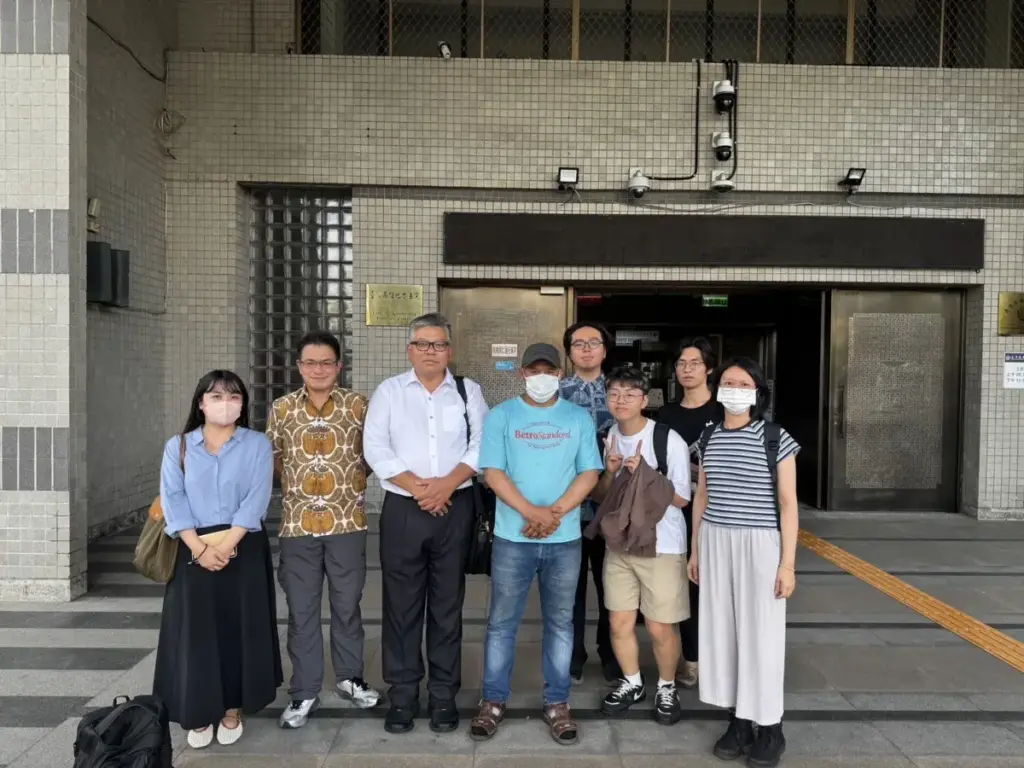
TAIWAN — In a ruling that has sent shockwaves through international human rights and labor advocacy circles, the Kaohsiung District Court in Taiwan has handed down not-guilty verdicts for the captain and chief officer of the Da Wang. The high-profile trial centered on harrowing allegations of human trafficking, severe labor exploitation, and physical abuse aboard the Taiwanese-owned, Vanuatu-flagged tuna fishing vessel.
The decision marks a bitter defeat for survivors, labor unions, and environmental organizations that have spent years fighting to bring accountability to an industry long plagued by maritime abuses. For the migrant fishers who lived through the nightmare aboard the Da Wang, the verdict is not merely a legal setback—it is a glaring symptom of a regulatory and judicial system ill-equipped to police the lawless expanse of the high seas.
As global seafood companies continue to rake in profits, the human cost of the fish trade remains devastatingly high. This landmark case lays bare the immense evidentiary hurdles of prosecuting crimes committed thousands of miles from shore, intensifying calls for sweeping legislative reform, rigorous supply chain transparency, and corporate accountability across the multi-billion-dollar global seafood industry.
Executive Overview
The acquittal of the Da Wang’s senior officers has ignited a fierce debate over the efficacy of modern maritime labor laws and the protection of migrant workers in distant-water fishing (DWF) fleets. The legal proceedings traced back to the tragic death of Sunoto, a 19-year-old Indonesian crew member who died under deeply suspicious circumstances in June 2019 after reportedly being struck in the back of the head by a superior.
Prosecutors initially presented a grim picture of daily life on the tuna vessel, alleging that the captain and first officer systematically relied on extreme violence, intimidation, and coercion to extract grueling labor from their vulnerable migrant crew. Despite these compelling allegations, the Kaohsiung District Court ultimately ruled that the evidence was insufficient to secure convictions on the primary human trafficking and abuse charges.
Human rights defenders argue that the outcome underscores a systemic failure to protect the world’s most vulnerable mariners. Migrant fishers, largely hailing from Southeast Asian nations such as Indonesia and the Philippines, frequently find themselves trapped in isolated, offshore environments with zero connectivity, no regulatory oversight, and few avenues for legal recourse.
Furthermore, the case spotlights the intricate web of international commerce that insulates major seafood brands from the atrocities occurring at the point of harvest. From vessels flagged in convenience registries to complex transnational trade routes ending in Western supermarkets, the Da Wang saga stands as a stark reminder that the global seafood supply chain remains fundamentally broken.
Detailed Chronology: From Tragedy on the High Seas to Judicial Defeat
To fully understand the gravity of the Kaohsiung District Court’s recent verdict, one must retrace the harrowing timeline of events that transformed a routine fishing voyage into an international human rights scandal.
June 2019: The Death of Sunoto
The tragedy aboard the Da Wang came to light in mid-2019. Sunoto, a 19-year-old Indonesian national seeking to support his family back home, had signed up for a contract aboard the tuna vessel. According to testimonies gathered later by investigators, Sunoto’s brief tenure on the ship was characterized by brutal mistreatment. In June 2019, he was reportedly struck violently in the back of the head during a work dispute. The following morning, he was discovered lifeless in his cabin. His death served as the catalyst for a transnational investigation into the violent underworld of distant-water fishing.
2019–2020: Investigative Exposés and International Scrutiny
Later in 2019, Greenpeace Southeast Asia and the Union of Indonesian Migrant Workers (SBMI) published a groundbreaking joint investigation titled Seabound: The Journey to Modern Slavery on the High Seas. The report documented systemic labor abuses across several vessels, prominently featuring the horrific conditions aboard the Da Wang, including physical violence, excessive working hours, and rampant wage theft.
The revelations triggered international regulatory responses. In August 2020, the United States Customs and Border Protection (CBP) issued a Withhold Release Order (WRO) targeting tuna harvested by the Da Wang, signaling that American authorities had found credible indicators of forced labor.
April 2022: Indictments in Taiwan
Spurred by testimonies passed from Greenpeace East Asia to Taiwan’s Fisheries Agency, the evidence was handed over to the Kaohsiung District Prosecutors’ Office for formal investigation. In April 2022, prosecutors took decisive action, indicting nine individuals—including the vessel owner, the captain, the first officer, and other key figures—on multiple charges, including severe violations of Taiwan’s Human Trafficking Prevention Act. This milestone was hailed as a monumental step forward for Taiwanese maritime justice.
January 2022 – Present: U.S. Findings and Legal Fallout
While judicial proceedings crept forward in Taiwan, international pressure mounted. In January 2022, the U.S. CBP issued a formal "Finding" against the Da Wang for forced labor, confirming that the vessel’s operations violated international human rights standards. Investigations by Greenpeace USA subsequently revealed that tuna harvested by the Da Wang during the period of alleged human trafficking had made its way into supply chains serving major U.S. seafood brands, including Bumble Bee Foods. This discovery led to separate federal lawsuits filed by Indonesian fishers against Bumble Bee, accusing the corporation of profiting from forced labor.
Despite these international sanctions and civil suits, the criminal trial in Taiwan concluded with today’s acquittals, leaving the quest for criminal accountability deeply compromised.
Supporting Context & Metrics: The Crisis in Distant-Water Fishing
The Da Wang case is far from an isolated incident; it is symptomatic of a widespread, systemic crisis within the global distant-water fishing industry. Taiwan possesses one of the world’s largest distant-water fishing fleets, operating thousands of vessels across the Pacific, Atlantic, and Indian Oceans. While this multi-billion-dollar industry is a critical pillar of the global seafood economy, it has long operated in a regulatory gray zone.
The Anatomy of Maritime Isolation
Migrant fishers recruited from Indonesia, the Philippines, and other developing nations are prime targets for predatory labor brokers. Enticed by the promise of stable incomes to support their families, workers frequently sign opaque, multi-language contracts that they cannot read or understand. Once at sea, these individuals are subjected to conditions that international monitors have repeatedly classified as modern slavery.
- Extreme Working Hours: Fishers routinely report working shifts lasting 18 to 20 hours a day, day after day, with minimal rest.
- Wage Exploitation: Systematic withholding of wages, exorbitant recruitment fees that trap workers in inescapable debt bondage, and arbitrary wage deductions are pervasive.
- Physical and Verbal Abuse: Violence is frequently used as a management tool to instill fear and enforce compliance among the crew.
- Total Isolation: Cut off from cellular networks, satellite communication, and port authorities for months or even years at a time, workers have virtually no way to report abuse or seek outside help.
The Jurisdictional Maze
One of the greatest obstacles to achieving justice in cases like the Da Wang is the complex web of maritime jurisdictions. A vessel may be owned by a company registered in one country, fly the flag of convenience of another nation, employ crew members from a third, and sell its catch to multinational corporations headquartered in a fourth. This fragmented structure allows bad actors to exploit legal loopholes, evade domestic labor laws, and systematically avoid prosecution when human rights abuses come to light.
Official Statements and Reactions
The not-guilty verdicts delivered by the Kaohsiung District Court have drawn sharp condemnation from survivors, labor advocates, and environmental watchdogs worldwide.
The Voice of the Survivors
Manny (a pseudonym), a Filipino fisher who survived the ordeal aboard the Da Wang and served as a key witness in the forced labor trial, expressed profound heartbreak and disillusionment following the verdict.
"The captain assaulted and beat people on board every day," Manny stated. "He was responsible for Sunoto’s wrongful death and should be held accountable under the law. If there is an opportunity to appeal, I will appeal the case all the way."
Manny’s testimony underscores the immense emotional toll placed on survivors who risk their safety to speak out, only to see the legal system fall short of delivering meaningful accountability.
Environmental and Human Rights Advocacy
Civil society organizations have mobilized in the wake of the decision, emphasizing that the court’s ruling highlights the urgent need for structural reform rather than merely pointing fingers at individual vessel operators.
Shay Kuo, Oceans Campaigner at Greenpeace East Asia’s Taipei Office, criticized the structural limitations exposed by the trial:
"Despite multiple testimonies and indications pointing to forced labour and violence aboard the vessel, the court’s decision highlights the difficulties of gathering evidence and establishing proof at sea, underscoring the challenges facing the maritime regulatory system. Seven years on, full justice remains out of reach. To prevent further victims and broken families, the Taiwanese government must strengthen oversight of fishing vessels and require seafood companies to take responsibility for human rights abuses throughout their supply chains."
Echoing these sentiments, Sari Heidenreich, Senior Human Rights Adviser for Greenpeace USA’s Global Fisheries campaign, emphasized that corporate responsibility must extend far beyond the docks:
"This heartbreaking verdict cannot be the end of the story. A migrant fisher lost his life, and other workers reported serious abuses, including forced labor, aboard the same vessel. This case exemplifies the uphill battle that fishers face to achieve justice and remedy. Responsibility does not end with vessel operators. All of Big Seafood, which includes companies buying and trading seafood, must be rigorous in their due diligence to ensure that forced labor and abuse are not happening anywhere in their supply chains and that, if they do, victims have access to swift and meaningful justice and remedy."
Future Outlook and the Path Forward
The Da Wang verdict serves as a critical turning point for the global seafood industry. It demonstrates that relying solely on retrospective criminal prosecutions in domestic courts is insufficient to protect migrant workers or punish perpetrators. Because gathering forensic evidence in the middle of the ocean remains exceptionally difficult, preventative measures and robust regulatory frameworks must take precedence.
As part of its global Beyond Seafood Campaign, the Greenpeace network and allied labor organizations are calling for concerted, coordinated action by governments, regional fisheries management organizations (RFMOs), and multinational seafood corporations to eradicate modern slavery at sea.
Key Demands for Systemic Reform
- Mandatory Supply Chain Transparency: Seafood brands and retail giants must implement rigorous, third-party audited due diligence protocols to trace seafood products from "bait to plate," ensuring that no forced or trafficked labor is utilized at any stage of production.
- Enhanced At-Sea Oversight: Governments must mandate independent, human or electronic monitoring systems (such as closed-circuit television cameras and digital reporting tools) across all distant-water fishing fleets to deter abuse and secure reliable evidence.
- Abolition of Isolation: To break the cycle of forced isolation, vessels must be required to provide affordable, uncensored communication access to all crew members, enabling them to contact families, unions, and authorities at any time.
- Stronger Government Accountability: Flag states and port states must harmonize their legal frameworks to eliminate loopholes, enforce strict penalties for labor violations, and guarantee that migrant fishers have unhindered access to legal representation, medical care, and fair compensation.
- Corporate Legal Liability: Major seafood buyers must be held legally accountable if they knowingly or negligently profit from supply chains tainted by human rights abuses and labor trafficking.
Conclusion
The acquittal of the Da Wang officers is a dark day for international justice, but it must not be the final chapter for Sunoto and the countless other migrant fishers who have suffered in the shadows of the global seafood trade. The systemic failures highlighted by this trial demand an immediate, uncompromising response from world governments and corporate giants alike. Until the human cost of catching fish is valued above profit margins, the high seas will remain a lawless frontier where modern slavery continues to thrive unchecked.