

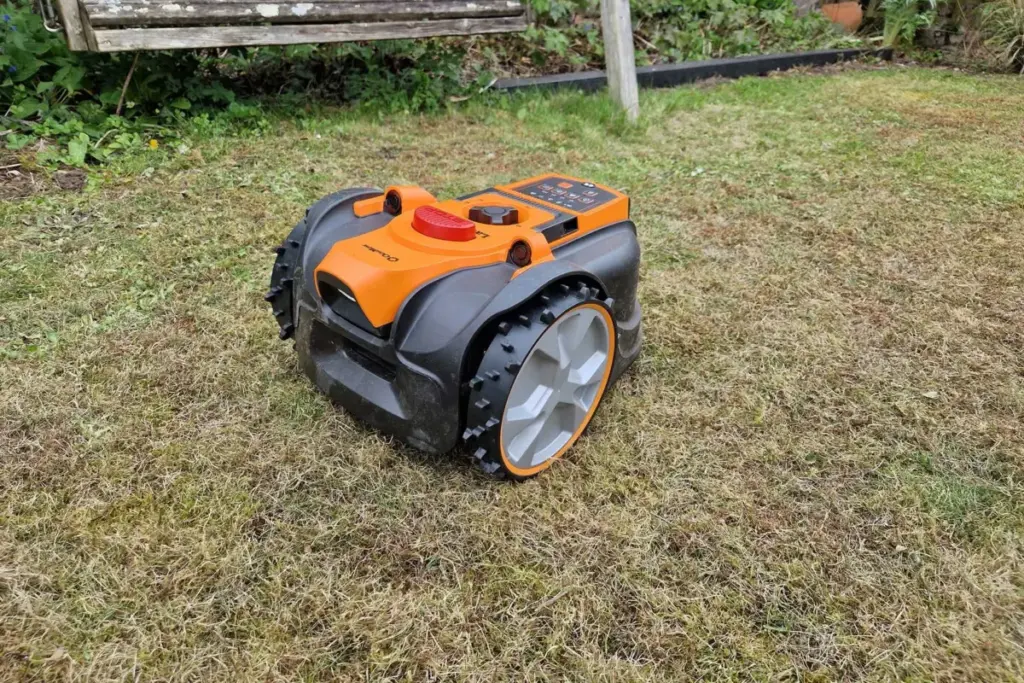
Robot lawn mowers have transitioned from novel, luxury garden gadgets into mainstream household utilities for UK homeowners. Offering a hands-free alternative to traditional petrol and corded electric models, these autonomous machines are increasingly adopted by gardeners seeking relief from physical maintenance, those with limited mobility, or simply homeowners pressed for time.

Powered by rechargeable lithium-ion batteries, modern robotic mowers navigate using various technological systems. While legacy models traditionally relied on perimeter boundary wires buried in the lawn, contemporary innovations range from AI-enhanced cameras and RTK GPS positioning to ultra-precise solid-state LiDAR. Following weeks of rigorous, real-world testing across diverse garden layouts—including complex shapes, sloped terrains, and shaded areas—industry experts have evaluated the market’s leading contenders to establish definitive performance benchmarks. This report details the top-rated robot mowers available, analyzing their navigation systems, cutting efficiencies, setup requirements, and overall value.

Detailed Chronology & Market Evolution
The journey of the robotic lawn mower reflects rapid technological advancements over the past decade. Early iterations were entirely dependent on manual perimeter wire installation—a labor-intensive process requiring trenches or surface pegging to map out boundaries and safely steer the machine away from flower beds, trees, and ponds.

As consumer demand for wire-free solutions surged, manufacturers introduced satellite-guided Real Time Kinematic (RTK) positioning and camera-based vision systems. This allowed mowers to map lawns autonomously, often through smartphone-guided remote control. By 2026, the integration of solid-state LiDAR technology has pushed precision even further, enabling machines to take hundreds of thousands of laser measurements per second. This progression has effectively eliminated the need for external reference antennae or boundary wires in many advanced models, shifting the market toward plug-and-play autonomy.

Supporting Context & Metrics: Top-Rated Robot Mowers Compared
To provide a comprehensive view of the current market, testing panels evaluated mowers across various price tiers, categorizing them by budget constraints, lawn sizes, and navigational capabilities.

Best Budget & Entry-Level Mowers (Under £400)
- LawnMaster OcuMow 16
- RRP: £299.99 | Rating: 4.5/5
- System: Camera & sensors | Max Lawn: 150m² | Max Slope: 19°
- Overview: Operating on a "drop and mow" principle, this basic machine avoids complex apps and docking stations. Users manually swap out a 24V removable battery (compatible with other LawnMaster tools). It relies on optical and ultrasonic sensors to detect well-defined borders like fences or raised pathways.
- Lawnmaster OcuMow AMB16-400
- RRP: £399.99 | Rating: 4.5/5
- System: Camera & sensors | Max Lawn: 400m² | Max Slope: 19°
- Overview: The larger sibling to the OcuMow 16, this model introduces an automated charging station while retaining app-free simplicity. It includes five meters of magnetic "no-go" strip and an automated 60-minute self-charging cycle.
Best Mid-Range & Medium Lawns (£400 – £1,000)
- Ecovacs GOAT O600
- RRP: £449 | Rating: 4.5/5
- System: RTK Navigation | Max Lawn: 600m² | Max Slope: 24°
- Overview: Combining an RTK positioning station with a compact 40cm chassis, the O600 navigates narrow 70cm pathways. It features parallel-line cutting patterns that shift weekly to protect turf health, alongside an IPX6 water-resistance rating.
- WORX Landroid Vision Cloud WR303E
- RRP: £699.99 | Rating: 4.5/5
- System: GPS & cameras | Max Lawn: 300m² | Max Slope: 17°
- Overview: Utilizing AI-enhanced cameras and satellite data, the WR303E builds automated boundary maps without requiring a separate garden antenna. Its modular battery system utilizes standard WORX power tool batteries.
- Segway Navimow i208 LiDAR
- RRP: £1,099 | Rating: 4.5/5
- System: GPS, LiDAR & camera | Max Lawn: 800m² | Max Slope: 24°
- Overview: Incorporating solid-state LiDAR alongside AI vision software, this model maps complex medium-to-large gardens almost instantly. It operates at a whisper-quiet 59dB, making it ideal for night schedules.
Premium & High-Performance Mowers (£1,000+)
- Mammotion Luba mini 2 AWD 1000
- RRP: £1,399 | Rating: 5/5
- System: GPS & camera | Max Lawn: 1,000m² | Max Slope: 38°
- Overview: Engineered for hilly, undulating landscapes, the Luba mini 2 features true all-wheel drive, a dedicated side-cutting disc for sharp borders, and an ability to scale steep 38° gradients effortlessly.
- Stihl iMOW 5
- RRP: £1,729 | Rating: 4.8/5
- System: Boundary & guide wires | Max Lawn: 500m² | Max Slope: 22°
- Overview: A traditional boundary-wire system backed by Stihl’s robust engineering. It features an adjustable rain sensor, a generous 5-year warranty, and exceptional cutting performance on overgrown turf.
Official Guidelines & Testing Criteria
The expert panels from leading horticultural publications enforce strict parameters when testing and rating robotic lawn care equipment. Every unit undergoes weeks of continuous operation to monitor battery degradation, cutting consistency, and navigation reliability under duress.

Starting in 2026, the "Best Buy" badge is exclusively reserved for models achieving a score of 4.5 out of 5 or higher. Evaluation metrics weigh four core pillars equally:

- Setup & Ease of Use: Assessing app interfaces, mapping efficiency, and installation friction.
- Cutting Performance: Evaluating blade efficiency, turf finish, and border management.
- Extra Features: Factoring in obstacle avoidance, rain sensors, anti-theft alarms, and connectivity options.
- Value for Money: Balancing upfront RRP against longevity, warranty terms, and ongoing operational costs.
Future Outlook & Consumer Advice
As artificial intelligence and spatial mapping continue to mature, the future of automated lawn care points toward total autonomy with minimal human intervention. Upcoming iterations are projected to feature deeper smart-home integration, solar-assisted recharging docks, and enhanced biodiversity protections—such as automatic camera pauses to safeguard ground-nesting wildlife.

Key Considerations Before Purchasing:
- Garden Topography: Uneven lawns, ruts, and steep inclines (exceeding 20°) generally require all-wheel-drive systems (such as the Mammotion Luba series) rather than standard rear-wheel setups.
- Layout Complexity: Narrow corridors and dense tree canopies can weaken satellite and GPS signals, necessitating models equipped with LiDAR or local VSLAM optical cameras.
- Power and Infrastructure: While wire-free models eliminate the physical labor of burying cables, dock stations still require a nearby outdoor electrical socket sheltered from direct sunlight.
By matching specific garden dimensions and physical layouts with the appropriate navigation technology, homeowners can successfully eliminate the chore of manual mowing while securing a healthy, pristine lawn year-round.



