The global transition toward a low-carbon economy often invites a simplistic narrative: massive renewable energy farms, ubiquitous electric vehicles (EVs), and advanced grid-scale battery installations dominate the collective imagination. However, the sprawling exhibition floors of IFA Berlin—Europe’s premier consumer electronics and home appliance trade show—reveal a far more granular, nuanced, and distributed reality.
As the curtains closed on this year’s conference, a defining consensus emerged: sustainability in the modern era is no longer a monolithic pursuit or a novel marketing differentiator. Instead, it has matured into a complex, multifaceted ecosystem encompassing material science, thermodynamic engineering, circular supply chains, repair economies, and localized climate adaptation strategies.
For industry observers accustomed to the tech sector’s hyper-focus on software-driven optimization and energy efficiency metrics, IFA Berlin offered a reality check. In many European markets, foundational clean technologies—such as residential heat pumps and high-output induction cooktops—are no longer emerging innovations; they are baseline consumer expectations. Consequently, manufacturers are pivoting toward secondary and tertiary frontiers of decarbonization. These include reducing the embodied carbon of heavy production materials, redesigning packaging loops, phasing out climate-damaging refrigerants, and introducing localized heating paradigms that challenge the very definition of whole-home climate control.
This comprehensive report explores the diverse technological approaches, manufacturing pivots, and strategic philosophies showcased by major global brands and agile regional players at IFA Berlin. By examining innovations ranging from propane-based heat pumps to modular repair ecosystems and localized micro-cooling, we uncover how the consumer technology sector is charting a pragmatic course toward comprehensive sustainability.
Detailed Chronology & Technological Breakdown: Day-by-Day Innovations at IFA
Navigating the vast exhibition halls of the Messe Berlin requires an appreciation for how different sectors are approaching the shared challenge of environmental stewardship. Over the course of the multi-day event, several standout exhibits mapped out the current frontier of sustainable home and consumer technology.
Material Efficiency and Circularity: The Bosch and Ferre Showcases
While much of the climate discourse centers on operational energy consumption—how much electricity a device draws while plugged into the wall—the physical manufacturing footprint of consumer goods demands equal scrutiny. Home appliances are inherently heavy, resource-intensive, and material-heavy.
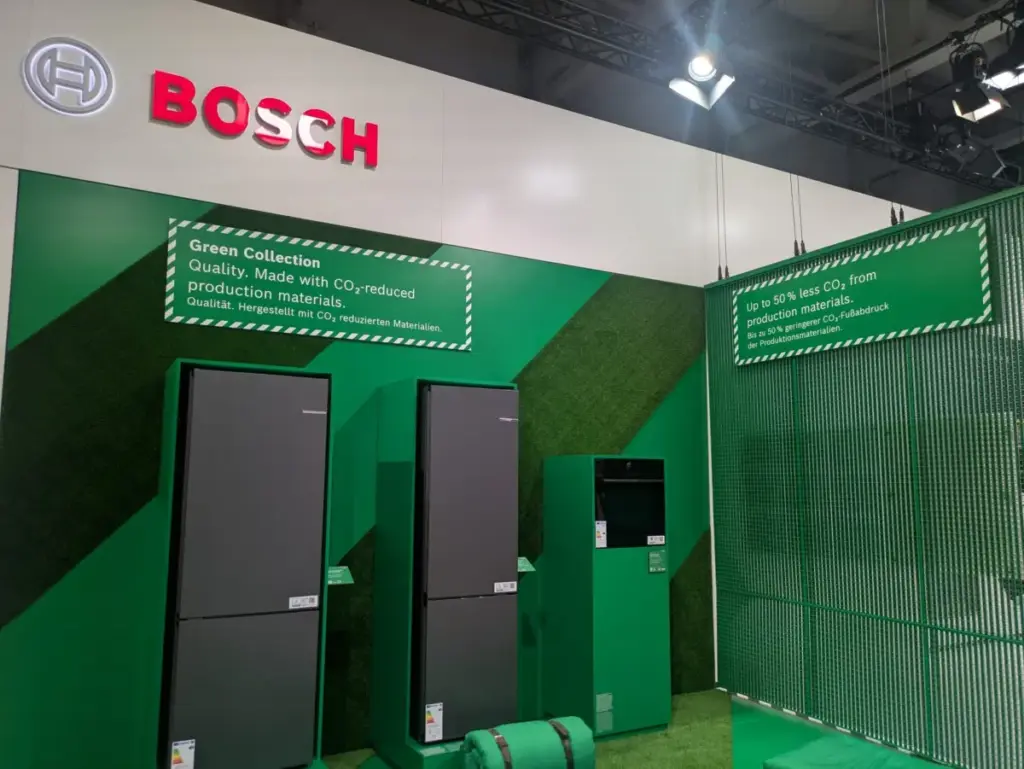
At Bosch, the spotlight was fixed firmly on the company’s newly minted Green Collection. By rethinking raw material sourcing and manufacturing protocols, Bosch successfully engineered a line of kitchen appliances that achieves up to a 50% reduction in carbon dioxide emissions derived directly from production materials. Beyond the lifecycle carbon math, the collection featured a striking matte black aesthetic, signaling that sustainable design no longer needs to compromise on modern luxury or visual distinctiveness.
Nearby, Turkish appliance manufacturer Ferre zeroed in on a less glamorous yet critical vector of waste: outbound supply chain packaging. By dedicating significant exhibition space to packaging solutions engineered entirely from recycled materials, Ferre underscored the industry-wide push to eliminate single-use Styrofoam and virgin cardboard from the logistics chain.
Manufacturing Scale and High-Output Electrification: Gorenje
Operating as the fourth-largest appliance manufacturer in Europe, Slovenia-based Gorenje (a subsidiary of Hisense) mounted one of the most comprehensive displays of sustainability at the entire conference. Gorenje’s exhibition spanned every phase of the product lifecycle, from raw material sourcing and Slovenian factory manufacturing methods to operational energy efficiency and circular packaging.
During discussions with Gorenje’s product development leadership, a clear strategic philosophy emerged: the most effective way to foster home sustainability is to elevate the performance and appeal of electrified cooking and heating alternatives. Rather than positioning induction technology as a niche eco-friendly alternative, Gorenje showcased high-output induction cooktops and specialized electric pizza ovens designed to outperform legacy gas appliances. Because Gorenje acts as an original design manufacturer (ODM) for numerous prominent European brands, the innovations showcased at their booth quietly underpin millions of households across the continent.
The Refrigerant Revolution: Midea and Chigo’s R290 Transition
Perhaps the most significant industrial shift visible on the IFA exhibition floor was the aggressive industry-wide migration toward climate-friendly refrigerants. For decades, residential air conditioners and heat pumps relied on hydrofluorocarbons (HFCs)—potent greenhouse gases with global warming potentials thousands of times higher than carbon dioxide.
At the Midea pavilion, the complete pivot to R290 refrigerant (propane) took center stage. While Midea heavily marketed this transition, they were far from alone; the entire European HVAC sector is rapidly abandoning legacy synthetic refrigerants in favor of natural alternatives like R290, driven by tightening European Union environmental regulations.
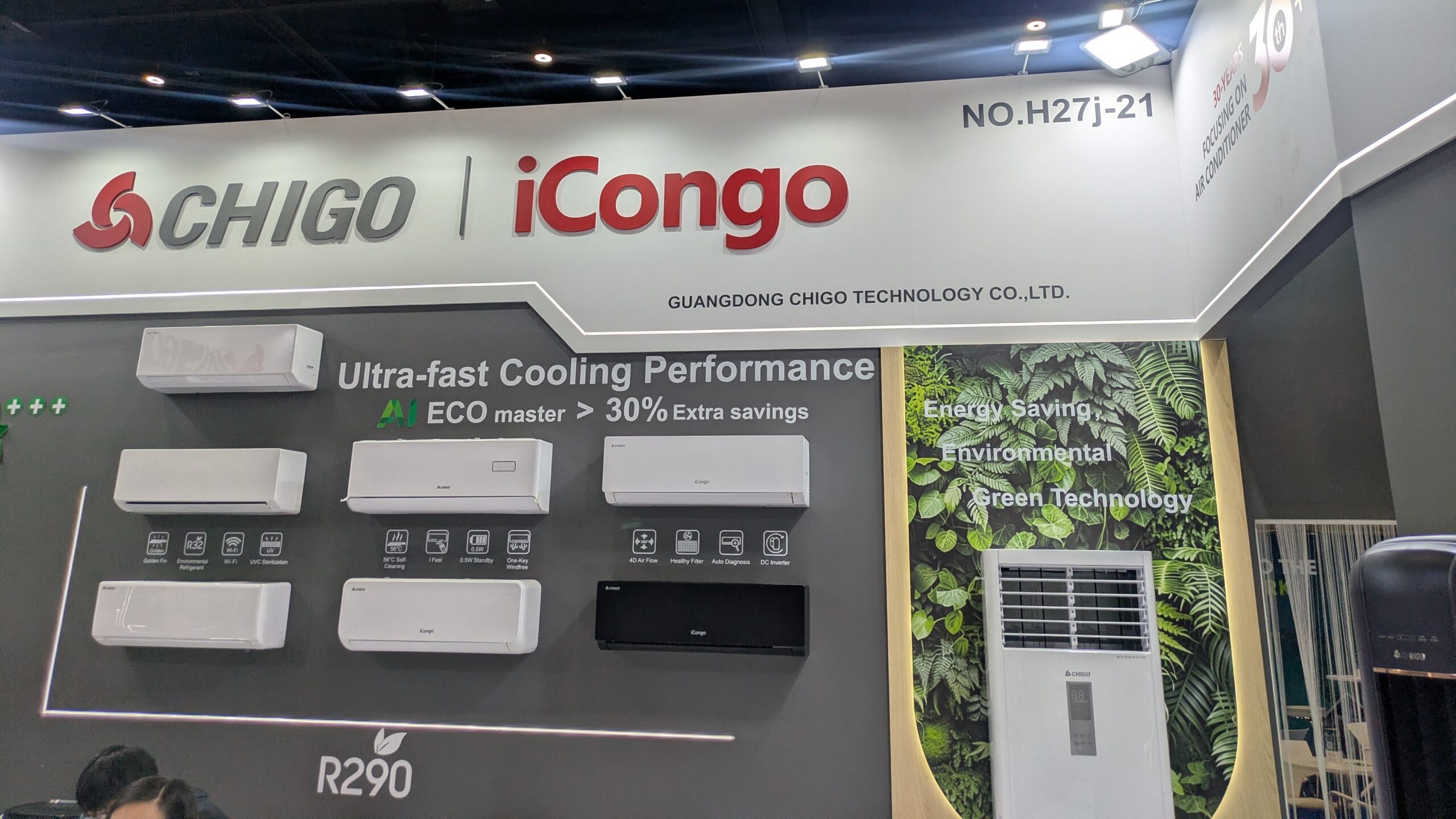
Similarly, Chigo/iCongo showcased a suite of R290 air conditioning units paired with bold efficiency claims. The brand highlighted its integration of "AI-powered dynamic adjustments," claiming up to a 30% reduction in energy consumption. While such aggressive efficiency metrics invariably invite rigorous third-party field testing, the marriage of natural refrigerants and intelligent machine-learning control systems represents the clear trajectory of modern climate control engineering.
While heat pumps dominated the discussion on efficient space conditioning, alternative heating philosophies also found a voice. Eurom displayed an array of infrared home heating panels, offering an intriguing counter-narrative to traditional convective heating.
From a pure coefficient of performance (COP) perspective, infrared heaters cannot match a modern heat pump on a per-BTU basis. However, Eurom’s engineering concept relies on a different principle: radiant transfer. Much like the sun warms the earth directly through electromagnetic radiation without needing to heat the intervening atmosphere, infrared panels can invisibly project long-wavelength heat directly onto surfaces and occupants.
In practice, this means an open-concept living space does not need to be uniformly heated to comfortable human temperatures. By focusing radiant heat precisely on active seating areas, homeowners can maintain lower ambient air temperatures throughout the rest of the house, yielding net energy savings through zone-targeted comfort. When integrated with occupancy sensors and smart-home algorithms, the potential for targeted thermal management becomes even more pronounced.
Supporting Context & Metrics: Micro-Cooling, Food Waste, and Repair Economies
Beyond major heavy-duty appliances, IFA Berlin highlighted a vibrant ecosystem of smaller-scale technologies designed to address climate resilience, resource recovery, and product longevity.
The Rise of Micro-Cooling: Gforest’s Evaporative Innovations
As global temperatures rise, intense heatwaves are increasingly testing European infrastructure. Unlike North America or parts of East Asia, residential air conditioning is far from ubiquitous in many European nations due to historic climate norms, building architecture, and strict urban zoning laws.
Gforest (Ningbo Green Forest Electronic Technology) addressed this urban vulnerability through two distinct product lines:
Advanced Food Recyclers: Utilizing high-efficiency internal heaters, these countertop appliances dry and break down organic food waste into nutrient-dense soil amendments for home gardens, diverting organic mass away from methane-producing municipal landfills.
Evaporative Mister Fans: Recognizing that millions of European households cannot easily install traditional split-system air conditioners, Gforest displayed both standalone misting fans and an ingenious retrofit prototype—an adhesive puck designed to mount to the center hub of an existing standard household fan, connected via a simple hose to a compact water tank.
This low-tech, high-impact solution allows consumers to achieve evaporative cooling relief without purchasing energy-intensive refrigeration compressors or undertaking invasive home renovations. It serves as a potent reminder that effective clean technology does not always require high-cost complexity.
Material Recovery: REEDEE’s Circular Screen Protectors
In the consumer electronics accessories sector, REEDEE showcased commercial advancements in recycled thermoplastic polyurethane (TPU) and polyethylene terephthalate (PET) plastic films configured for mobile device screen protection. Despite widespread consumer participation in municipal recycling programs, millions of tons of thin-film plastics ultimately end up in landfills or incineration facilities. By establishing industrial closed-loop pathways for TPU and PET recovery, manufacturers can dramatically shrink the virgin petrochemical footprint of everyday mobile accessories.
The Right to Repair: Repartly’s Regional Infrastructure
Hardware longevity remains the ultimate litmus test for corporate sustainability. No matter how efficiently an appliance is manufactured, discarding it prematurely squanders all the embodied energy required to build it.
In Germany, Repartly is tackling this systemic inefficiency head-on by offering an integrated digital and physical infrastructure for appliance and electronics spare parts distribution and repair services. By decentralizing repair access and drastically shortening shipping logistics for replacement components, Repartly empowers consumers and local technicians to extend the operational lifespans of complex household goods, directly combating the pervasive culture of planned obsolescence.
Official Statements & Industry Perspectives
The overarching ethos of IFA Berlin 2026 was captured effectively by the trade show’s foundational moniker: Innovation For All.
Discussions with product engineers and brand representatives across the exhibition grounds consistently underscored a departure from greenwashing toward pragmatic, systemic accountability. A senior product strategist from Gorenje noted during an interview:
"Sustainability is no longer a bullet point on a spec sheet that you highlight for a single product generation. Our customers—and regulatory frameworks across Europe—demand that resource efficiency, circular packaging, and high-performance electrification are baked into the very DNA of our manufacturing pipeline. If an electrified appliance cannot match or exceed the performance of the legacy fossil-fuel alternative, the consumer simply will not adopt it. True sustainability begins with uncompromising performance."
Similarly, heating and ventilation experts emphasizing the R290 transition pointed out that regulatory compliance is rapidly aligning with consumer conscience. The phase-down of synthetic HFCs is no longer an distant policy horizon; it is an active manufacturing constraint reshaping global supply chains in real time.
Future Outlook: A Fragmented Yet Impactful Horizon
As the consumer technology sector looks toward the remainder of the decade, the takeaways from IFA Berlin offer both encouragement and a clear call to action.
There is no single "silver bullet"—no single technological invention that will single-handedly resolve the climate crisis or eliminate the resource pressures facing global manufacturing. Instead, the path forward is characterized by a sprawling, highly diverse mosaic of incremental and disruptive interventions:
Decarbonizing Manufacturing: Reducing embodied carbon in heavy materials (as demonstrated by Bosch).
Closing Material Loops: Utilizing recycled polymers for consumables and packaging (Ferre and REEDEE).
Electrifying the Home: Perfecting high-output induction and natural-refrigerant heat pump architectures (Gorenje and Midea).
Enhancing Climate Resilience: Deploying localized cooling and zone-targeted heating strategies (Gforest and Eurom).
Enforcing Circularity: Building robust regional repair and spare-parts networks (Repartly).
Ultimately, IFA Berlin demonstrated that sustainable innovation belongs to everyone. Whether through major multinational investments in zero-carbon production lines or grassroots consumer choices favoring repairable goods, the transition to a sustainable future is actively being forged across every tier of the consumer economy.