From the bustling financial corridors of New York City to the peatland fires of South Sumatra, and from the courthouse steps in Valencia to the steps of the National Congress in Brasília, the global environmental movement has entered a high-stakes chapter. Over the past week, Greenpeace activists and allied citizens around the world have staged high-visibility protests, confronted corporate greenwashing, and stood in solidarity with climate defenders facing unprecedented legal persecution.
This week’s snapshot of global activism underscores a grim reality: as the converging crises of climate change, biodiversity loss, and unchecked corporate exploitation accelerate, so too does the suppression of environmental dissent. Yet, far from being cowed, communities and campaigners are mobilizing with renewed vigor. Whether confronting the existential threats of deep-sea mining, challenging the carbon-heavy footprint of artificial intelligence data centers, or defending conservation land from legislative rollbacks, the message from the global grassroots is unmistakable—the world is watching, and the resistance is expanding.
Detailed Chronology: A Global Week of Action
Spain: The "Sagunto" Trial and the Giant Eye of Valencia
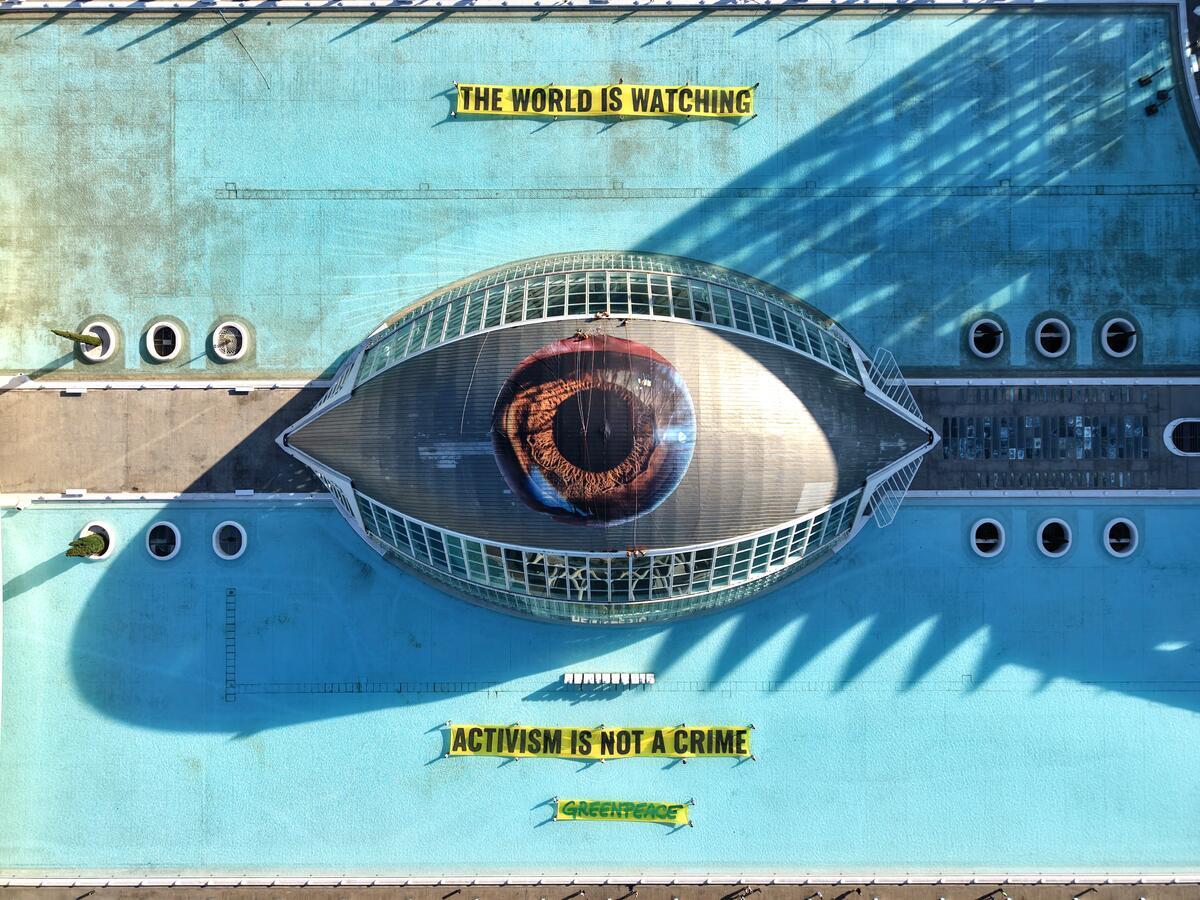
The week’s most dramatic legal showdown opened at the Ciudad de la Justicia in Valencia, Spain. In a powerful display of solidarity, over 40 Greenpeace activists gathered outside the courthouse to support 11 of their colleagues facing severe prosecution. The charges stem from a 2021 peaceful direct action targeting a fossil fuel gas tanker in the port of Sagunto.
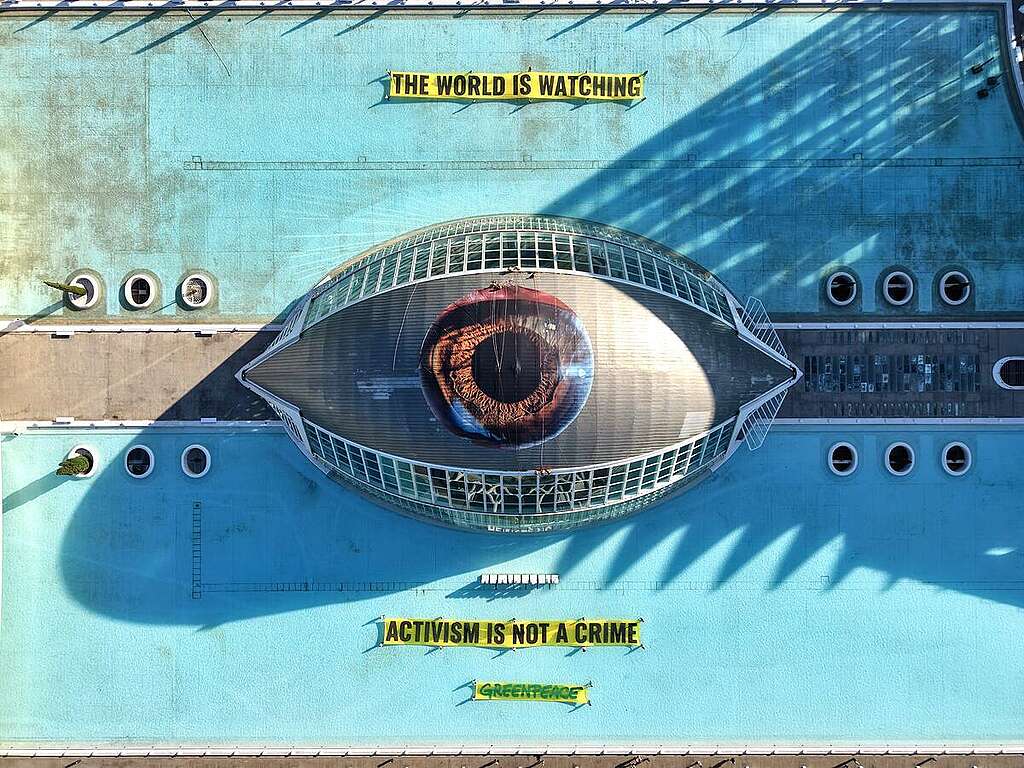
To draw international attention to the trial, Greenpeace Spain erected a staggering 530-square-meter inflatable eye at the iconic Hemisfèric in Valencia, emblazoned with the stark message: "The world is watching."
The stakes for the defendants could not be higher. The prosecution is seeking a staggering five-year prison sentence for each of the 11 activists—representing one of the harshest crackdowns and heaviest potential sentences ever levied against peaceful environmental protesters in modern European history. Legal observers and civil rights groups have raised alarms, warning that such draconian sentencing requests set a chilling precedent for civil disobedience and climate advocacy across the European Union.
Brazil: Untangling the Senate Mess in Brasília
In the political heart of Brazil, activists from Greenpeace Brazil erected a precarious "House of Cards" directly in front of the National Congress in Brasília. The striking visual intervention was designed to spotlight the critical importance of the upcoming Senate votes ahead of the 2026 General Elections.
Part of the ongoing "Desembaralho do Senado" (Untangling the Senate Mess) project under the broader #YourVoteMatters initiative, the action aimed to wake the public up to how legislative corruption and short-sighted political maneuvering destabilize environmental protections. By visualizing the fragile and easily toppled nature of current political alliances regarding ecological legislation, Greenpeace sought to empower voters to demand accountability and environmental integrity from their elected representatives.
Indonesia: Documenting the Human Cost of Peatland Fires
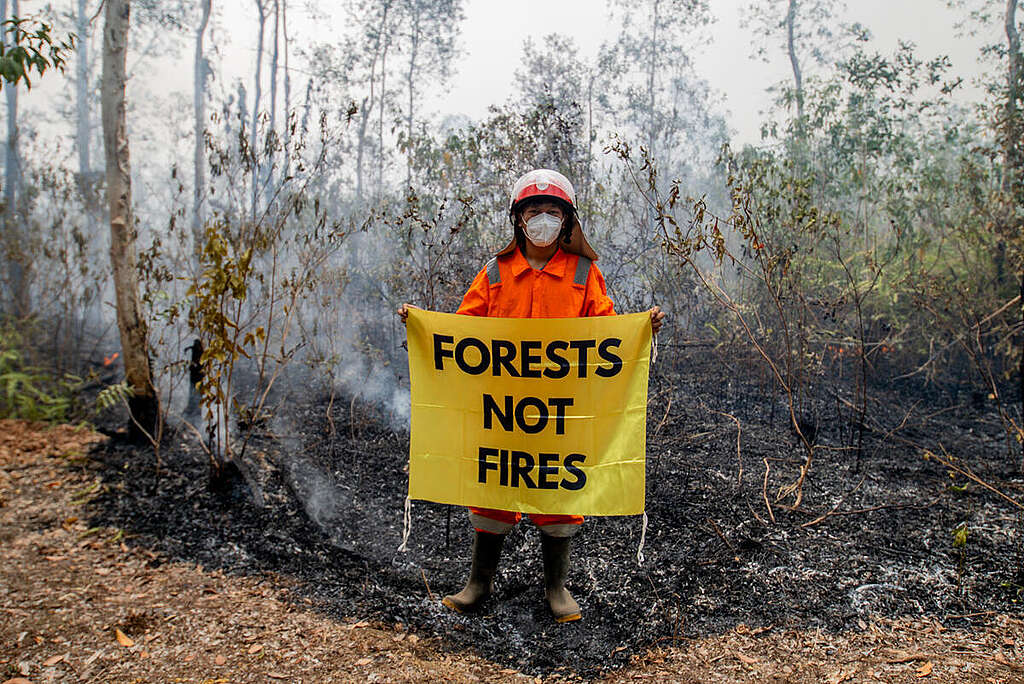
Half a world away in South Sumatra, Indonesia, the ecological frontlines are measured in smoke and ash. Ali, a member of Greenpeace Indonesia’s Fire Prevention Team, braved hazardous conditions within the PT Bintang Harapan Palma (BHP) concession area in Ogan Komering Ilir. Standing against a backdrop of degraded peatland, he unfurled a banner bearing a simple, urgent plea: "Forest Not Fires."
These deliberate or poorly managed peatland fires are a recurring catastrophe, unleashing toxic haze across regional communities, including Palembang and surrounding districts. The human toll is disproportionately borne by vulnerable populations—particularly children and the elderly—who face a surge in respiratory illnesses, most notably acute respiratory infections (ARI). These preventable blazes not only devastate critical carbon-sink ecosystems but also trap local populations in a recurring public health crisis.
New Zealand/Aotearoa: Thousands March for Nature in Auckland
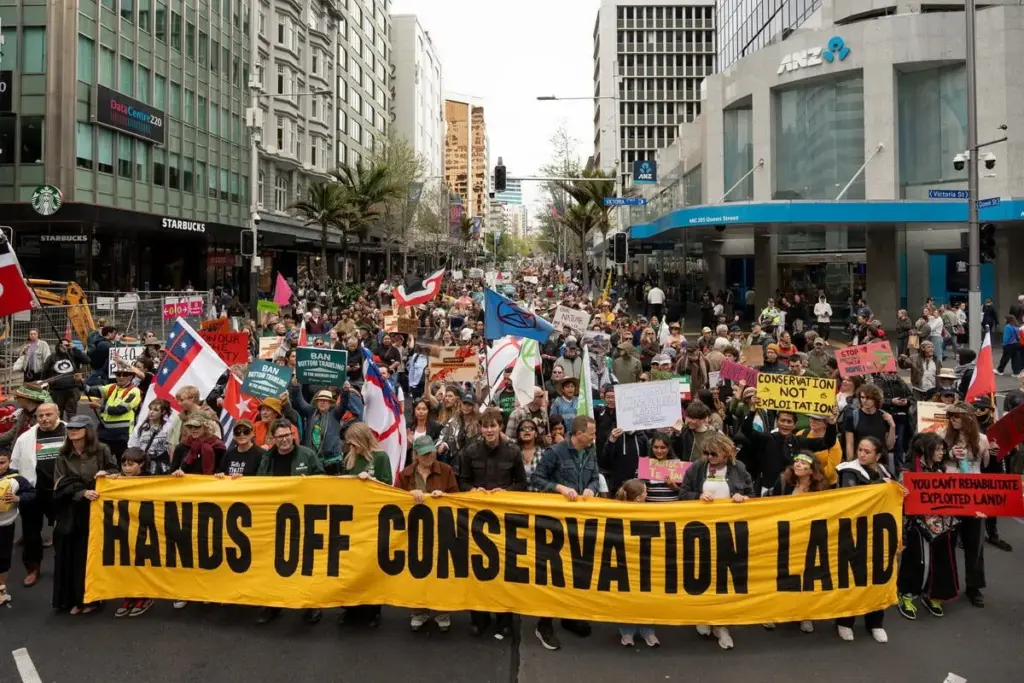
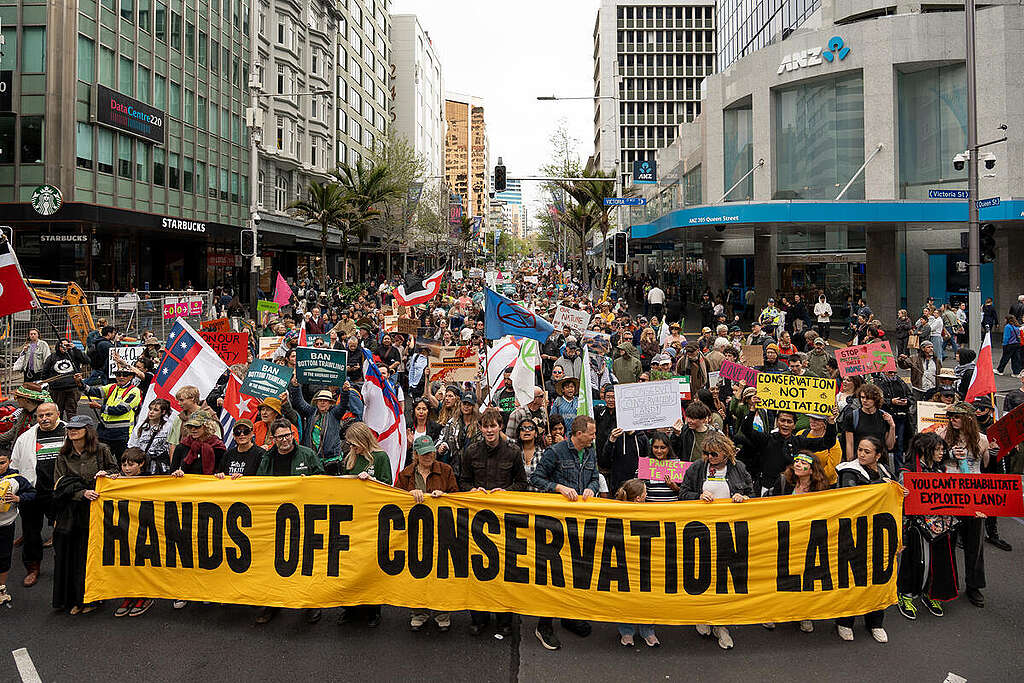
In the Southern Hemisphere, the pushback against regressive environmental policies reached a crescendo on Saturday, September 19th. Thousands of New Zealanders flooded the streets of Auckland to protest the controversial "Conservation Amendment Bill."
If passed, the legislation would dismantle longstanding protections, opening up precious public conservation land to commercial exploitation, mining, and resource extraction. The massive turnout signaled a deep-seated public fury over attempts by authorities to commodify natural heritage under the guise of economic development.
United States: New York Climate Week and the Battle for the Future
As world leaders gathered in Manhattan for the United Nations General Assembly (UNGA) and New York Climate Week 2026, Greenpeace USA launched a multi-pronged, high-impact campaign targeting the architects of the climate crisis.
The AT&T Building and Manhattan Bridge Projection: Greenpeace projected a massive, luminous message across the urban landscape right on the doorstep of the UN and major corporate hubs. The projection flashed a defining manifesto for the modern era: "Defend your Freedoms + Defend your Rights = Defend the Planet. RESIST!" The action directly called out the billionaires and autocrats profiting from ecological collapse.
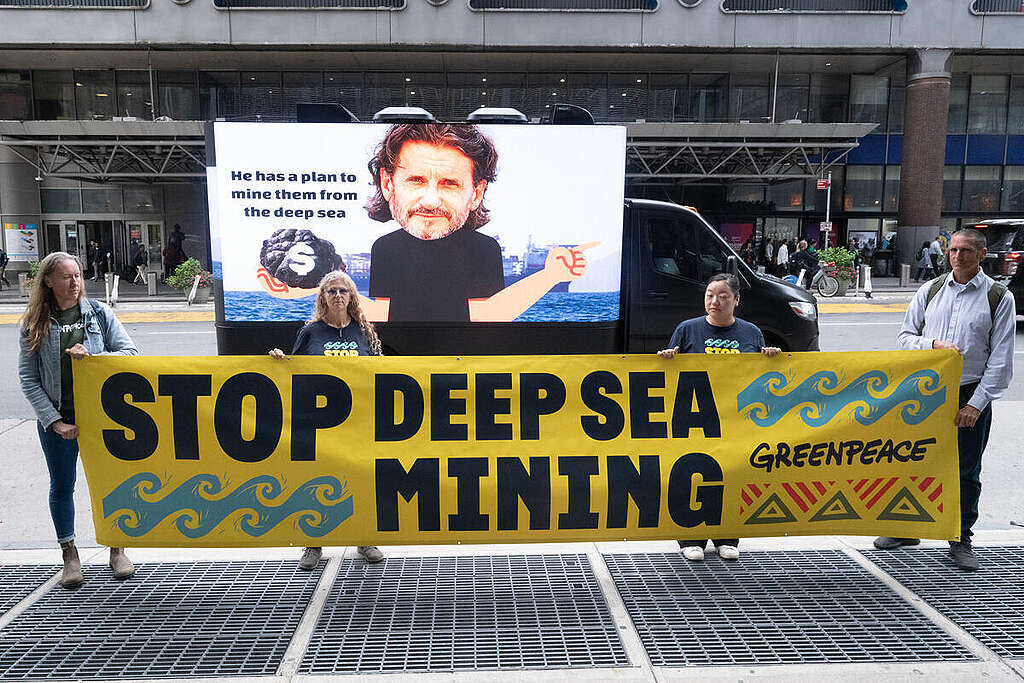
Targeting Deep-Sea Mining on Wall Street: Circling The New York Times building during the Climate Forward event, a Greenpeace digital billboard truck took aim at Gerard Barron, CEO of The Metals Company (TMC). The truck exposed Barron’s cozy ties to the Trump administration and his aggressive lobbying to bypass the International Seabed Authority. TMC is attempting to fast-track U.S. permits for deep-sea mining by framing it as a "green" climate solution—despite a complete lack of scientific consensus regarding its safety or necessity for the energy transition.
"AI Bubbles" on Wall Street: In a creative and pointed critique of the tech sector’s unchecked expansion, Greenpeace USA activists rolled out giant "AI bubbles" near Wall Street. The action named and shamed the financial institutions and technology giants pouring capital into hyperscale data centers across the United States. These energy-gorging facilities are driving a massive resurgence in fossil gas consumption, threatening local communities with increased air pollution and threatening to wipe out corporate climate targets through unprecedented surges in carbon emissions.
Supporting Context & Metrics: The Scale of the Crisis
To understand why activists are risking multi-year prison sentences and facing down corporate giants, one must examine the staggering metrics defining today’s ecological battles:
The European Legal Crackdown: The five-year prison sentences sought against the Sagunto 11 in Spain represent an escalating trend of criminalizing dissent. Across Europe, governments are increasingly deploying anti-protest laws, originally designed for counter-terrorism or public disruption, against peaceful climate activists.
The AI Carbon Footprint: The rapid proliferation of generative artificial intelligence and hyperscale data centers is projected to drive the single largest increase in corporate and municipal carbon pollution over the next decade. Analysts estimate that powering these facilities will require tens of gigawatts of new energy, much of which is currently slated to come from fracked gas rather than renewables.
Deep-Sea Fragility: The International Seabed Authority (ISA) has repeatedly warned that deep-sea mining could inflict irreversible damage on fragile benthic ecosystems, destroy uncatalogued marine species, and disrupt the ocean’s biological carbon pump. Despite this, corporate actors like TMC continue to lobby governments to exploit international legal loopholes.
Indonesian Peatlands: Peatlands store vast quantities of carbon underground. When drained and burned for plantation expansion—such as in South Sumatra—they transform from the world’s most efficient carbon sinks into explosive carbon sources, accelerating global heating while blanketing Southeast Asia in toxic haze.
Official Statements and Voices from the Ground
The urgency of the week’s actions was underscored by statements from campaigners and organizations on the frontlines:
"The prosecution of our colleagues in Spain is an attack on the very foundations of democracy. When peaceful protest against environmental destruction is met with five-year prison sentences, the state is signaling that protecting corporate polluters is more important than protecting human life and the planet. But the world is watching, and we will not be silenced."
— Greenpeace Spain Representative
Regarding the corporate exploitation of emerging technologies, a Greenpeace USA spokesperson noted:
"Big Tech and Wall Street are trying to sell us artificial intelligence as the pinnacle of human progress, while quietly building data centers powered by fossil gas that will cook our planet. We cannot code our way out of a climate crisis by fueling it from behind the scenes."
On the controversial push for deep-sea minerals, campaigners emphasized the deceptive nature of greenwashing:
"TMC and its executives are attempting a dangerous end-run around international law. Selling deep-sea mining as a climate solution is a predatory falsehood. We are risking the pristine biodiversity of the ocean floor simply to feed corporate greed under the guise of the green transition."
Future Outlook: What Lies Ahead
As September 2026 draws to a close, the events in Spain, Indonesia, Brazil, New Zealand, and the United States paint a complex picture of a global movement at a crossroads.
The Legal Battlegrounds: The outcome of the Sagunto trial in Valencia will serve as a bellwether for civil liberties in Europe. A conviction with severe sentencing will likely galvanize further international solidarity protests, while an acquittal or reduced sentence could provide a vital legal defense shield for future activists.
Electoral Reckoning in the Global South: In Brazil, campaigns like #YourVoteMatters will continue to ramp up pressure as the 2026 elections approach, ensuring that voters connect the dots between legislative corruption, land degradation, and the climate crisis.
The Tech and Mining Front: Greenpeace’s focus on the carbon footprint of AI and the existential threat of deep-sea mining marks a strategic shift toward holding emerging industries accountable before their destructive business models become institutionalized.
For more than half a century, Greenpeace has pioneered photo activism, bearing witness to environmental injustice through the lens of a camera and the bodies of peaceful protesters. As these diverse struggles demonstrate, the fight for the planet’s future is not confined to a single courtroom, parliament, or forest—it is a truly global ecosystem of resistance that refuses to look away.
To explore more images, videos, and investigative reports from Greenpeace’s global actions, visit the official Greenpeace Media Library.