

Executive Overview
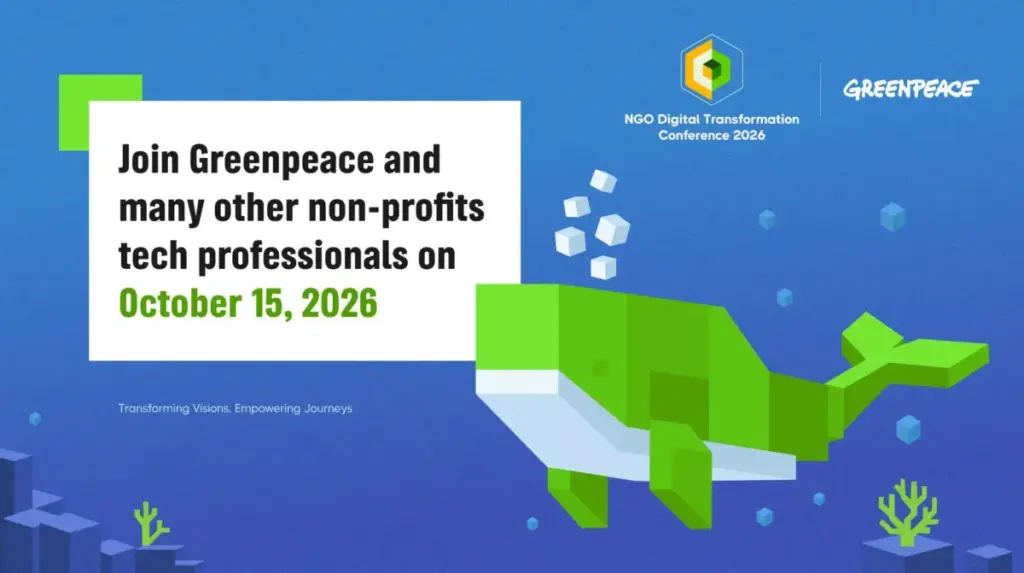
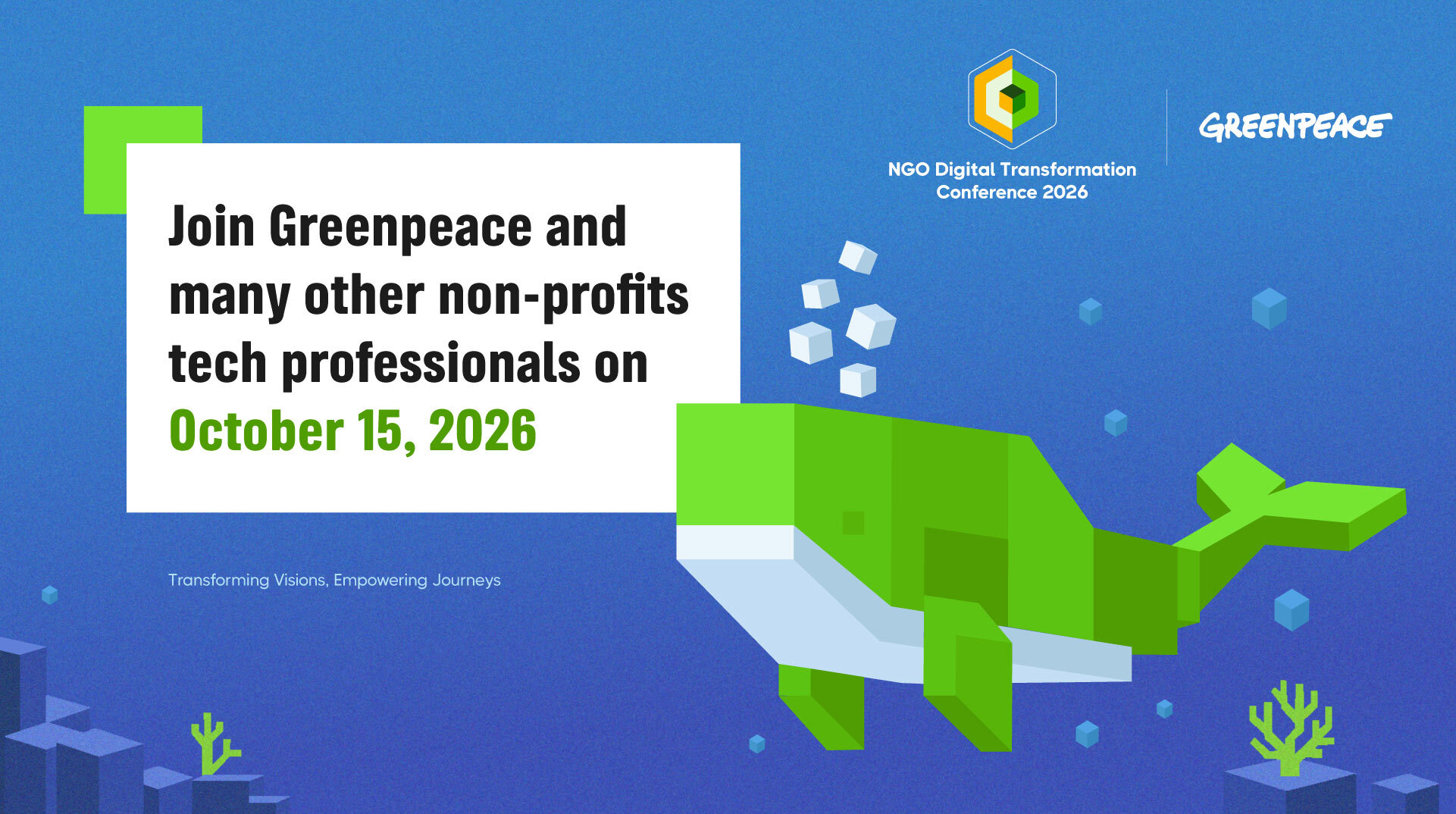
As the global sociopolitical landscape grows increasingly volatile and technologically complex, values-based non-profit organizations find themselves standing at a dangerous crossroad. On Thursday, October 15, 2026, Greenpeace International—in collaboration with civil society digital rights organization Tactical Tech—will host its third annual digital transformation conference. Entitled “Leveraging our collective power in times of democratic crisis, AI and misinformation,” this pivotal online gathering aims to unite voices from international development, academia, and civil society.
The core mission of the 2026 conference transcends simple technology adoption. For years, non-profits have rushed to integrate digital tools into their operations to streamline fundraising, expand advocacy reach, and connect with supporters across the globe. However, this race for digital modernization has introduced critical vulnerabilities. Organizations now grapple with stark dilemmas regarding runaway cybersecurity costs, the ethical footprint of commercial software, and the profound environmental degradation driven by the explosive growth of artificial intelligence (AI) and data centers.
Simultaneously, the non-profit sector is navigating a hostile external environment defined by surging right-wing populism, authoritarian crackdowns, state-sponsored misinformation campaigns, and systematic restrictions on public assembly and free speech. Against this backdrop, the upcoming conference offers a vital, secure arena for civil society technologists, strategists, and campaigners to dissect these intersecting crises. By fostering cross-sector collaboration, the event seeks to chart a sustainable technological path forward—one that prioritizes human rights, ecological health, and independence from Big Tech monopolies.
Detailed Chronology: The Evolution of Greenpeace’s Digital Transformation Initiative
The journey toward the 2026 conference has been shaped by a progressive realization within the global non-profit community: technology is no longer a neutral utility, but an ideological and environmental battleground.
The 2024 Genesis: Laying the Foundations
The initiative began in 2024 when Greenpeace hosted its inaugural digital transformation conference for non-profits. Emerging from the post-pandemic acceleration of remote work and digital-first campaigning, the 2024 event focused heavily on operational resilience. Non-profits shared tactical approaches to migrating infrastructure, safeguarding internal databases, and managing distributed remote workforces. However, even in its infancy, the conference underscored a deep disparity in digital capabilities across the civil society ecosystem. While well-funded international NGOs (INGOs) could readily invest in robust cloud architectures and proprietary security suites, smaller grassroots organizations struggled with prohibitive costs and steep learning curves, exposing systemic inequities within the global movement for social and environmental justice.
The 2025 Deepening: Confronting the Corporate Tech Hegemony
Building upon these initial discussions, the 2025 conference shifted from basic infrastructure to structural dependency. As generative AI exploded onto the global stage and tech conglomerates consolidated control over critical digital infrastructure, non-profits faced mounting pressure to integrate tools whose ethical origins they could neither verify nor control. Discussions in 2025 centered on the perils of vendor lock-in, data privacy violations, and the hidden ecological costs of digital expansion. Organizations began asking harder questions: How can we campaign against environmental destruction while relying on data centers powered by fossil fuels? The 2025 event cemented the need for a collaborative, values-driven alternative to the commercial tech status quo, laying the ideological groundwork for the expansive agenda planned for 2026.
The 2026 Paradigm: Confronting the Democratic Crisis
The upcoming October 15, 2026 conference arrives at a moment of acute global crisis. The convergence of generative AI, hyper-targeted misinformation, and the rollback of democratic norms across multiple continents has turned digital spaces into active conflict zones. This year’s programme is explicitly designed to address how values-based organizations can resist digital authoritarianism. By partnering with Tactical Tech—an organization globally renowned for investigating the impacts of technology on society—Greenpeace has elevated the 2026 conference into a comprehensive strategy summit. Participants will not only analyze threats but actively contribute to a collaborative research report detailing the current state of technology use across the non-profit sector, ensuring that the insights generated during the online sessions translate into long-term, actionable policy.
Supporting Context & Metrics: The Intersecting Crises of AI, Climate, and Democracy
To fully understand the urgency driving the 2026 Greenpeace and Tactical Tech conference, one must examine the multifaceted pressures currently bearing down on civil society organizations.
[The Non-Profit Tech Trilemma in 2026]
 ├── 1. Environmental & Ethical Toll of AI (Massive energy footprints, data center expansion)
 ├── 2. Democratic Erosion & Misinformation (State-backed campaigns, right-wing populism, speech restrictions)
 └── 3. Big Tech Dependency & Cost (Proprietary software lock-in, escalating cybersecurity burdens)
1. The Environmental and Ethical Toll of AI
The expansion of artificial intelligence is frequently marketed as an immaterial, cloud-based revolution. In reality, AI is exceptionally material and resource-intensive. Modern large language models and machine learning systems require vast computational arrays housed in sprawling data centers. These facilities consume immense volumes of electricity—frequently straining local power grids and driving up carbon emissions—alongside millions of gallons of water for cooling.
For environmental organizations like Greenpeace, this creates a profound ethical contradiction. Utilizing AI tools provided by Big Tech companies to model climate catastrophe or optimize fundraising campaigns directly supports an industry whose underlying infrastructure accelerates environmental degradation. Furthermore, the ethical concerns surrounding AI extend to labor exploitation in data-labeling supply chains and the widespread violation of copyright and data privacy laws.
2. Misinformation, Populism, and Democratic Backsliding
Democracy is retreating globally. Right-wing populism and fascism are on the march, accompanied by sophisticated, state-aligned and corporate-funded misinformation campaigns designed to erode public trust in science, journalism, and civil society activism.
Non-profits that rely on digital platforms to organize protests, disseminate investigative findings, and mobilize supporters find themselves operating on playgrounds rigged against them. Social media algorithms—optimized for engagement rather than truth—frequently amplify polarizing, hateful, or misleading content while suppressing human rights reporting and climate advocacy. Moreover, digital surveillance tools are increasingly weaponized by authoritarian regimes to track activists, infiltrate secure communications, and criminalize dissent.
3. The Financial and Cybersecurity Squeeze
While digital threats multiply, the financial sustainability of non-profits remains precarious. Values-based organizations operate on tight budgets, making them prime targets for sophisticated cyberattacks, ransomware, and state-sponsored espionage. Yet, investing in enterprise-grade cybersecurity often forces organizations to divert critical funds away from their core programmatic work—be it protecting endangered ecosystems, providing humanitarian relief, or defending human rights.
Compounding this issue is the reality of software commodification. Non-profits are frequently forced into long-term dependencies on proprietary platforms owned by a handful of monopolistic tech giants. These platforms dictate pricing, alter terms of service unilaterally, and retain ownership over sensitive supporter data, leaving civil society perpetually vulnerable to corporate whims.
Official Statements and Institutional Collaboration
The urgency of the 2026 conference is mirrored in the caliber of its organizers and contributors. Bringing together diverse perspectives from international development, human rights, and academic research, the event reflects a unified front across civil society.
The Greenpeace Leadership Perspective
According to Luca Tiralongo, Head of Digital Transformation at Greenpeace International, the challenges facing the non-profit sector cannot be resolved through isolated technical fixes. "The question is not simply how to adopt more technology," Tiralongo emphasizes, "but how to choose tools that serve people and the planet, protect rights, and reduce dependence on powerful tech companies."
This sentiment is echoed by Maria Julia van Boekel Cheola Torres, Digital Transformation Analyst at Greenpeace International, who points to the necessity of structural adaptability. As digital tools evolve at a breakneck pace, internal operational strategies must align with the ethical commitments of values-based organizations.
Priscilla Chanda Chomba, Chief Technology Officer at Greenpeace International, stresses that cybersecurity and digital sovereignty must be treated as fundamental pillars of organizational safety. In an era where civil society faces digital surveillance and aggressive state interference, safeguarding organizational networks is synonymous with protecting the communities they serve.
A Broad Coalition of Minds
The 2026 conference benefits from a remarkably diverse roster of speakers, moderators, and partner organizations. Collaborating alongside Greenpeace and Tactical Tech are prominent institutions spanning global humanitarian aid, human rights advocacy, and academic research, including:
- Amnesty International (Human rights monitoring and digital defense)
- Tactical Tech (Civil society digital investigations and capacity building)
- The Norwegian Refugee Council (Humanitarian response and data security in crisis zones)
- 350.org (Global grassroots climate mobilization)
- Aldeias SOS Portugal (Social development and child welfare)
- The Bertelsmann Foundation (Democratic governance and policy research)
- NetHope (Technology collaboration for the global humanitarian sector)
- Data Tank and Loughborough University (Academic research, data governance, and critical technology studies)
This cross-disciplinary participation ensures that the conference will not exist in an echo chamber. By bridging the gap between academic theory, technical execution, and frontline grassroots campaigning, the event aims to formulate holistic strategies that address both immediate operational vulnerabilities and long-term systemic threats.
Future Outlook: Building a Resilient, Independent Civil Society
As the digital landscape of the late 2020s continues to shift under the weight of generative AI, climate crisis, and democratic decay, events like the Greenpeace and Tactical Tech conference are no longer optional luxuries—they are operational necessities.
The upcoming sessions on October 15, 2026, are designed to lay the groundwork for a more resilient, sovereign civil society. Key outcomes anticipated from the conference include:
- Enhanced Digital Sovereignty: Developing frameworks that help non-profits migrate away from extractive, commercial software ecosystems toward open-source, community-governed alternatives.
- Collaborative Security Protocols: Establishing trusted channels for civil society organizations to share threat intelligence, defend against targeted cyberattacks, and protect vulnerable whistleblowers and activists.
- Actionable Research Output: Utilizing insights gathered during the interactive workshops to draft a comprehensive report on non-profit technology usage, providing a practical blueprint for organizations seeking to modernize ethically.
- Strengthened Solidarity Networks: Fostering long-term alliances between environmental campaigners, human rights defenders, humanitarian workers, and academic researchers to confront systemic technological threats collectively.
In an era where technology is frequently deployed to divide, surveil, and exploit, the 2026 Digital Transformation Conference serves as a powerful reminder that civil society retains the capacity to chart an alternative course. By pooling resources, sharing expertise, and committing to unyielding ethical standards, values-based organizations can harness the power of technology in service of people and the planet—ensuring that the digital age strengthens democracy rather than dismantling it.
Registration for the online conference on Thursday, 15 October 2026, is currently open. In keeping with the event’s commitment to maintaining a secure, collaborative environment for civil society actors, participants are required to provide an organizational email address or verified evidence of their affiliation with a values-based non-profit, academic, or civil society institution.



