

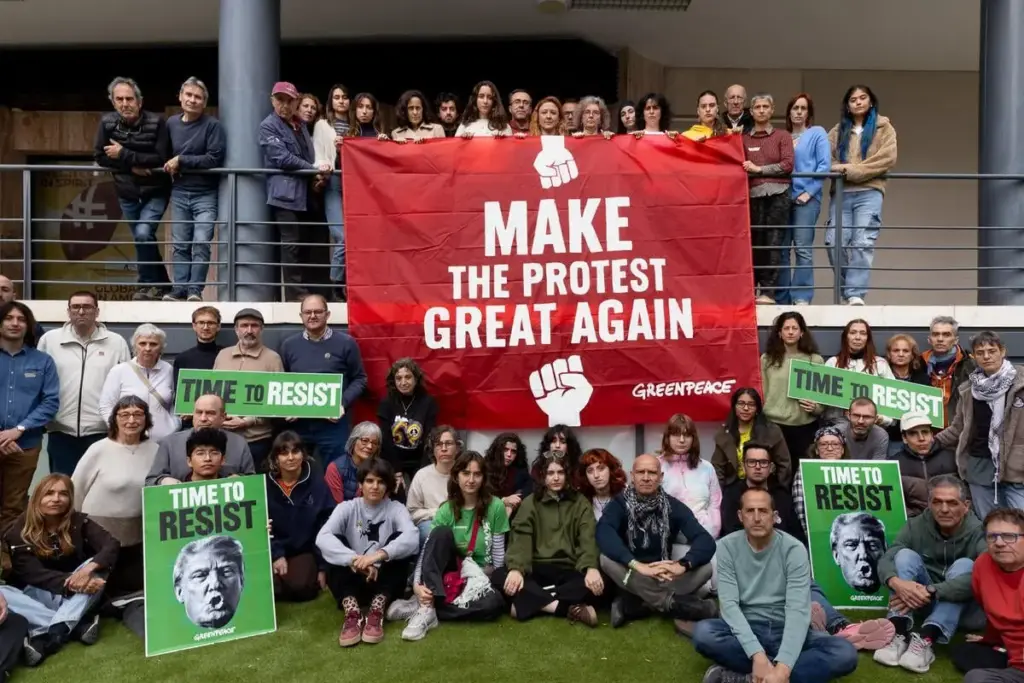
VALENCIA, SPAIN — In a resounding victory for civil liberties and the global environmental movement, a Spanish court has unequivocally dismissed aggravated public disorder charges against 11 Greenpeace activists. The defendants had faced an unprecedented legal onslaught following a high-profile 2021 peaceful protest against a massive fossil gas shipment at the Port of Sagunto.
The ruling, handed down on October 6, 2026, by a single judge in Valencia, serves as a vital judicial check against the growing international trend of criminalizing civil disobedience. Initially, the Public Prosecutor’s Office sought a staggering five-year prison sentence—one of the harshest penalties ever demanded in Europe for environmental activism—before reducing it to two and a half years at trial. Ultimately, the court rejected the prosecution’s narrative, finding a complete lack of evidence indicating that the activists had engaged in violence, intimidation, or any action capable of disrupting the public peace.
As governments and corporate entities increasingly weaponize legal systems to silence climate dissent, the Sagunto ruling establishes a critical precedent protecting the fundamental right to peaceful protest.
Executive Overview: The High Stakes of the Sagunto Trial
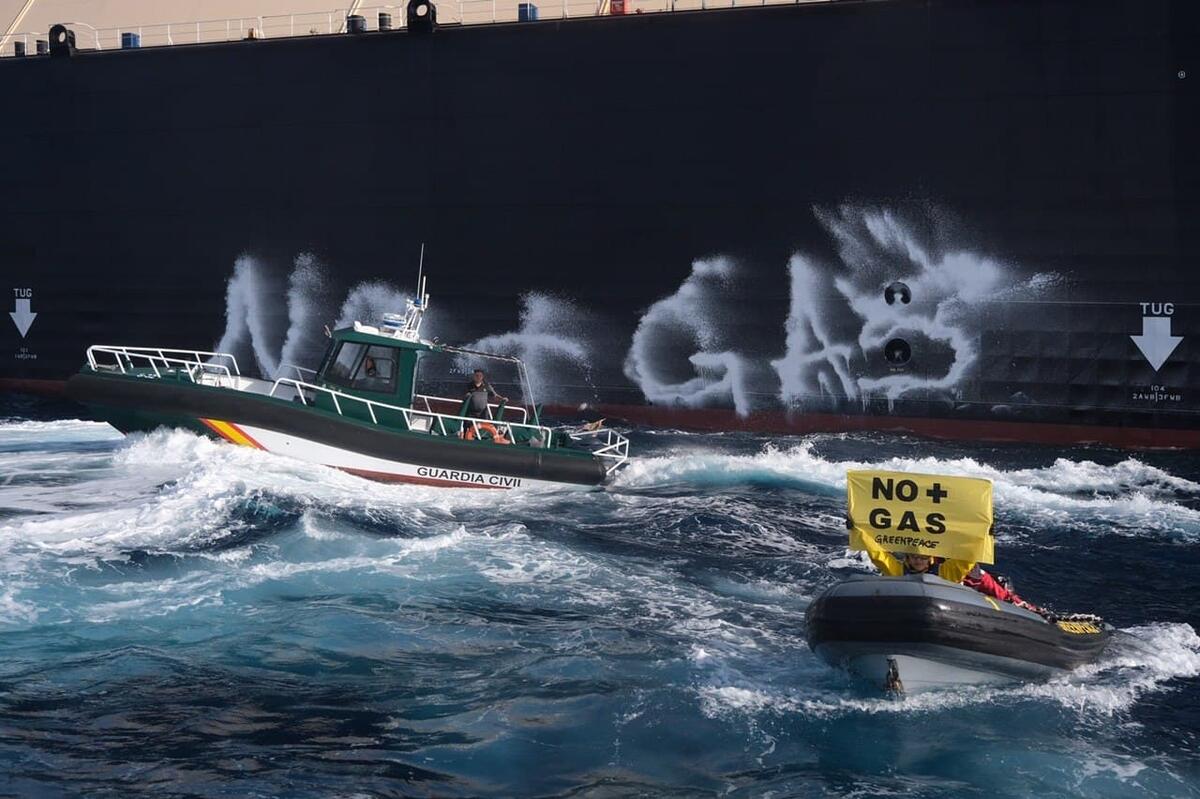
The trial in Valencia was more than a localized legal battle; it was a litmus test for the future of climate protest across Europe and the industrialized world. At the heart of the case was an October 2021 direct action organized by Greenpeace Spain. Activists from 18 nationalities deployed the MY Esperanza—Greenpeace’s flagship vessel at the time—alongside inflatable boats to block the entrance of the Port of Sagunto. Their target was the Merchant, an enormous liquefied natural gas (LNG) tanker carrying 138,000 cubic meters of compressed methane derived from hydraulic fracturing (fracking) in the United States.
What followed was a disciplined, non-violent protest characterized by meticulous communication with maritime authorities. An activist chained himself to the anchor of the Esperanza for 12 hours, successfully delaying the tanker’s entry into port before Spain’s Civil Guard boarded the vessel and cut the chains. No injuries were reported throughout the entire operation.
Despite the peaceful nature of the demonstration, the state responded with extraordinary punitive measures. In addition to administrative fines exceeding €160,000, the Public Prosecutor pursued criminal charges carrying a potential five-year prison term under the guise of aggravated public disorder.

The court’s ultimate rejection of these charges marks a major rebuke of prosecutorial overreach. However, legal experts warn that the case is emblematic of a broader, systemic effort by corporate polluters and state actors to shrink civic space and deter climate action through intimidation.
Detailed Chronology: From the Waters of Sagunto to the Courtroom
Understanding the gravity of the October 2026 verdict requires tracing the timeline of events, administrative penalties, and courtroom arguments that defined the case over five turbulent years.
October 2021: The Blockade at the Port of Sagunto
Against the backdrop of an extraordinary meeting of European energy ministers in Luxembourg discussing soaring energy prices and market volatility, Greenpeace Spain executed its direct action. The timing was symbolic and strategic: the ministers were debating solutions to energy insecurity caused by fossil fuel dependency, while the Merchant arrived carrying the equivalent of 41 Olympic swimming pools’ worth of fracked US gas.
The protest was meticulously planned. Activists painted "No + Gas" on the side of the incoming tanker while maintaining open channels with port authorities. The primary objective was to draw direct attention to the severe environmental and climate risks of LNG imports while advocating for an accelerated transition to renewable energy. After a 12-hour standoff, the Civil Guard intervened, boarding the MY Esperanza to terminate the blockade.
2022–2025: Administrative Penalties and Escalating Charges
The immediate aftermath saw the Spanish state issue heavy financial retaliation. In 2022, authorities imposed administrative fines totaling more than €160,000 against Greenpeace, citing the obstruction of maritime traffic and the Esperanza’s alleged failure to request pilotage and towing services within the port. These administrative penalties remain under active legal appeal.
Far more alarming, however, was the criminal escalation. Rather than treating the incident as a minor civil disruption or a matter for maritime regulation, the Public Prosecutor’s Office categorized the protest as "aggravated public disorder." They demanded a five-year prison sentence for each of the 11 participating activists—a severity of punishment typically reserved for violent offenses, representing an unprecedented legal threat to environmental defenders in Europe.
September 23, 2026: The Trial in Valencia
The criminal trial commenced before a single judge in Valencia, drawing intense national and international scrutiny. During the proceedings, the defense dismantled the prosecution’s claims. Crucially, testimony from police officers and the shipping agent representing the tanker confirmed that the protest had been entirely peaceful. Furthermore, the prosecutor conceded that the initial demand for five years in prison was fundamentally flawed, as it exceeded the maximum statutory penalty in force at the time of the offense in 2021 (laws regarding public disorder were subsequently altered in 2023). Even during the trial, the prosecution reduced its demand to two and a half years—a figure still viewed by advocates as grossly disproportionate.
October 6, 2026: The Landmark Verdict
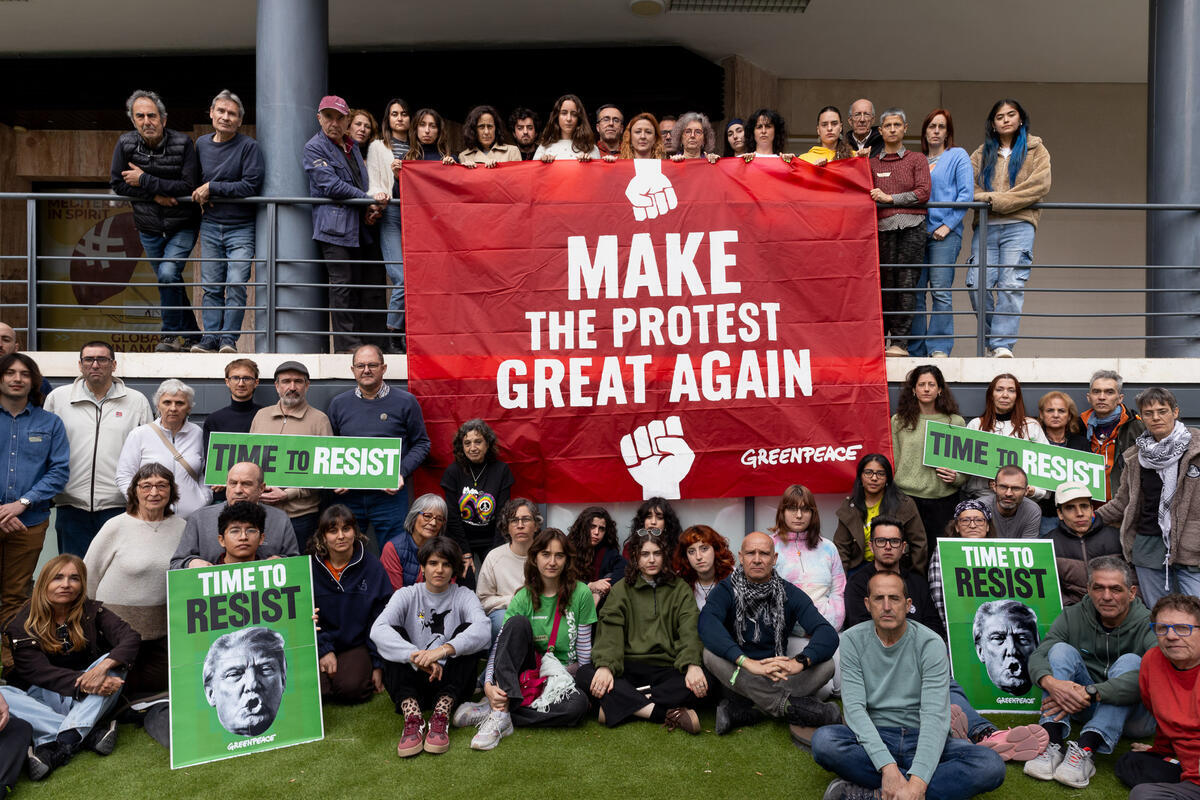
In his ruling, the presiding judge decisively acquitted all 11 defendants of the aggravated public disorder charge. The court established a vital legal boundary: the prosecution failed to provide any credible evidence of violence, coercion, or intimidation capable of altering the public peace. The verdict was hailed immediately by Greenpeace Spain, which unfurled banners outside the courthouse bearing the clear, defiant message: "Activism is not a crime."
Supporting Context and Metrics: The Global War on Dissent
The Sagunto trial did not occur in a vacuum. It is part of a rising global wave of legal intimidation tactics designed to stifle public participation and protect fossil fuel interests.
The Rise of SLAPPs and Corporate Intimidation
Environmental defenders worldwide increasingly face Strategic Lawsuits Against Public Participation (SLAPPs) and aggressive criminal prosecutions. Corporations and industry groups, facing existential threats from climate science and public mobilization, are investing heavily in legal strategies to reframe peaceful protesters as national security threats or violent actors.
- Financial Repression: In Spain alone, more than 30 Greenpeace activists are currently navigating various criminal proceedings stemming from non-violent direct actions.
- International Precedents: The scale of corporate retaliation echoes other major transnational cases, such as Energy Transfer’s massive multi-million-dollar SLAPP suit against Greenpeace entities in the United States, designed to drain organizational resources and deter future advocacy.
- Historical Severity: While most climate activists face short-term detentions or administrative fines, extreme precedents do exist. Notably, the "Arctic 30"—activists detained in Russia for two months following a 2013 peaceful protest against offshore oil drilling—demonstrated how authoritarian and semi-authoritarian regimes attempt to break the resolve of environmental movements through pre-trial detention.
The Science of Urgency vs. The "Cassandra Complex"
According to legal and communications experts within the environmental sector, the criminalization of climate protest can be understood through the lens of the "Cassandra complex." Governments and fossil fuel incumbents often punish activists not because their methods cross legal lines into violence, but because their message—grounded in irrefutable climate science—is deeply uncomfortable to political and economic elites dependent on fossil fuel extraction.
Official Statements and International Observations
The high-stakes nature of the Valencia trial attracted high-ranking international observers, human rights defenders, and legal experts who recognized the trial’s implications for global democracy.

The courtroom and its surrounding steps played host to delegations from Greenpeace International, the crew of the Arctic Sunrise, and prominent human rights figures, including representatives of United Nations Special Rapporteurs.
Perspectives from United Nations Human Rights Experts
Gina Romero, the United Nations Special Rapporteur on the Rights to Freedom of Peaceful Assembly and of Association, whose office monitored the Sagunto proceedings, issued a stark warning regarding the global erosion of civic space:
"The Sagunto case demonstrates how easily the legal system can be used to deter people from exercising a fundamental right, even when the law agrees in the end they did nothing wrong. It’s part of a broader, global pattern of using the legal system, criminal charges, punitive fines, and restrictive laws to shrink civic space. I will continue to raise the alarm and raise my voice to ensure that peaceful protest is not treated as a crime — in Spain or anywhere else."
Legal Analysis from Greenpeace International
Reflecting on the verdict and the broader implications for strategic defense, Daniel Simons, Greenpeace International Senior Legal Counsel for Strategic Defence—who has worked on the Sagunto case since its inception in 2021—emphasized the discipline and legality of the activists’ actions:
"The non-violent protest was undertaken by highly-disciplined activists who maintained clear, calm communication with local maritime and port authorities throughout. In a peaceful act of resistance, one activist chained himself to the Esperanza’s anchor… No one was injured for the duration of the action."
Simons noted that while the prosecution technically retains the right to appeal the acquittal, the court’s definitive ruling leaves very little legal ground for maintaining criminal sanctions against peaceful climate assembly.
Future Outlook: What the Ruling Means for Climate Activism
The October 2026 Valencia court ruling represents a major defensive win for environmental movements across Europe, but the struggle over the boundaries of civil disobedience is far from over.
- Potential Appeals: The Public Prosecutor’s Office retains the procedural right to appeal the acquittal to a higher appellate court. Greenpeace legal teams remain prepared to defend the activists through any subsequent judicial proceedings.
- Ongoing Administrative Battles: While the criminal charges have been successfully defeated, the underlying administrative fines—exceeding €160,000 imposed in 2022—remain subject to ongoing appeals in Spanish courts.
- Heightened Solidarity: The case has galvanized international networks, demonstrating that public solidarity and coordinated legal defense can successfully push back against overreaching state prosecution.
- Legislative Vigilance: Human rights organizations continue to monitor legislative trends across Europe, pushing back against statutory changes that expand police powers or narrow the legal definitions of lawful assembly.
Conclusion: A Defining Moment for Environmental Defense
The acquittal of the Sagunto 11 sends an unmistakable message to governments and corporate polluters alike: the judicial system cannot be easily subverted into a tool for silencing ecological truth. As the climate crisis accelerates and the imperative to phase out fossil fuels becomes ever more urgent, the protection of peaceful dissent remains the absolute cornerstone of a democratic society. Activism is not a crime—and in Valencia, the law has finally reaffirmed that fundamental truth.



