

This story was produced by Montana Free Press and Mountain Journal in collaboration with Grist as part of the Report for America Local News Initiative.
Executive Overview
Across the 193 million acres of public land managed by the United States Forest Service (USFS)—including more than 19 million acres in Montana alone—a fundamental shift in recreational management is underway. For nearly two decades, motorized recreation in America’s national forests has operated under a strict regulatory framework: trails, two-tracks, and backcountry routes are closed unless explicitly designated open.
However, under the Trump administration, the U.S. Department of Agriculture (USDA) and the Forest Service have initiated a sweeping effort to upend this status quo. In late August, federal agencies announced plans to revise the decades-old travel management rule to flip the operational standard. Under the proposed framework, forest trails, service roads, and even backcountry airfields would be open unless explicitly designated closed, forcing land managers to prioritize motorized access.
Supporters of the overhaul argue that the shift will simplify complex regulations, streamline administrative burdens, and expand outdoor access for elderly citizens, individuals with disabilities, and outdoor enthusiasts who rely on all-terrain vehicles (ATVs), side-by-sides, and e-bikes.
Conversely, a broad coalition of conservationists, sportsmen, backcountry horsemen, and non-motorized recreation groups are sounding the alarm. Opponents argue that opening blanket swathes of the forest landscape to motorized traffic without exhaustive review risks severe ecological degradation, accelerated soil erosion, habitat fragmentation, and the destruction of sensitive aquatic ecosystems. Coupled with parallel efforts to dismantle the 2001 Roadless Rule, this policy shift represents one of the most significant transformations of public land management in modern American history.
Detailed Chronology: The Evolution of Forest Access Policies
To understand the weight of the current regulatory battle, it is necessary to examine how current policy was established and how recent federal actions have systematically targeted foundational public land protections.
The Foundation: The 2005/2006 Travel Management Rule
For generations, unauthorized off-highway vehicle (OHV) use gradually expanded across national forests, frequently creating user-created "ghost roads" that scarred landscapes and disrupted watersheds. To rein in unmanaged motorized impacts, the USFS implemented the Travel Management Rule. This policy required every national forest to draft exhaustive travel management plans.
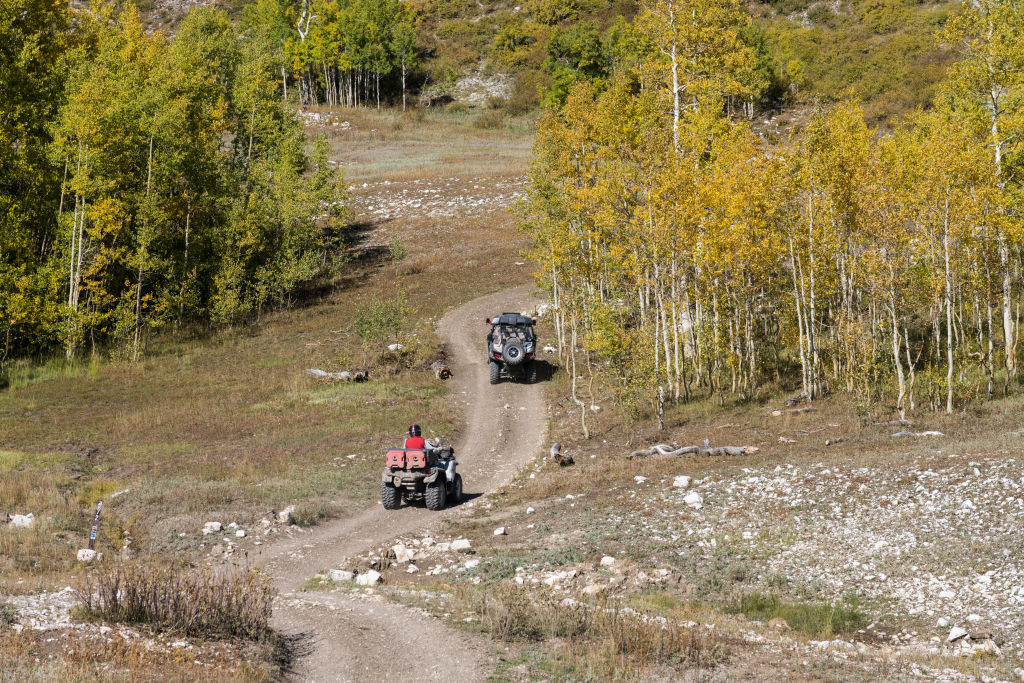
These documents mapped out permitted uses for every trail and road, cementing the standard operating procedure: motorized vehicles were prohibited off designated routes, and trails were closed unless officially designated open. The rule was designed to provide absolute clarity for ranchers, timber workers, hunters, and recreationists while safeguarding fragile ecosystems.
August 2026: Reversing the Travel Management Standard
In late August, the USDA formally announced a rulemaking process to revise the travel management regulations. The stated intent, published in the Federal Register, was to "increase recreation access and simplify regulatory requirements."
The proposal shifts the administrative burden entirely. Instead of requiring meticulous environmental and public reviews before opening a route to motorized use, forest managers would face expectations to prioritize motorized access across service roads, backcountry tracks, and airfields, leaving the identification and posting of closures up to the agency.
Parallel Rollbacks: The Roadless Rule Under Fire
The travel management revision does not exist in a vacuum. It follows closely on the heels of an aggressive administrative push to rescind the 2001 Roadless Rule—a landmark policy that shields approximately 45 million acres of pristine Forest Service land from commercial logging and road construction.
Initially, the public comment periods for these monumental changes were drawn exceptionally tight, triggering immediate public backlash. Responding to intense pressure from conservation groups and the public, the Forest Service announced a 15-day extension for the roadless rule comment period on September 11, pushing the deadline to October 6. Meanwhile, the public comment window for the travel management rule revision was scheduled to close on September 23.
Supporting Context & Metrics: Environmental Realities on the Ground
While policy debates often focus on administrative efficiency and recreational freedom, field scientists and conservation project managers point to tangible, measurable environmental consequences when motorized vehicles are unmanaged or improperly routed.
The Middle Fork Judith River Case Study
Chris Edgington, a watershed project manager with Montana Trout Unlimited, witnessed the catastrophic impacts of unregulated and poorly routed motorized access along the Middle Fork of the Judith River in central Montana’s Little Belt Mountains.
Prior to major restoration efforts completed ahead of 2023, a six-mile stretch of the river featured more than 80 entrances and 27 shallow vehicle crossings. Cars, trucks, and side-by-sides regularly plowed through the streambed. The constant mechanical disruption eroded riverbanks and generated heavy sediment loads that coated the gravelly riverbed. This sedimentation smothered macroinvertebrate life and choked out fish spawning grounds.
By 2020, the ecological degradation had reached crisis levels:
- Severe Population Collapse: The native cutthroat trout and overall fish populations plunged to an estimated less than 10 percent of what would be expected in a healthy river of that size and character.
- Morphological Damage: The river channel had become artificially over-widened and shallow, producing unnatural riffles and preventing the waterway from naturally managing its sediment load.
Collaborative Restoration and its Vulnerability
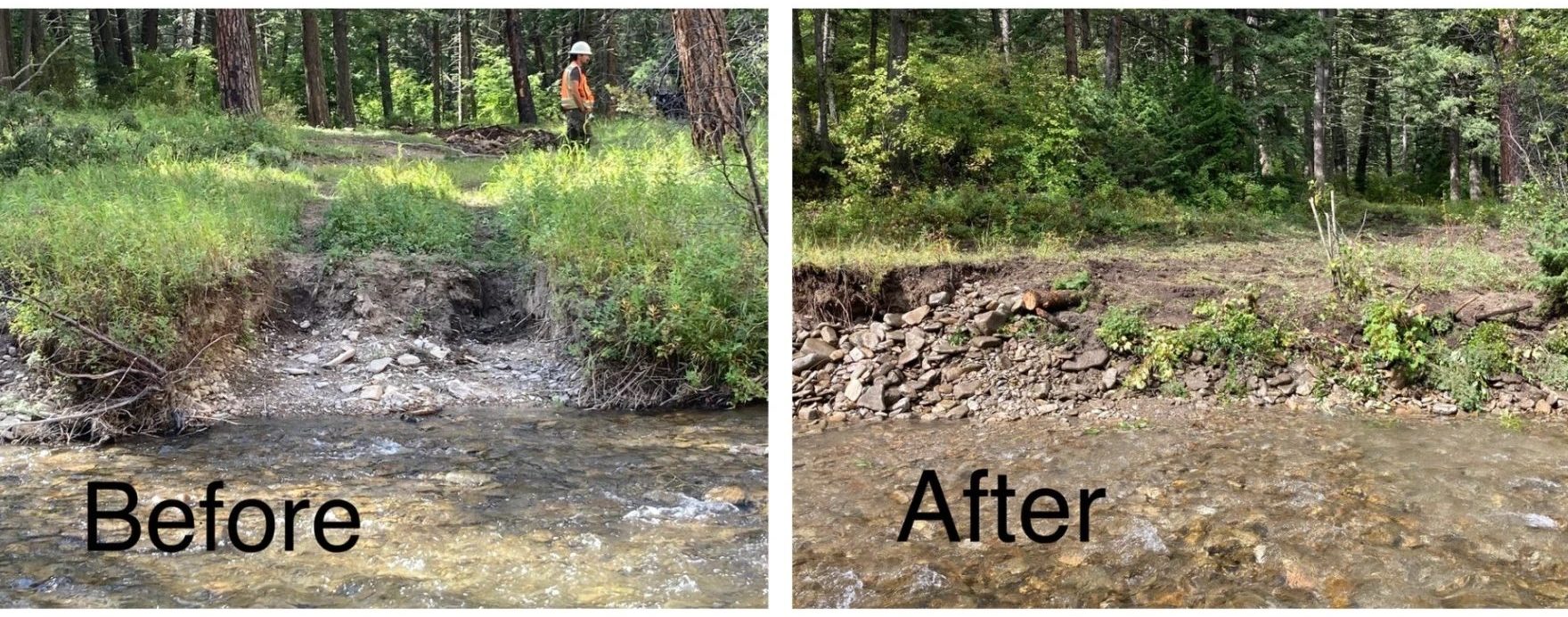
Recognizing the crisis, Edgington spearheaded a coalition bringing together the OHV community, the Great Falls Trail Bike Riders Association, environmental organizations, and government agencies. The group successfully rebuilt 1,000 feet of eroded riverbank, eliminated 80 percent of the stream crossings, and rerouted motorized trails away from the sensitive river corridor.
The intervention yielded immediate ecological dividends, with water quality improving and fish populations rebounding. However, Edgington emphasizes that this expensive, multi-source federally funded restoration work was only pursued because the area was protected by underlying designations—such as a Wilderness Study Area and an Inventoried Roadless Area—and governed by a rigorous Helena-Lewis and Clark National Forest travel management plan.
Edgington fears that a broad deregulation of travel management rules would render such investments pointless, exposing restored watersheds to unchecked degradation. "Cold, clean water is a finite resource," Edgington said. "And we need to do whatever we can to protect it."
Official Statements & Stakeholder Perspectives
The debate over the proposed travel management revisions exposes deep ideological divides regarding the purpose of America’s public lands, pitting motorized advocacy groups against conservation organizations and wildlife defenders.
The Pro-Access Perspective: Expanding Recreation and Ensuring Equity
Advocates for motorized recreation argue that the current rules are overly restrictive and place an unfair burden on visitors who rely on machines to access the backcountry.
Kerry White, executive director of the Bozeman-based nonprofit Citizens for Balanced Use and a former Montana state legislator (2013–2021), champions the proposed shift. White argues that making trails open unless designated closed will restore basic access to public lands.
"Without roads and trails, people can’t get out in the woods," White asserted. "This is public land, and people with disabilities, the elderly, need some sort of transportation to get out there."
White contends that critics are exaggerating the potential negative impacts of the rule change. He maintains that fears of unmanaged industrial development or environmental ruin are unfounded because stringent federal environmental laws and regulations will still govern major ground-disturbing projects. Furthermore, White believes the rule change will force the Forest Service to exercise greater accountability in properly marking and maintaining trail closures.
The Conservationist Perspective: Protecting Intergenerational Stewardship
On the other side of the debate, conservation advocates view the administrative changes as a direct assault on the foundational principles of the national forest system.
Hillary Eisen, federal policy director for Wild Montana, argues that the agency’s formal announcement is vague, poorly structured, and deliberately opaque. She warns that under an "open unless closed" policy, any faint trace of a route—from an old game trail to an eroded track—could invite uninhibited off-road vehicle traffic.
"Any sort of feature that you could interpret to be a trail or a road would be open to every type of use, unless closed," Eisen explained. "That could mean if you can get your side-by-side on there, have at it."
Eisen links the travel management overhaul to a broader administrative pattern aimed at dismantling bedrock environmental statutes, including rollbacks to the Endangered Species Act and the National Environmental Policy Act.
"This administration does not appear to value what our public-land system is rooted in," Eisen stated. "It’s more about, ‘How can I make a quick buck off of this for my benefit?’ I think it gets back into that interest in privatizing."
Future Outlook: The Stakes for America’s Backcountry
As the public comment windows for both the travel management rule revision and the roadless rule rescission draw to a close, the future of America’s national forests hangs in the balance.
Scientific consensus overwhelmingly highlights the ecological threats posed by unmanaged roads and motorized trails in wild landscapes. Extensive research published by the Forest Service and academic institutions confirms that roads and unregulated off-road vehicle routes actively fragment wildlife habitats, facilitate the spread of invasive noxious weeds, accelerate soil erosion, and drastically increase the risk of human-caused wildfires.
For local conservationists, sportsmen, and watershed managers who have spent decades collaborating on delicate ecological restorations, the potential dismantling of the travel management framework threatens to undo years of hard-won progress.
Ultimately, the impending regulatory decisions will determine whether national forests continue to operate under a precautionary model prioritizing long-term ecosystem health, sustained ecological yield, and intergenerational conservation—or pivot toward a model maximizing immediate motorized recreation and extractive access. As public input concludes, the outcome will shape the ecological and recreational character of America’s public lands for decades to come.



