

Executive Overview
In the architecture of modern science, few disciplines rely as heavily on the preservation and continuous interrogation of historical records as biodiversity research. The taxonomy of life on Earth, the mapping of ecological baselines, and the documentation of vanishing habitats are not endeavors born yesterday; they are built upon centuries of observation, detailed illustration, and meticulous cataloging.
A monumental step toward unifying this global historical record occurred as the Senckenberg Gesellschaft für Naturforschung (Senckenberg Society for Nature Research) officially joined the Biodiversity Heritage Library (BHL). This strategic partnership bridges a critical gap in international biodiversity informatics by integrating Senckenberg’s world-class, specialized libraries into a globally accessible, open-access knowledge infrastructure.
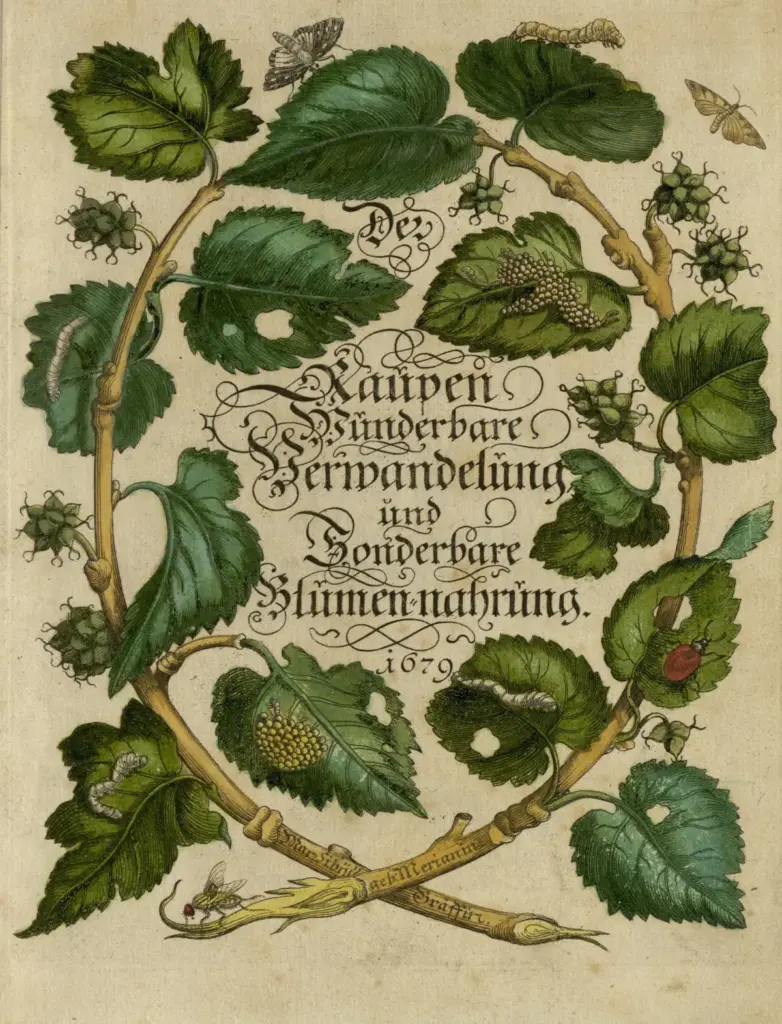
At the heart of this integration is a treasure trove of rare scientific literature, including an original 1679 edition of Maria Sibylla Merian’s landmark study on insect metamorphosis, Der Raupen wunderbare Verwandelung, und sonderbare Blumennahrung. Preserved within the Library of the Senckenberg German Entomological Institute in Müncheberg, this text symbolizes the enduring power of historical literature to anchor contemporary biological research.
By connecting these specialized regional collections to the BHL network, Senckenberg is not merely digitizing old books; it is transforming static pages into dynamic, searchable, and machine-readable data nodes. In an era defined by rapid biodiversity loss and data-driven environmental science, this initiative equips taxonomists, data scientists, and emerging artificial intelligence applications with the verifiable historical baselines necessary to model, understand, and protect the natural world.

Detailed Chronology: From Hand-Painted Plates to Global Digital Networks
To understand the magnitude of Senckenberg’s integration into the BHL, one must trace the evolutionary arc of biodiversity documentation—a timeline stretching from the early dawn of empirical science to the cutting edge of semantic web technologies.
The 17th Century: The Birth of Modern Metamorphosis
- 1679: Born in Frankfurt am Main—the very city that would later host Senckenberg’s headquarters—naturalist and illustrator Maria Sibylla Merian published Der Raupen wunderbare Verwandelung, und sonderbare Blumennahrung. Breaking away from the purely theoretical scholastic traditions of her era, Merian combined rigorous, firsthand field observation with stunning, anatomically detailed artwork. She documented insects alongside their specific host plants, capturing entire life cycles from caterpillar to butterfly. Nearly three and a half centuries later, her work remains an unshakeable pillar of the scientific record, serving as an immutable baseline against which modern species descriptions and ecological relationships are measured.
The Rise of Specialized Research Infrastructure
- The 19th and 20th Centuries: As natural history matured into professionalized science across Europe, specialized research institutions amassed vast corpuses of literature. In Germany, organizations like Senckenberg developed sprawling, decentralized networks of research libraries spanning Dresden, Görlitz, Müncheberg, and Weimar. The library in Müncheberg evolved into one of the largest entomological research libraries in Europe, housing irreplaceable collections focused on zoology, botany, geology, and paleontology. For generations, accessing these insights required physical travel to these specialized archives.
The Digital Turn and the Birth of BHL
- 2009: Recognizing the isolation of physical library collections, the global scientific community launched the Biodiversity Heritage Library, transforming it from a pioneering digitization experiment into the world’s largest open-access repository for literature on biodiversity. Over the subsequent decade and a half, researchers and information architects began recognizing that digitized text was only the first step; the true frontier lay in semantic integration.
- The AI and Linked Open Data Era: Modern researchers began leveraging tools like ChatGPT, text-mining algorithms, and Linked Open Data (LOD) frameworks. Historic plates—such as those found in Georg Wolfgang Franz Panzer’s Deutschlands Insecten—are no longer viewed merely as illustrations; they are now conceptualized as nodes in complex knowledge graphs, connecting physical museum specimens, genetic sequences, taxonomic nomenclature, and historical field notes into a unified global web of life.
2026: The Senckenberg-BHL Convergence
- 2026: Senckenberg formally joins the Biodiversity Heritage Library. By contributing selective, high-value materials from its specialized eastern German libraries—anchored by historical masterpieces like Merian’s 1679 volume—Senckenberg bridges the gap between physical collection management and international digital infrastructures, cementing a new paradigm for open-access biodiversity data.
Supporting Context & Metrics: The Anatomy of an Open Knowledge Ecosystem
The integration of Senckenberg into the BHL is driven by the practical demands of modern scientific inquiry. Biodiversity research today operates across multiple scales, requiring the seamless synthesis of historical data with real-time ecological monitoring.
The Value of Cumulative Knowledge
Biodiversity science is fundamentally cumulative. When a taxonomist describes a newly discovered species or revises a taxonomic group today, they cannot do so in a vacuum. They must consult original type descriptions, trace nomenclatural histories, and review historical geographical distributions.
When historical literature remains locked behind physical archives or fragmented digital silos, the pace of scientific discovery slows. Opportunities for large-scale synthesis, historical comparison, and ecological baseline reconstruction are systematically lost. By funneling specialized regional literature into the BHL, Senckenberg eliminates these friction points, ensuring that centuries-old insights are instantly available to a researcher in South America, Asia, or Europe.

Decentralized Strength: Senckenberg’s Library Network
Senckenberg is one of the premier natural history research institutions in Germany, maintaining a decentralized library system that mirrors the complex history of German scientific institutions:
- Müncheberg: Home to the Senckenberg German Entomological Institute (SDEI) library, representing a massive repository of entomological literature critical to insect taxonomy and agricultural science.
- Dresden, Görlitz, and Weimar: Specialized sites housing deep historical collections covering botany, zoology, paleontology, and geobiodiversity.
Rather than duplicating the massive, general biodiversity literature already captured by the BHL, Senckenberg’s contribution is highly strategic. It targets specific institutional strengths, filling remaining gaps in the global knowledge base and elevating the discoverability of rare European publications.
Transforming Text into Structured Data
The integration of literature into platforms like the BHL triggers a profound technical evolution: text transitions into structured data. Through advanced text-mining, optical character recognition (OCR), and semantic enrichment, legacy monographs and archival materials become machine-readable.
This transformation empowers researchers to:

- Automatically extract species names, localities, and ecological traits from centuries-old texts.
- Cross-reference historical observations with contemporary biodiversity datasets to model the impacts of climate change over 300-year timescales.
- Feed curated, peer-reviewed, and scientifically validated historical texts into emerging Artificial Intelligence and Machine Learning models, ensuring that AI-driven biodiversity tools are grounded in verified scientific literature rather than unvetted internet noise.
Official Statements
The strategic importance of this partnership is underscored by leadership within both the Senckenberg Gesellschaft für Naturforschung and the wider European taxonomic community.
Emphasizing the dual benefit of global visibility and institutional development, Dr. Lutz Kunzmann, Member of the Board of Directors at Senckenberg, noted:
"Our libraries contain numerous specialized and historically developed collections of great relevance to international research. Their digitization and integration into BHL anchor them within a global research infrastructure and increase their visibility. At the same time, membership provides an important impulse for the strategic development of Senckenberg in the areas of digitization, networking, and international collaboration."
Reflecting on the long-term convergence of collections, literature, and digital infrastructure, Dr. Jana Hoffmann—Vice President of the Consortium of European Taxonomic Facilities (CETAF), head of the Entomology Information Center at Senckenberg Müncheberg, and co-editor-in-chief of Contributions to Entomology—offered her perspective built on over a decade of engagement with BHL:

"Access to biodiversity literature is about more than preserving the past. Historical publications provide baselines that continue to anchor current research. This becomes particularly important in the context of biodiversity loss and environmental change, where researchers increasingly need to combine information across time, disciplines, and sources. When literature remains difficult to access, opportunities for comparison, synthesis, and reuse are lost. The real transformation begins when literature is no longer only read, but can also be connected, queried, and analyzed alongside collections, taxonomic names, and other biodiversity data."
Future Outlook: The Horizon of Integrated Biodiversity Knowledge
As global ecological pressures mount—marked by accelerating rates of biodiversity loss, habitat fragmentation, and shifting climatic zones—the scientific community requires tools that are as dynamic and interconnected as the ecosystems they study.
The integration of Senckenberg’s collections into the Biodiversity Heritage Library points toward a future where the artificial boundaries between physical museum specimens, field archives, genomic databases, and historical literature dissolve entirely. In this emerging ecosystem, a researcher examining a butterfly specimen collected in the 18th century can instantly link to its original publication in Merian’s 1679 compendium, query the associated genetic sequencing data, view AI-generated knowledge graphs mapping its historical range, and assess its current conservation status through real-time observation networks.
By committing to open science standards, shared digital infrastructures, and coordinated digitization efforts, institutions like Senckenberg and the BHL are safeguarding the past while actively engineering the intellectual scaffolding of the future. The historical record, once bound by paper and ink, is now an infinitely expandable global commons—ensuring that the foundational wisdom of early naturalists will continue to illuminate, guide, and protect the natural world for generations to come.



