As the global scientific and conservation communities grapple with the accelerating loss of biodiversity, the infrastructure supporting research into the natural world is undergoing a profound structural evolution. In a decisive move to fortify its long-term operational resilience and financial independence, the Biodiversity Heritage Library (BHL)—the world’s largest open-access digital literature repository for biodiversity data—has officially welcomed two prominent library leaders to newly created roles on the Executive Committee of the BHL Members’ Council.
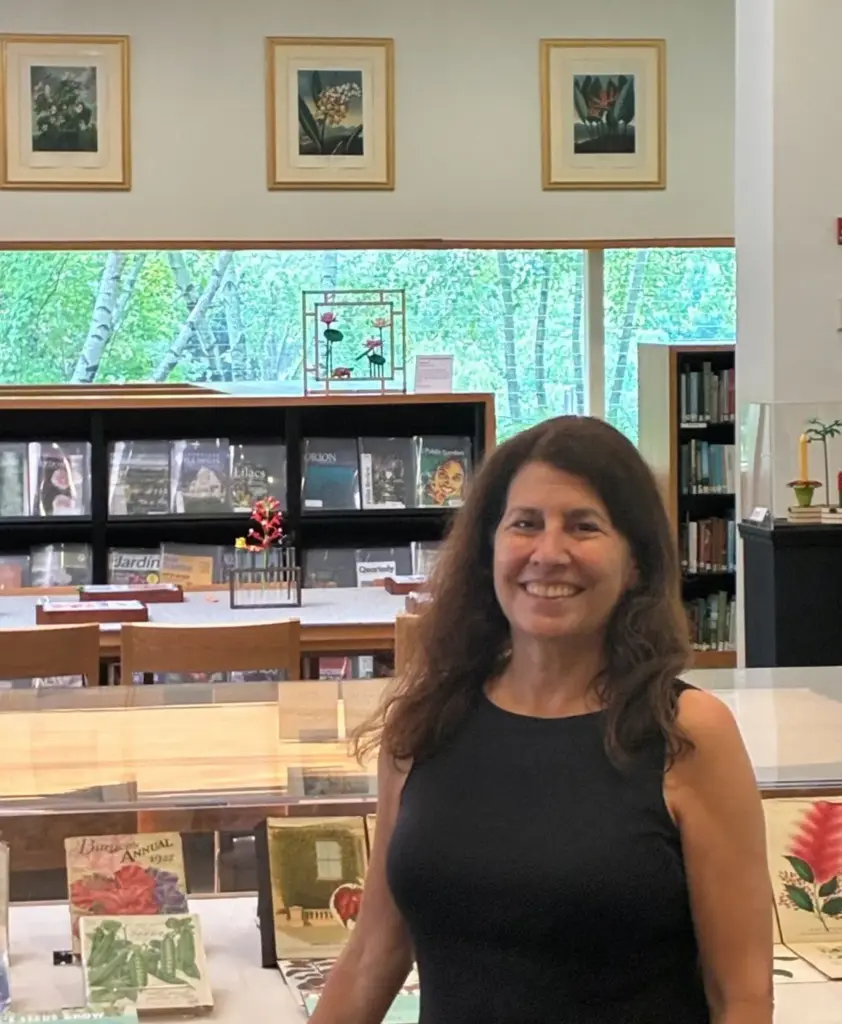
Amanda Boczar of the University of South Florida Libraries has been appointed as BHL’s inaugural Strategic Development Officer, while Leora Siegel of the Chicago Botanic Garden joins the leadership body as its first Member-at-Large. Formally approved by BHL members in June 2026 and enacted in July, these appointments arrive at a critical watershed moment for the consortium. Having recently transitioned into an independent, community-governed global consortium operating under the administrative umbrella of the Council on Library and Information Resources (CLIR), BHL is actively engineering its next strategic blueprint.
By diversifying its governance capacity, expanding its fundraising horizons, and bridging institutional representation between core members and affiliates, these strategic additions position the organization to secure a vibrant, financially stable future. This article provides an in-depth examination of the structural changes underpinning BHL’s new era, profiles the newly appointed leaders, and analyzes the broader implications for open-access scientific literature.
1. DETAILED CHRONOLOGY: A NEW ERA OF INDEPENDENCE AND GOVERNANCE
To understand the significance of Boczar’s and Siegel’s appointments, one must examine the institutional trajectory that BHL has traversed over the past several years. Founded to serve as a digital commons for historical and contemporary biodiversity literature, the consortium historically relied on centralized hosting and administrative models. However, the modern imperative for global scalability, shared financial stewardship, and decentralized operational agility necessitated a radical re-engineering of the library’s governance framework.
The Shift to Distributed Operations
In recent years, BHL embarked on a strategic pivot toward a distributed operational model. This evolution culminated in its administrative alignment with the Council on Library and Information Resources (CLIR), establishing a robust framework for an independent, community-governed global consortium. This structural shift freed the organization from single-institution dependencies, allowing it to tap into a wider pool of international expertise and collaborative resources.
Yet, autonomy brings its own set of organizational challenges—chief among them the necessity of diversified revenue streams, proactive fundraising, and enhanced financial oversight. Recognizing these emerging pressures, the BHL Members convened in June 2026 to evaluate the organization’s long-term sustainability metrics. The consensus was clear: the existing governance structures, while effective for basic administration, required deliberate expansion to support complex financial planning, strategic grant-seeking, and broader community representation.
The Legislative Framework and Provisional Implementation
Because formal amendments to the BHL Bylaws are legally bound to be adopted exclusively during official Annual Meetings, the creation of the Strategic Development Officer and Member-at-Large positions was initiated on a provisional basis. Both roles were integrated into the Executive Committee in July 2026 to immediately address pressing strategic planning needs. These provisional appointments will be formally submitted for ratification at the upcoming 2027 BHL Annual Meeting.
Despite their provisional status, both Boczar and Siegel have already plunged into active governance duties, shaping the core writing groups responsible for formulating BHL’s next multi-year strategic plan. Their early integration underscores the urgency with which the consortium is tackling its operational evolution.
2. SUPPORTING CONTEXT & METRICS: ANATOMY OF THE NEW ROLES
The creation of these two specific offices directly addresses structural gaps identified during BHL’s transition phases. By dissecting the mandates of the Strategic Development Officer and the Member-at-Large, industry observers can glean insight into how modern digital archives intend to weather economic uncertainties while scaling their global impact.
The Strategic Development Officer: Securing Long-Term Financial Viability
Historically, open-access digital repositories face the perennial challenge of the "commons dilemma"—securing adequate, recurring funding for digital preservation, server infrastructure, and metadata enhancement without relying solely on institutional membership dues.
As BHL’s inaugural Strategic Development Officer, Amanda Boczar is tasked with confronting this challenge head-on. Working in tandem with the BHL Secretariat and specialized committees, Boczar will:
Provide advanced financial oversight and strategic guidance to the Executive Committee.
Lead proactive fundraising campaigns aimed at private philanthropy, institutional grants, and endowment growth.
Identify, assess, and spearhead responses to high-value grant and funding opportunities on an international scale.
Coordinate development priorities to ensure the consortium achieves long-term operational self-sufficiency.
Boczar brings formidable credentials to this mandate. Serving as the Associate Director of Digital Initiatives at the University of South Florida (USF) Libraries—one of BHL’s newest member institutions—she has cultivated a deep expertise in regional and global digital collections. Having worked extensively with digital collections highlighting Florida’s fragile environment and natural history since 2020, Boczar is intimately familiar with the intersection of informatics and environmental conservation. Furthermore, her active role co-leading the Collection Development and Discovery strategic planning writing group alongside Emily Benton of the University of Illinois Urbana-Champaign ensures that financial strategy remains deeply integrated with core collection goals.
The Member-at-Large: Democratizing Governance and Broadening Representation
While financial sustainability keeps the digital lights on, inclusive governance ensures that the consortium remains responsive to its vast network of global stakeholders. Enter the Member-at-Large position—a structural innovation designed to bridge the gap between BHL’s core Member institutions and its extensive network of Affiliate institutions.
Prior to this creation, executive governance pathways primarily favored designated member representatives. The new Member-at-Large role uniquely breaks down these barriers:
It is the only Executive Committee position open to qualified staff from both BHL Member and Affiliate institutions.
It establishes a formal, accessible pathway for broader community participation in high-level consortium decision-making.
It offers mid-career and institutional leaders hands-on experience on the Executive Committee, serving as a developmental stepping stone toward future elected leadership roles.
It provides flexible, cross-functional support for special projects, administrative overflow, and strategic planning initiatives.
Leora Siegel, Senior Director of the Lenhardt Library at the Chicago Botanic Garden, steps into this inaugural role. Siegel is a venerated figure within the botanical library community, bringing over a decade of active collaboration within the BHL ecosystem. Her institutional home, the Chicago Botanic Garden, has long served as a cornerstone BHL Affiliate. Siegel’s leadership credentials were put on vivid display in 2024, when she successfully co-hosted the BHL Annual Meeting in Chicago, welcoming international delegates and shaping a forward-looking program. Currently, Siegel is applying her institutional acumen to BHL’s strategic planning framework as an active member of the Operational Sustainability writing group.
3. OFFICIAL STATEMENTS & PERSPECTIVES
The weight of these appointments is best understood through the voices of the leadership team steering BHL into its next chapter.
Richard Wragg, Vice Chair of the BHL Executive Committee and Head of Library and Archives at the Natural History Museum in London, emphasized the strategic harmony of the new additions:
"We are delighted to welcome Amanda and Leora to the Executive Committee. Leora will be well known to many in the BHL community and, coming from an Affiliate institution, brings both extensive experience and new perspectives to the Committee. Amanda joins us with a wealth of ideas and previous successes in a role that is vital to BHL’s long-term sustainability. With the expansion of the Executive Committee complete, and the addition of two such capable colleagues, we are now well placed to secure a bright and stable future for BHL."
For Amanda Boczar, the appointment represents a profound professional alignment with an organization she has long admired as a benchmark for international cooperation:
"I have been working with digital collections related to Florida’s environment and natural history since 2020 and have always looked to BHL as a model for global outreach and community. After USF joined BHL as both a member and a strategic partner for its technical infrastructure in January 2026, I knew I wanted to really dive in and make the most of the opportunity. It has been such a privilege to engage with the other members and affiliates, and I am very honored to have been selected for this new role to help sustain the organization for many more years to come."
Leora Siegel echoed these sentiments, highlighting the emotional and professional resonance of transitioning from a long-standing affiliate partner to a central governance stakeholder:
"Through collaborations with BHL colleagues over the past 10 years as an Affiliate member, and witnessing BHL’s amazing growth and development, I’m honored to serve on the Executive Committee and contribute as BHL becomes fully independent."
These testimonials reflect a shared institutional ethos: a commitment to collaborative stewardship, open-access advocacy, and proactive adaptation in the face of shifting global funding landscapes.
4. FUTURE OUTLOOK: SUSTAINING OPEN ACCESS FOR BIODIVERSITY RESEARCH
As the Biodiversity Heritage Library looks toward its upcoming 2027 Annual Meeting—where Boczar’s and Siegel’s provisional appointments will face formal ratification—the broader scientific community stands to benefit immensely from these structural reinforcements.
In an era characterized by restricted access to academic journals and the commercialization of scientific data, BHL remains a steadfast beacon of open science. By digitizing millions of pages of taxonomic literature, field notes, and botanical illustrations spanning centuries of scientific discovery, BHL provides researchers, conservationists, and historians with the foundational data required to address modern ecological crises.
However, maintaining an archive of this magnitude requires visionary leadership and ironclad financial engineering. The creation of the Strategic Development Officer and Member-at-Large positions signals that BHL is not merely resting on its historical laurels. By diversifying its leadership, institutional perspectives, and revenue-generating capacities, the consortium is proactively insulating itself against economic volatility.
As Amanda Boczar spearheads new grant initiatives and Leora Siegel champions affiliate inclusivity, the BHL Executive Committee is exceptionally well-equipped to guide the digital library through its next phase of growth. For the global biodiversity community, these developments ensure that humanity’s collective knowledge of the natural world will remain permanently accessible, freely shared, and rigorously preserved for generations to come.