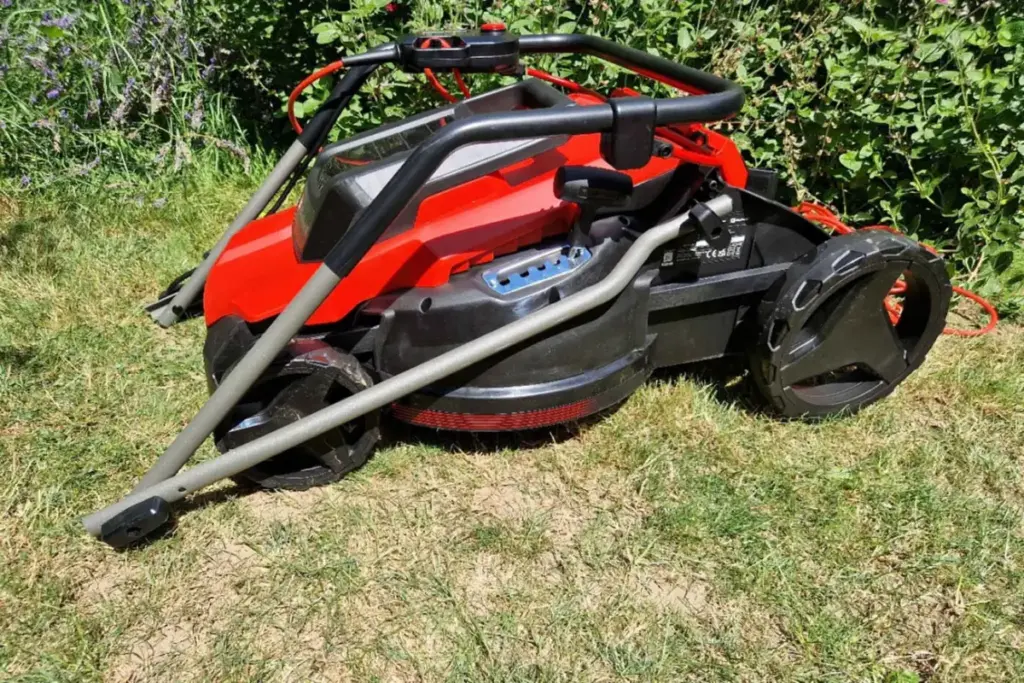
While the gardening market has witnessed a surge in high-tech robotic mowers and advanced cordless, battery-operated units, the classic corded electric lawn mower continues to hold its ground firmly in garden sheds across the country. As consumer preferences shift and manufacturers race to innovate, corded mowers remain the go-to choice for budget-conscious gardeners seeking simplicity, lightweight maneuverability, and an uninterrupted power source.
Despite a shrinking market share compared to their battery-powered counterparts, the sheer variety of available corded models means that buyers face ample opportunity to make a costly mistake. To help consumers navigate this landscape, expert testing panels—including authorities from BBC Gardeners’ World Magazine—have rigorously evaluated the top corded electric lawn mowers on the market. From 2026 onward, testing protocols have tightened: newly awarded "Best Buy" badges are reserved exclusively for models scoring 4.5 out of 5 or higher, while models scoring between 3.5 and 4.4 are relegated to the "Best of the rest" category.
This comprehensive guide breaks down the top-performing corded electric mowers of the year, analyzing their specifications, performance metrics, pros, cons, and real-world utility.
Detailed Chronology & Testing Insights: Putting Mowers Through Their Paces
The evaluation of garden machinery leaves no room for shortcuts. Testing protocols require reviewers to unbox each unit, follow the often-convoluted assembly instructions, and push the mowers across diverse, real-world terrain. Reviewers test machines over rough grass, manicured lawns, steep slopes, and bumpy terrain, mirroring the exact conditions homeowners face in their own backyards. Beyond raw cutting power, reviewers meticulously assess storage capabilities, handle ergonomics, and folding mechanisms.
Impressing reviewers with its superb design and effortless assembly, the Webb Weer33 claims the title of best budget electric mower for small gardens under £100. It features a comfortable foam handle adjustable to various heights, a single-lever cutting height adjustment offering five settings, and a 10m black cable complete with tidy hooks.
Why Buy: Lightweight and remarkably easy to maneuver, it cuts cleanly right up to lawn edges. The 35L fabric grass collection box includes a handy full-indicator flap. Furthermore, the handles unscrew and fold flat over the deck for compact shed storage.
Drawbacks: The black cable can be difficult to spot against green grass; a brighter color would improve safety.
2. Mountfield Electress 38: Built for Larger Spaces
For those managing larger lawns, the Mountfield Electress 38 delivers robust performance. Its wider 38cm cutting deck reduces the number of passes required to complete a lawn, while six cutting heights are easily adjusted via a single lever.
Why Buy: Equipped with an exceptionally long 15m cable, this mower often eliminates the need for an extension lead. It maneuvers smoothly despite its heavier build, yields a pristine cut, and packs a generous 40L grass box.
Drawbacks: Like many of its peers, it features a low-visibility black cable and lacks a dedicated cable safety clip.
Gardeners aiming for a classic, professional-looking striped lawn will find the Cobra GTRM34 an appealing choice thanks to its integrated rear roller. Minimal assembly is required, aided by clear instructions and online video guides.
Why Buy: It offers exceptional balance, seven cutting heights, and a cushioned handle equipped with a cable relief clip. The double-folding handle allows the unit to collapse compactly into storage.
Drawbacks: Weighing 13kg, it is heavier and slightly harder to lift than smaller competitors.
Driven by a 1300W engine, the Ryobi RLM13E 33S is engineered for effortless small-garden maintenance. It features a double-drive lever enabling single- or two-handed operation, alongside deck-mounted grass combs that cut flush against borders, eliminating the need for subsequent strimming.
Why Buy: It comes bundled with a mulching plug to feed lawn clippings back into the turf, a highly effective cable relief clip, and a reassuring three-year warranty.
Drawbacks: The 8m cable is on the shorter side, necessitating careful positioning near power sources or the use of an extension lead.
Supporting Context & Technical Metrics
To provide a transparent overview of how these corded electric mowers stack up against one another, the following comparative metrics highlight their key performance indicators:
Mower Model
Rating
RRP (£)
Cut Width
Weight
Noise Level
Cable Length
Cut Height Range
Grass Box Capacity
Webb Weer33
4.8/5
£99.99
33cm
8.8kg
89dB
10m
25–65mm
35L
Mountfield Electress 38
4.5/5
£159.00
38cm
11kg
95dB
15m
25–75mm
40L
Cobra GTRM34
4.5/5
£122.99
34cm
13kg
96dB
10m
20–75mm
35L
Ryobi RLM13E 33S
4.5/5
£119.95
33cm
9.9kg
89dB
8m
20–60mm
35L
Stihl RME 235
4.0/5
£179.00
33cm
13kg
93dB
17m
25–65mm
30L
Einhell GC-EM 1600/37
4.0/5
£136.95
37cm
10.75kg
96dB
10m
20–60mm
38L
The Best of the Rest
While models like the Stihl RME 235 (£179, 4/5 rating) and the Einhell GC-EM 1600/37 (£136.95, 4/5 rating) missed out on the elite 4.5+ Best Buy threshold, they remain highly functional options.
The Stihl RME 235 features an intelligent eco-mode that adjusts blade speed dynamically based on grass density, though its assembly process is notably complex.
The Einhell GC-EM 1600/37 is a powerhouse driven by a 1,600W motor, handling overgrown weeds and thick turf without bogging down. However, its complex initial assembly—requiring wheel and handle installation—and the absence of integrated cord storage prevent it from achieving top-tier status.
Official Reviewer Statements and Testing Methodology
The testing panel evaluates all lawn mowers using a stringent, equal-weighted four-pillar scoring matrix. Reviewers look past manufacturer marketing claims to assess real-world durability, assembly ease, cutting precision, and storage convenience.
"As trained gardeners and seasoned users of all sorts of garden tools, we have reviewed shedloads of lawn mowers over the years… We test lawn mowers in varied, real-world conditions, cutting the sort of grass most of us actually have in our gardens."
— Oliver Parsons, Strategic Projects Editor
The testing team includes distinguished horticulturalists and industry experts:
Oliver Parsons: Strategic Projects Editor and trained RHS horticulturalist.
Kay Maguire: Magazines Editor, Kew Botanic Gardens alumna, and veteran gardening author.
Harry Duncton: Freelance Powered Tools Tester specializing in hands-on DIY equipment.
Sue Fisher & Jane Moore: Accomplished garden writers and media broadcasters with decades of practical, hands-on gardening experience.
Emma Crawforth: Horticulture Editor holding the Kew Diploma in Horticulture.
Editorial independence remains a core tenet of these reviews: product assessments are never shared with manufacturers or retailers prior to publication, and financial compensation is strictly barred in exchange for favorable ratings.
Future Outlook: The Relevance of Corded Mowers in a Wireless Era
As the horticultural industry races toward full electrification via lithium-ion battery ecosystems and autonomous robotic systems, some consumers question the long-term viability of corded electric mowers. Yet, market data and expert evaluations prove that corded machines occupy a permanent, essential niche.
For urban and suburban homeowners with modest gardens, the appeal of a "plug-and-go" machine remains unmatched. Gardeners weary of managing multiple proprietary battery platforms, slow charging cycles, and high replacement costs continue to favor the reliable, limitless power delivery of a corded motor.
Looking forward, manufacturers will likely focus on refining ergonomic storage solutions, incorporating brighter, high-visibility cables for improved safety, and enhancing motor efficiency. For buyers willing to manage a power cord, these machines represent the highest value-for-money proposition in modern garden maintenance.