Executive Overview
In an era defined by rapid data-driven discovery, artificial intelligence, and unprecedented ecological challenges, modern biological science remains fundamentally anchored in centuries of historical observation. The foundational records of biodiversity—hand-drawn illustrations of insect metamorphosis, meticulously compiled catalogs of flora, and centuries-old taxonomic classifications—form the baseline against which modern environmental change is measured.
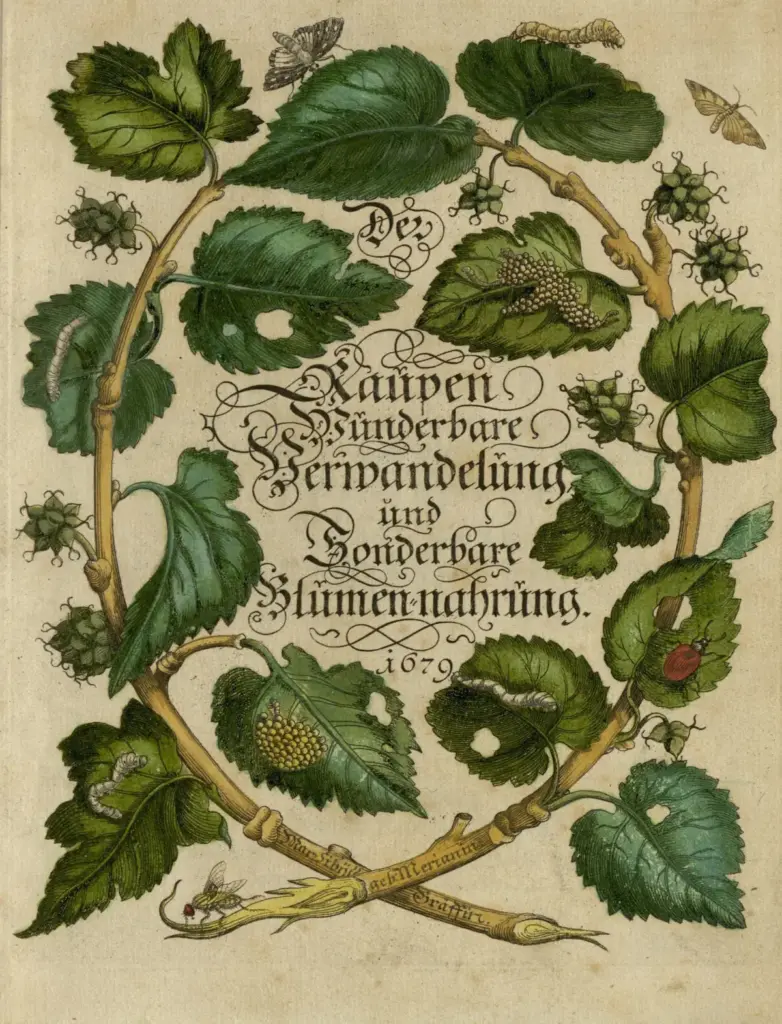
Recognizing this vital link between historical preservation and cutting-edge research, the Senckenberg Gesellschaft für Naturforschung officially joined the Biodiversity Heritage Library (BHL). This strategic partnership integrates invaluable holdings from Senckenberg’s decentralized specialized research libraries—including an original, rare 1679 edition of Maria Sibylla Merian’s landmark study on insect metamorphosis—into the world’s largest open-access digital repository for biodiversity literature.
This article explores the profound implications of this integration. By bridging centuries-old archives with modern data infrastructures, text-mining technologies, and AI-driven knowledge graphs, Senckenberg and the BHL are transforming static historical publications into dynamic, searchable, and interconnected digital assets. This initiative not only preserves our scientific heritage but fundamentally empowers the global taxonomic community to address contemporary biodiversity loss with unprecedented depth and precision.
Detailed Chronology: From Merian’s Observations to the 2026 BHL Integration
To understand the weight of Senckenberg’s integration into the Biodiversity Heritage Library, one must trace a nearly 350-year evolution of scientific documentation, institutional growth, and technological convergence.
1679: The Dawn of Comprehensive Metamorphic Study
The historical lineage of this milestone traces back to 1679, when naturalist and illustrator Maria Sibylla Merian published Der Raupen wunderbare Verwandelung, und sonderbare Blumennahrung (The Wonderful Metamorphosis of Caterpillars and Their Singular Plant Food). Born in Frankfurt—historically tying her work to Senckenberg’s home region—Merian revolutionized entomology. By combining rigorous, firsthand ecological observation with stunningly detailed artistic illustration, she documented insects alongside their specific host plants. Nearly three and a half centuries later, her work is not merely a historical artifact; it remains an active component of the scientific record, serving as an immutable baseline for modern species descriptions and classifications. Today, an original, pristine edition of this foundational text is meticulously preserved in the Library of the Senckenberg German Entomological Institute under call number B 877:1.

2009–2026: The Evolution of Digital Biodiversity Infrastructure
Fast-forward to the 21st century, where the digital preservation of historical literature moved from a fragmented digitization effort to a coordinated global movement. Since 2009, modern biodiversity informaticians and taxonomists—including institutional leaders within the Consortium of European Taxonomic Facilities (CETAF)—have collaborated closely with the BHL. Over the last decade and a half, the BHL has evolved from a pioneering scanning initiative into an indispensable cornerstone of the global biodiversity knowledge ecosystem.
2026: Senckenberg Formalizes Its Global Commitment
Culminating decades of localized stewardship, the Senckenberg Gesellschaft für Naturforschung formally joined the BHL network. By opening its specialized libraries to international digital integration, Senckenberg ensured that its centuries-old physical archives would no longer exist in isolation. Instead, they are now woven directly into the global digital fabric that supports integrative taxonomy, geobiodiversity research, and cross-disciplinary environmental science.
Supporting Context & Metrics: Senckenberg’s Decentralized Research Ecosystem
As one of Germany’s premier natural history research institutions, Senckenberg operates a uniquely structured network of specialized research libraries. Rather than being consolidated under a single roof, Senckenberg’s library and archive landscape is intentionally distributed across multiple historic German scientific hubs—including Dresden, Görlitz, Müncheberg, and Weimar.
Each site reflects a distinct scientific, institutional, and regional history, collectively covering an exhaustive spectrum of natural sciences:
- Zoology and Entomology: Supported heavily by the world-class holdings housed in Müncheberg.
- Botany: Preserving historical plant records and ecological observations.
- Geology and Paleontology: Documenting the deep-time history of the Earth through specialized literature and archival field notes.
The Senckenberg German Entomological Institute (SDEI) in Müncheberg
At the heart of Senckenberg’s entomological contributions is the library of the Senckenberg German Entomological Institute in Müncheberg. Recognized as one of the largest and most comprehensive entomological research libraries in Europe, it holds an irreplaceable corpus of legacy literature. Through its Information Center for Entomology, the institute bridges the gap between physical insect collections, historical archives, and digital data pipelines.

By strategically selecting materials to contribute to the BHL, Senckenberg avoids redundant scanning, focusing instead on filling critical global gaps in specialized taxonomic literature. This targeted approach ensures that rare, localized volumes—such as localized monographs, historical expedition reports, and rare entomological journals—are brought into the international spotlight.
Official Statements and Institutional Perspectives
The integration of Senckenberg’s archives into the BHL marks a pivotal philosophical and strategic evolution in how natural history institutions manage their intellectual assets.
Dr. Lutz Kunzmann, Member of the Board of Directors at Senckenberg, emphasized the dual benefit of international networking and institutional modernization:
"Our libraries contain numerous specialized and historically developed collections of great relevance to international research. Their digitization and integration into BHL anchor them within a global research infrastructure and increase their visibility. At the same time, membership provides an important impulse for the strategic development of Senckenberg in the areas of digitization, networking, and international collaboration."
Echoing this sentiment from both a research and informatics perspective, Dr. Jana Hoffmann—Vice President of the Consortium of European Taxonomic Facilities (CETAF), head of the Entomology Information Center at Senckenberg Müncheberg, and Co-Editor-in-Chief of Contributions to Entomology—reflects on her long-standing relationship with the BHL since 2009:

"Whether supporting integrative taxonomy, biodiversity knowledge systems, or emerging biodiversity and geobiodiversity data infrastructures, literature continues to provide the evidence base on which this work depends. What once existed primarily as individual publications increasingly becomes part of a broader, interconnected knowledge environment."
Future Outlook: From Static Text to Intelligent Biodiversity Knowledge Graphs
The true paradigm shift of integrating Senckenberg’s historical holdings into the BHL extends far beyond simple digitization or improved online reading access. We are witnessing the conversion of historical library literature into structured, queryable data.
The Rise of Semantic Enrichment and Text Mining
For generations, valuable taxonomic insights—such as historical species localities, behavioral descriptions, and ecological host associations—remained locked inside unstructured paragraphs of 18th- and 19th-century text. Today, platforms linked to the BHL utilize advanced text-mining algorithms, optical character recognition (OCR), and semantic annotation tools. These technologies extract binomial nomenclature, geographic coordinates, and anatomical descriptions directly from scanned pages, transforming passive literature into active data points.
Fueling Artificial Intelligence and Next-Generation Knowledge Graphs
As demonstrated by conceptual innovations in biodiversity informatics—such as AI-generated network visualizations mapping specimens from historical plates (e.g., Georg Wolfgang Franz Panzer’s Deutschlands Insecten, interpreted via modern machine-learning pipelines)—historical literature is becoming a vital training and validation dataset.
Modern artificial intelligence applications require curated, scientifically validated, and citable primary sources to minimize hallucinations and ensure taxonomic accuracy. By connecting Senckenberg’s historical resources via Linked Open Data (LOD) frameworks, researchers can now synthesize data across multiple dimensions:

- Specimen Data: Physical insects or plants preserved in museum cabinets.
- Archival Data: Field notes, expedition diaries, and correspondence.
- Literature Data: Original taxonomic descriptions published centuries ago.
When these three pillars are connected into an interoperable knowledge graph, scientists gain an unprecedented lens through which to study environmental baselines.
Confronting Global Biodiversity Loss
This technological leap is not merely an academic exercise; it is an urgent necessity. In the face of catastrophic global biodiversity loss and accelerating climate change, conservationists and evolutionary biologists must rapidly compare historical ecosystems with present-day realities. They need to know where species lived 300 years ago, how their habitats have shifted, and what ecological relationships were documented by pioneers like Maria Sibylla Merian.
By ensuring that historical literature is no longer isolated on dusty shelves, but is instead fully discoverable, connected, and machine-readable, Senckenberg and the Biodiversity Heritage Library are future-proofing biodiversity science. This historic partnership guarantees that the foundational wisdom of the past will actively arm the technological tools, analytical frameworks, and conservation strategies of tomorrow.