Executive Overview
Across the globe, the drumbeat of climate disruption is growing louder, amplified by the stark imagery of an environment in freefall and the resolute faces of those fighting back. For over half a century, Greenpeace has pioneered the art of photo activism, using the camera lens not merely to record history, but to challenge power, expose ecological atrocities, and demand systemic accountability.
This week’s dispatches from the frontlines of environmental defense offer a panoramic view of an interconnected planetary crisis. From the scorched streets of Madrid and the drying banks of Lake Constance to the corporate-dominated auto halls of Jakarta and the vulnerable marine dead zones of the Baltic Sea, civil society is rising against institutional inertia.
While millions face the compounding costs of extreme weather events, fossil fuel conglomerates post record profits, and governments flirt with legislation that commercializes public conservation lands. This comprehensive review examines the global actions, scientific findings, and socio-political flashpoints defining the current environmental landscape, highlighting how frontline communities and environmental defenders are drawing a definitive line in the sand.

Detailed Chronology of Global Actions
1. The Philippines: Challenging the State of the Nation
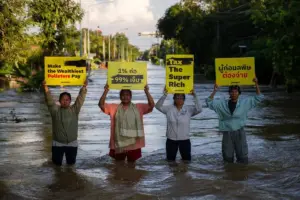
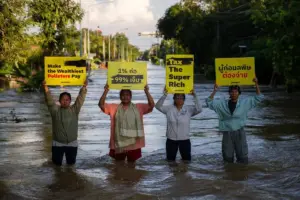
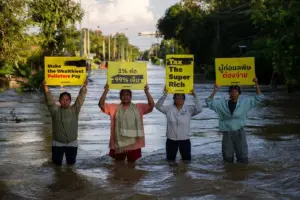
As Philippine President Ferdinand Marcos Jr. delivered his fourth State of the Nation Address (SONA), Greenpeace Philippines and frontline communities gathered to confront the administration’s development trajectory. Demonstrators directly challenged the government to ensure that economic policies prioritize human welfare over corporate polluters.
Activists and climate-vulnerable citizens warned that the nation cannot claim genuine progress while millions of Filipinos shoulder the escalating costs of extreme heatwaves and intensifying typhoons. The action underscored a central demand: true national development must protect people on the frontlines rather than subsidizing the industries driving the climate crisis.
2. Switzerland: A "Water Castle" Confronts Drought
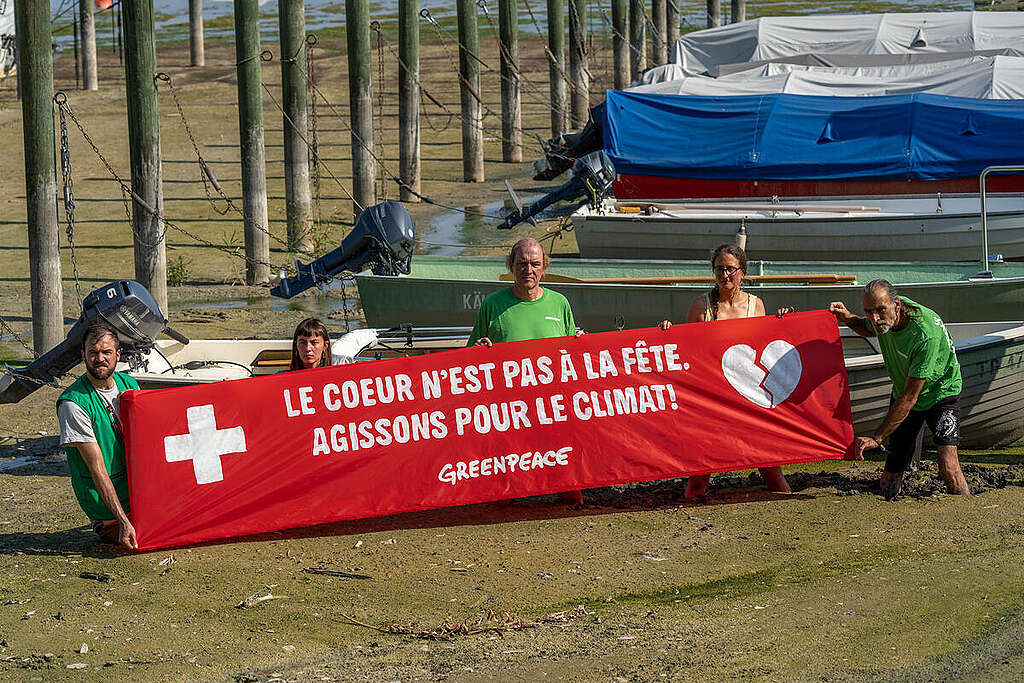
Traditionally celebrated as Europe’s "water castle," Switzerland is facing an unprecedented and protracted drought that has cast a heavy shadow over its National Day festivities. With water levels plummeting and strict municipal bans on open fires and fireworks implemented to mitigate disaster risks, the summer of 2026 serves as a terrifying preview of a warming future.

Rejecting festive complacency, Greenpeace activists unfurled a stark banner on Thursday, July 30, along the shores of Lake Constance at the Mannenbach-Salenstein harbor. Bearing the slogan, "No reason to celebrate. Climate action now!" the demonstration called upon the Swiss federal government to enact immediate, robust adaptation measures. Organizers are demanding an injection of 100 million Swiss francs specifically earmarked to combat severe heatwaves and reinforce national climate resilience.
3. Indonesia: Defending Raja Ampat at the GIIAS 2026
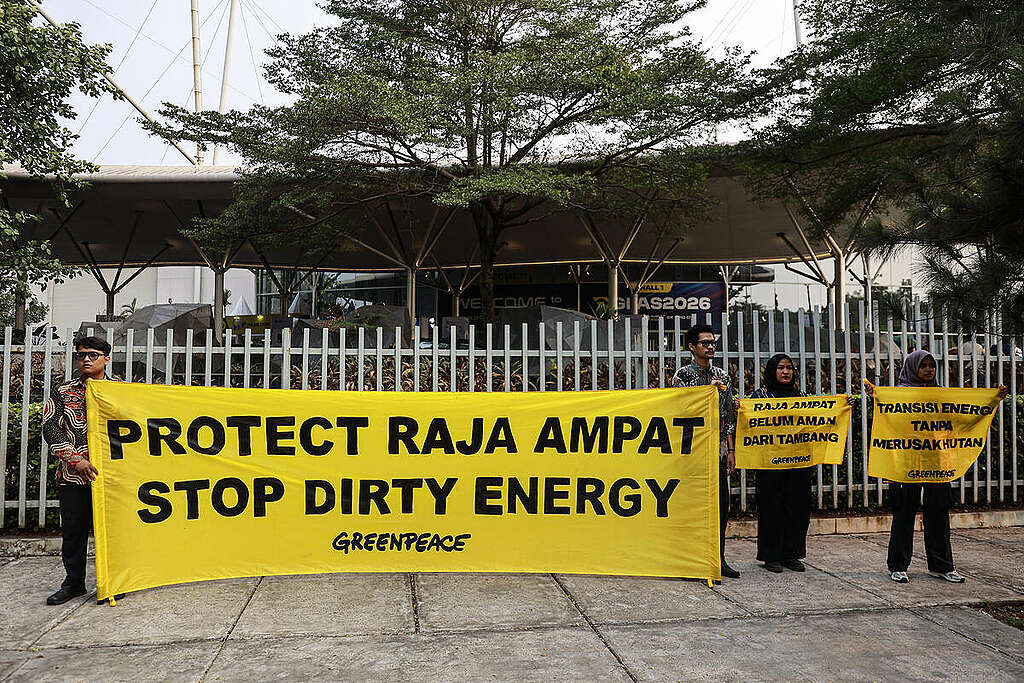
In Southeast Asia, the spotlight turned to the heart of marine biodiversity during the opening of the Gaikindo Indonesia International Auto Show (GIIAS) 2026—the country’s premier annual automotive exhibition. Just as Industry Minister Agus Gumiwang Kartasasmita pressed the ceremonial button to inaugurate the event, Greenpeace activists executed a peaceful, non-violent protest.
The demonstration targeted the intersection of industrial expansion and ecosystem destruction, brandishing bold banners that read "Protect Raja Ampat, Stop Dirty Energy" and "Is Your Car Powered by Forest Destruction?" The action served as a sharp reminder to policymakers and industrial leaders that the relentless push for high-emission transport and raw material extraction directly threatens irreplaceable ecological sanctuaries like the Raja Ampat marine ecosystem.
4. Spain: Mourning and Defiance Outside the Congress of Deputies
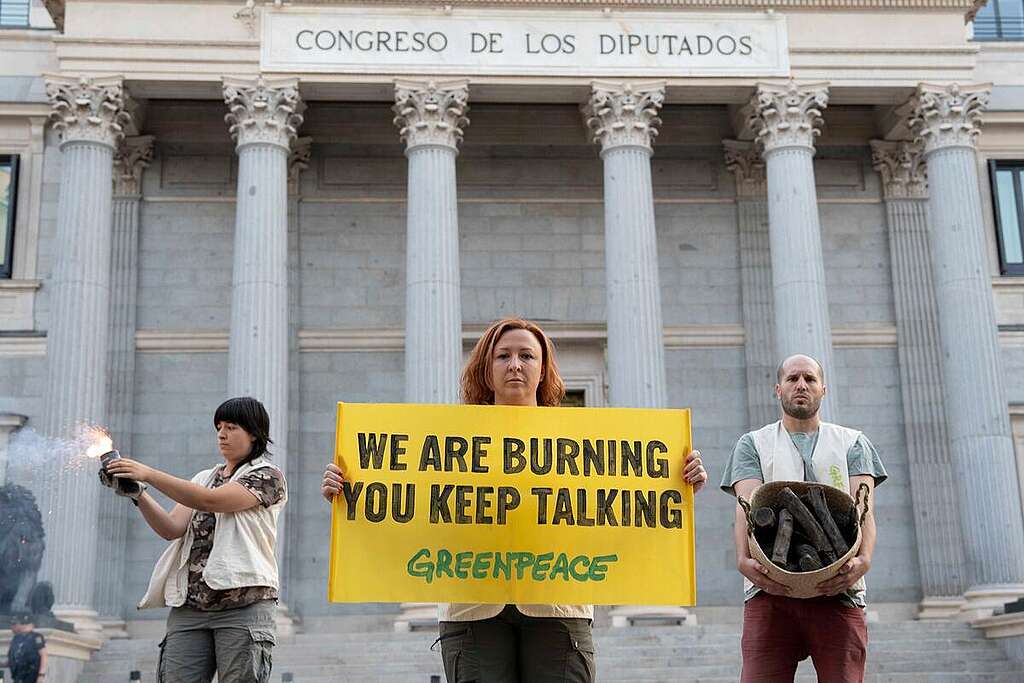
Spain has found itself at the epicenter of historic, catastrophic wildfires that have displaced over 100,000 citizens and claimed 15 direct fatalities amid a punishing fourth consecutive heatwave. In response to this unfolding tragedy, Greenpeace Spain orchestrated a haunting and visceral protest outside the Congress of Deputies in Madrid.
Deploying artificial smoke, ash, burnt timber, and a solemn black banner bearing the inscription "Spain is burning. Your inaction is killing us," activists confronted the nation’s political leadership. The peaceful demonstration served a dual purpose: expressing deep solidarity with fire-affected communities and demanding that political institutions abandon empty rhetoric in favor of aggressive, transformative climate policies.
5. New Zealand: Defending Public Conservation Land
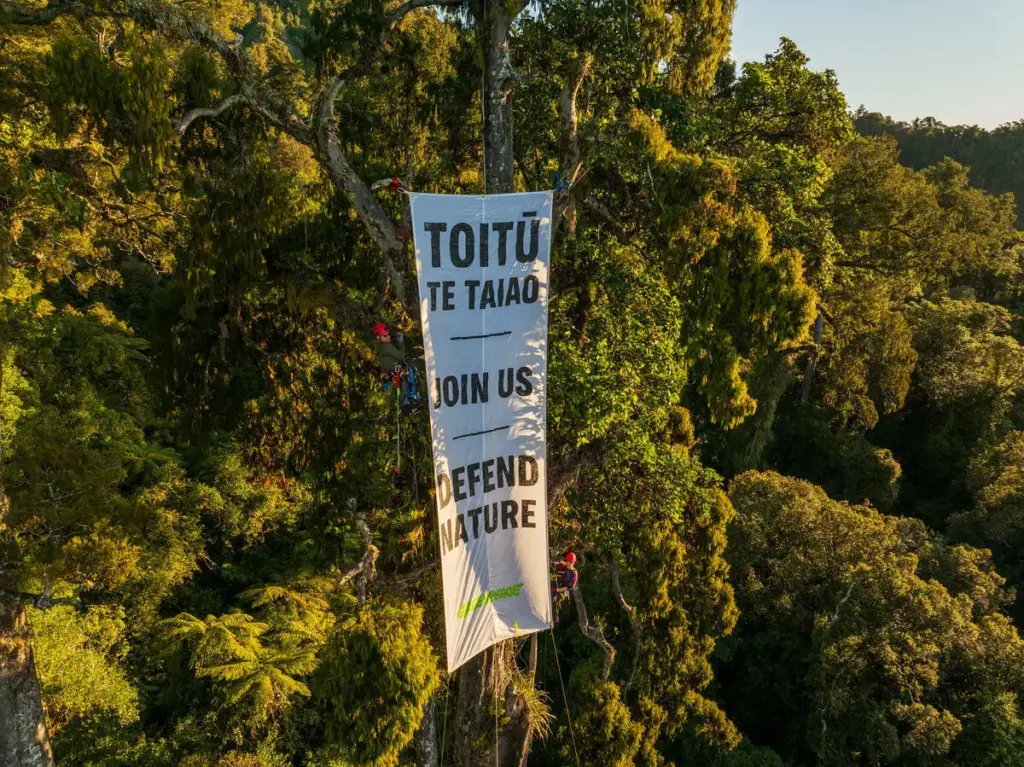
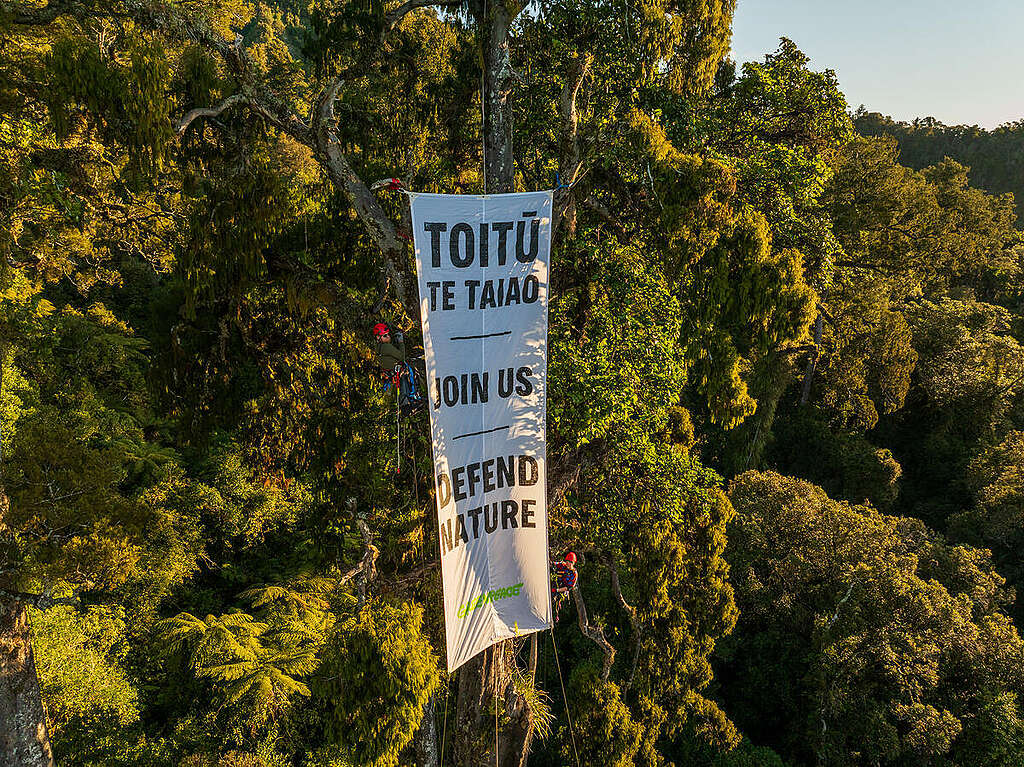
Marking World Conservation Day, Greenpeace Aotearoa (New Zealand) channeled the spirit of historical environmental victories by dropping an expansive 18-square-metre banner from the canopy of a giant rimu tree on the country’s West Coast.
The high-altitude protest targeted controversial government legislative reforms designed to ease commercial exploitation and facilitate the sell-off of public conservation land. By consciously recreating an iconic visual from the historic campaigns that successfully halted native forest logging decades ago, the activists served notice that the defense of New Zealand’s native ecosystems remains a fiercely guarded public trust.
6. Germany: Mapping Marine Dead Zones in the Baltic Sea
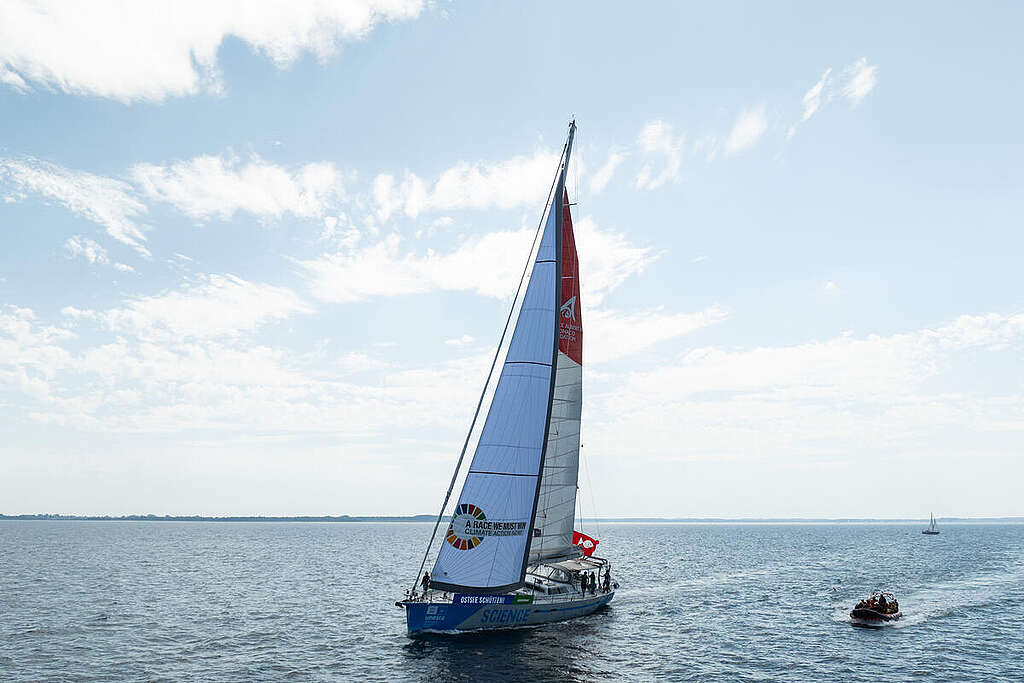
Scientific rigor met direct environmental action off the German Baltic Sea coast, where Greenpeace researchers utilized Boris Herrmann’s high-tech research yacht, the Malizia Explorer, to document expanding marine dead zones.
Equipped with advanced instruments including CTD probes, scientific teams tested coastal waters for temperature, salinity, oxygen saturation, and chemical contaminants such as nitrates, phosphorus, and persistent fluorinated substances (PFAS). Drone footage captured the yacht’s operations off Schleswig-Holstein, highlighting how agricultural runoff from intensive factory farming—specifically liquid manure spread across saturated fields—destroys marine habitats when heavy rainfall flushes nutrients into the open sea.
7. United Kingdom: Holding Big Oil Accountable in Westminster
Against the backdrop of towering corporate earnings announcements by energy giant Shell, Greenpeace UK utilized a mobile electric advertising van stationed directly outside Big Ben and the Houses of Parliament in Westminster.
The vehicle displayed haunting, real-time imagery documenting the devastation wrought by European wildfires across the continent. By juxtaposing corporate windfall profits against the human and economic toll of climate disasters, the mobile exhibition challenged the status quo. The action reinforced a singular, uncompromising message: major polluters must be held legally and financially accountable for the multi-billion-dollar damages inflicted upon modern societies.
Supporting Context & Metrics
The convergence of these diverse actions highlights systemic failures across global environmental management:
- The Human Toll: In Southern Europe, climate-induced wildfires and heatwaves have displaced more than 100,000 individuals, underscoring the acute vulnerability of urban and rural populations alike.
- Agricultural Runoff and Aquatic Hypoxia: Intensive factory farming in Central Europe continues to generate unsustainable volumes of liquid manure. The subsequent leaching of nitrogen and phosphorus into watersheds accelerates eutrophication, plunging Baltic Sea beds into oxygen-depleted "dead zones" where marine life cannot survive.
- Economic Disparities: While public sectors face mounting adaptation bills—such as Switzerland’s urgent need for 100 million Swiss francs in heat mitigation funding—major fossil fuel entities continue to report record-shattering profits, shifting the financial burden of climate devastation onto ordinary taxpayers.
- Legislative Rollbacks: Governments from Wellington to Jakarta face mounting criticism for prioritizing short-term industrial growth, automotive trade shows, and the commercialization of public conservation lands over long-term ecological preservation.
Official Statements and Perspectives
Environmental leaders, frontline spokespeople, and scientific researchers have articulated a unified stance against political and corporate complacency:
- On Climate Inaction and Extreme Weather: Greenpeace spokespeople across Madrid and London emphasize that extreme weather events are no longer anomalies but predictable outcomes of institutional delay. "The biggest polluters continue to profit while ordinary people bear the brunt of the costs," noted a Greenpeace UK representative regarding Shell’s record financial returns. "It is time to hold them accountable and demand they pay for the destruction they have engineered."
- On Biodiversity and Conservation: In New Zealand and Indonesia, activists reiterated that ecosystems like Raja Ampat and the West Coast native forests are non-negotiable planetary assets. Commercial exploitation under the guise of economic modernization represents a permanent loss for future generations.
- On Scientific Integrity: Marine researchers aboard the Malizia Explorer stressed that empirical data must dictate policy. The documentation of PFAS and nutrient loading in the Baltic Sea confirms that terrestrial industrial practices have direct, catastrophic consequences for marine biodiversity.
Future Outlook
As the global community navigates the remainder of 2026, the trajectory of environmental policy hangs in a precarious balance. The actions coordinated by Greenpeace across seven nations this week signal that civil disobedience and rigorous scientific documentation will intensify as planetary boundaries are increasingly breached.
Key milestones moving forward will include monitoring legislative battles over public lands in New Zealand, tracking the enforcement of adaptation funding in Switzerland, and pressing legal challenges against fossil fuel corporations in European courts.
Ultimately, the overarching message from the global dispatches is clear: bearing witness through visual media and peaceful resistance remains an indispensable tool in the fight for climate justice. As extreme heat, disappearing glaciers, and burning forests redefine the global baseline, the demand for systemic political transformation has transitioned from an environmental objective to an absolute prerequisite for human survival.
To explore the complete archive of Greenpeace photography, video documentation, and investigative media, visit the official Greenpeace Media Library.