

Executive Overview
As global markets increasingly pivot toward sustainable textiles, biobased manufacturing materials, and localized supply chains, agricultural sectors across the United States are actively seeking high-value, environmentally friendly specialty crops. In the Commonwealth of Pennsylvania, fiber hemp (Cannabis sativa L.) has emerged as a compelling economic and ecological frontrunner. Driven by a surge in consumer and industrial demand for eco-conscious products, an expanding cohort of Keystone State farmers is looking to incorporate hemp into their crop rotations.
However, transitioning from an emerging alternative crop to a reliable, economically viable commodity requires navigating significant agronomic hurdles. Producing consistently high-quality fiber hemp—particularly within the cooler, higher-elevation microclimates characteristic of many Pennsylvania regions—hinges heavily upon two critical, yet frequently overlooked, agricultural decisions: precise planting date selection and meticulous soil preparation.
To address these foundational challenges, the renowned Rodale Institute has launched a comprehensive, multi-year research initiative funded by the Commonwealth Specialty Crop Block Grant Program through the Pennsylvania Department of Agriculture. Kicking off field trials in 2026 at the Institute’s Main Campus in Kutztown, this project seeks to scientifically evaluate how targeted winter cover crop strategies and optimized planting windows interact to influence crop establishment, soil health, and ultimate fiber quality.
By bridging the gap between rigorous academic research and practical, on-the-ground farming applications, the initiative aims to empower approximately 400 Pennsylvania growers and agricultural stakeholders. Ultimately, the project demonstrates that regenerative farming practices—specifically no-till systems utilizing well-managed cover crops and minimal synthetic inputs—can unlock superior fiber yields, enhance ecological resilience, and secure stronger financial returns for producers operating with narrow margins for error.
Detailed Chronology
The trajectory of industrial hemp research at the Rodale Institute is rooted in years of methodical, peer-reviewed experimentation designed to decode the biological and mechanical complexities of the crop within the Northeast’s distinct climate.
Foundations in the Northeast (Pre-2025)
For several years, Rodale Institute researchers have worked to build a robust body of foundational knowledge regarding industrial hemp production in the northeastern United States. Moving past the initial legal and regulatory hurdles that historically stifled the crop’s resurgence, agronomists focused heavily on production variables. These initial trials examined nitrogen management protocols, optimal row spacings, varietal performance across diverse soil types, and mechanical fiber quality testing standards.
Crucially, this early body of work yielded a paradigm-shifting observation: early-season soil conditions exert a far more profound influence on final hemp outcomes than subsequent nutrient inputs alone. Getting the crop off to a vigorous start in the spring proved to be the single most reliable predictor of success at harvest.
Breakthrough Findings (2025–2026)
This foundational understanding was codified in a major feature published in CSA News in September 2025, which highlighted the innovative strides being made in industrial hemp production across the Northeast. Building directly upon those insights, a subsequent 2026 study published in Crops & Soils delivered empirical validation for regenerative agronomic practices.
The 2026 study revealed that no-till systems integrating specific winter cover crops alongside minimal nitrogen fertilizer applications consistently produced stronger, higher-quality fiber than conventionally tilled, heavily fertilized control plots. These findings challenged conventional wisdom, which often assumes that high-input chemical regimens are necessary to maximize fiber yield. Instead, the research underscored that soil biological health and structural integrity are the true drivers of superior textile-grade fiber.
The 2026 Research Initiative Launch
Capitalizing on these empirical breakthroughs, Rodale Institute structured its latest project to take this research a logical step further. Commencing in 2026 at the Kutztown research facility, the Institute initiated a series of systematic, on-farm trials specifically tailored to Pennsylvania’s agronomic realities.
Rather than merely observing crop performance under generic management styles, the current project establishes a rigorous comparative framework. It evaluates three distinct soil preparation strategies—cereal rye alone, a cereal rye and hairy vetch binary mix, and a conventional tilled fallow with no cover crop—cross-referenced against two distinct planting dates (an early window in mid-May versus a late-summer window in early June). Through comprehensive field monitoring, data collection, and eventual grower outreach, this timeline represents a systematic effort to translate complex soil science into accessible, field-ready recommendations for Pennsylvania producers.
Supporting Context & Metrics
The success of a fiber hemp crop is determined long before the first stalks are harvested for textile processing or industrial composites. Understanding the mechanisms that govern early-season crop establishment requires a detailed examination of soil physics, plant physiology, and the intricate dynamics of cover cropping systems.
The Critical Role of Early-Season Soil Conditions
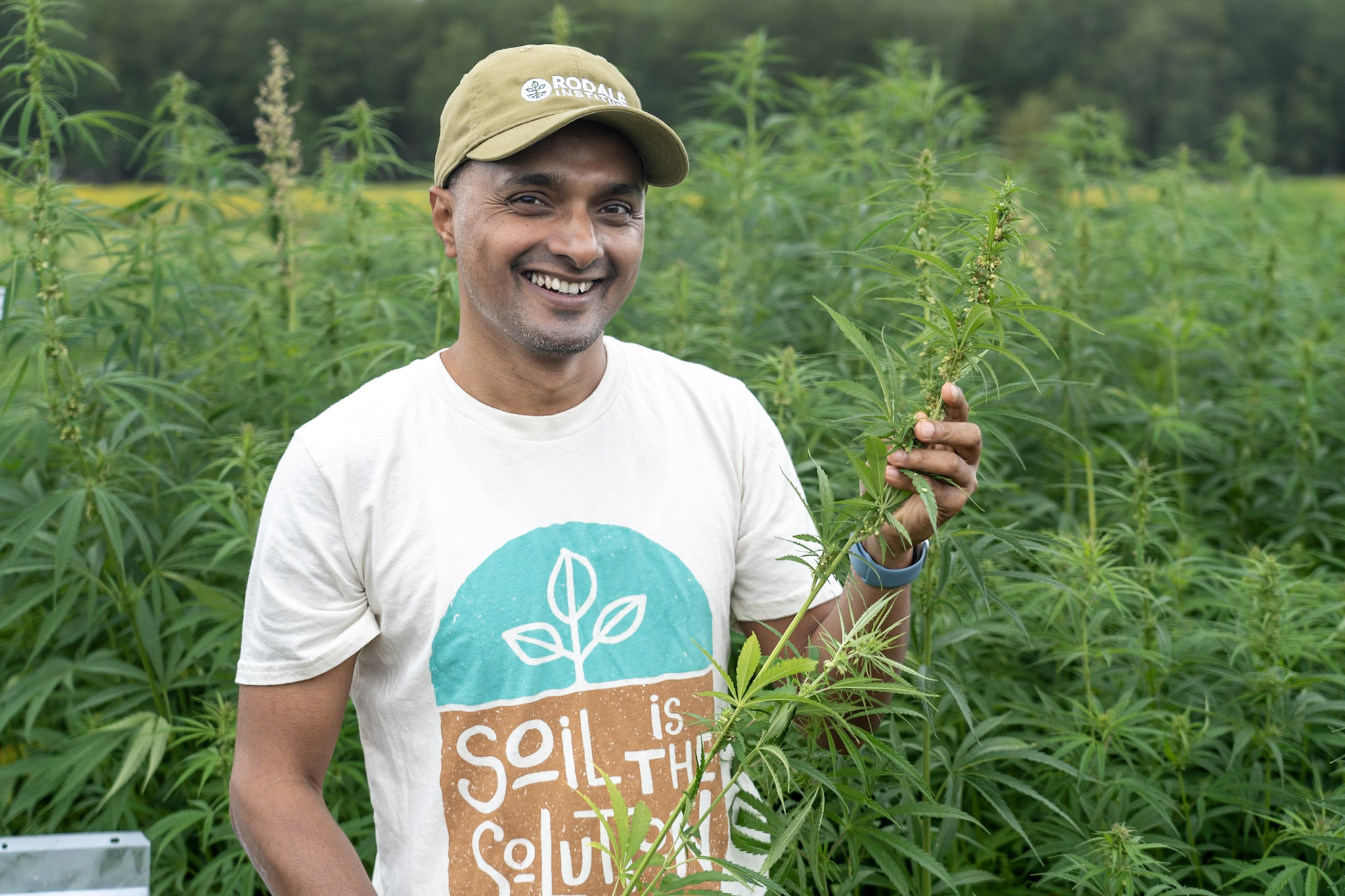
How well industrial hemp establishes during the delicate spring transition depends almost entirely on the physical, chemical, and thermal condition of the soil at planting. Seedling emergence, early vegetative vigor, and the plant’s ability to outcompete emerging weeds are heavily dictated by:
- Soil Temperature: Hemp seeds require consistent warmth to germinate uniformly; cold soils delay emergence, leaving young seedlings vulnerable to soil-borne pathogens and environmental stress.
- Soil Moisture: Adequate, balanced moisture is essential for breaking seed dormancy and supporting rapid root elongation, yet saturated, poorly drained soils can lead to hypoxia and root rot.
- Physical Structure: Compaction layers or cloddy seedbeds restrict root penetration, stunting the plant before it can develop the deep taproot characteristic of high-performing fiber hemp.
When these foundational factors are mismanaged, the negative consequences inevitably manifest at harvest. Growers frequently encounter poor, uneven plant stands, weak and brittle fiber strands with compromised tensile strength, and ultimately, significantly diminished economic returns. In fiber hemp production, uniformity is paramount; irregular plant stands lead to branching rather than straight, elongated vertical growth, which ruins the quality of the bast fibers required for high-end textiles.
Navigating Cover Crop Dynamics: Rye, Vetch, and Mixtures
Cover crops represent one of the most powerful tools available to regenerative farmers for optimizing early-season soil conditions, yet they require precise management.
- Cereal Rye (Secale cereale): Renowned for its exceptional winter-hardiness, rapid spring growth, and powerful weed suppression capabilities, cereal rye is a staple cover crop. However, in cooler soils and compressed growing seasons, rye produces a massive volume of dense, carbon-rich biomass. If termination and mechanical incorporation or roller-crimping are not timed with absolute precision, this heavy residue can physically smother delicate hemp seedlings, lock up available soil nitrogen, and delay soil warming.
- Hairy Vetch (Vicia villosa): As a nitrogen-fixing winter legume, hairy vetch actively captures atmospheric nitrogen and deposits it into the soil profile while supporting complex soil biology. Despite these immense biological benefits, hairy vetch often performs inconsistently when planted as a monoculture in cold, heavy clay soils typical of certain Pennsylvania agricultural zones, where it can be susceptible to winter-kill or sluggish spring recovery.
- Binary Mixtures: To capture the best attributes of both species while mitigating their individual drawbacks, Rodale Institute’s trials evaluate a strategic mixture of cereal rye and hairy vetch. The rye provides structural carbon, weed suppression, and moisture moderation, while the vetch introduces biologically fixed nitrogen and balances the carbon-to-nitrogen ratio of the residue, facilitating smoother decomposition and nutrient release for the emerging hemp crop.
The Complexity of Planting Windows
Planting date adds another layer of operational complexity for hemp producers. Even slight shifts in timing—shifting from mid-May to early June—can dramatically alter canopy closure rates, total vegetative biomass accumulation, and final fiber quality. Early planting allows the crop to take advantage of spring moisture and longer photoperiods, but risks exposing seeds to unseasonably cold soils. Conversely, later planting ensures warmer soil temperatures but may compress the growing season, limiting the plant’s ultimate height and fiber maturation. Because margins for error are exceptionally narrow in specialty fiber production, science-based guidance combining cover crop selection with optimized planting schedules has historically been scarce—a gap this Rodale Institute project actively rectifies.
Comprehensive Evaluation Metrics
To ensure the data gathered is exhaustive and actionable, researchers are tracking a multifaceted suite of indicators across the trial plots over two consecutive field seasons:
- Agronomic Metrics: Seedling emergence rates, final plant population density, canopy height, total aboveground biomass production, weed pressure ratings, and leaf tissue nitrogen levels.
- Soil Health Indicators: Biological, chemical, and physical parameters, including microbial activity levels, active carbon, soil organic matter percentage, water-stable aggregates, and dynamic water infiltration rates.
- Harvest Metrics: Final fiber yield per acre, bast-to-core ratios, and mechanical fiber quality testing (evaluating tensile strength, fineness, and processing viability).
Official Statements
The urgency and collaborative nature of this research are underscored by the institutional commitment of the organizations involved, as well as the broader agricultural community working to revitalize sustainable local supply chains in Pennsylvania.
While specific individual quotes from the project directors and agricultural extension leaders reflect an ongoing commitment to grower education, the core ethos of the initiative centers on practical empowerment. Representatives from the Rodale Institute emphasize that the overarching goal of the Kutztown trials is to demystify regenerative transitions for producers who cannot afford high-risk experimentation on their own land.
"By translating complex, long-term soil science into clear, field-ready recommendations, our objective is to remove the guesswork from specialty fiber production," project documentation notes. "Pennsylvania farmers are increasingly eager to diversify their rotations with sustainable biobased crops, but they need empirical proof that practices like cover cropping and no-till management will protect their bottom lines. This grant from the Pennsylvania Department of Agriculture allows us to provide that empirical foundation directly to the agricultural community."
Furthermore, state agriculture officials have repeatedly highlighted the strategic importance of the Commonwealth Specialty Crop Block Grant Program in fostering innovation. By supporting applied research on alternative and specialty crops like fiber hemp, the program helps position Pennsylvania as a national leader in regenerative agriculture and regional biobased manufacturing, ensuring that state producers remain competitive in rapidly evolving domestic markets.
Future Outlook
As the Rodale Institute’s fiber hemp research project progresses through its multi-year timeline at the Kutztown campus, the long-term implications for Pennsylvania agriculture and regional manufacturing are profound. The transition toward a biobased economy requires more than just consumer enthusiasm; it demands a secure, high-quality, and reliable domestic supply of raw materials.
Direct Benefits for Pennsylvania Growers
The ultimate beneficiaries of this research are Pennsylvania’s farmers—particularly those operating mid-sized, diversified farms seeking practical, regenerative approaches to improving profitability without increasing their reliance on expensive chemical inputs. By adhering to the project’s data-driven recommendations, growers can expect to achieve:
- Stronger, More Uniform Crop Stands: Eliminating early-season germination bottlenecks to ensure high plant density and optimal vertical growth.
- Enhanced Ecological Resilience: Building healthier, biologically active soils with superior water-holding capacity and structural integrity capable of withstanding extreme weather events driven by a changing climate.
- Superior Fiber Quality: Producing clean, strong, textile-grade fiber that meets the stringent standards of modern processing facilities and industrial manufacturers.
- Economic Stability: Achieving reliable, high-value harvests while minimizing input costs, thereby protecting profit margins.
Dissemination and Outreach Strategy
Recognizing that scientific data is only valuable if it reaches the people working the land, Rodale Institute has designed a robust outreach and knowledge-transfer campaign. Findings will be actively distributed to an estimated 400 growers and agricultural stakeholders across Pennsylvania through multiple channels:
- On-Farm Field Days: Interactive demonstrations hosted directly at the Kutztown research plots, allowing farmers to observe trial plots firsthand and discuss methodologies with researchers.
- Educational Collateral: Grower-focused technical fact sheets detailing step-by-step cover crop termination timings and optimal planting windows.
- Digital Engagement: Online webinars and virtual seminars designed to reach producers across the state and broader Northeast region.
- Academic & Professional Channels: Presentations at regional and national agricultural conferences, complemented by formal peer-reviewed publications in scientific journals.
The Bottom Line
The resurgence of industrial hemp in Pennsylvania represents a unique intersection of agricultural innovation and ecological stewardship. By systematically pairing optimal cover crop management strategies—such as cereal rye and hairy vetch mixtures—with scientifically validated planting schedules, Rodale Institute is paving the way for a thriving, resilient fiber hemp economy. Through rigorous research, boots-on-the-ground education, and a steadfast commitment to regenerative principles, this initiative ensures that Pennsylvania farmers are equipped to lead the charge into a sustainable, biobased future.



