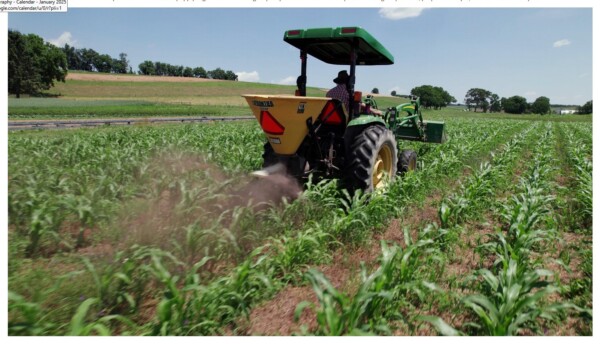
In the high-stakes, physically punishing world of modern agriculture, knowledge is the ultimate crop. For decades, the barrier to entry for sustainable and regenerative farming has not been a lack of passion, but a lack of accessible, rigorous, and practical education. Bridging this gap has traditionally required moving to an established training farm, uprooting one’s life, and stepping away from the daily demands of the land. Today, however, a quiet revolution is taking root in the digital space.
The renowned Rodale Institute—a global pioneer in regenerative organic agriculture with over 75 years of scientific research and field-tested expertise—is fundamentally transforming how agricultural knowledge is disseminated. By launching a comprehensive, university-level virtual curriculum, the Institute is taking its flagship Rodale Institute Farmer Training (RIFT) program out of its physical Pennsylvania campus and beaming it directly to agricultural entrepreneurs, transitioning producers, and conscious consumers across the nation.
This digital pivot addresses a profound structural challenge in modern farming: the sheer impossibility of taking time off. By leveraging the robust Canvas learning management system, Rodale Institute is scaling its educational impact from a dozen in-person fellows a year to a virtual campus capable of welcoming 6,500 students. In doing so, the Institute is positioning itself as the definitive digital hub for regenerative agriculture—melding uncompromised scientific integrity with modern, flexible, and accessible e-learning.
Detailed Chronology: The Evolution of Rodale’s Educational Mission
To understand the magnitude of Rodale Institute’s virtual expansion, one must trace the trajectory of its commitment to agricultural education and the compounding pressures facing today’s food producers.
The Foundation: Decades of Field-Tested Science
For more than three-quarters of a century, the Rodale Institute has operated at the vanguard of the organic movement. Founded on the premise that "healthy soil equals healthy food equals healthy people," the Institute has dedicated its research to proving the viability, profitability, and ecological superiority of regenerative organic methods.
The Birth of RIFT (Fifteen Years Ago)
Recognizing that scientific papers alone would not convert conventional acreage into thriving organic farms, the Institute launched the Rodale Institute Farmer Training (RIFT) program at its headquarters in Pennsylvania. For over 15 years, this immersive, nine-month, in-person campus experience served as a boot camp for agricultural entrepreneurs. Students got their hands dirty—learning everything from soil science and entomology to marketing strategy and organic certification requirements. Yet, despite its immense success, the physical RIFT program faced a hard ceiling: it could only accept a dozen or so trainees annually due to physical and logistical constraints.
The Three-Year Digital Buildout
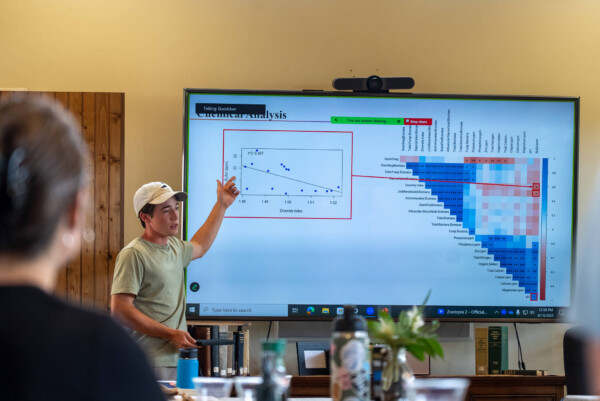
Realizing that the burgeoning regenerative movement required a vastly accelerated timeline for education, Institute leadership initiated a multi-year development project. Over the past three years, educators and researchers systematically captured the core curriculum of the RIFT program on video, translating years of hands-on, boots-in-the-soil instruction into structured, high-definition digital modules.
The Launch of the Virtual Campus
Today, this meticulous translation has culminated in a fully operational online platform. Powered by the Canvas learning management system, the virtual campus removes geographic and scheduling boundaries, allowing farmers in remote regions, urban centers, and everywhere in between to access world-class agricultural education on demand.
Supporting Context & Metrics: The Mechanics of Modern Agricultural Education
Farming is fundamentally a knowledge-intensive enterprise. Unlike standard business ventures, agriculturalists must master a staggering array of distinct disciplines. As Renée Baran, Rodale Institute Dean of Education, points out, "Farming is a unique way to make a living because farmers don’t get vacations or even weekends off when they can take time to focus on learning. But new farmers and many experienced ones have gaps in their knowledge they need to fill."
Bridging the Knowledge Gap
The curriculum goes far beyond the rudimentary, surface-level tips commonly found on public internet forums or disjointed video clips. Dr. Jason Slipp, Director of Education at Rodale Institute, emphasizes the academic rigor of the platform:
"These are university-level classes based on proven instructional principles. At Rodale Institute, we have accumulated more than 75 years’ worth of knowledge, and for the past three years, we’ve been capturing much of our RIFT curriculum on video. We’re now offering it to farmers who are not able to enroll in our nine-month, in-person program."
The syllabus tackles both the biological and economic pillars of farming:
Agronomic Mastery: In-depth lessons on soil health diagnostics, complex crop rotations, advanced weed control methodologies, and the safe, effective application of organic fertilizers.
Ecological Balance: Comprehensive modules on entomology, natural pest management, and biodiversity enhancement.
Business Acumen: Critical administrative training covering financial recordkeeping, cost accounting, marketing strategy, and navigating the rigorous compliance requirements for earning and maintaining organic certification.
The User Experience: Technology Meets the Soil
One of the primary historical hurdles of online learning for agricultural communities has been user friction—clunky interfaces, poor video quality, or overly academic delivery systems that alienate practitioners who prefer working with their hands.
Rodale Institute neutralized this obstacle by integrating the Canvas learning management system. Canvas provides a seamless, intuitive dashboard where students can:
Engage in peer-to-peer and instructor-led discussions.
Complete interactive assignments, quizzes, and tests.
Work entirely at their own pace, drilling down into the specific modules most critical to their immediate operational needs.
As Dr. Slipp notes, "This is easy for everyone to use, even if they’re not too tech-savvy." Whether a student is managing a multi-acre organic row-crop farm in the Midwest or launching a small market garden on the East Coast, the platform adapts to their reality.
Official Statements & Industry Impact
The launch of Rodale’s virtual campus has sent ripples through the sustainable agriculture sector, forging vital alliances with nonprofits, academic institutions, and agricultural apprenticeship programs nationwide.
Empowering Nonprofits and Emerging Producers
One of the earliest adopters of the virtual ecosystem is Good Roots, a prominent nonprofit organization dedicated to helping organic farmers build lasting, sustainable businesses that benefit their families, communities, and the environment.
Rebecca Frimmer, a partner and principal consultant for Good Roots, highlights the severe operational blind spots that frequently plague new agriculturalists:
"Farmers need training in business management and finance to ensure they are profitable and viable for the long term. The biggest challenge for farmers is finding the time to balance all that must be done. It’s essential to carve out the space to work on the farm business and not just in the business."
Frimmer underscores the immense value Rodale’s platform brings to smaller-scale producers who lack the capital for expensive private consultants:
"Smaller-scale producers may not have the resources to access consulting services or other professional services like bookkeeping and marketing. The self-paced educational resources and interactive support offered by Rodale Institute open up effective ways for Good Roots to ensure the next generation of farmers can scale up with strong financial and marketing foundations."
Scaling Up the Movement
The quantitative leap achieved by this virtual pivot is staggering. While the residential, in-person RIFT program shapes roughly a dozen agricultural leaders each year, the new digital infrastructure scales that capacity exponentially.
"Our virtual campus can serve 6,500 farmers," states Renée Baran.
This scalability is not merely about accumulating user accounts; it represents a strategic deployment of vital ecological knowledge designed to counteract soil degradation, chemical dependency, and climate instability on a macro scale.
Future Outlook: The "Regenerative Organic YouTube" and Lifelong Learning
Looking ahead, Rodale Institute has no intention of resting on its laurels. The digital campus is envisioned as a living, breathing ecosystem that will continuously expand its course catalog and forge new institutional partnerships.
Democratizing Knowledge for Every Citizen
Crucially, Rodale Institute recognizes that the regenerative revolution cannot succeed on the backs of farmers alone; it requires an informed, conscious public. To that end, the virtual campus extends far beyond commercial agricultural training, offering programming designed for anyone passionate about nutritious food, health, and sustainable living.
Users can enroll in specialized courses such as:
"Being a Regenerative Consumer"
"Regenerative Health: The Power of the Plate"
Introductory classes on hobby gardening and beekeeping taught by seasoned Institute professionals.
These offerings allow everyday citizens to build their personal literacy around food systems while directly supporting the economic viability and expansion of the organic farming community.
The Ultimate Vision
Summarizing the long-term ambition of the initiative, Baran captures the ethos driving the virtual campus forward:
"We want to be the ‘regenerative organic agriculture YouTube’ where farmers can find the information they’re looking for, but with real scientific integrity and a community of others to connect to and learn with."
By fusing decades of uncompromising scientific research with the democratic, borderless reach of modern e-learning, Rodale Institute is ensuring that the tools for healing our soils—and feeding our future—are within arm’s reach of anyone willing to learn.
For detailed course schedules, enrollment procedures, and further information regarding Rodale Institute’s educational programming, visit RodaleInstitute.org/education.